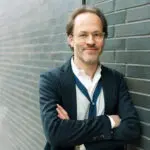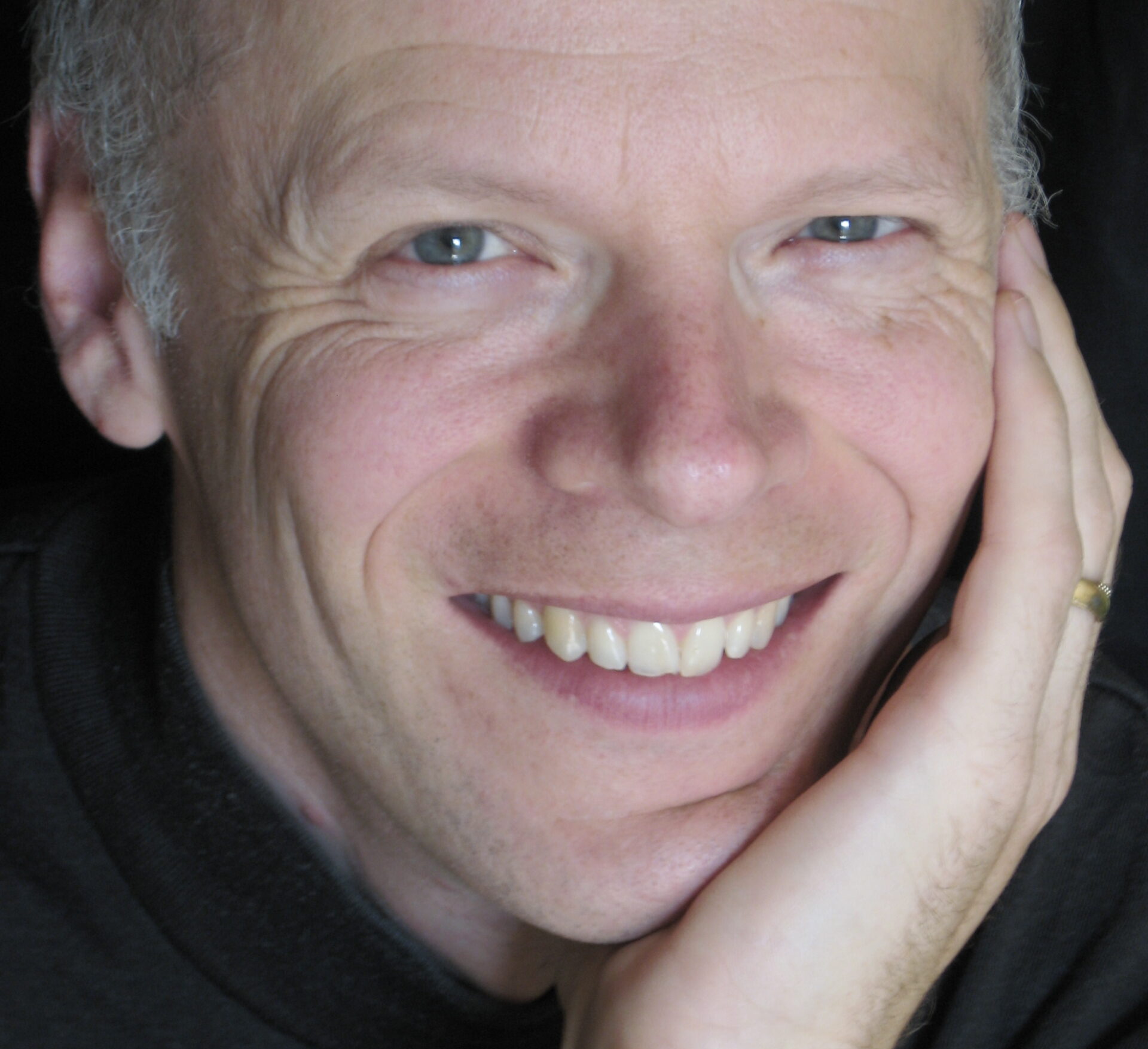
The Artist of the Week is Canadian composer James Rolfe. His compositions are featured on Pursue Peace, the debut album of Jewish Music at York, which is available now (info here).
James's works have been commissioned and performed by ensembles, orchestras, choirs, theatres and opera companies in Canada, the United States, Europe, Asia, Australia and New Zealand. He currently teaches composition at the University of Toronto.
This week, James chats with us about his approach for composing for the voice, the best thing about working with singers and one of this favourite hobbies, baking. Read on to find out more.
What/who inspired you to sing?
I'm told that if my mother sang to me while changing my diaper, I'd stop wriggling and stare at her, transfixed. A few years later, I loved singing in Mrs. Pulker's choir at Fairfield Elementary School in the suburbs of Ottawa; I especially remember falling in love with “Edelweiss.” The wonder of a great melody perfectly fitted to the lyrics has never left me.
Tent or hotel?
Tent! I adore canoe camping, and try to make two or three trips each summer to Algonquin, Killarney, or Temagami. Paddling, portaging, swimming, making food, setting up camp, being outdoors 24/7 among the trees and birds and lakes – until I did it, I had no idea how refreshing and beautiful it is, how good for my soul.
Cat person or dog person?
Nothing against dogs, but cats speak to me. I had one, Shakespeare, who died two years ago at 17. I still speak or sing to him most days. He was the best companion.
Do you enjoy cooking?
Do I ever! Cooking, baking and eating are great joys of being alive, all the more when shared with family and friends. I especially love baking, perhaps because I could never get enough as a child. I first took control of my destiny at age nine when I baked a chocolate layer cake and haven't stopped since. There's always something on hand – pies, cakes, cookies, breads. My current party piece is cherry almond frangipane cake, made with sour cherries from our own tree.
Do you approach composing differently today than at the beginning of your career?
Writing for voice has taught me to go straight to the heart of the lyrics. My job is to channel emotion, desire and longing into vocal and instrumental lines that communicate clearly and simply and perhaps beautifully. I try to get out of the way and let the singer sing. I also tend to repeat music and lyrics more often now, to give listeners space to receive not only the words but their emotional weight. Momentum, pacing and timing are everything; again, I try to stay out of the way and give the emotional drama the time and space it needs to play out.
I love using the rhythms inherent in words and phrases to build motives and combining them into memorable vocal lines. Studies have shown that our ears (trained and untrained alike) are most sensitive to rhythm and melody, which are endlessly fascinating to me.
The music industry is tough, and filled with rejection. How do you cope? Does it get easier?
There are ways to take rejection less personally: there's no music which is universally loved, and no composer who didn't suffer through rough patches. Contemporary classical music has a small audience, not necessarily because listeners won't like it, but because organizations must sell seats and confine new works to venues, staff, artists and marketing models which are designed for dead composers. This tends to make organizations wary of living composers, which in turn makes us wary of stepping outside the box, as we may have been rejected for doing so in the past. Too often, fresh ideas lose out in favour of received and familiar ones.
All this perspective helps, but there's no question that rejection never quite loses its sting.
Are you a perfectionist?
The honest answer is yes, but I constantly struggle to allow myself to be just a bit messier. Rehearsal time is always too tight, and new music takes more rehearsal, so there's zero room for mistakes in scores or parts – here, perfectionism is my friend. But it can be creatively deadening: if no risks are taken, then little is at stake, and singing works best when everything's at stake from the minute a singer opens their mouth.
I've relaxed a lot through attending performances. Even the best singers suffer random memory lapses on stage – though the best also know how to fake their way through. Live music (especially when memorized, with no prompter) is always an adventure and never a sure thing.
What are you afraid of?
I think my fears are so deeply repressed that I can appear calm and fearless. Yet because part of me is reserved and values privacy – probably the same innermost part which harbours my creativity – I sometimes fear how people will receive the music that comes from there. Which makes composing a very odd career choice: having a premiere is a very public occasion, one where my own vicious superego can go on the rampage and dig its claws into me.
Who is a singer you admire from the past?
As a small child, I listened over and over to an LP of British folk songs sung by countertenor Alfred Deller; I loved both songs and singing. Fast forward to my newest opera, Madame Caeneus's Canteen, which premiered in Kitchener last June with not one but two wonderful countertenors, Daniel Cabena and Ryan McDonald – such a pleasure to work with their lyrical and dramatic voices, and to connect through them back to my early years.
Drink of choice?
Cider pressed from the old apple tree in our back yard – so dry and refreshing.
If you weren't a composer, you'd be...?
A psychotherapist. As a matter of fact, I'm in the third year of a six-year, part-time program to qualify as a psychodynamic psychotherapist. I'm really enjoying the subject and the people, as well as doing something new and challenging later in life. Nice to know that I don't have to do just one thing with my life (though I will continue to compose, which I still love to do).
What's your favourite mind-calming practice?
Being outdoors: running, walking, biking, paddling, gardening, just breathing fresh air as we were designed to do. And breathing leads us back to singing...
What's the best thing about being a composer?
Hands down, getting to work with so many great singers, who've given me so much, and continue to do so. We so easily underestimate how smart, skilled and fun musicians are. And they're clearly not risk-averse, given the nature of our careers. I also work with great writers as librettists and lyricists – another amazing bunch of people, from whom I've learned a great deal.
Do you have a funny joke for us?
I can only ever remember two jokes; not sure if they're funny. The polite one is about the optician who fell into the lens-grinding machine and made a spectacle of himself.
LEARN MORE ABOUT JAMES ROLFE
VISIT HIS WEBSITE
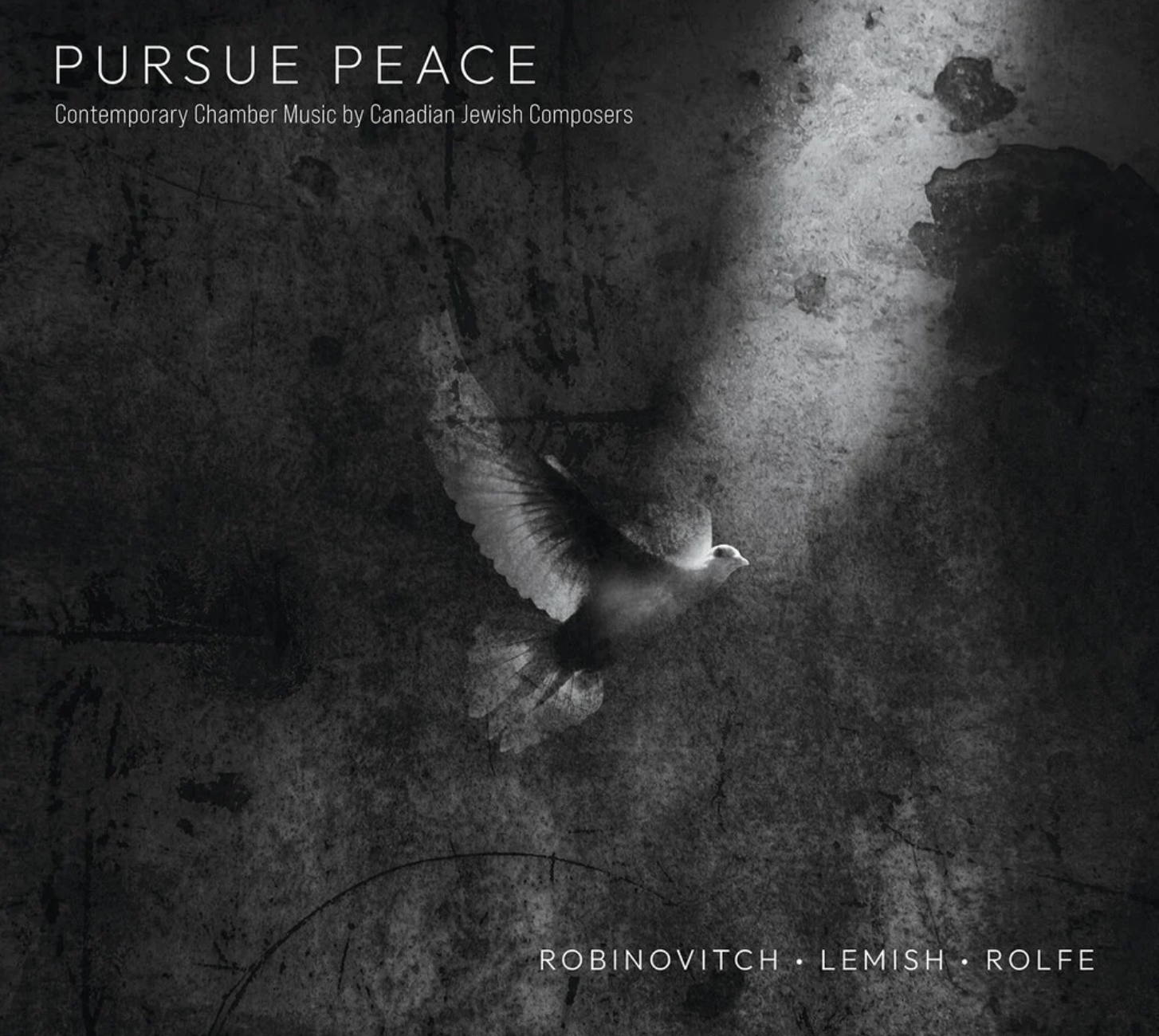
Pursue Peace album cover
Pursue Peace
Jewish Music at York
COMPOSERS: Noam Lemish, Sid Robinovitch, James Rolfe
PERFORMERS: Amy Hillis, Katherine Dowling, Noa Sarid, Catherine Gray, Mark Chambers, Eric Abramovitz, Sara Schabas, Jane Fingler, Vania Chan, Veronika Muggeridge, Rebecca Claborn, Mark Duggan, Clark Schaufele, David Fallis
Pursue Peace represents the first volume of a collection of music by Canadian Jewish composers under the "Jewish Music at York" umbrella, curated by composer Noam Lemish. Including works by James Rolfe, Sid Robinovitch, and Lemish himself, the works rotate around themes of conflict, resolution, and peace, engaging with Jewish texts and presenting a diverse range of musical aesthetics.
Opera Canada depends on the generous contributions of its supporters to bring readers outstanding, in-depth coverage of opera in Canada and beyond.
Please consider subscribing or donating today.