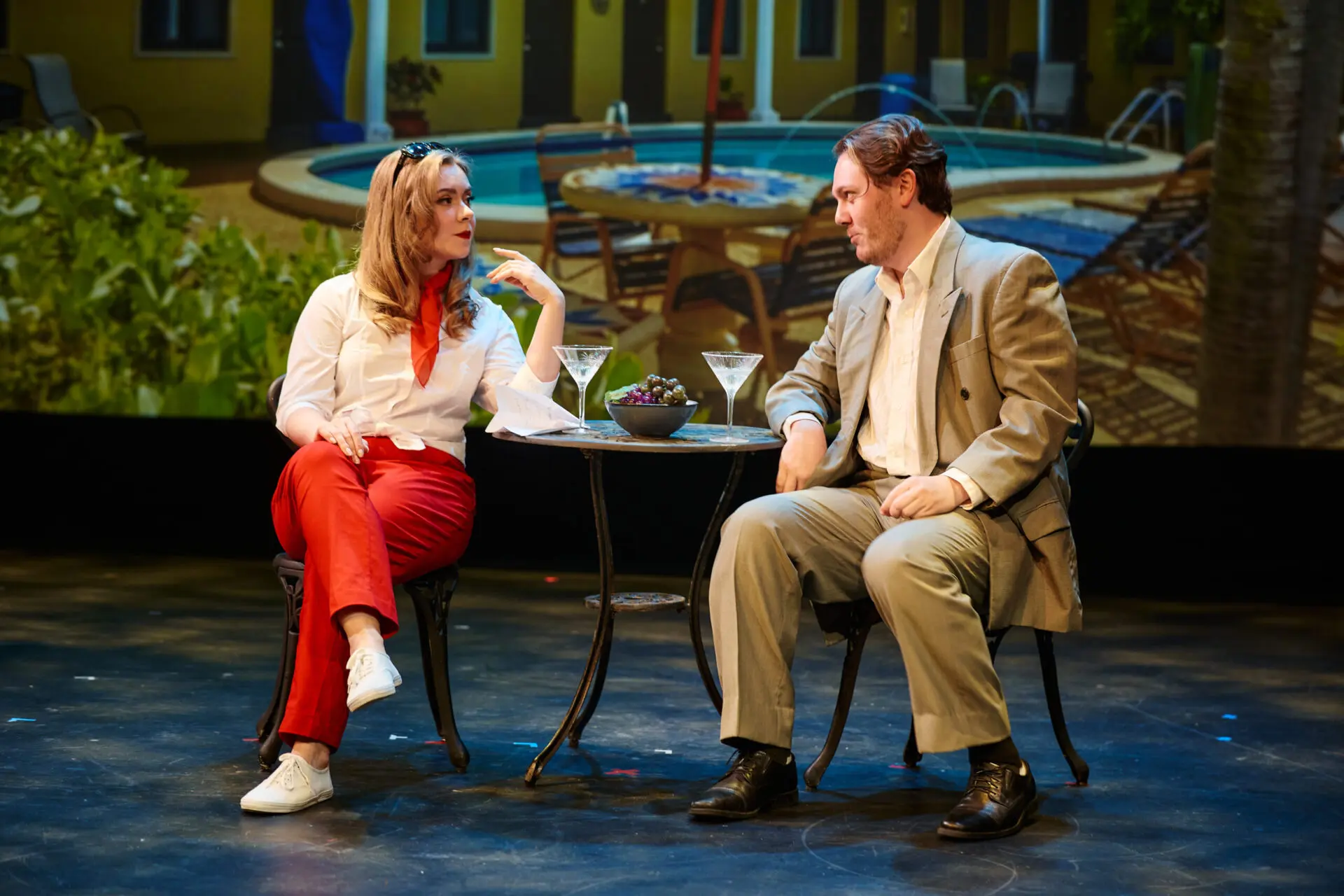
Highlands Opera Studio’s 20th-anniversary season culminated with Gaetano Donizetti’s Don Pasquale. Donizetti’s masterpiece premiered in Paris in 1843 and was an immediate success, marking the high point of 19th-century opera buffa. No wonder it has remained popular: brilliant music and an accessible and funny storyline still make it a crowd pleaser. Creative reimaginings of the original contemporary setting have included the COC’s cat-themed production set in the 1960s, an American Wild West version, and an LGBTQ staging out of Michigan titled Dawn Pasquale. For HOS, stage director Richard Margison chose 1950s California, “primarily to show that things don’t change through the decades (certainly not enough).”
Margison is a witty man, and it shows in his direction. Paper airplanes, golf balls, flashlights and teddy bears added touches of whimsy to this abridged version, which clocked in at just a little over two hours… including intermission. The staging was pared down, and scenes were enhanced by Brenden Friesen’s beautiful projected backdrops behind minimal props. Making the most of the theatre space, singers entered from the back of the theatre as well as the stage wings. David Sweeney’s multi-faceted lighting assisted in these creative entrances and exits. There were no chorus numbers, but the two supernumeraries included a mute maid played by mezzo Madeline Cooper (who brought new meaning to the phrase “shaken not stirred”), and a servant played by the delightfully young and expressive local actor Thomas Austin Ward.
Co-artistic directors of HOS Val Kuinka and Margison know voices. Both casts were a blend of singers chosen to create particular ensembles. To compare the casts would be fruitless, given that each group was brilliant on its own.
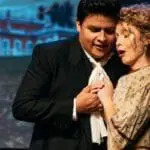
The first cast featured the heavier timbre of Romanian-Canadian bass-baritone Mihnea Nitu as Don Pasquale. Nitu is an imposing figure, both physically and dramatically, and his rich bass-baritone voice and talent for physical comedy commanded the stage. His voluminous voice was effective as he railed against his domestic situation and his age, but his voice was also capable of rendering tender moments of reflection. George Theodorakopoulos was a charismatic Malatesta, whose rich baritone voice created a manipulative yet congenial aura. His Malatesta was a ladies’ man, flirting with the maid and even making us wonder about his relationship with Norina. Theodorakopolous’s and Nitu’s "Cheti, cheti, immantinente" was a superb example of the vocal agility and diction needed in patter songs.
Elias Theocharidis was a charming Ernesto whose stage movements were intuitively graceful. His tender "Com’è gentil" contained some exquisitely phrased pianissimos, while his other emotionally charged solos demonstrated a darker voice waiting to burst forth at any moment. Theocharidis’s fine line between understated fervour and fulsome passion added emotional depth to the sometimes one-dimensional role of Ernesto. Emily Rocha more than held her own with these powerful male performers. Her Norina was a wily and manipulative widow who used expressive tonal colours to show her moods. Not only are Rocha’s comedic skills well honed, she showcased her stamina and strength during her multiple solos. Her "So anch’io la virtù magica" was the beginning of an evening filled with sparkling high notes and seemingly effortless rapid-fire bel canto moments.
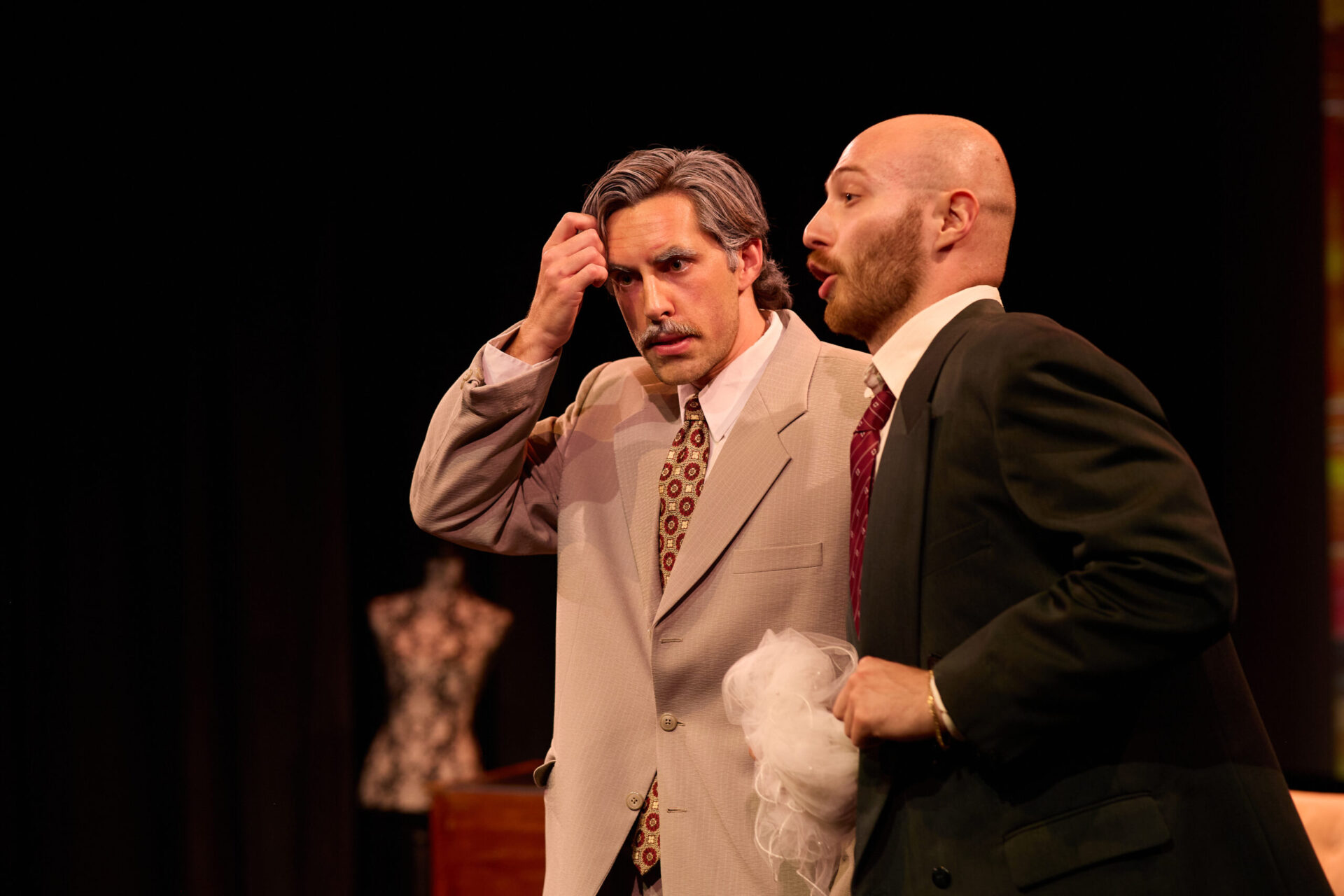
Photo Credit: Brenden Friesen
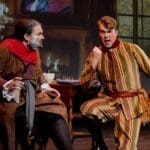
Luke Noftall in the title role and Dante Mullin-Santone as Malatesta in Don Pasquale
With Luke Noftall in the title role, the second Don Pasquale cast was lighter in tone. Noftall’s resonance, keen comic timing and patter singing were a treat to experience, and his diction and dynamics were strong. It’s not easy for a young man to play a convincing old one, but Noftall did it well and brought a particular pathos to the scene when Norina slapped him. Dante Mullin-Santone was well cast as the conniving Malatesta. Listeners were treated to lush legato singing as well as a command of tongue-twisting solos and duets. What was particularly entrancing about Mullin-Santone’s Malatesta was his hilarious facial expressions coupled with his elegant and sophisticated stage movements, both of which reminded me of a young Cary Grant.
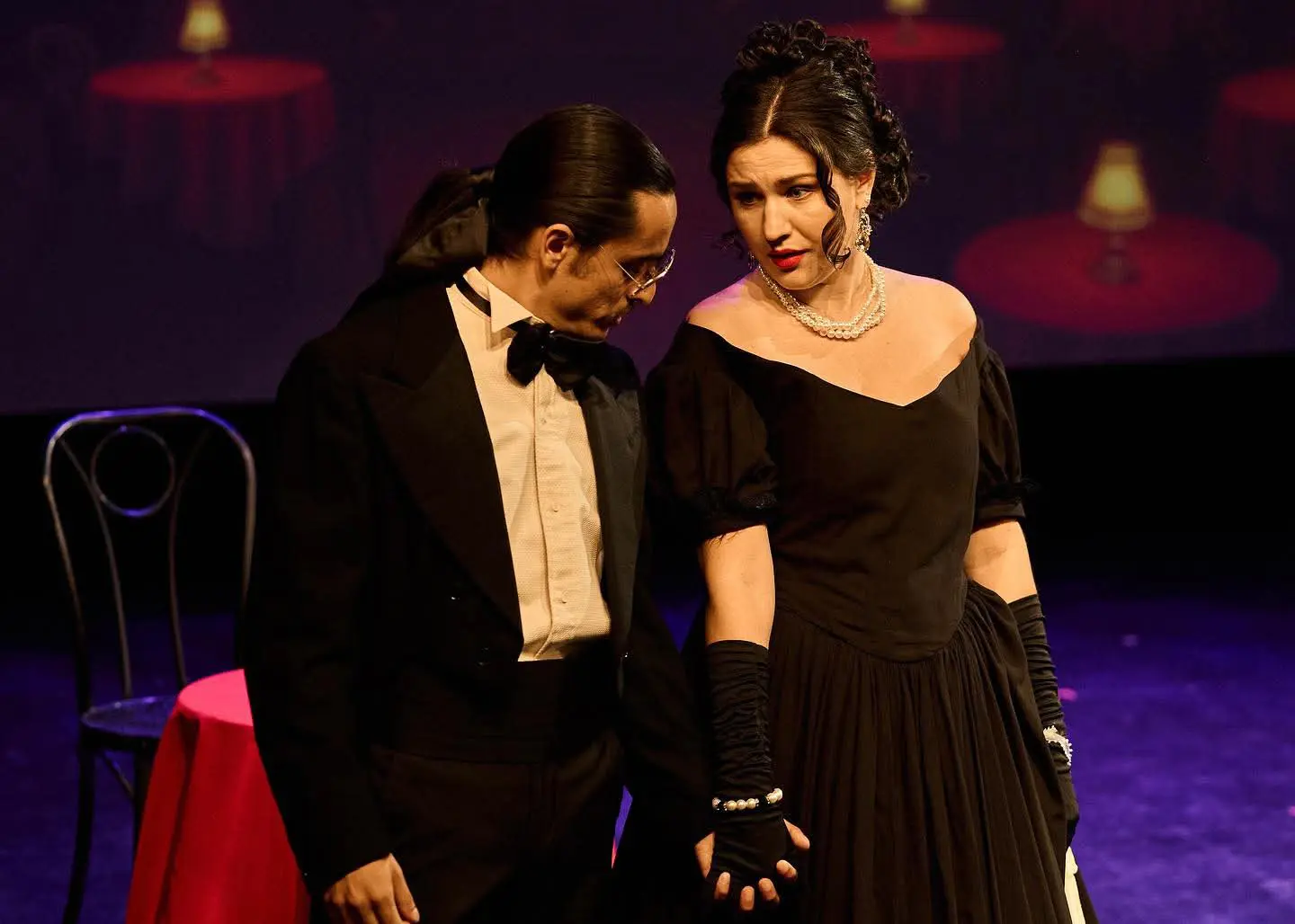
Yanik Gosselin was a completely charming Ernesto who milked the boy-next-door image to the max. His fresh lyrical voice was particularly enchanting in “Povero Ernesto!”, and his overall performance was filled with beautiful high melodic lines, sweet pianissimos and the refined stylistic grace required in bel canto singing. Maeve Palmer was an exuberant Norina whose over-the-top moments contrasted with some very heartfelt scenes. Palmer’s tone was glorious, and her coloratura was meticulously precise. Palmer’s and Gosselin’s “Tornami a dir” was magical.
In both casts, Neil Hong played the Notary and in doing so firmly put himself in the ranks of other inept and pedantic opera characters. Hong’s dithering, short-sighted, nasally narcoleptic portrayal was comic gold.
Holding this antic-filled opera together was music director Nadège Foofat whose mastery of steady rhythmic passages skilfully contrasted with her sensitive conducting in rubato passages. Her accompanists – Vladimir Soloviev, Christine Bae – were accomplished pianists, whose gracefully played intermezzos were as impressive as the rhythmic and tempo flexibility needed in more lively passages.
HOS’s Don Pasquale was a lesson in economy. Gone were many supernumeraries and large choruses, simple staging replaced lavish sets, the score was whittled down to the bare essentials, the orchestra became a piano. What was left was an entertaining and appealing snapshot of 19th-century Italian comic opera. Even in opera, less can be more.
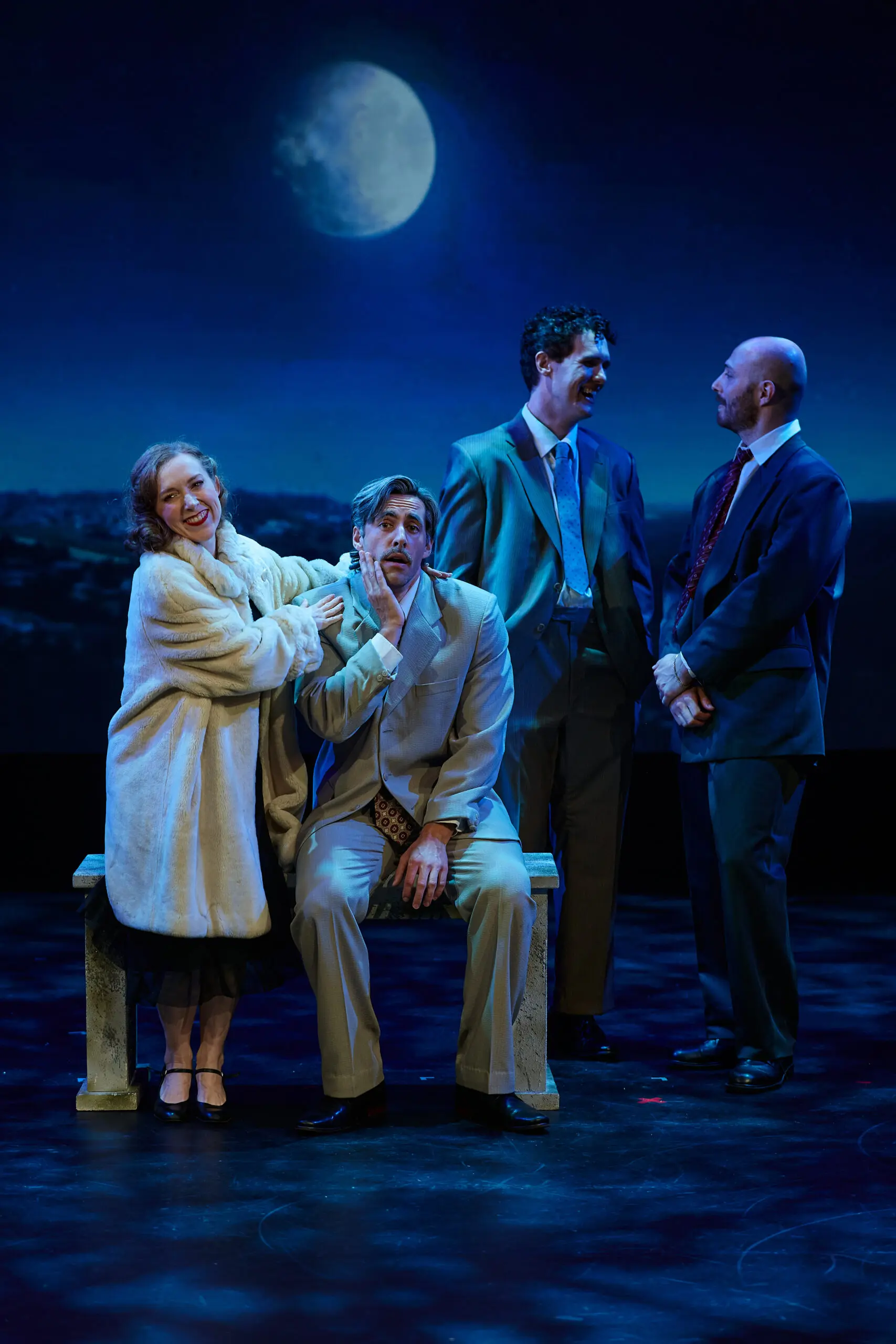
Photo Credit: Brenden Friesen
From left to right: Maeve Palmer, Luke Noftall, Yanik Gosselin and Dante Mullin-Santone
Opera Canada depends on the generous contributions of its supporters to bring readers outstanding, in-depth coverage of opera in Canada and beyond. Please consider subscribing or donating today.