Calgary Opera opened its new season with an engaging new production of Puccini’s continuingly popular Madama Butterfly. The production, a joint collaborative effort with Arizona Opera and Opera Grand Rapids, features strong, sturdy singing and sensitive dramatic direction. It greatly pleased the large opening-night audience in Calgary, which applauded loud and long.
What made this production different was the full embracing of the Japanese side of the story. Stage director Mo Zhou has mounted similar productions in different US cities and Vancouver. Central to her productions is the move in time from late 19th-century to the immediate post-World War II period. The fundamental purpose of this is to create a sense of contemporary social immediacy by setting the story against the backdrop of the war bride phenomenon after World War II, a way of extending the pathos of Butterfly’s story to a much wider range of women.
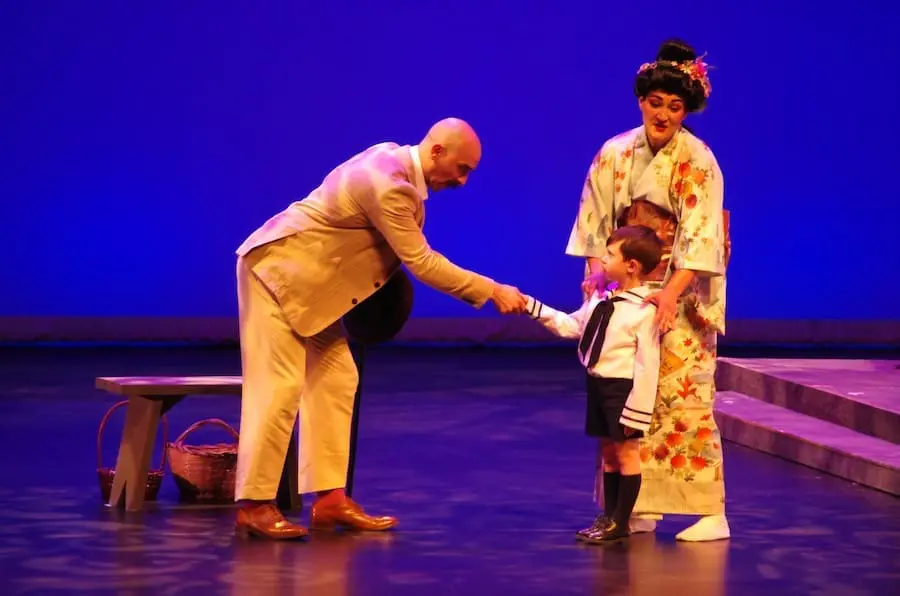
To this end, a sharp contrast is made between the Butterfly of the first act, a Butterfly who is Japanese in manners, to a later Butterfly, now six years older and self-consciously American, if uncomfortably so. No longer a young woman trapped in a romantic dream of America, Butterfly possesses, in this concept, considerably more independence of action, more agency. The fact that she is still unable to escape her Japanese roots and her romantic fantasies is her ultimate undoing.
The rest of the production circles around these ideas, with little change from way these characters are normally portrayed. Pinkerton, an unaware American young man in the first act, is transformed by the awareness of what he has done, but he is still a coward who cannot face Butterfly. Suzuki, always aware of the larger situation where Butterfly is not, remains a supportive companion and foil for Butterfly. Sharpless too is a sympathetic figure, played as Puccini wrote the role. All these things came across very well in this remarkably sensitive production, which seemed to get better and better as it went along. The end, swift and brutal, had its effect.
Yasko Sato played Cio-Cio-San (Madama Butterfly), a role with which she has been much associated and has had considerable success. It is difficult to convey the sense that Butterfly is only a fragile 15 and to handle the mature vocal demands of the first-act duet, not to mention the famous “Un bel dì.” Sato’s mature, big lyric soprano was easily able to soar over Puccini’s full orchestral writing, her voice rich and full. Making the most of important moments, Sato’s was a consummate handling of this challenging role. Lost in all this, at least to a degree, was a certain level of vocal nuance and subtlety, but it could be said that this sense of underlying steel was also part of the concept of the role. The congruence between vocal rendition and dramatic realization was excellent.
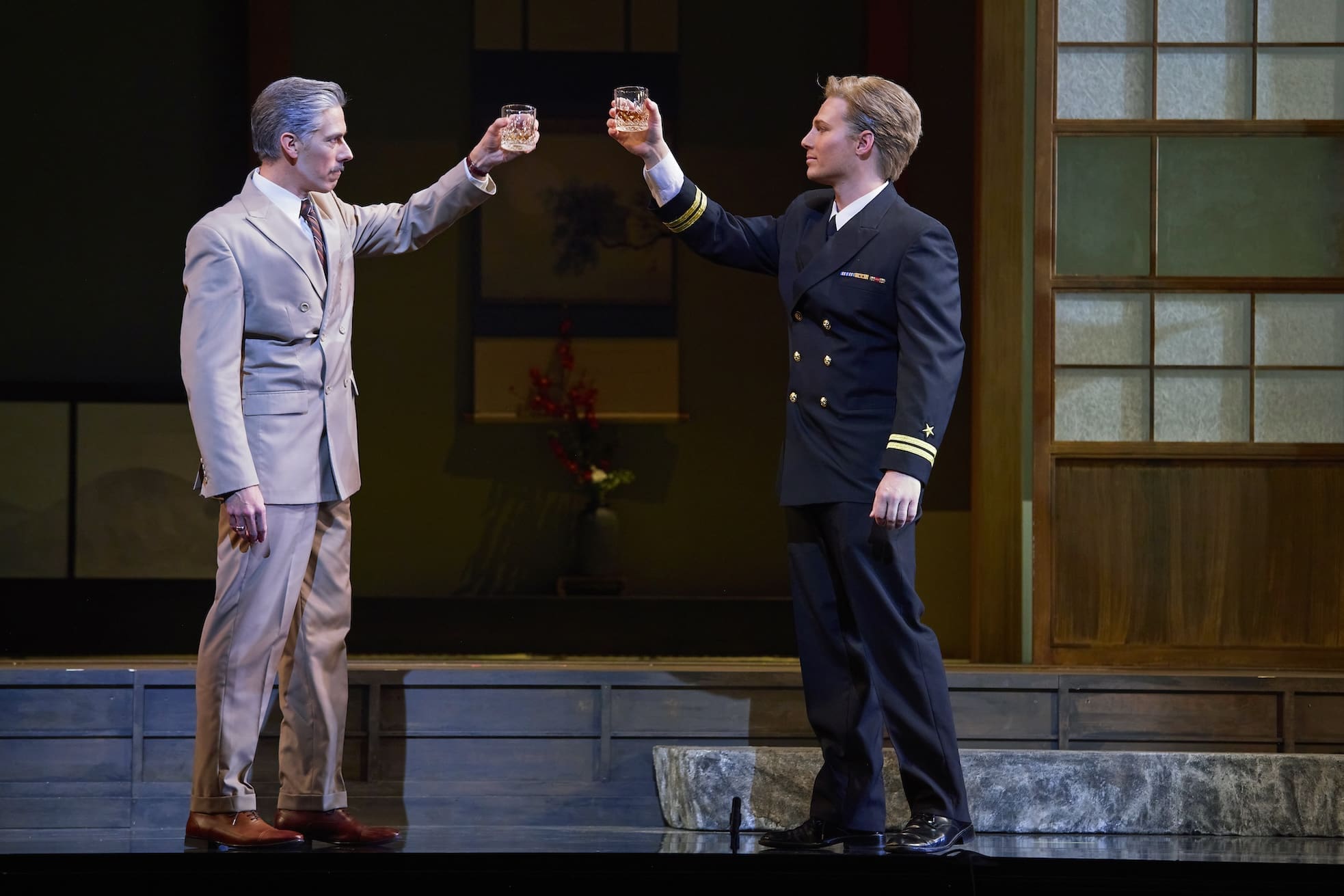
Photo Credit: HarderLee Photography
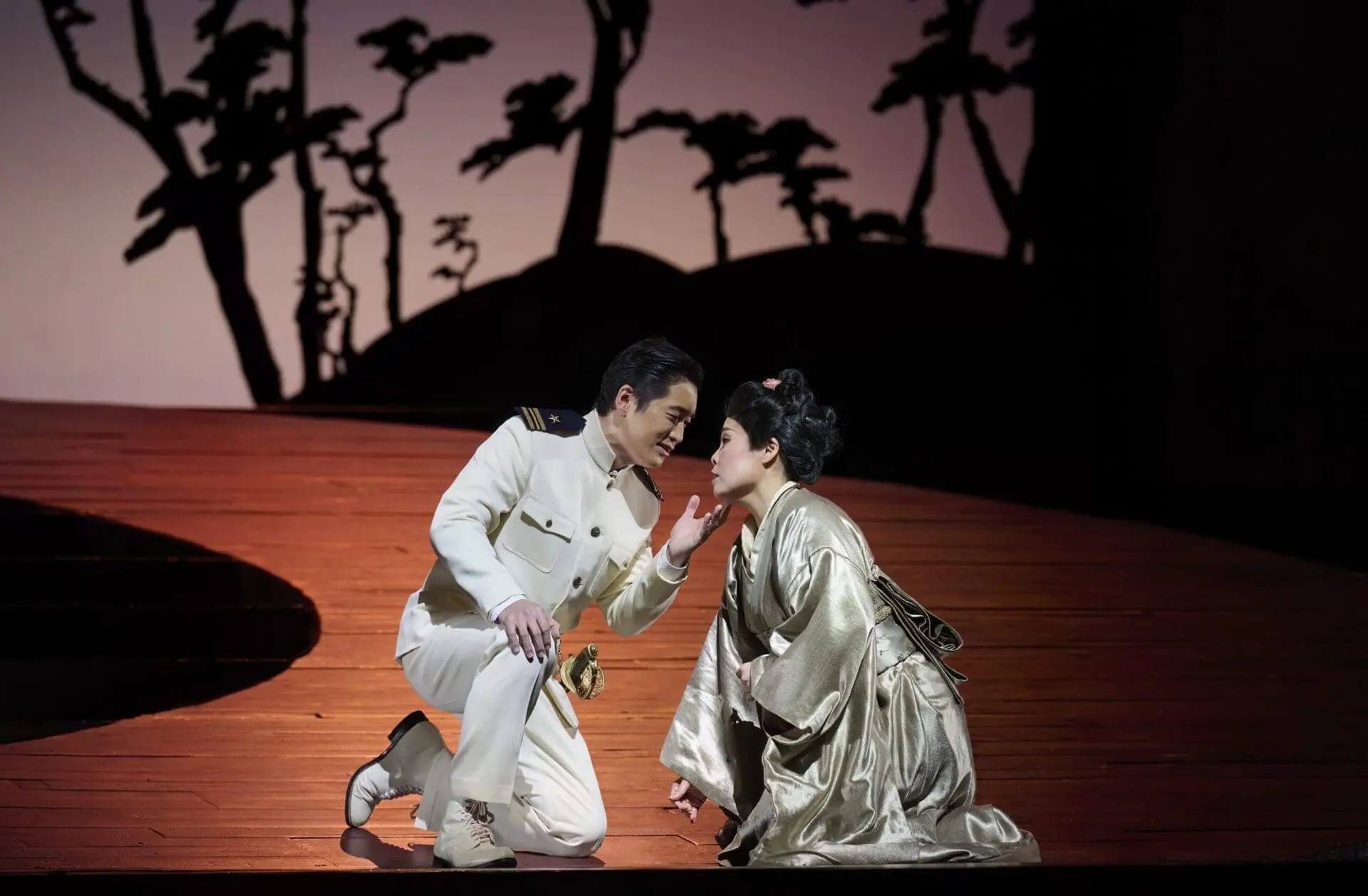
Phillip Addis and Matthew White as Sharpless and Pinkerton in Calgary Opera’s Madama Butterfly
American tenor Matthew White was Pinkerton and my favourite of the four main roles. White has a remarkably healthy, resonant tenor, perfect with which to characterize a brash, young American naval officer. He delivered the difficult vocal writing with ease but also showed the softer, tender side of his character in the first-act duet. On stage he made the transition from American cad to a man with his moral eyes opened. Of the six Pinkerton’s I have seen at Calgary Opera, his was the best.
Nina Yoshida Nelsen was the production’s Suzuki, a role with which she has been associated a long time. Vocally just right for the part, she could hardly have been better in the role, her voice strong but also sensitive when needed. Phillip Addis was Sharpless, his voice a fine Puccini baritone in the Marcello/Scarpia manner. Dramatically, he handled his duties very effectively as the one non-Japanese person who understands Butterfly’s plight while maintaining the dignity that becomes his position as consul.
The opera contains many secondary characters, the most prominent of whom was Julius Ahn as Goro – excellent in every way. Most of the rest of the cast were members of the McPhee Artist Development Program and sounded comfortable in the company of the more-experienced principal singers. The reduced Calgary Opera Chorus made the most of its famous humming chorus and contributed comic stage business as Butterfly’s many relatives.
All this was the concept of stage director Mo Zhou, whose attention to detail was impressive and effective. The eminently suitable set and lighting design were by Chika Shimizu and Marie Yokoyama, with attractive costumes designed by Mariko Ohigashi incorporating original designs by Kathleen Trott from the Arizona Opera production stock.
The Calgary Philharmonic Orchestra was conducted by Jonathan Brandani with what Calgarians have now come to expect of his work: complete competence. Together with the judicious choice of tempos, the music of the opera flowed naturally with solo spots highlighted where needed and always with sumptuous strings and powerful brass. In Calgary, we are rather spoiled.
In the end, it lies to the listener was to whether the updating of the production brings anything very significant to the opera – or not. But there cannot be anything but good to have such a degree of detail and energy lavished upon the Japanese side of the work and on the wider social consequences when a powerful culture meets one that is less powerful. It cannot be a bad thing to be asked to reflect the abuse of power, male and female, colonizer and defeated. Our present world might benefit from such considerations.
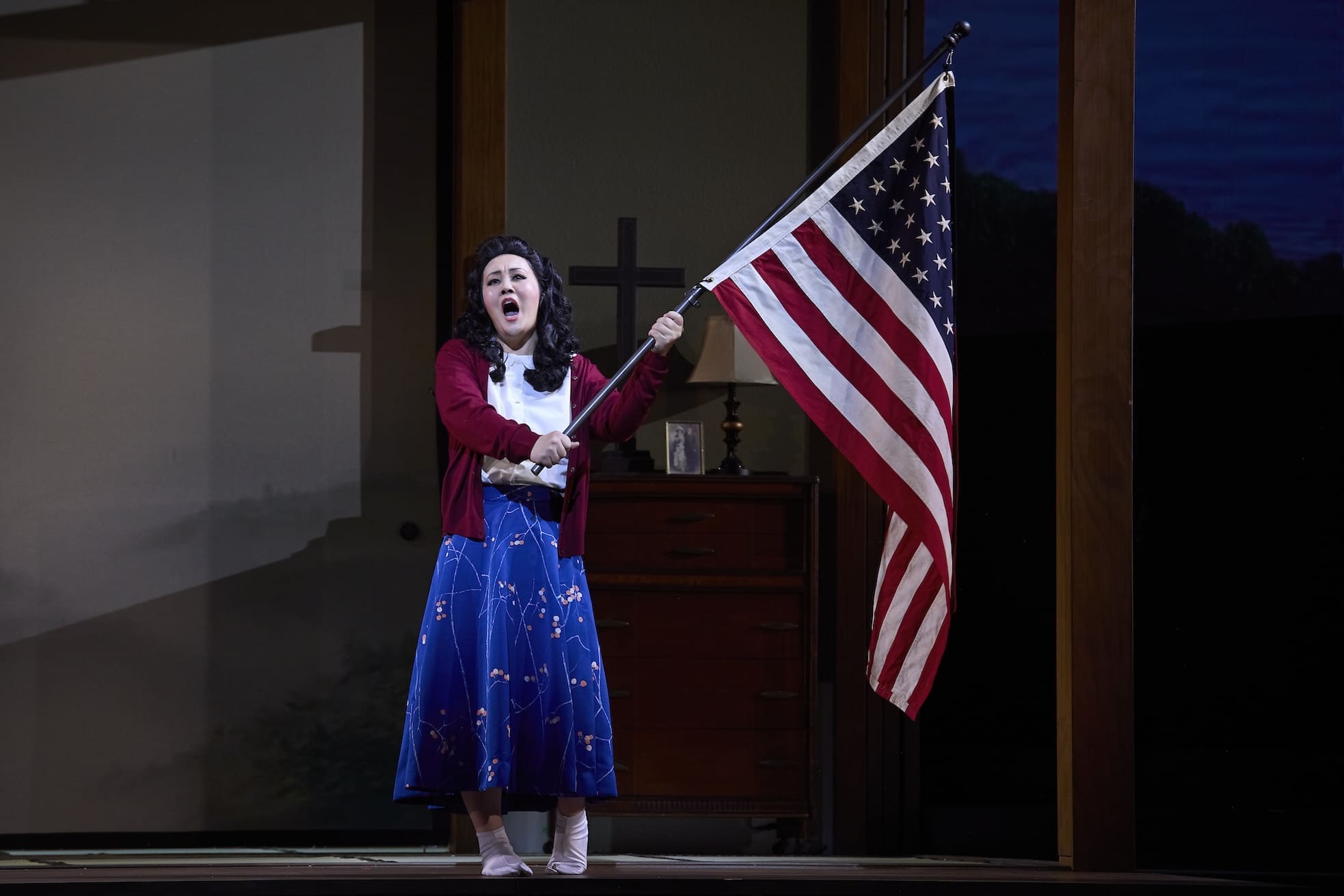
Photo Credit: HarderLee Photography
In director Mo Zhou’s vision, a post-World War Two Butterfly abandons her traditional garb and becomes “self-consciously American” as she waits for Pinkerton’s return
Opera Canada depends on the generous contributions of its supporters to bring readers outstanding, in-depth coverage of opera in Canada and beyond. Please consider subscribing or donating today.