Jenůfa (1904), by Czech composer Leoš Janáček, tells a dark story. A young woman in a Moravian village becomes pregnant out of wedlock, and when the child is born, she and her stepmother find themselves in a desperate situation. In this opera, hurt people are driven to hurt others, and rigid societal rules force women to choose between bad options. The result is one of opera’s most compelling dramas – tragic, realistic and profoundly compassionate.
Jenůfa opened at Opéra de Montréal on Saturday, November 22nd and will be performed only twice more on November 27th and 30th. The production, directed by renowned Canadian-Armenian filmmaker Atom Egoyan, brings the opera to life with electric voices and complex theatrical performances. I only wish there were more shows.
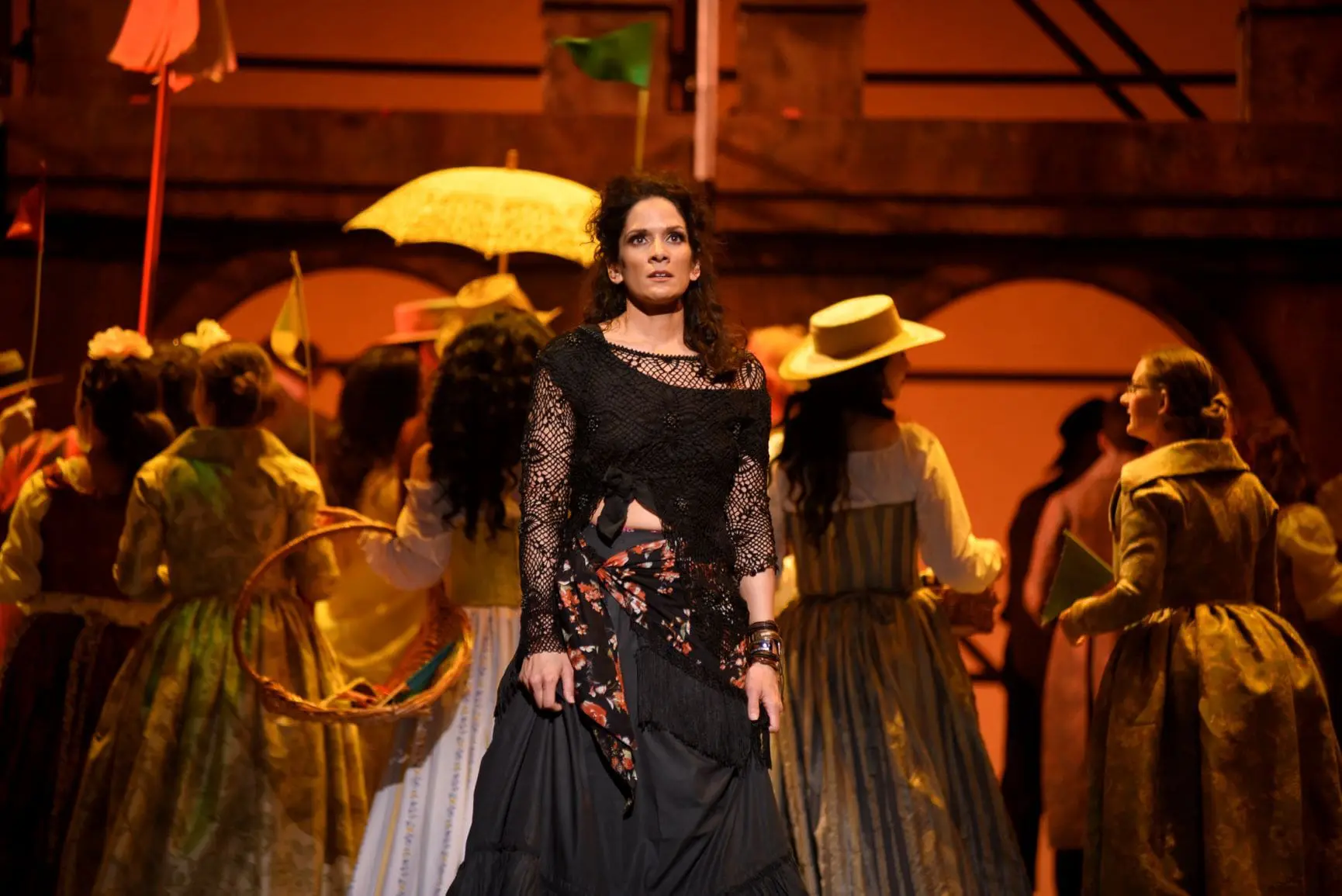
French soprano Marie-Adeline Henry was an extraordinary Jenůfa. In an instant, her voice could go from stunningly powerful to poignantly quiet, without sacrificing any of its carrying power. I savoured her singing especially in the moments when Janáček’s love of Moravian folk songs shone through – fragments of warm, fluid melody in an otherwise very speech-inspired score. Her sincere and grounded acting cut straight to the heart.
The two male leads were equally impressive. Canadian tenor Isaiah Bell as Števa and Lithuanian tenor Edgaras Montvidas as Laca both brought gorgeous vocalism and compelling physical acting to the stage. Bell was so deeply in character that I almost forgot he was singing; his rich, consistent tenor never broke the spell. The turbulent attraction between Števa and Jenůfa was palpable in the first-act party scene, but Bell slowly exposed the essential cowardice of Števa’s character as the opera went on. Meanwhile, Montvidas embodied Laca’s bitterness and anger just as convincingly as his better qualities – love, courage, remorse. Montvidas’s tenor is both powerful and well-controlled, with beautiful tonal variety in the more speech-like passages.
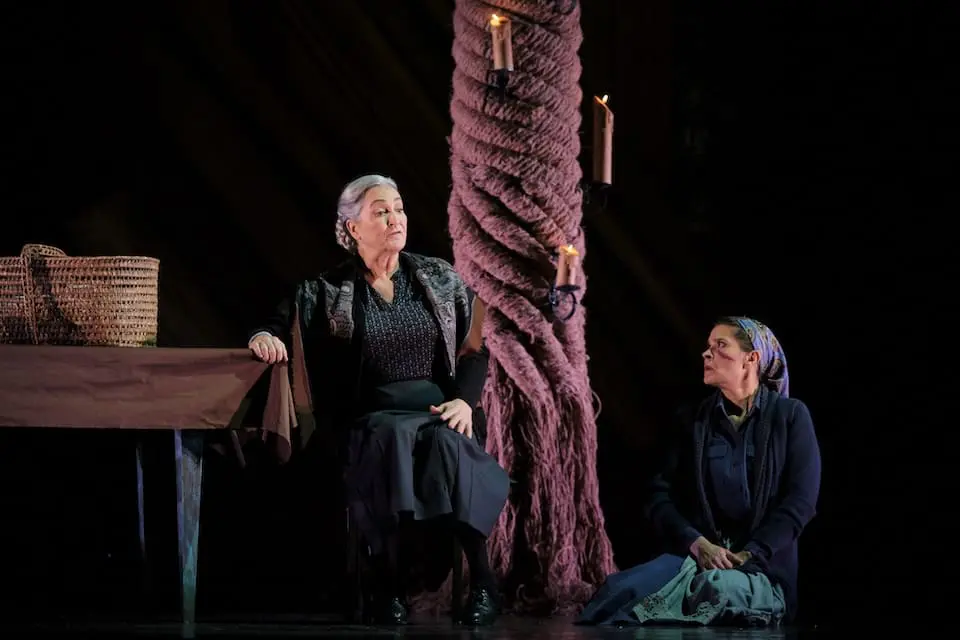
Swedish soprano Katarina Karnéus played Jenůfa’s tormented but loving stepmother, the Kostelnička. This role is in many ways the dramatic crux of the opera and presents a massive vocal challenge, requiring both extremely powerful high B-flats and a strong middle and lower range, all the way to below middle C. In the performance I attended, these lower, more recitative-like sections did not always carry over the orchestra. Still, Karnéus was equal to the dramatic challenge, carrying the crucial second act on her shoulders, and her high notes were electrifying.
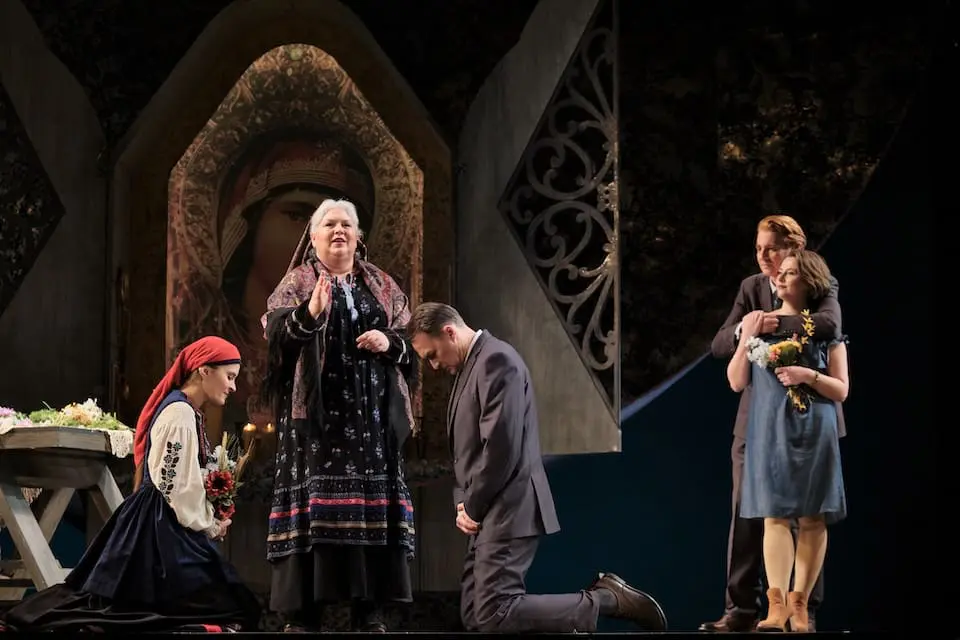
Photo Credit: Vivien Gaumand
From left to right: Marie-Adeline Henry, Megan Latham, Edgaras Montvidas, Isaiah Bell and Tessa Fackelmann
Among the smaller roles, baritone Mikelis Rogers stood out as Stárek, a mill worker who sees right through Laca’s outbursts. I found mezzo-soprano Megan Latham as Grandmother Buryja somewhat underpowered vocally and dramatically. The third act, however, achieved a strong ensemble cast effect, with colourful performances from Atelier lyrique members Colin Mackey (Mayor), Camila Montefusco (Mayor’s Wife), Tessa Fackelmann (Karolka) and Justine Ledoux (Pastuchyna).
It’s obvious that this production’s singing actors were set up for success by Atom Egoyan’s thoughtful and inspired direction. All the relationships on stage – not just the relationships between the leads – felt fleshed out and real.
According to Egoyan, the production design was meant to blend past and present, and Debra Hanson (the costume designer for Schitt’s Creek) landed on a mix of folkloric clothing and modern dress that proved very effective. I could have done without Števa and Karolka taking selfies in the third act, but otherwise the sets, lights and staging worked together to support the action with clear but unobtrusive symbolism.
I was excited to see Canadian conductor Nicole Paiement at the podium, and she did not disappoint, bringing out the warmth and timbral variety of Janáček’s dense and challenging score. Many textures depended heavily on the brass section of Orchestre Métropolitain, who rose admirably to the occasion; the extended lyrical violin solo in the second act was also notable.
There were a few moments – a surtitle typo, a tricky rhythm, a slightly stiff blocking maneuver – that made me think the cast and crew would have loved just one more rehearsal to make things more comfortable. But such is life in the opera business. By the time Marie-Adeline Henry came out for Jenůfa’s bow, any hiccups were forgotten, and the audience was on its feet.
To me, Jenůfa is a masterpiece not just because of Janáček’s music – the music that made Atom Egoyan fall in love with opera for the first time – but because it is one of the first operas to tell a woman’s story from a woman’s perspective: the libretto is a close adaptation of an incisive play by Gabriela Preissová. I am deeply grateful to everyone at the Opéra de Montréal for doing the opera justice.
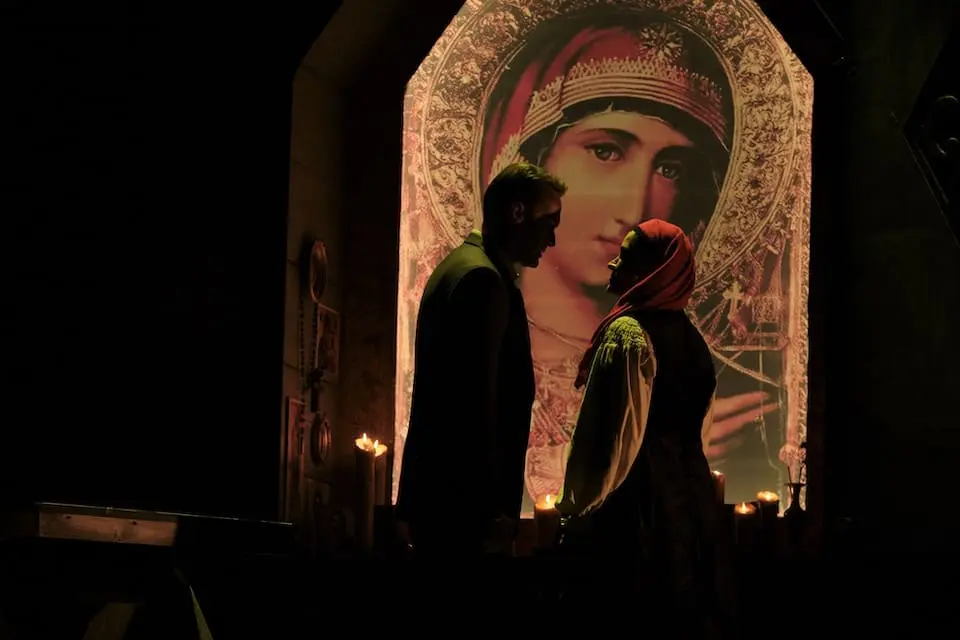
Photo Credit: Vivien Gaumand
Edgaras Montvidas (Laca) and Marie-Adeline Henry (Jenůfa) at Opéra de Montréal
Opera Canada depends on the generous contributions of its supporters to bring readers outstanding, in-depth coverage of opera in Canada and beyond. Please consider subscribing or donating today.