On March 7th, a sold-out audience packed the Burlington Performing Arts Centre to see Southern Ontario Lyric Opera’s (SOLO) production of Verdi’s Aida. Never one to avoid challenges, Artistic Director Sabatino Vacca did not shy away from tackling this behemoth of grand opera. But how would a work which has featured massive sets, huge casts and, yes, even live animals translate into an effective production in a small theatre in Burlington? The answer is: magnificently.
Vacca, who is maestro of the SOLO orchestra, assembled an impressive 42-piece ensemble. There were the pitch problems inherent in a semi-professional group of strings, but overall the SOLO orchestra has evolved remarkably in the past ten years. There were some lovely solos by flutes, oboes, horns and harpist Nicole Chang. The trumpets were handed the difficult job of working between scores meant for players onstage and in the pit, but Bill Renwick and Timothy White did an impressive job of keeping everything in order, while also adding some precise playing to SOLO’s historically troubled trumpet section.
Aida is renowned for its magnificent choruses, and if working on book was what it took to produce a unified, strong sound, then so be it. My quibble was when smaller choruses had some singers on book, and others not: it should be all or nothing. The male chorus in particular needed to be reminded to get their faces up and out of their scores. The sheer wall of sound produced by the 33-person chorus in the Triumphal March was impressive, while both male and female choruses excelled at the ethereal singing in the temple scenes.
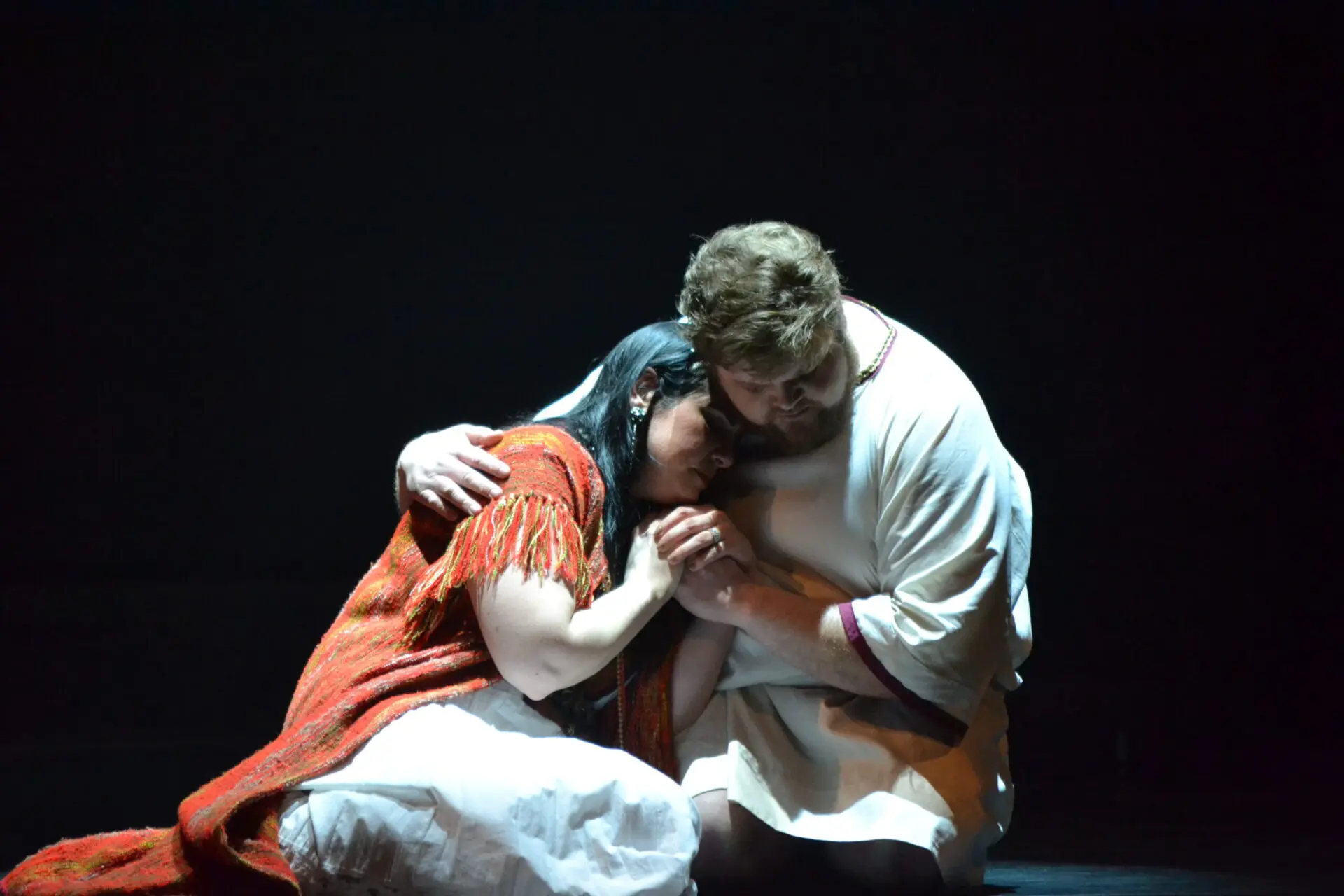
The plot of Aida is relatively simple. Aida, an Ethiopian slave girl, is locked in a love triangle with the Egyptian princess Amneris and the captain of the Egyptian army, Radamès. In the end, Radamès is accused of treason after being tricked by Aida’s and her father, Amonasro, the King of the Ethiopians. Aida and Radamès are sealed in a tomb, and as they slowly suffocate, Amneris grieves her part in the final outcome.
Soprano Stephanie DeCiantis was an understated Aida, trapped between inescapable forces, and it was during her fortissimos that the inner conflict of her character shone through. Her third-act confrontation with Amneris contained her most dramatic acting. Andrew Derynck continues to grow artistically, and his Radamès was magnificently sung and well acted. Not only did his bearing exemplify heroism, but his dramatic tenor embraced all the nuances in this challenging role. “Celeste Aida” had a soft lyrical quality, and this solid beginning heralded an evening of powerful singing culminating in the strong breath control needed in the final scene’s pianissimos.
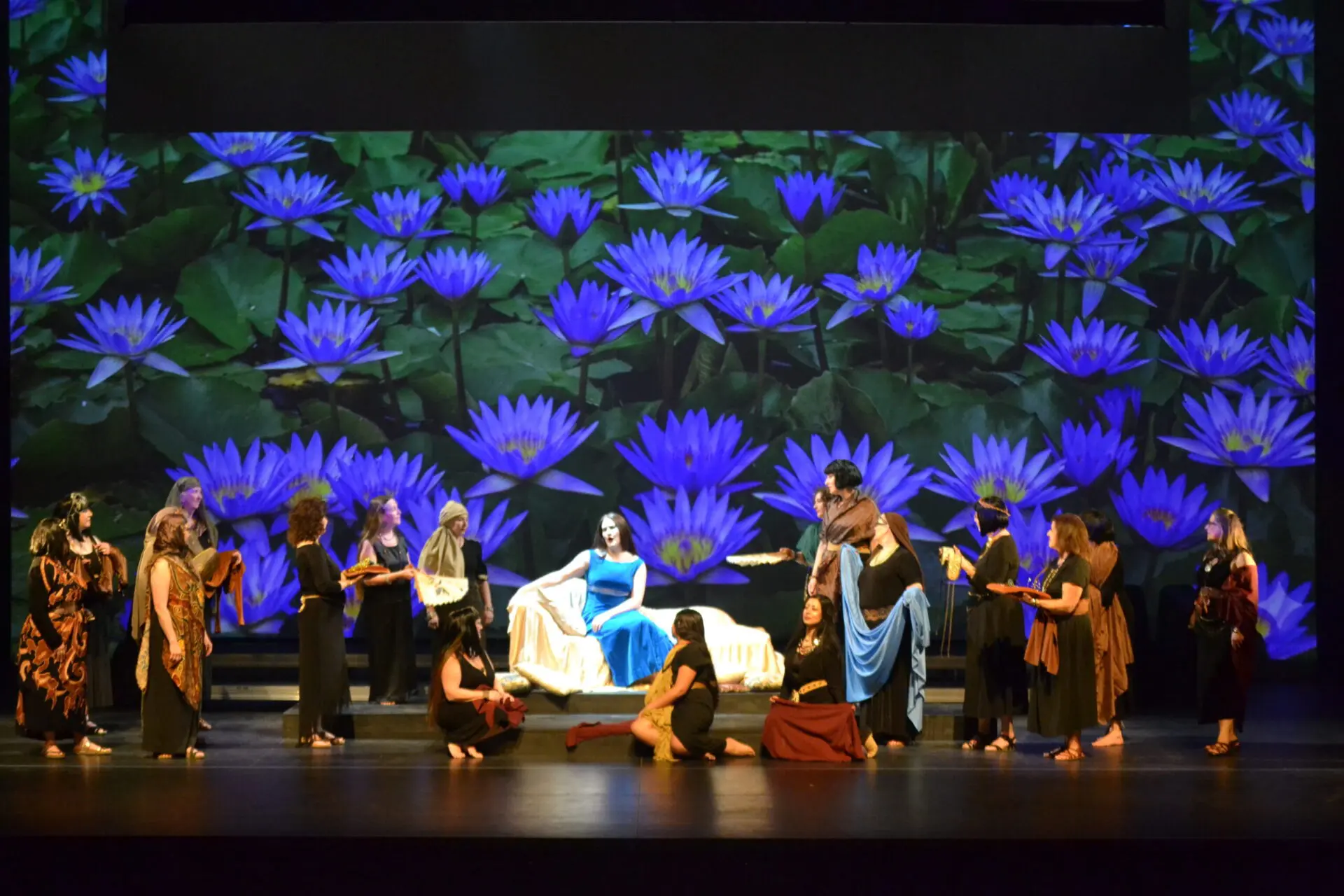
Photo Credit: Gwen Gilhooy
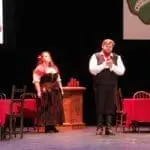
Stephanie Yelovich as Amneris with the chorus of Aida
Stephanie Yelovich was a mesmerizing Amneris; not only did she have a powerful and emotive voice, but she also had a regal bearing which made her a striking figure in every scene. She was alluring yet terrifying, skilfully handling the acting needed to portray her complex evolution as a character. Whether preening amidst slaves, venting her anger on Radamès, or singing soulfully in the final notes of the opera, Yelovich demonstrated a solid and secure middle and lower register but also a healthy and easy top, making her the perfect voice type to portray this pivotal role. Michael Robert-Broder was a dignified Amonasro. Following some vocal distress due to illness in the first act, Robert-Broder’s “Ciel, mio padre!” was heartfelt and had some lovely rich tones.
Chris Palmer was a dramatic and forceful Ramfis whose chilling repetition of “Radamès” in the condemnation scene made for some great theatre. Bass Yurii Yevchuk was a dignified King whose deep chest sound was authoritative in both solo and chorus work. Michael Nasato was a strong tenor whose small role as the Messenger left us wanting more. Terri-Lyn Paterson’s High Priestess added a gossamer sound to Act One’s “Possente Ptha.”
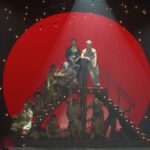
This Aida was advertised as semi-staged, but by the time director Edward Franko was done with it, the audience was treated to the aura of a fully staged opera. Franko’s projections were thoughtfully researched, and multiple images were used in one song, very effectively telling the story. The chorus was on risers, but Franko’s direction with the leads was such that there was a beautiful fluidity throughout the evening. His use of dance was inspired and choreographer Melania Pawliw should be commended for the visually stunning ballet in Act Two. Franko’s background as a soloist, chorus member and director showed an innate understanding in his placement of singers and chorus, something that elevated this production to its inspiring level.
Pamela Blackwood-Marques and her costume and props team did a splendid job of costuming soldiers, priests, priestesses and leads. The costumes looked authentic for a Verdian production, and her work on a limited budget was truly amazing. Gabe Graziano’s elegant lighting added to the overall quality of this production.
Many went to SOLO’s Aida to enjoy the familiar choruses. Some attended to cheer on specific performers, while others bought tickets to see if a small opera company could pull off such a monumental task. Those with the latter group’s misgivings quickly learned that their pessimism was misguided. Thanks to the courage of Vacca and the vision of Franko, SOLO became the community-based opera company that could.
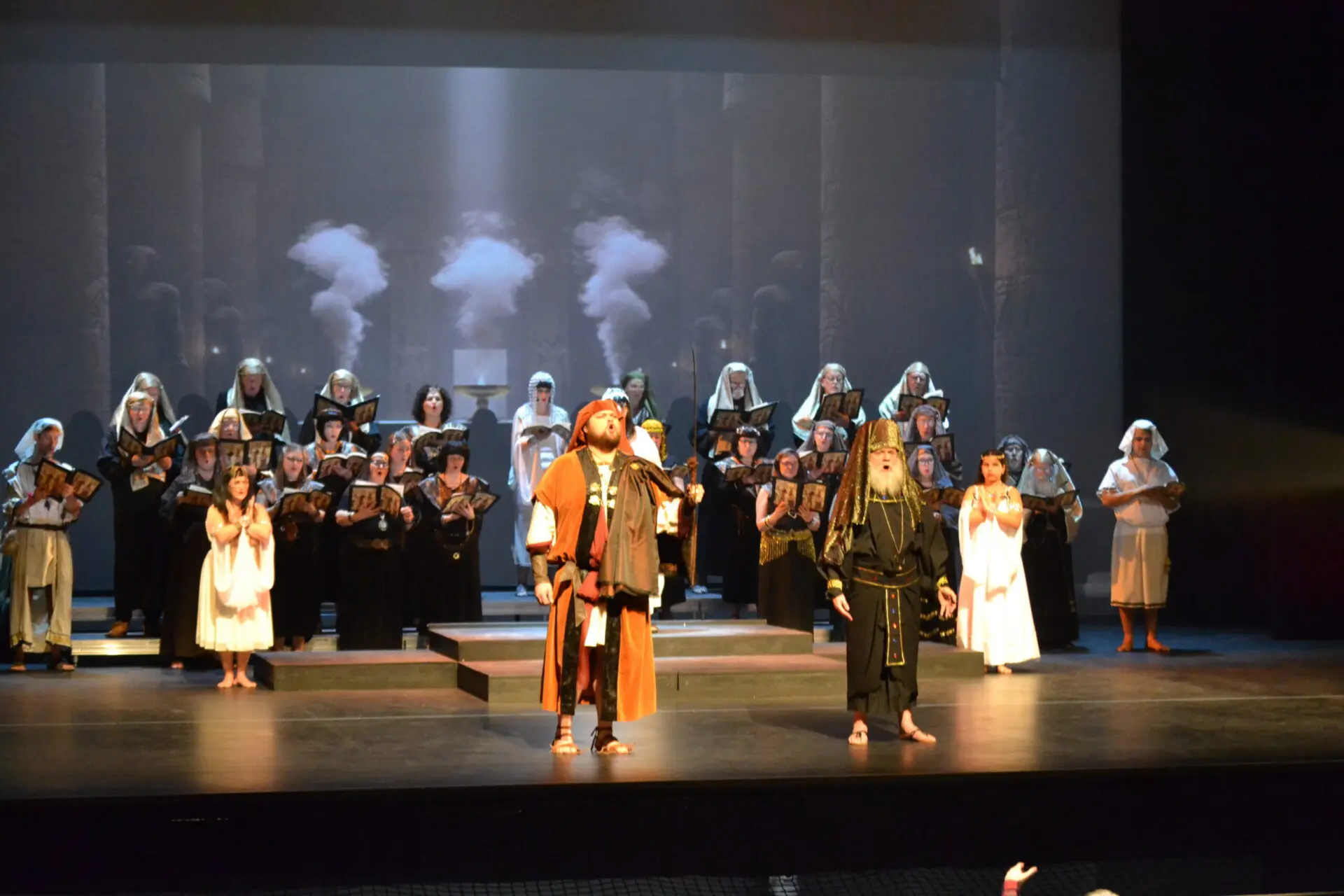
Photo Credit: Gwen Gilhooy
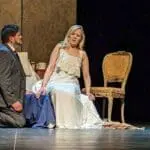
Andrew Derynck (Radamès) and Chris Palmer (Ramfis) in SOLO’s Aida
Opera Canada depends on the generous contributions of its supporters to bring readers outstanding, in-depth coverage of opera in Canada and beyond. Please consider subscribing or donating today.