When Alan Paton’s novel Cry, the Beloved Country was published in 1948, it became an instant bestseller and provided the catalyst for the culmination of more than a decade of artistic scheming between Kurt Weill and American playwright Maxwell Anderson. Plans for their musical Ulysses Africanus lay abandoned, but both were still motivated to write something that would address contemporary race relations. Dorothy Hammerstein gave Anderson a copy of Paton’s novel, and within a year, Lost in the Stars premiered at Broadway’s Music Box Theater in October 1949.
Despite sporadic revivals, it’s taken nearly 80 years to make it over the northern border. Lucky for the couple of hundred of us who made our way to Bloor and Spadina on Saturday afternoon, then, that Opera in Concert used its 2025/26 season to commemorate Weill’s 125th anniversary with the Canadian premiere of Lost in the Stars. This is a weighty, persuasive work of deeply moving musical tragedy; OIC has here more than fulfilled its mission to present music-theatrical “rarities” that deserve illumination.
Anderson and Weill’s adaptation is a mix of the kind of socially conscious theatre that the latter had pioneered in Weimar Germany alongside Bertolt Brecht, midcentury American musical theatre, and high tragedy operatic plots. Exceptional casting by OIC meant that this distinctive mix of genres was realized magnificently by the principal cast, all exceptionally multi-faceted artists.
Taking place just before apartheid rule was formally introduced in South Africa, Stephen Kumalo (Leroy Davis), a Black Anglican priest, travels from his rural village to Johannesburg, searching for his son Absalom (Martin Gomes). Absalom, having served some time in prison and left his work in the mines, is on parole and living with his pregnant girlfriend, Irina (Ineza Mugisha). Convinced to participate in robbing Arthur Jarvis (Joseph Ernst), a white lawyer with whom he is friendly, Absalom accidentally kills him and is sentenced to death. Having first taken guardianship of his sister’s illegitimate son, Alex (Julian Bredin), Stephen finds Absalom only at the end of this series of fateful events: he meets his son in prison, he marries Irina and Absalom, and he returns home to await Absalom’s execution in Pretoria from afar. James Jarvis (Sean Curran), Arthur’s father and a wealthy white landowner who previously expressed outright his firm belief in racial segregation, joins Stephen in his vigil, and the two men share in grief and tentative reconciliation.
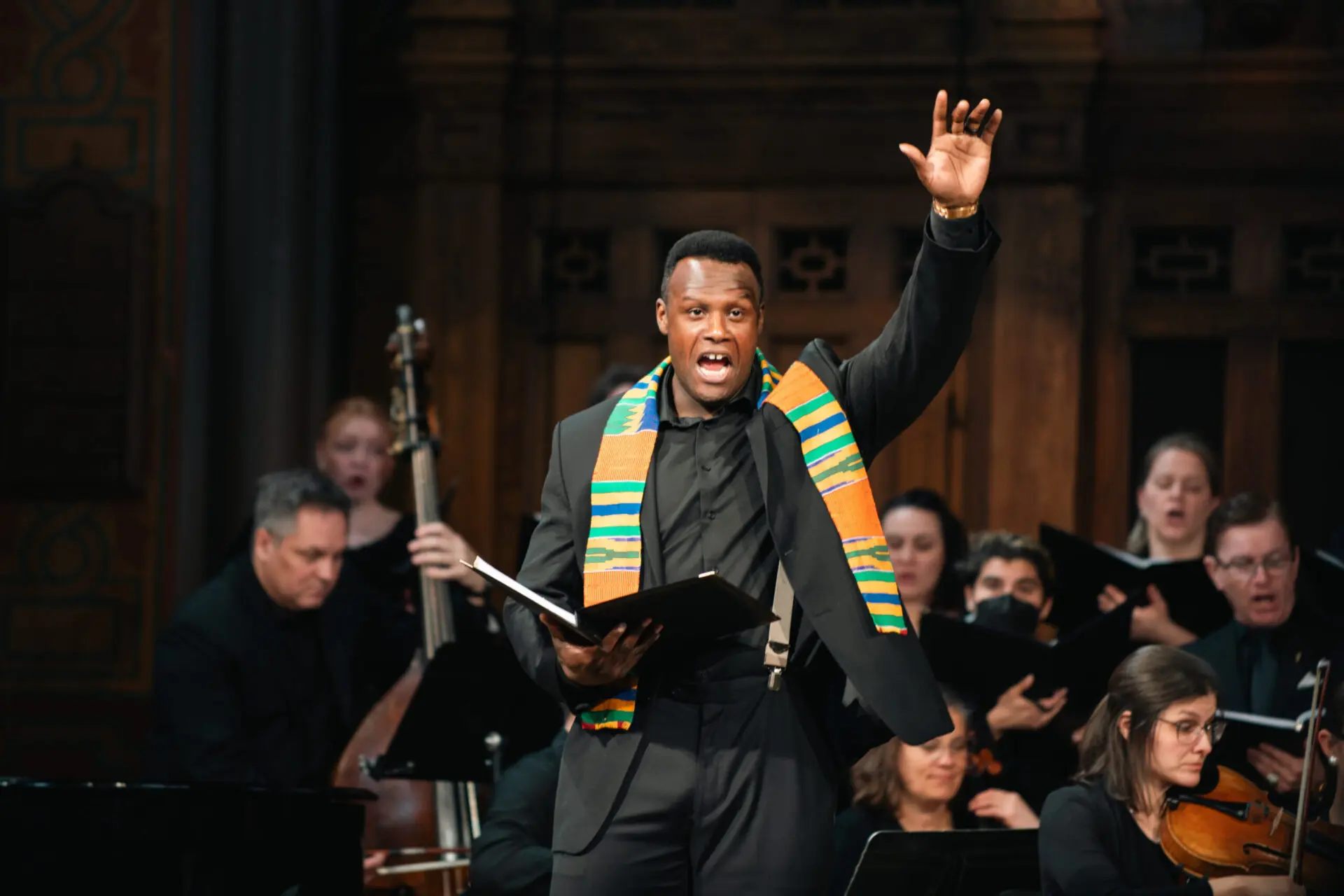
Photo Credit: Emily Ding Photography
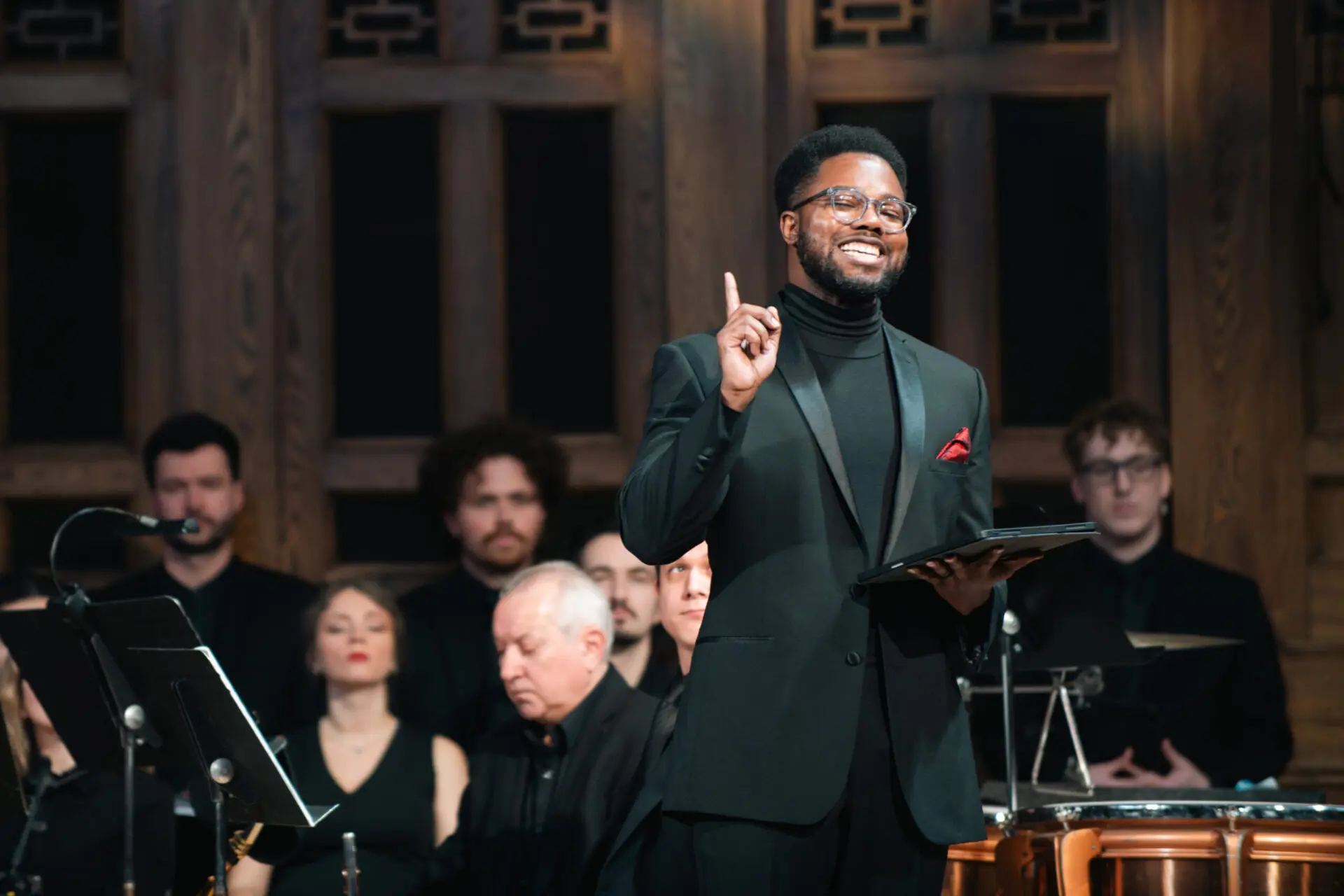
Ryan Allen as the Leader, our narrator/poet in Lost in the Stars
We are drawn into multiple journeys throughout the piece: literal ones undertaken to, from and across Johannesburg, quests that Leroy Davis brought to life in a phenomenal vocal performance as Stephen, delivering wonderful expressive breadth and lyrical flexibility. Most of the narrative’s journeys are abstract, however: towards and away from faith arcs of personal and collective redemption, processes of grief, and the movement from racial prejudice to mutual acceptance. OIC’s unstaged performance allows this powerful layering of metaphors to emerge throughout. We didn’t see, for example, the two most impactful dramatic events (Absalom killing Arthur and Absalom’s execution) – our experience is guided more often by post-hoc narration. Ryan Allen tied scenes together in the elusive role of Leader/Poet/Narrator, compelling us to reflect on the narrative’s complex symbolism with a commanding, rich vocal presence. (Catch him on the big screen in Normal from April 17, following its 2025 TIFF premiere).
Weill’s broad musical palette, blending Broadway, 1940s jazz, opera, oratorio, spirituals and blues, was delivered with vigour by all. Hints of Weimar cabaret surged to the fore in Francesca Alexander’s rousing showstopper scene as Linda, a tavern entertainer. Irina and Absalom spend comparatively little time together, but Mugisha and Gomes brought their scenes alive with electric intensity as the troubled but loving couple. Mugisha also gave a breathtaking performance in Irina’s solo scenes, her gorgeously rich voice complemented by singularly expressive acting.
Recent support from the Azrieli Foundation is evidently already bearing fruit, allowing the inclusion of a small but mighty band, who, under Joel Goodfellow’s confident leadership, impressively brought out the nuances of Weill’s diverse score. Myriad small roles and bit parts, meanwhile, were taken on with enthusiasm by members of the chorus. The piece has a substantial amount of spoken dialogue, which was the most uneven aspect of the production, delivered with convincing emotional range by some of the cast and more haltingly by others, which I suspect was mostly a product of under-rehearsal.
It’s possible to appreciate Lost in the Stars for both its meditation on humanity’s moral complexity and its window into the fascinating post-war-pre-apartheid era, but it also takes very little effort to find new relevance today in its central themes. Just as Weill and Anderson were reflecting the tumult of 1940s America and Europe as much as illuminating South African racial politics for an American public, so too do the work’s wide-ranging political resonances ring as unfortunately true today as a century ago. Suffice to say: if you missed Saturday’s performance, seek out Lost in the Stars. Tell whoever you can to stage it again in Canada before too long, and in the meantime, watch out for our stars Allen, Davis and Mugisha – these are voices we really want to keep hearing.
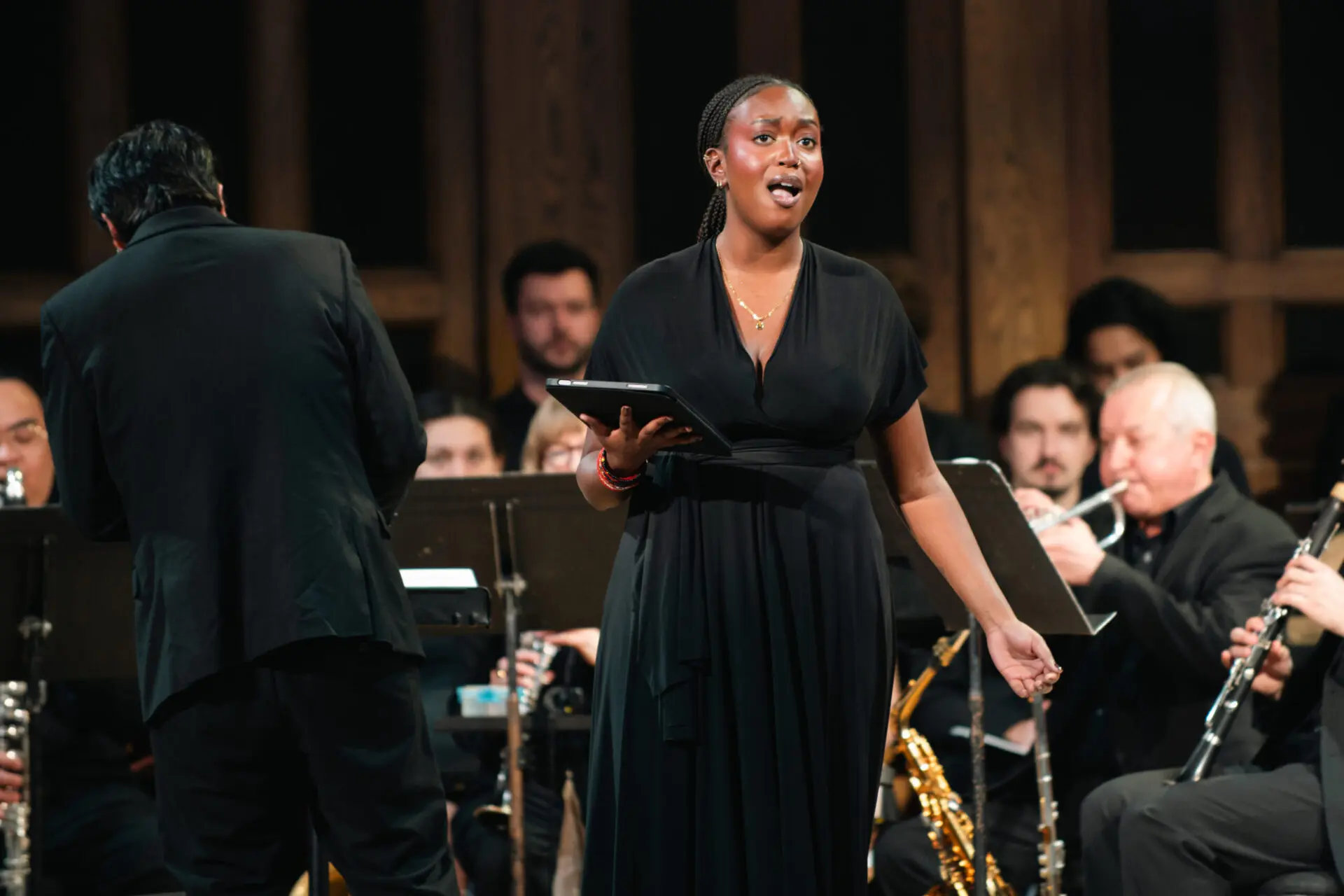
Photo Credit: Emily Ding Photography
Lost in the Stars’ Irina as played by Ineza Mugisha at Opera in Concert
Opera Canada depends on the generous contributions of its supporters to bring readers outstanding, in-depth coverage of opera in Canada and beyond. Please consider subscribing or donating today.