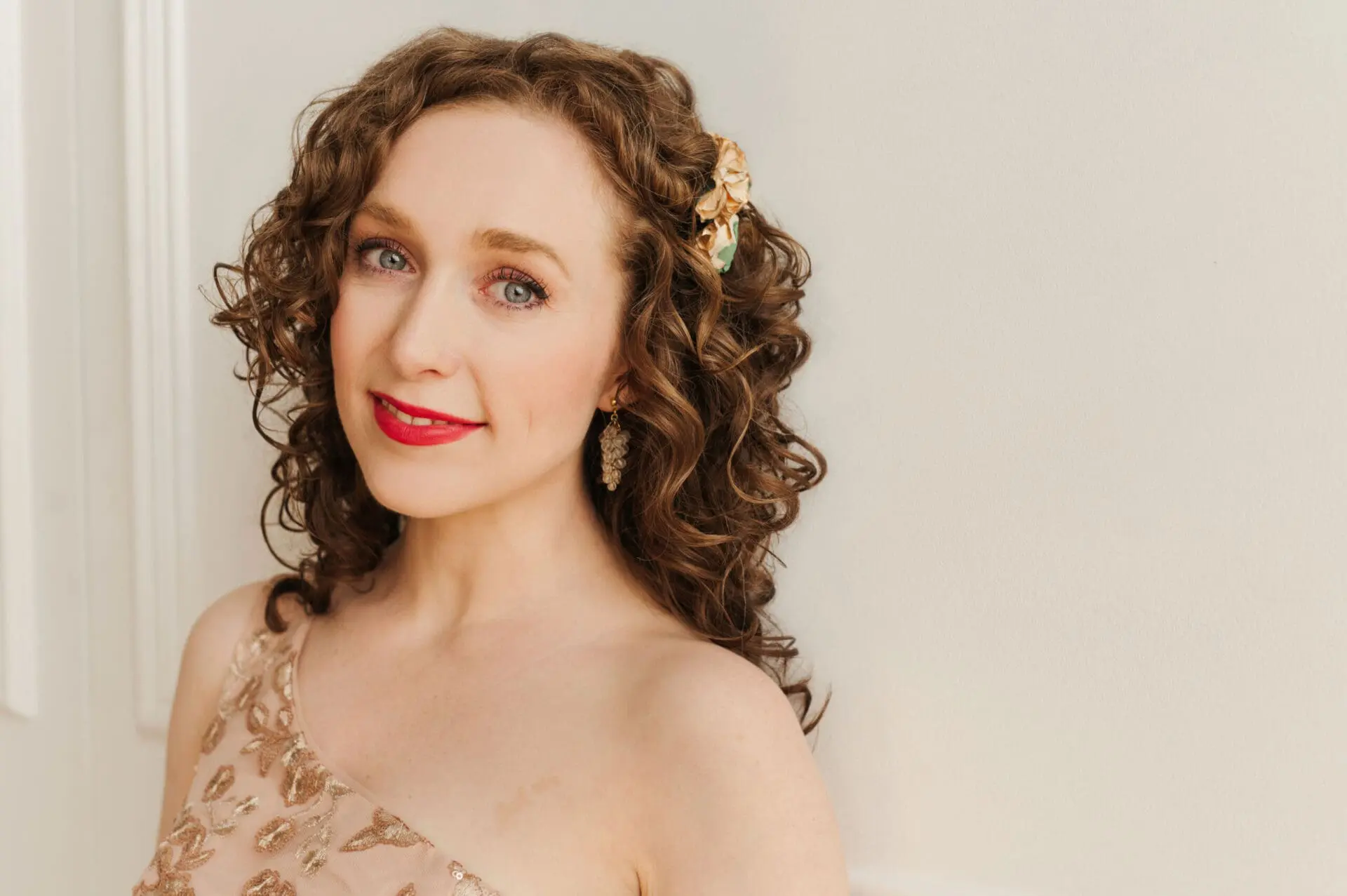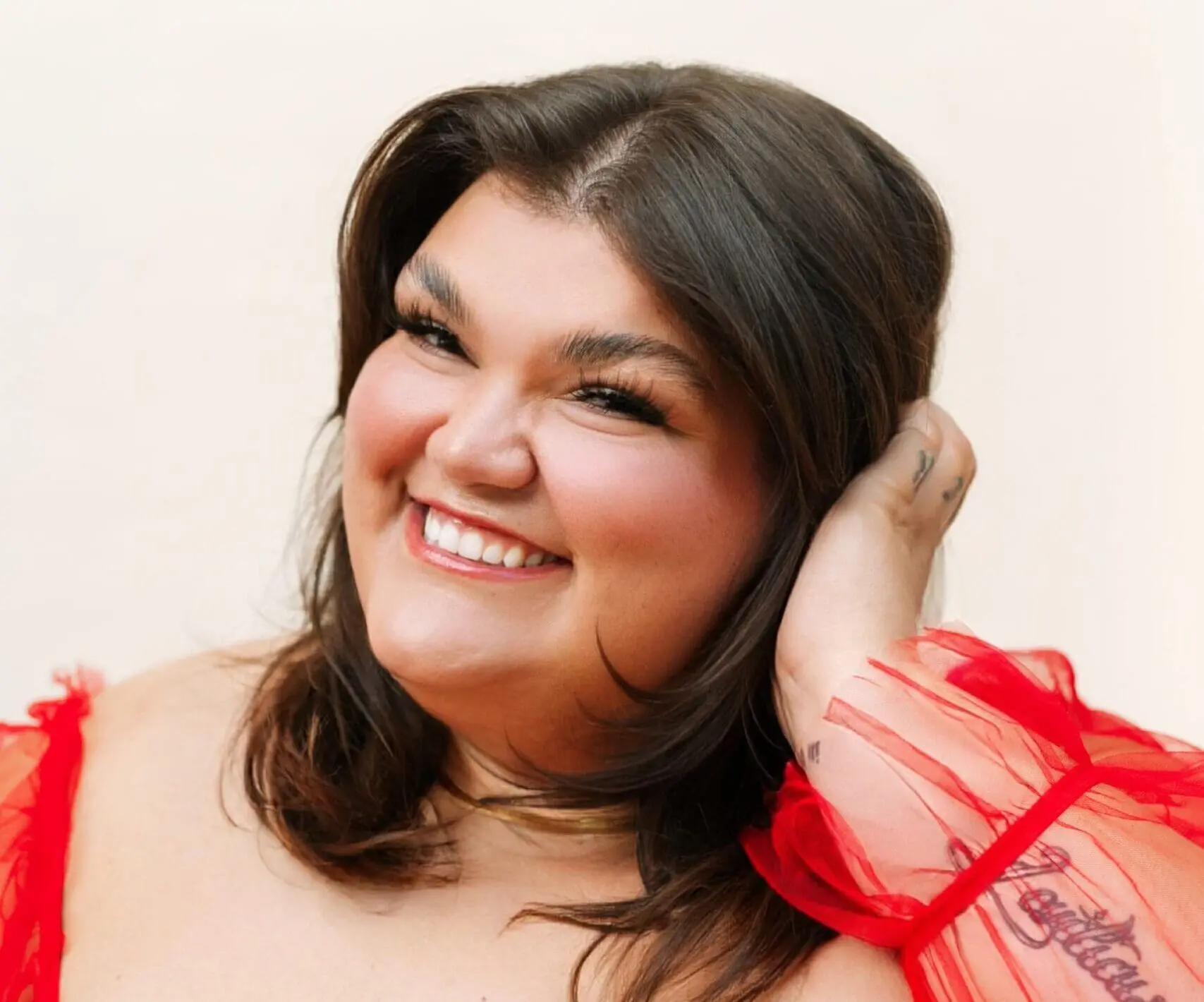
The Artist of the Week is Canadian (mixed settler with Mi'kmaw roots) soprano Emma Pennell. They are a librettist and performer in Against the Grain Theatre's Canuck Cantatas from April 10th to 12th (tickets and info here).
Emma is a performer, librettist and poet. They were the second place winner at the 2024 Canadian Opera Company's Centre Stage Competition and received the RBC Emerging Artist Award at the Governor General's Performing Arts Awards in 2025. Emma is currently a member of the COC's Ensemble Studio.
This week, Emma chats with us about their educational journey, love of trees and the importance of community. Read on to find out more.
What/who inspired you to sing?
I grew up in a tiny, off-grid cabin in rural Northern Ontario. To pass the time, we were always outside: singing through the woods to my grandparents’ house, where my mom would remind us, “The louder you sing, the better! It keeps the bears away.” So we were always singing outside, which was especially important because we had several raspberry patches on our walk to Grandma's house.
I've been singing to my "tree friends" for as long as I can remember. I used to shake their hands like they were my fans and I was on a stage. I would greet them after, and they would tell me how much they loved my singing. With no electricity or plumbing, or any technology, my imagination became my entertainment. We had a battery-powered radio, and we would listen to CBC Radio One, because my dad liked the podcasts and The Vinyl Café, Mom liked the true crime, and every Sunday, Sunday Night at the Opera would come on and I would groan and try to make up my own stories about what these people could possibly be singing about.
Music surrounded me from an early age. My great-grandparents (who I am so fortunate to have known very well), grandparents, aunts and uncles, all part of a family band, made sure of that! They would travel around the small towns of the Almaguin Highlands and cottage country, anywhere from Parry Sound to Huntsville to North Bay, but most especially the little towns in between, and they would play at retirement homes, fall fairs and square dances at the Sundridge Legion. Sometimes they would take my brother and me with them. They taught my brother to fiddle, tried to teach me (but I wouldn't have it), and they would always have me come up and sing, and I loved to sing.
One of my first experiences singing, I think I was about four years old, I sang “You Are My Sunshine” at the Sundridge or South River Fall Fair, I can't remember which. An older gentleman came up to me afterwards, and he was crying. He told me it was a very special song to him, and he held my hands and thanked me for sharing that gift with him. That was the first time I realized that music is medicine. Growing up, I saw the ways addiction, loss and systemic failures affected the people around me, my cousin overdosed, my brother was taken from our home by CAS, many of us still struggle with health, mental health and addictions. Music was one of the few places where healing, connection and hope felt possible. It is a gift we share with each other, and one of the most human things you can do. And so I always say that my favourite gigs are the ones where I'm singing for the people who need it most.
When I was in high school, I used to sing for palliative care patients at the North Bay Hospital, and any opportunity I get to sing for people who really need the medicine. Those are special moments for me. That's what inspires me to sing.
Favourite place?
My favourite place in the whole world, and keep in mind I haven't really been that many places in the world, but so far, Newfoundland. I love all of Newfoundland, of course, especially Curling and Corner Brook, where my heart, heritage and family are from. La Scie: its beautiful cliffs, hiking, wild blueberries, and the crab festival that we went to with zero crabs but one hell of a boat parade. Bonavista with all the puffins and the lighthouses and all the winding roads that feel like they go on forever and then suddenly there's a beautiful view of the ocean that just melts you.
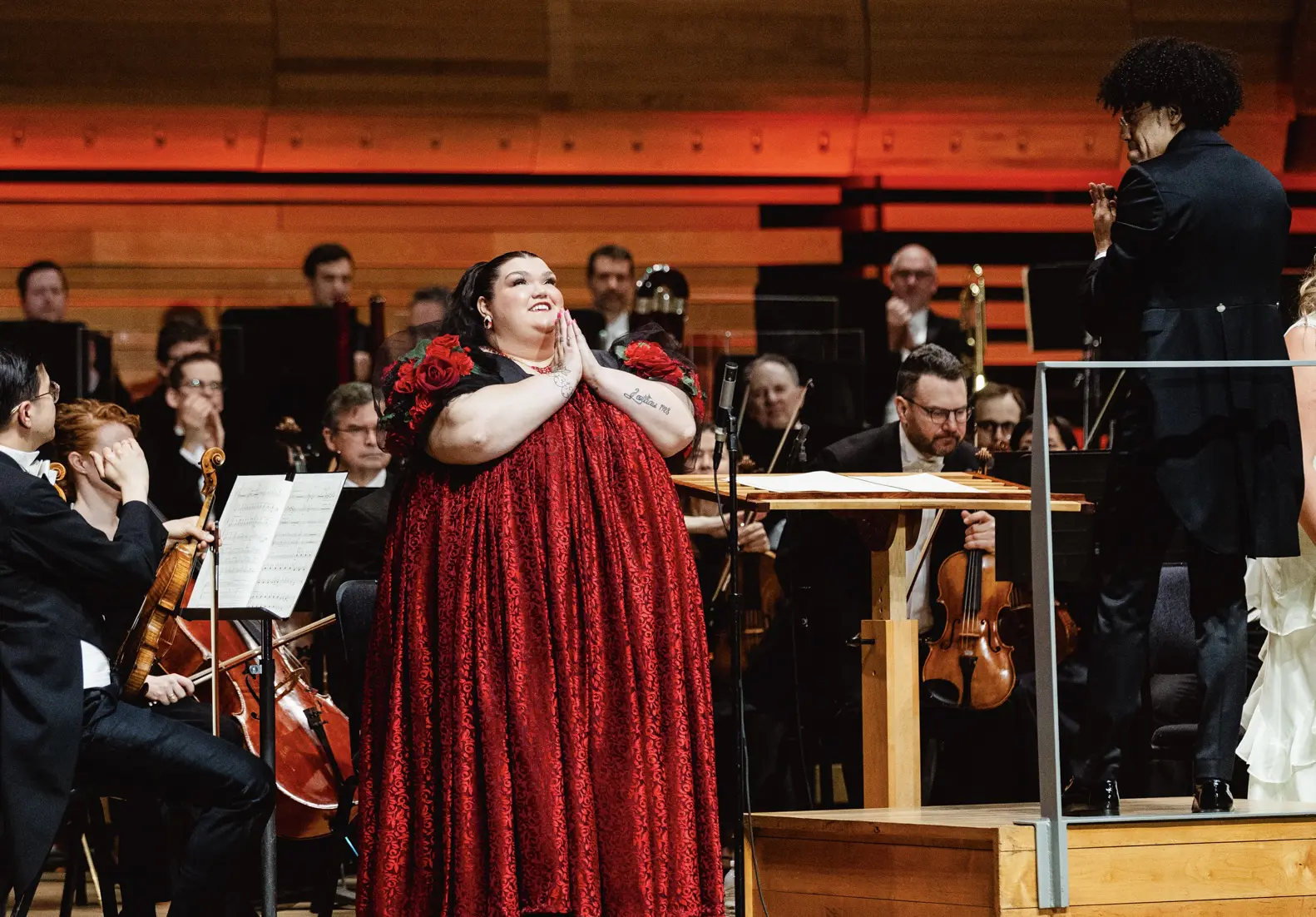
I truly believe it's one of the most beautiful places on earth, and if you haven't had a coastal summer in Newfoundland, you're missing out. I am, however, very excited to sing at the Edinburgh international Festival this August. I'm taking the Mi’kmaq language to one of the most coveted music festival gigs in the world with the OSM!
If you weren’t a singer, you’d be..?
If I wasn't a singer, I don't know what I would do. I come from a family that is below sub-poverty. I've always had an affinity for trees, and I've loved learning about each name and all of their properties. When I was in high school, a local teacher named Brad O'Gorman (we called him OG) taught a forestry class. It was such solace from the halls and walls of the school when we got to go outside during that period and roam around in the bush and collect twig samples and put them in our little Nalgene water bottles to make a collection later to be identified and written about.
The truth is that I've always been quite ambitious, but that is not unique among people who come from a similar background as I do. Growing up below sub-poverty forces you to have grit, but it is through my gift that I've been afforded opportunity. And for other kids like me who grew up on the system, I know for a fact they are not afforded the same opportunities that I have been.
I truly believe, though, that I was always meant to try to make things a little bit better for whoever comes next, and so I always will, and I probably always have in every single version of my life that exists in another universe.
Which opera role do you want to be singing now?
I am a young lyric soprano who may develop into a more dramatic repertoire, and I think I would make a very compelling Micaëla, Mimì, Contessa, maybe even a Rusalka or Susannah! Those are all on my radar and very exciting to me right now, even while I'm trying on some bigger things like early Verdi and, of course my favourite, Puccini.
Which opera role do you want to be singing in 10 years?
I am anticipating a slow burn toward roles with greater orchestral weight and emotional scale. I’m very interested in letting the voice evolve naturally, but from my wish list, I would like to work toward an Aida, Tosca, Leonore (La forza del destino). I like the idea of a big, stinking powerful voice in a big, stinking powerful body on a big, stinking powerful stage.
What’s your favourite thing about singing with an orchestra?
One of my resolutions this year was to think more community-building minded. I love the idea of community, especially as someone who grew up alone a lot. The best times and best memories that I carry are those where I was with community. Community is survival where I'm from.
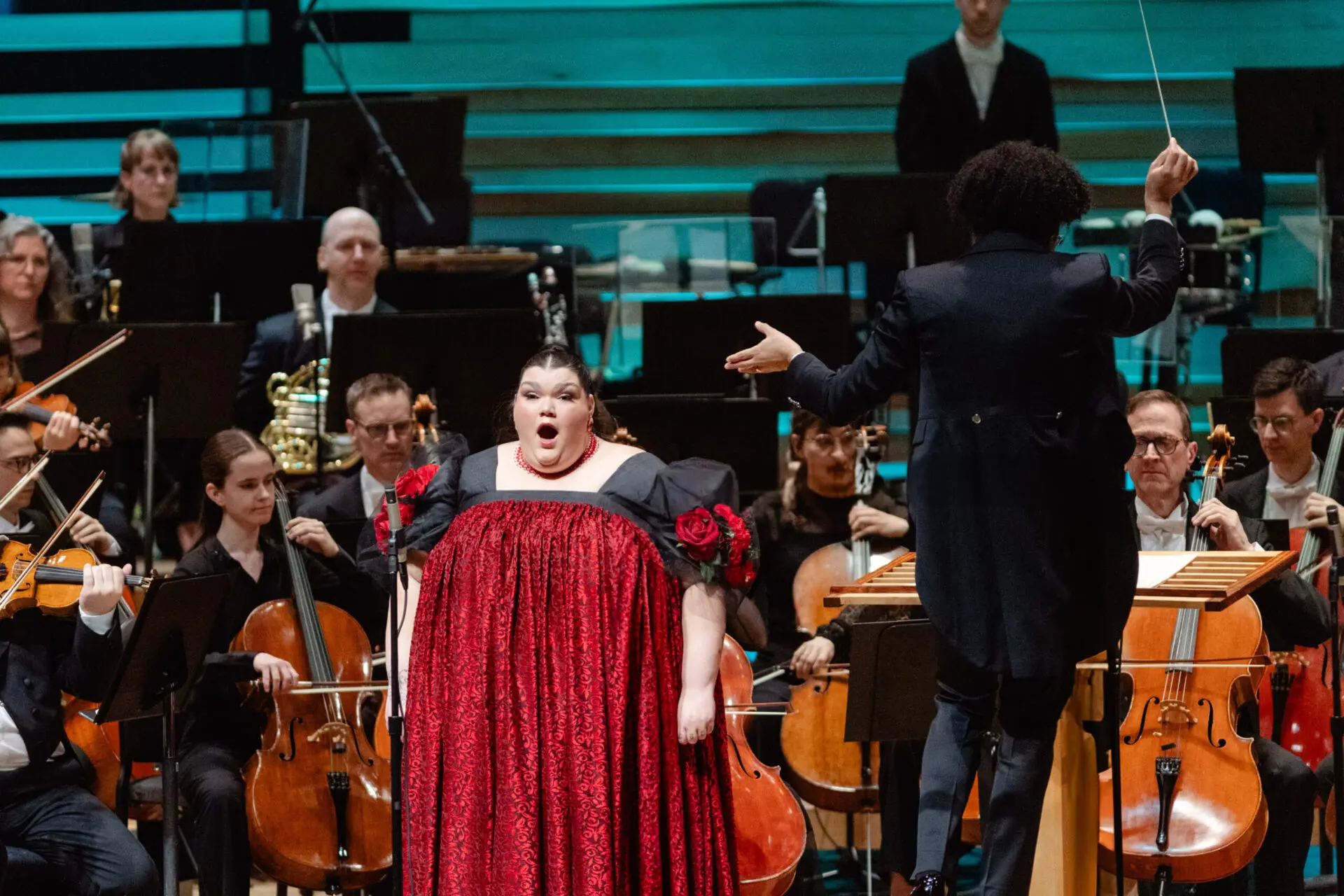
I think the best thing about singing in general, but especially with an orchestra, is the beauty of working as a community. As much as singers have our diva moments, working with an orchestra is much different to me. When I was still at the Glenn Gould School, I got to sing with a choir for the orchestral performance of Home Alone with the TSO, and getting to look down over the choir loft and see the sea of instruments all moving at the same time — almost like an intricate flock of birds or when you see a moving school of fish, it is the combination of so many people's hard work and dedication and excellence.
Getting to stand in front and sing with them as a community, it's truly one of the greatest things a human being can experience. It is incredibly moving to stand amongst such excellence and know that all of these people are here to work with you, and all of the people in the audience want to hear what you have to say. It's remarkable, and I don't take it for granted.
What’s something most people don’t know about opera life?
I think something most people wouldn't know is that it is extremely difficult to be an opera singer, especially when you're young, polarizing, and, in my experience, especially when you come from a background like I come from. It is incredibly expensive - monetarily, mentally, emotionally, politically, and it challenges you in several ways.
I truly believe it's one of those careers where the training forces you to go through ego death and rebuild over and over again. It is tricky to navigate. There are a lot of obstacles, and it is the kind of thing where, if you want it, you have to really, really want it, because at times it feels like an uphill battle and it doesn't always want you back.
I think one thing that people don't know about opera life is that it sort of forces you to find self-love. Truly radical self-love. It forces you to do the things that make you happy, to learn and to reflect. It is a lifelong learning art form, and the lessons are sometimes that you have to know yourself and love yourself for every intimate thing that you are willing to show other people.
Tent or hotel?
Tent all the way! There's no mattress like moss. I grew up in the sticks. We never went on vacation because we were too poor, but when we did want to get away, we would always go camping.
There is no better feeling than waking up at the crack of dawn, getting in the boat, fishing for a couple of hours, sticking it to the boys when you reel in five more fish than they did, and then coming back to shore and making food over a campfire. The food tastes better cooked out in nature over an open flame. The air is cleaner.
And yes, you might have to dig a hole to use the washroom, or you might become enemies with a raccoon, but the stories are worth the discomfort. And there's nothing more peaceful than hearing the birds chirp, crickets at night, frogs all ribbity, a tail flick from a bass, the crackle of fire, the loons calling out, and seeing the mist roll over the calm water in the morning.
Where did you go to school?
I started school where all South River kids start their journey with education: at South River Public School in the heart of the village of South River, Ontario. From there, my brother and I were transferred to the Catholic school, Saint Gregory's in Powassan, for my brother because they had much more resources for children on the spectrum. It was a few towns over and an hour-and-a-half bus ride away (much to my chagrin, but I was happy to help my bro with his transition).
Then I chose to go to Almaguin Highlands Secondary School in South River, all the while I was in the 3133 Burk’s Falls Army Cadet Corps because it was free, my parents got to get rid of me for a summer. You got paid to go to summer camp, there were lots of free meals, and we did some pretty cool recreational things too, like white-water rafting, skiing and hiking. We couldn't really afford many extracurriculars, so that was a great way for me to do things I couldn't have otherwise, gain some confidence and self-discipline, and eventually become the person that I am today.
After high school, my high school music teacher convinced me to audition for music school. I couldn't get in anywhere because my grades weren't good enough. I'd never had private lessons (except for one with the pride of Eagle Lake Narrows, Jill Berry, who was very kind when I begrudgingly decided I did not want to take voice lessons anymore because I wanted to sing songs by The Chicks or Dolly Parton). I didn't have any theory training, and I couldn't read music. I was 18 with nowhere to go.
My music teacher at the time recommended Cambrian College. At the time, they had a program in performance, and it was unlike any other program in Ontario, potentially in Canada, that had a sole focus on classical music performance in Northern Ontario, and they took people based on potential and talent. Their goal was to help take underprivileged young musicians from zero to hero so that after the program you could apply to any university-level music undergraduate program and get in, sometimes with enough transfer credits to skip years.
I auditioned with “Walking After Midnight” by Patsy Cline and “Reflection” from Mulan. I got to work with some of Sudbury's greatest, including Pam Teed, Suzanne Urquhart Pandolfo, Peter McGillivray and Marion Harvey Hannah.
I then went on to study at Western University. I got my bachelor’s degree in voice performance, studying with Torin Chiles and coaching with Marianna Chibotar-Rutkevich, and I also got a minor in Indigenous Studies while I was there during the pandemic. That's around the time that I really started to pay attention to why it matters to have activism become a part of my craft.
After that, I got my Artist Diploma at the Glenn Gould School at the Royal Conservatory of Music. I studied with Adrianne Pieczonka and Stephanie Bogle, and coached with David Eliakis. That led me to the Ensemble Studio at the COC, which is where I now actually get paid to do opera, which is sort of an amazing feat.
Where’s your favourite coffee shop?
When I first moved to Toronto, I lived in Koreatown, and there's this awesome little place right near Christie Pits called Coffee Pocket. It's tiny, and they have little Pierrots painted on the walls, which are quite charming to me. They serve this Korean honeycomb/dalgona latte, which is very sweet but very delicious, and when I want a treat, I'll get that and walk over to the PAT Supermarket for a fresh fish-shaped cake filled with custard.
What’s the best meal you’ve ever had?
Preemptive apology to all the Italian readers, but the best meal I've ever had was one that my mom made - a classic mom's spaghetti, but instead of a traditional Bolognese, my mom did it the old, old-fashioned way and used ground moose meat. It was delicious, tomato-y, cheesy, and quite frankly bomb as hell.
We have coined this affectionately as Moosgetti, and it has made its way into our family rotation. With a piece of cheesy garlic bread, you know it's gonna slap.
When did you know you wanted to be an opera singer?
I've always said that this is the kind of job that picks you. I didn't know I wanted to be an opera singer until I was already doing it.
When I was 10 years old, I auditioned for the Sundridge Fall Fair Idol, a spin-off of American Idol, but much more small-town Ontario-coded. I did the competition, and I won first place in the children's division, singing “Don't Fence Me In.” But when I initially auditioned, after my audition was complete, I was so nervous that I walked out and let out a big “Hallelujah” from the Messiah chorus.
Now keep in mind, I'd never actually seen Messiah because we were so remote, but I'd heard it on commercials before, as we had just gotten our first TV a few years earlier. So the judges came out asking who could possibly have been singing that. They asked my grandma if it was her, and she said no, it was the kid. They ushered me back in to sing it. I had no idea what I was doing, but I was singing the couple of lines that I knew from the TV commercials.
When I got my adjudication sheet after the competition, one of the judges strongly recommended that I consider studying classical voice because they thought I might have a natural gift for opera. My grandma still has that adjudication sheet somewhere, I believe, at her house, it is framed. But at the time I just thought, “Opera? Are you crazy?” and I spent all my money on cotton candy and rides at the fair the next day. I won $100, and I felt like I was the richest kid in town.
So, there were signs. But it wasn't until I heard one of my colleagues, Hannah Crawford, singing at Cambrian on the first day of school that I realized that it was such an incredible art form. I'd never seen anybody with a body like mine take up so much space unapologetically, and the sheer amount of noise and volume and the sheer beauty of it, which seemed at the time superhuman. One performance was all it took, and I was hooked.
What is the ultimate goal of opera?
Opera and theatre have always been the people's art form; from Greek theatre to Shakespeare to early opera. Back when opera used to be free, or it would be a sort of chatty soirée with food and drink. Opera is built upon community building. It is inherently political, deeply human. It's not something you can own; it's something you experience, and it's for everyone.
I think the ultimate goal is to make people feel things and to remind us that we're not alone. It's to remind us that these stories all have things in common, universal things that we all feel, like love or pain or passion, sadness and deep joy. It serves as a moral compass, showing us what's right and what's wrong. It reminds us that there are things that are bigger than you.
Do you believe in fate?
I have to. Too many coincidences have put me on the path that I'm on. I think the Creator has intervened far too many times for it to be anything else. I truly don't believe that the Creator would put these thoughts, these desires of mine, these passions into my head if it wasn't meant for me.
I wouldn't have gotten this gift if it wasn't meant for me. I know that what I do, I do for my people, for people like me, for the next generation, and for all the untapped potential that I saw growing up wrapped up in poverty. There was never going to be any other path for me than the one that I'm on.
What does it mean to be brave with music?
To me, being brave with music is a matter of life and death. I know…sounds serious. A great teacher of mine once said that if you make a mistake in singing, we are luckily in a career where no small children will die on our watch. And while that sentiment rings true and helps calm the nerves of making mistakes, the visibility that my community gets from me being on stage is a matter of whether we are erased or not, whether our stories and our teachings and our people and our bodies are bled back to the earth and forgotten.
Our communities survive through the arts. We break through. We spread our message to all of those who want to hear it. We make change. We teach people empathy for one another and for the earth. We need the arts to survive.
Being brave with music means refusing to be erased, refusing to be silent. It is a massive privilege and a massive responsibility.
LEARN MORE ABOUT EMMA PENNELL
VISIT THEIR WEBSITE
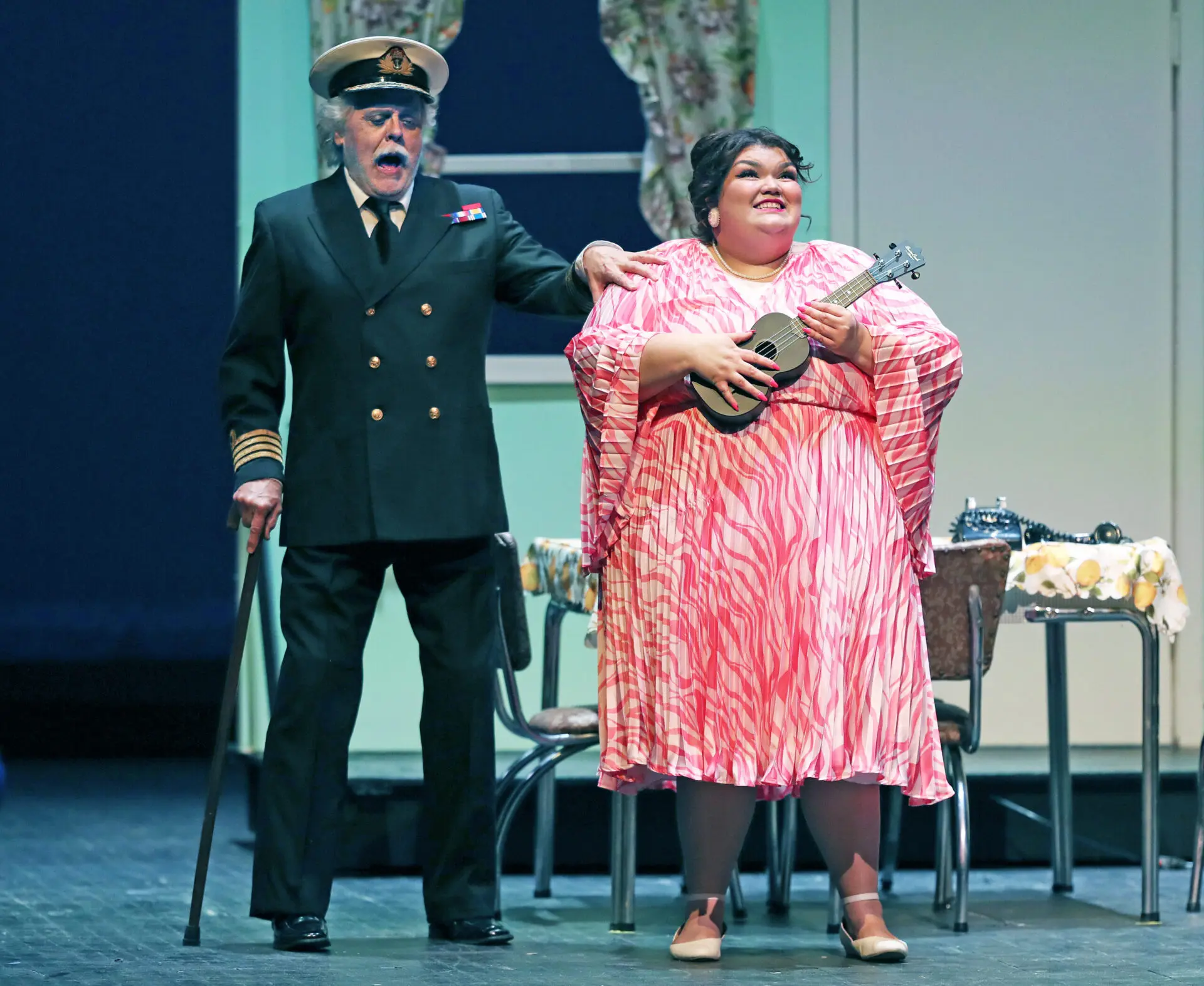
© Claus Andersen
With UWO Opera
© Gabriel Fournier
© Gabriel Fournier
Canuck Cantatas
Against the Grain Theatre

COMPOSER: Sonny-Ray Day Rider
COMPOSER/PERFORMER: Sarah Slean
COMPOSER/PERFORMER: Danika Lorèn
LIBRETTIST: Royce Vavrek
LIBRETTIST/PERFORMER: Emma Pennell
LIBRETTIST: Vern Thiessen
MUSIC DIRECTOR/PIANIST: Spencer Kryzanowski
DIRECTOR: Jennifer Nichols
LIGHTING AND PROJECTOS DESIGNER: Nathan Bruce
VIOLIN: Julia Mirzoev
VIOLA: Russell Iceberg
CELLO: Peter Eom
BASS CLARINET: Brad Cherwin
Canuck Cantatas presents a triptych of bold new mini-operas from some of Canada’s most exciting creative talents: composers Sonny-Ray Day Rider, Sarah Slean and Danika Lorèn join forces with librettists Emma Pennell, AtG Artistic Director Royce Vavrek, and Vern Thiessen to bring to life vivid snapshots of fictional Canadian characters, each one a carefully crafted stone in the ever-evolving mosaic of Canadian identity.
Opera Canada depends on the generous contributions of its supporters to bring readers outstanding, in-depth coverage of opera in Canada and beyond. Please consider subscribing or donating today.