The Glenn Gould School (GGS) presented a light-hearted program for their spring production, as they staged two comic one-act operas – one very unknown and one standard. The first of his operas ever to be produced, La cambiale di matrimonio is a charming one-act piece by an 18-year-old Gioachino Rossini. GGS paired it with Puccini’s familiar Gianni Schicchi, that composer’s only true comic opera.
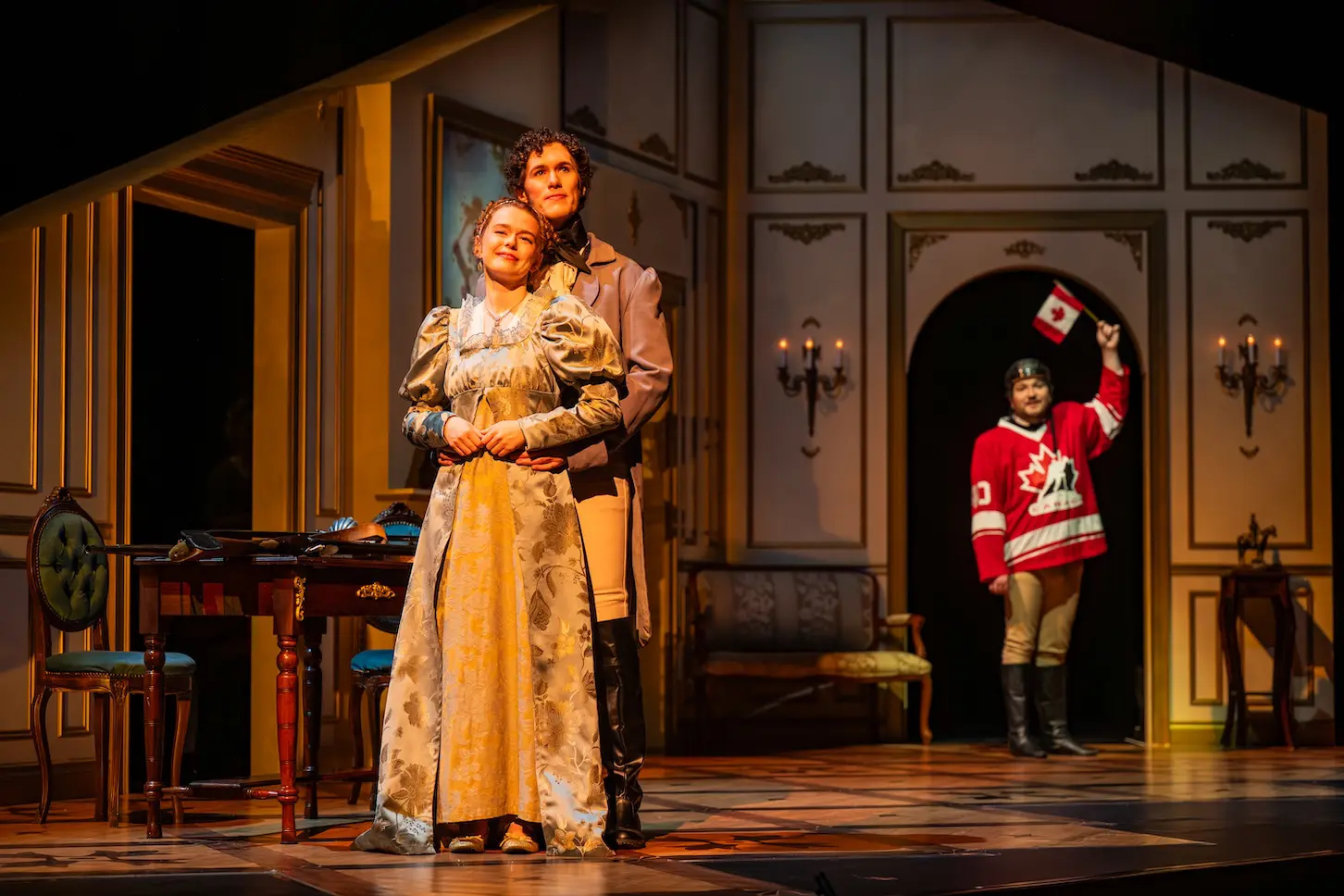
The Rossini came first, and it had a surprising Canadian twist: written in 1810, the soprano, who naturally is in love with the impoverished tenor, is being forced by her father to marry a wealthy businessman from the uncivilized country of (gasp) Canada! Special praise should be given to costume designer Alex Amini for her increasingly stereotypical Canadian clothing for this character. My personal favourite was the tailcoat that appeared to be constructed out of red-and-black lumberjack flannel.
The entire evening really belonged to this year’s Rebanks Fellow James Coole-Stevenson, who played Slook, the Canadian businessman, and the title role in the Puccini. Coole-Stevenson has a nicely maturing baritone voice and a very comfortable stage presence. He played his comic moments with relish, delivering a large but honest performance in even the most absurd situations and costumes. He shows great promise for a career.
The Rossini cast all handled their assignments capably. In particular, household servants Matthew Black and Alannah Beauparlant sang well and had strong presence. Alyssa Bartholomew, as the daughter Fanny, has a beautifully ringing top range and strong coloratura.
With the requirement for more mature voices in Puccini repertoire, Gianni Schicchi was possibly slightly less successful than the Rossini work, although again, many of the students showed great potential. Leandra Dahm sang a lovely “O mio babbino caro,” and the “Spogliati, bambolino” trio, sung by Jada Alexiou, Charlotte Anderson and Daniela Carreón Herrera, was beautifully lyrical.
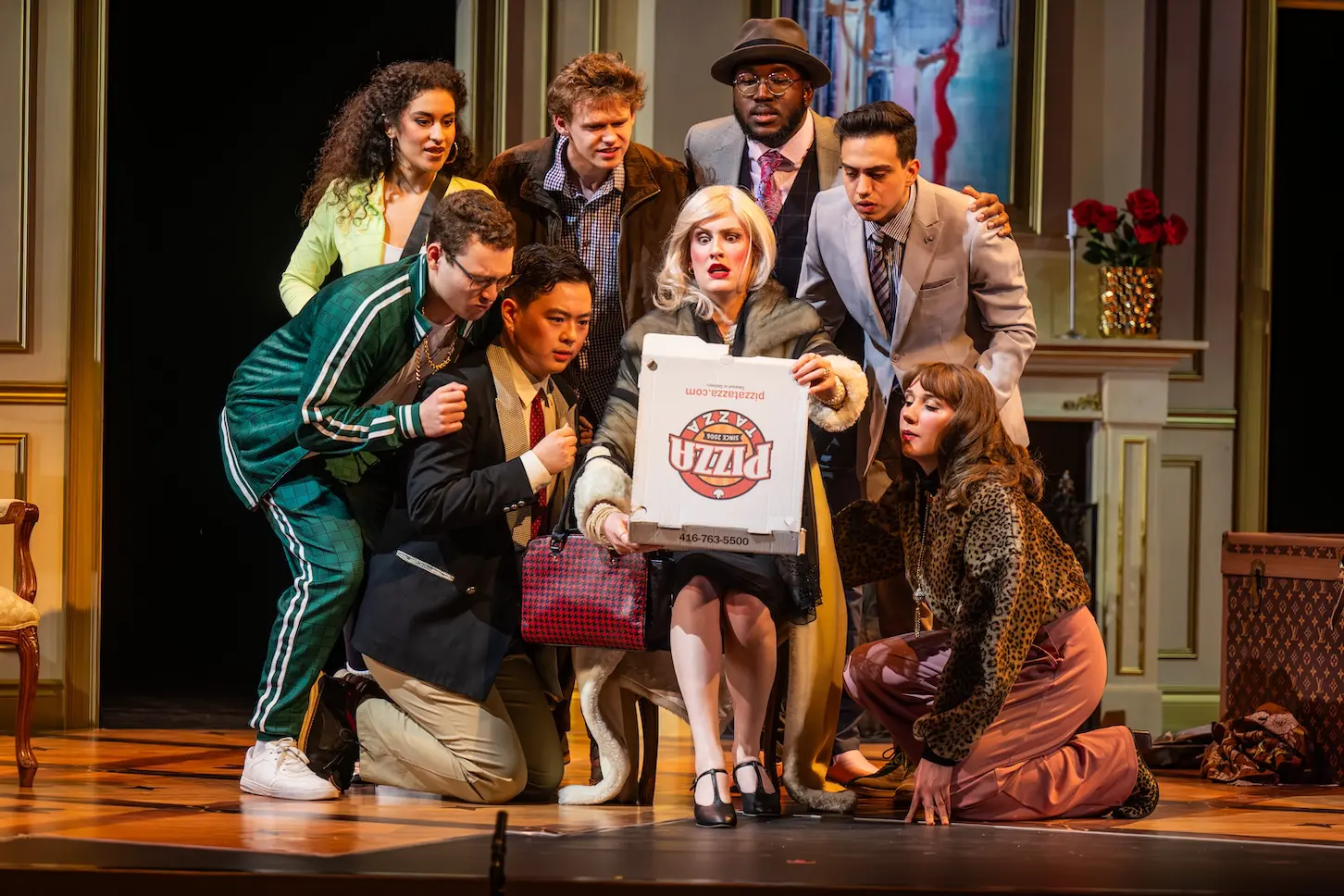
Photo Credit: Dahlia Katz
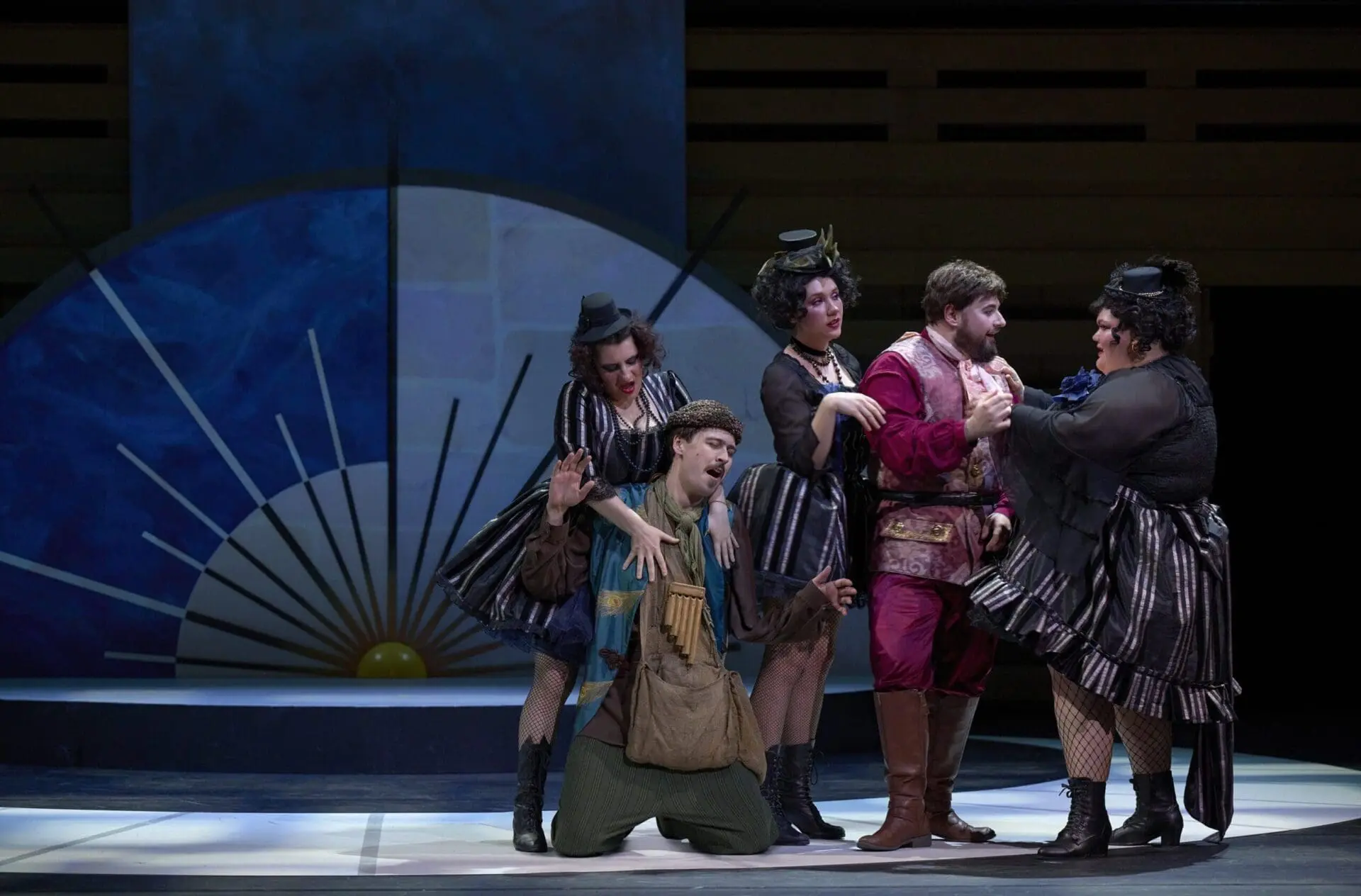
In Gianni Schicchi, the scheming relatives find Buoso’s will inscribed on the inside of a pizza box.
While Koerner Hall, an acoustically remarkable concert hall with no fly or wing space, can be challenging for opera, Adriana Bogaard’s set design worked surprisingly well. It was functional for both pieces and quite attractive, and it kept the action downstage – a benefit for young voices projecting over a 38-piece orchestra.
Gordon Gerrard, a noted Canadian conductor and artistic director of City Opera Vancouver, led the Royal Conservatory Orchestra from what appeared to be a very deep pit. Gerrard did exemplary work with the young players. The Rossini overture had an amazing sense of phrase highlighted by strong ensemble playing from the strings. While the surtitles projected during the overture were funny, they may have detracted from the orchestra’s incredible musicianship. Some of the tempo changes in La cambiale di matrimonio, however, felt under-rehearsed – or possibly suffered from the extraordinary depth of the pit – and it took a couple of measures for singers and orchestra to get back in synch. There were also moments, particularly in the Puccini, where the orchestra overwhelmed the singers and balance could have been better.
Director Stephen Carr staged both pieces as straightforward comedies, with some very funny touches including the surtitles mentioned above, and with bonus credit to Coole-Stevenson for managing to continue singing while steadily consuming his “Canadian” diet of Timbits. Unfortunately, some of the students didn’t appear fully comfortable playing the comedy, as though they were performing the movements that were taught without fully understanding the intentions behind them. It also seemed like the characters in Gianni Schicchi were not well-distinguished beyond their costuming, so the audience wasn’t easily able to follow the relationships between the individual family members.
One other minor quibble: I understand that there is limited space in Koerner Hall programs, which typically cover a couple of months’ worth of performances. Having said that, I question the decision to include biographies of the professional staff while making those of the singers only available by scanning a QR code. These are singers on the verge of entering the profession, so it would be a benefit to them and to the audience to know who these artists are. Particularly when the directors, designers and even the stage manager received printed biographies, this displacement seemed to relegate the students to a lower status instead of giving them the promotion they need.
Overall though, the GGS’s double bill was a charming evening out, marked by some good singing and quite high levels of musicianship throughout.
Opera Canada depends on the generous contributions of its supporters to bring readers outstanding, in-depth coverage of opera in Canada and beyond. Please consider subscribing or donating today.