[Editor’s Note: This production, conducted by Canadian Yannick Nézet-Séguin, will be shown in cinemas across Canada (and around the world) as part of the Met’s Live in HD season on Saturday, October 17th.]
Did the Met really need a new Macbeth?
Its last production of Verdi’s early-period masterpiece (as revised in his middle years) was premiered in 2007. “It’s a good production,” I wrote of Adrian Noble’s staging back then, “plain but potent, [it] never condescends to the piece and should wear well in revival.” It did just that, three times, and it likely would have done so a fourth, given the chance, at age 19. Is that too old? Well, the new production is sharing the stage with Zeffirelli’s 45-year-old La bohème, which still has plenty of youthful kick. With the company’s finances in turmoil, was the Met’s new Macbeth money well spent?
I’d fuss less about this if the staging were a really good one. It’s not.
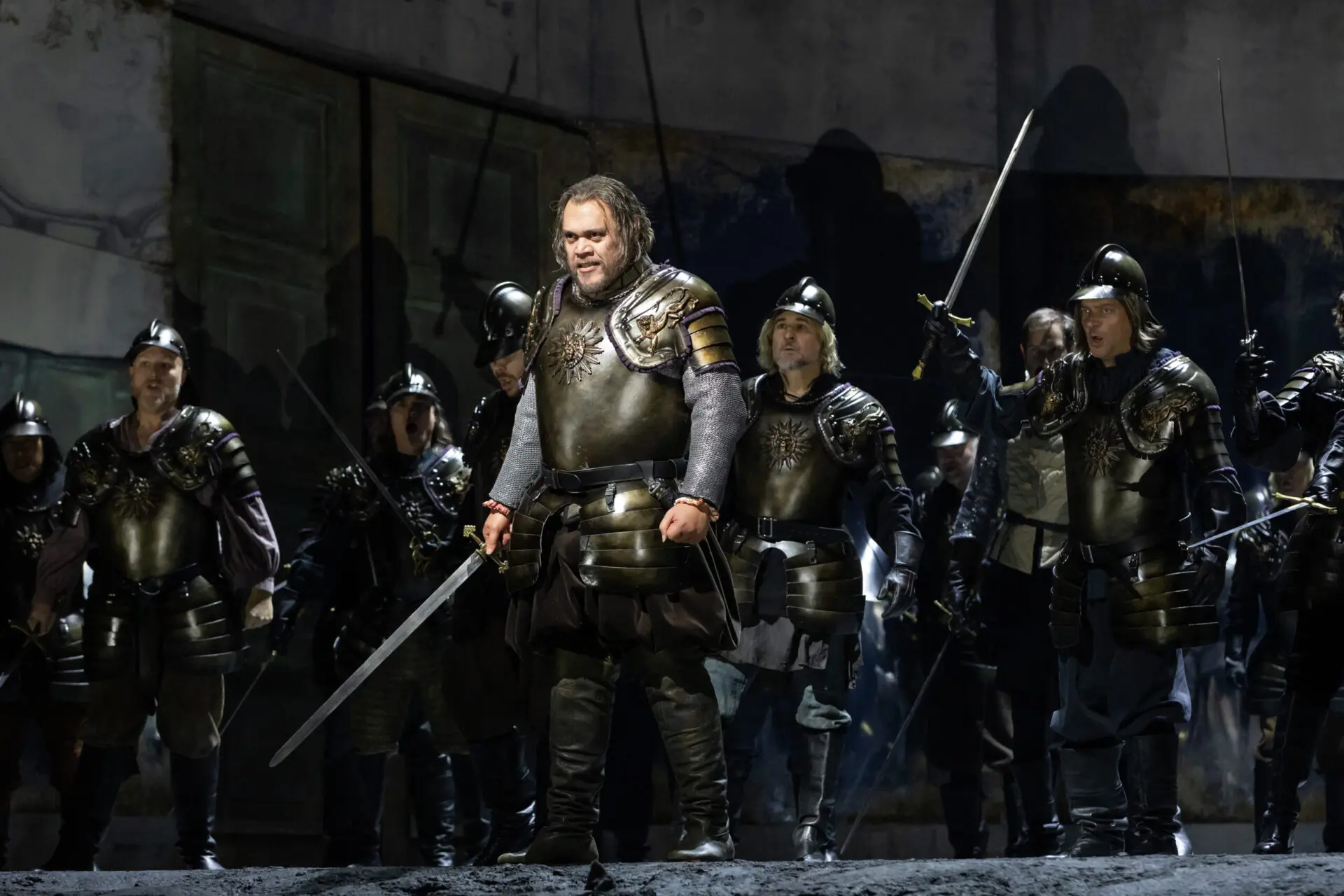
“Hell is murky,” says Shakespeare’s sleepwalking Lady Macbeth, and so is Louisa Proske’s gray, overpopulated, underlit production, which rankled me from curtain rise, with its dancing warriors and witches and ill-defined background images, and augmented my annoyance with every needless turn of Jon Bausor’s rotating set. Deadlier, though, was the director’s inability to move and animate a crowd in any cogent or coherent way. The banquet scene – launched by a rousing but utterly incongruous trio of Georgian folk dancers – became an inert case in point, with the guests offering scant reaction to their king’s guilty ravings. The third act apparition scene was messily hard to follow. And in the final scene, just as messily, Macbeth didn’t simply die by Macduff’s sword, as Shakespeare and Verdi dictated, but survived long enough to get brutally roughed up and finally burned at an upstage stake.
Proske was the co-founder, in 2014, of New York City’s Heartbeat Opera, which specializes in stripped-down, jazzed-up versions of the standard repertory presented on stages a fraction the size of the Met’s. She’s gone on to work in opera houses worldwide, but this Macbeth was her largest-scale venture to date, and perhaps she felt a bit cowed. To her credit, she set the action firmly in period – Shakespeare’s, not Verdi’s or the historical Macbeth’s – and mostly devoid of gimmickry, and Montana Levi Blanco’s costumes well became the singers. But Noble’s more stylized production did nearly everything better.
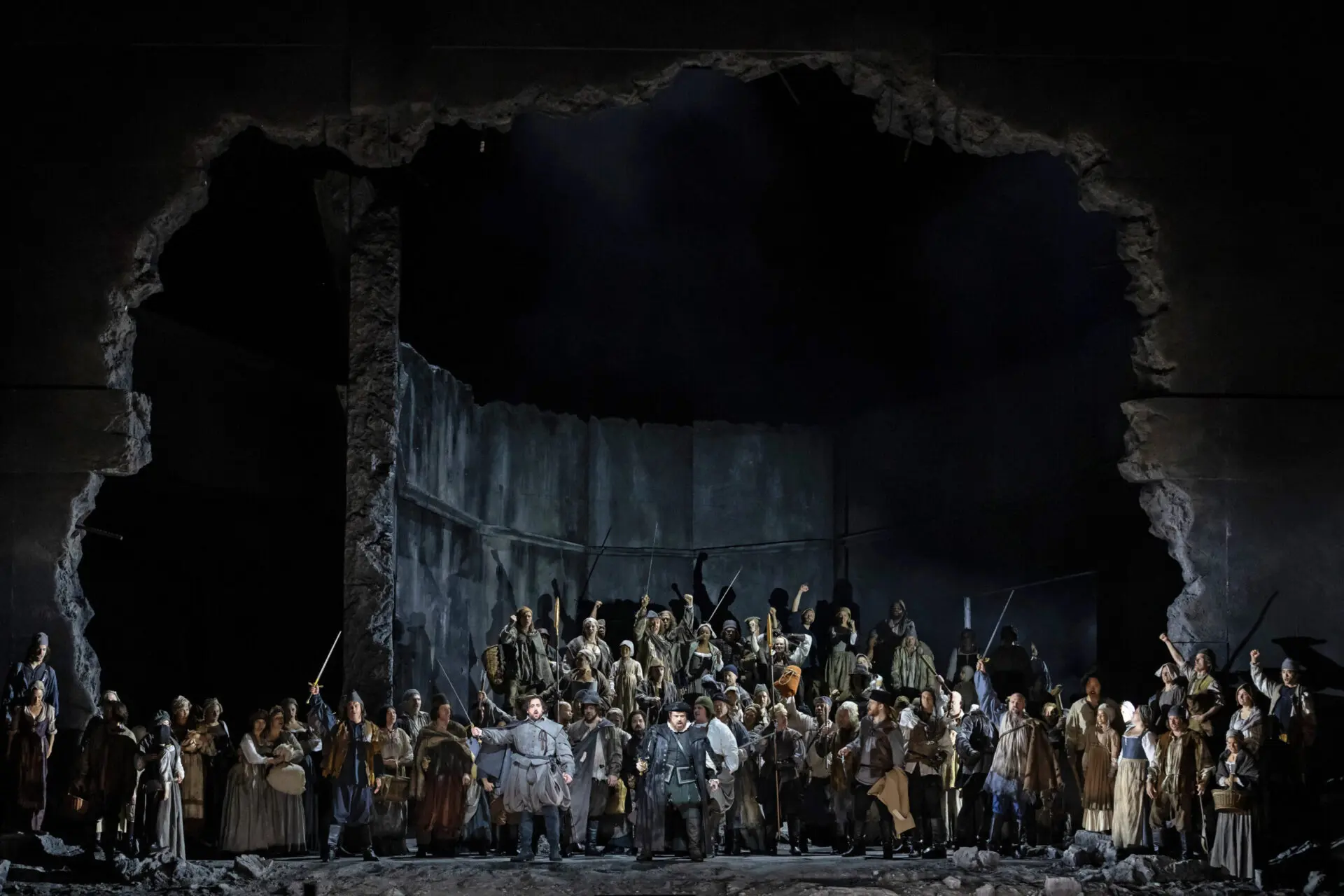
Photo Credit: Marty Sohl / Met Opera
The company of Macbeth in the Met’s new production
Proske wasn’t much helped by her stellar but uneven cast. Ryan Speedo Green, as Banquo, had the right presence but the wrong voice, a lean bass-baritone in place of the rolling Italianate basso cantante the role demands. Tenor Freddie De Tommaso displayed the right voice but often too much of it: his ringing “Ah, la paterna mano” lacked the grace and nuance of such former Met Macduffs as Carlo Bergonzi and Joseph Calleja.
Quinn Kelsey, on the other hand, proved a notable successor to the Met’s noble line of American Macbeths – Leonard Warren, Cornell MacNeil, Sherrill Milnes. It’s a handsomely imposing sound, no doubt, though I wished he, too, had shown a little more range in his dynamic shadings. (Canada’s Étienne Dupuis, with less native vocal clout, sang and acted a far more intriguing Macbeth at Washington’s now-bedeviled Kennedy Center two seasons back.)
But the evening’s weakest link was its starriest attraction: Lise Davidsen. Her Lady Macbeth disappointed from the first time she opened her mouth, with a close-to-inaudible reading of Macbeth’s letter, and continued to rack up demerits with an unbalanced voicing of this wide-ranging role – excitingly full on top, far slighter down below. Important phrases such as the repeated “È necessario!” in “La luce langue” wholly lacked their requisite impact. A most ladylike Lady, she consistently softened the role’s harder edges, and despite her director’s rightful program-note assertion that the Macbeths “know each other intimately,” she projected minimal chemistry with her more extroverted stage husband.
Yannick Nézet-Séguin was the attentive conductor – attentive, as he’s sometimes not, to his singers’ needs, and as he nearly always is, to the expressive potential of his band of top-notch instrumentalists. I wish the big ensembles had had a shade more swing, but the solo clarinet in “Patria oppressa” has seldom sounded more dolefully moving. That wonderful chorus – one of Verdi’s many such patriotic plaints – was eloquently performed by Tilman Michael’s splendid aggregation. It was the high point, for me, of a largely low-lying Macbeth.
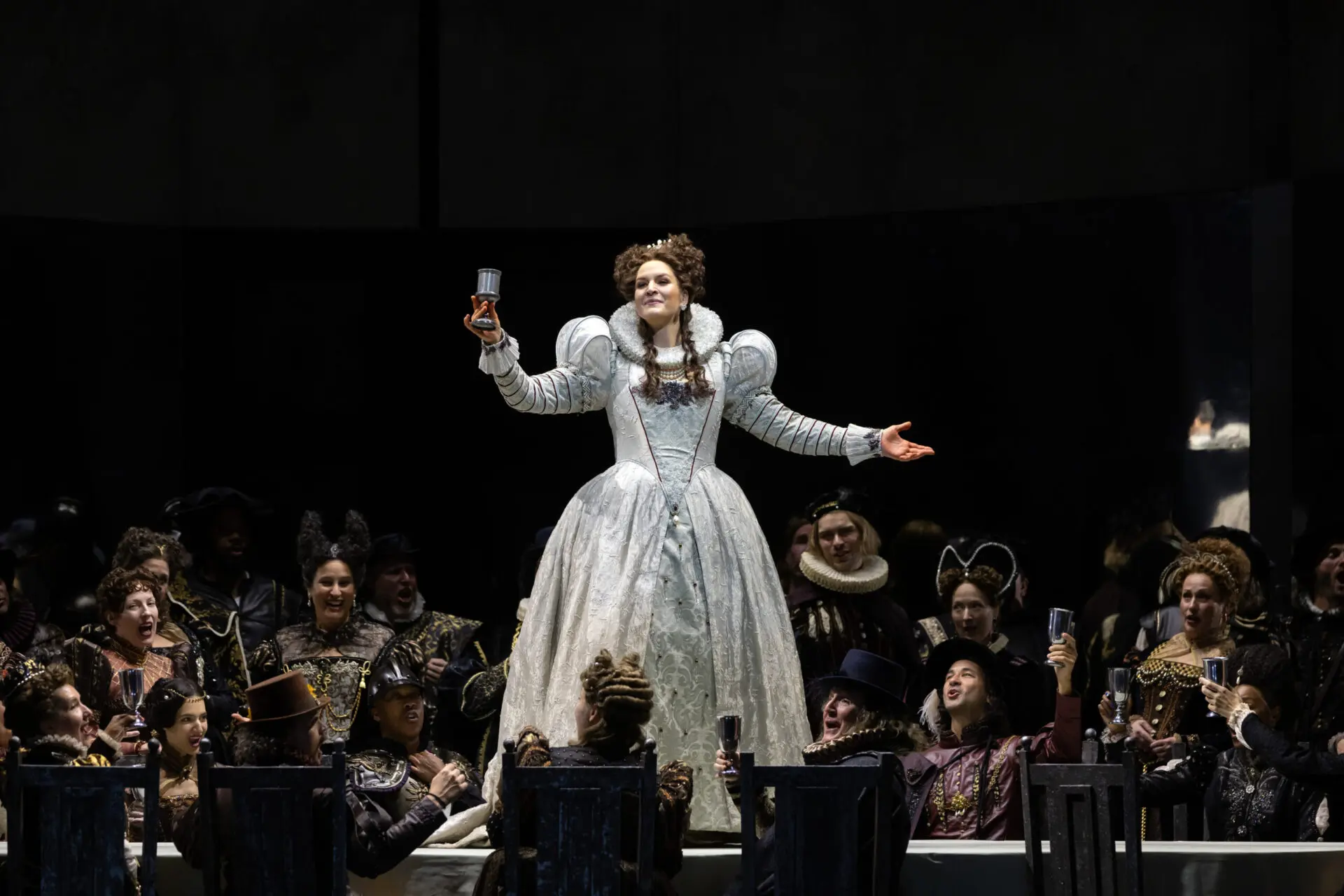
Photo Credit: Marty Sohl / Met Opera
Lise Davidsen as Lady Macbeth at The Metropolitan Opera
Opera Canada depends on the generous contributions of its supporters to bring readers outstanding, in-depth coverage of opera in Canada and beyond. Please consider subscribing or donating today.