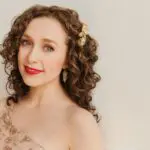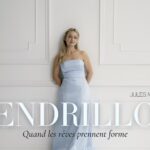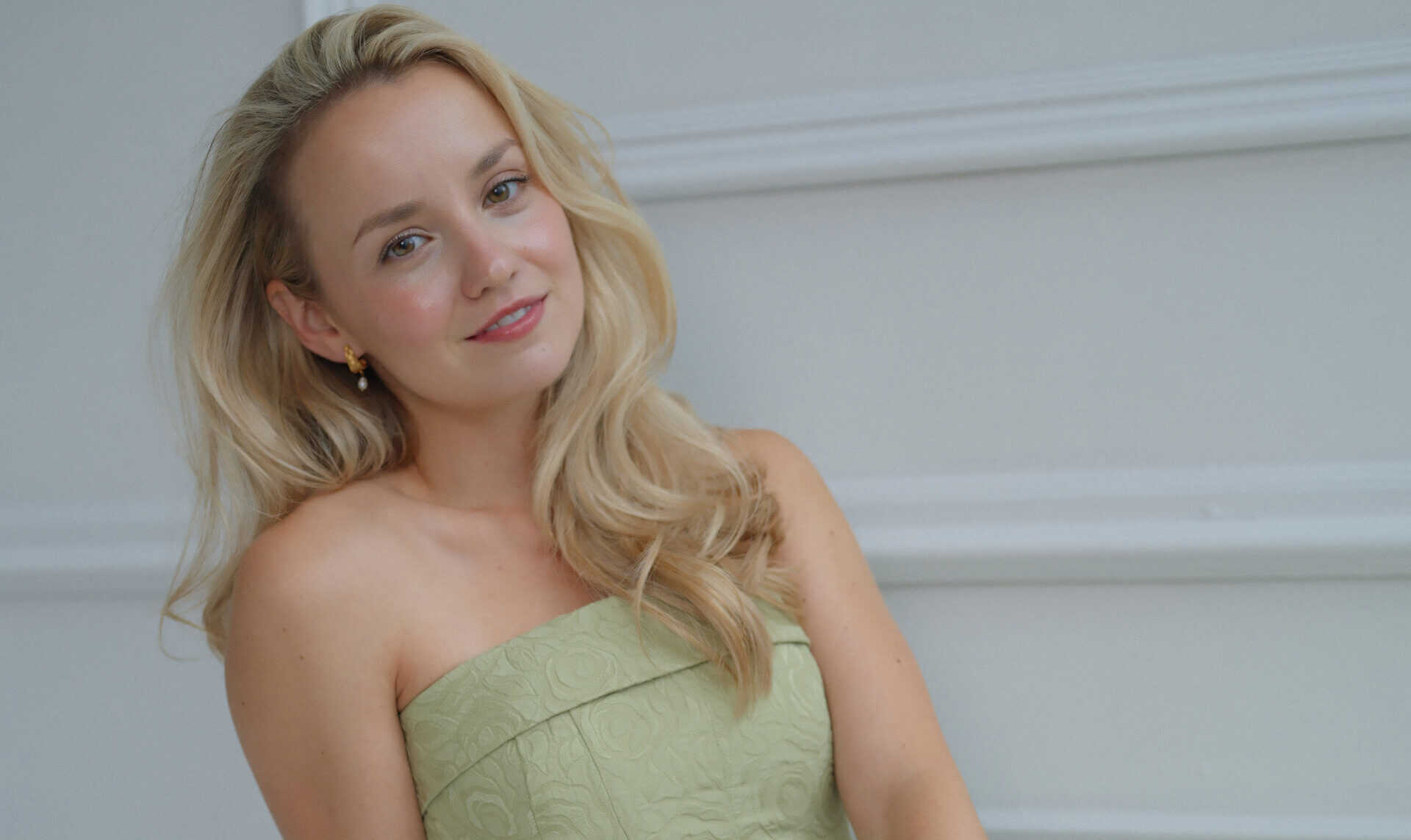
The Artist of the Week is Canadian soprano Elisabeth Boudreault. She is singing the title role in Opéra du Royaume’s production of Cendrillon from March 26th to 31st (tickets and info here).
Elisabeth is making a name for herself on stages across Canada and Europe. Recent highlights include performances with the Glyndebourne Festival, BBC Proms, Opéra de Rouen, Opéra Comique, Opéra de Lausanne and Opéra de Lyon. This spring, she will debut as Musetta in La bohème with Opéra de Quebec.
This week, Elisabeth chat with us about character preparation, fate and her dog Maurice. Read on to find out more.
Do you approach singing and/or upcoming projects differently today than you did at the beginning of your career?
I’m still very much at the beginning of my career, but my approach to singing has already evolved quite a lot since I left school. As a young singer you are pure eagerness and thirst – everything feels new and is there for you to gain. That energy is wonderful when you first step out into the world. But, like a romantic relationship, your passion evolves over time. Once singing is not something you’re “courting” anymore, and you have fully committed, then a new phase begins. I think that once having a career becomes something tangible and not just a dream you romanticize that you’d happily sacrifice everything for, it all becomes a very different ball game. In a way, I was grateful when that “honeymoon phase” passed because it allowed me precious perspective. I’m still deeply in love with opera, but gaining this clarity helped me develop a practice that is kinder and more sustainable. It’s not just about forcing myself (or my voice) into a mould anymore. I learnt to respect and care for myself and my instrument and I have much more to offer for it.
The music industry is tough and filled with rejection. How do you cope? Does it get easier?
The music industry is undeniably difficult, and rejection is a big part of it. Unfortunately, what is harder to cope with is not the rejections themselves, but believing they might be justified. We have to be smart and honest enough with ourselves to know what our weaknesses are and what we need to work on. I also believe strongly that life provides us with what we need – sometimes that comes as an open door, sometimes as an obstacle. The reality, though, is that when there’s one spot to fill, rejection can also not have much to do with your worth – you can be wonderful and still not what they’re looking for. With that in mind, I always try to learn what I can from any given experience, but it is equally important to be able to filter and let go of the “noise” that is not beneficial.
When was the first time you cried at the opera?
Oh wow! I don’t think it was even at a live opera! I believe I was watching the film of La bohème with Netrebko and Villazón on my laptop, lying in bed… and I was (of course) completely inconsolable. I was actually obsessed with opera movies as a teenager, I had a whole DVD collection.
Do you believe in fate?
I believe that we attract what we need. I’ve been incredibly fortunate in my life, and that sometimes reinforces the feeling that there might be something like fate at play, whether it be true or not. I often like to look back and notice how moments (both good and difficult) were interconnected. Who knows, I might be conjuring sense out of chaos, but seeing these patterns brings me a lot of peace.
What does it mean to be brave with music?
Bravery in music exists on a whole spectrum. Sometimes it means taking risks – letting go of preconceptions and trying something bold or new. Sometimes it simply means showing up when things are difficult. It can also mean standing up for yourself and your instrument. Even cancelling something requires courage. We’re constantly confronted with crossroads: technically, artistically or personally. We always have to make hard decisions; it is part of the job. But that also creates grounds very fertile for growth.
How long do you spend preparing to get into a character?
For me, preparation is about knowing a character as deeply as possible. Their decisions need to make such sense to you that their instincts feel natural. Once you reach that point, getting into character is simply about being in the present moment as myself, through the lens of that character’s experience. Funnily enough, I’ve noticed that I tend to absorb some of the personality traits of the roles I’m playing. I feel lighter and bouncier when playing a comedic role, and more prone to introspection while working on a dramatic one. There’s such a wide spectrum within our own personalities, and we’re lucky that this profession allows us to explore so many different facets of ourselves. We do not need to surrender parts of ourselves in order to conform and avoid contradictions.
Do your on-stage experiences also feed into your personal life?
I don’t think personal life and stage life can ever be completely separate. We inevitably bring our personal experiences onto the stage, and our art is richer because of it. At the same time, what we experience on stage inevitably feeds back into our personal lives. It would be unrealistic to expect to take only the positive lessons and none of the difficult ones, so I try to welcome both.
That said, I think it’s important not to base your entire sense of self-worth on what happens on stage or what comes out of your mouth. The boundary between stage and life needs to remain flexible. There is a separation, but for me it’s more of a permeable membrane than a brick wall.
What’s the most important lesson you learned from childhood?
I grew up in the countryside and spent most of my days playing in the forest. It was a place of endless wonder – but looking back as an adult, also incredibly vast and intimidating. As a child I used to roam through tall ferns carefree. Years later, after living in the city for a long time, I returned to that forest and was suddenly struck by how worried I was about where I was stepping and what dangers the ferns might hide. That moment made me realize how our relationship with fear evolves. I often think back on that and how safe I felt in the face of the unknown as a child. I bring myself back to that sense of awe I used to have and it helps me ground myself.
What does success look like to you?
For me, success is about maintaining a sense of balance and feeling that I’m both enjoying myself and growing. It’s easy to fall into the trap of thinking success is something waiting for us in the future, or that it is something very specific, singing certain roles in certain houses. Of course I have ambitions and dreams – but I try not to measure success against some distant goal. The way I see it is, passing a milestone is great, but that doesn’t change the way your brain is wired. If you are unhappy in your practice now, chances are you’ll be unhappy when you hit these milestones too. Success, for me, is something that you work towards daily. When you fall out of balance, you take a step back, readjust, and try again the next day.
If you were an animal, what animal would you be?
If I had the choice, I would absolutely be my dog, Maurice. I actually think that we share some personality traits – but more importantly, he lives a completely ridiculous life. He travels the world (freely), is endlessly adventurous, gets all the treats and even gets carried when the weather isn’t to his liking. Honestly, what kind of karma must that dog have?
View this post on Instagram
LEARN MORE ABOUT ELISABETH BOUDREAULT
VISIT HER WEBSITE
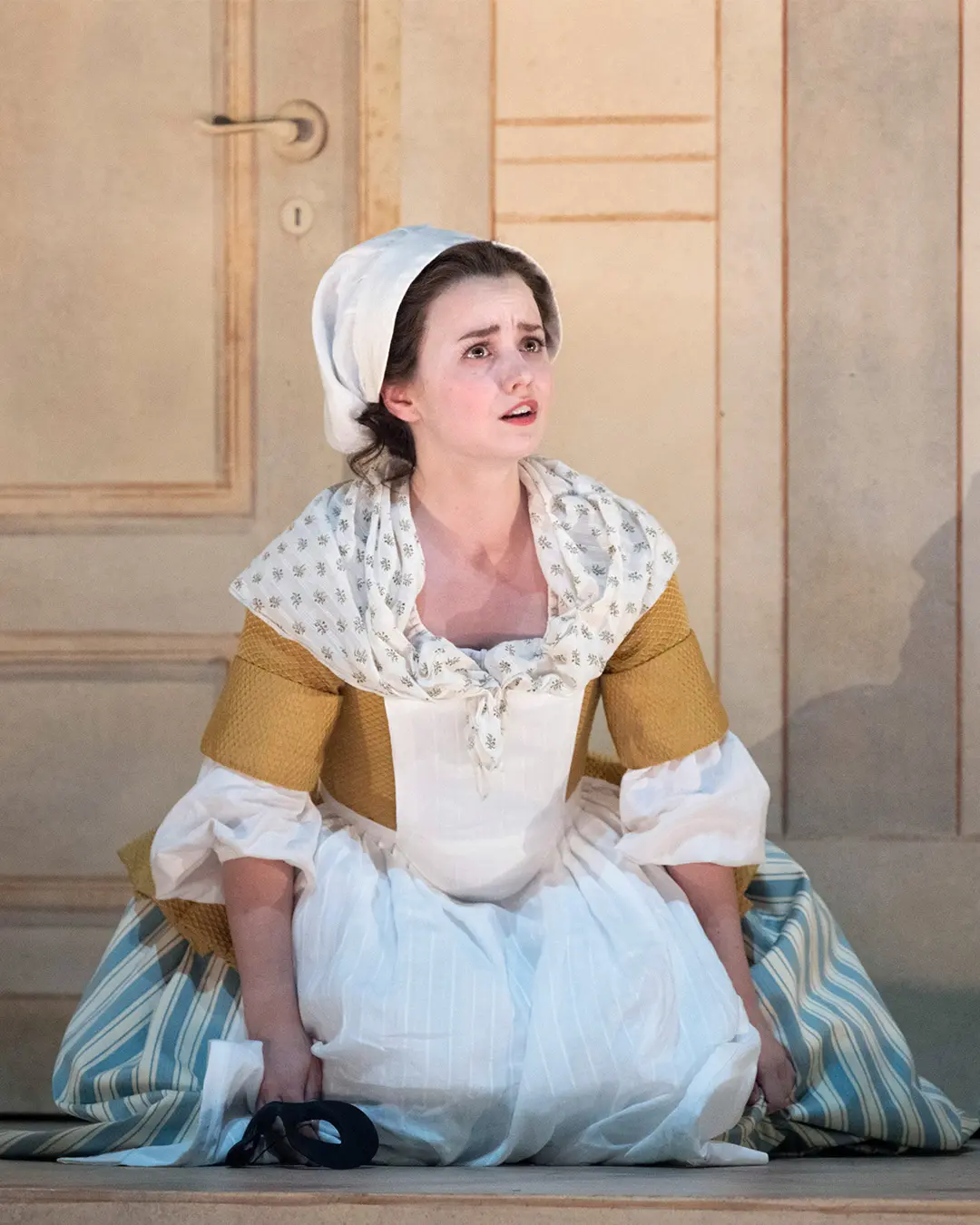
© Richard Hubert Smith
In Le nozze di Figaro at the Glyndebourne Festival
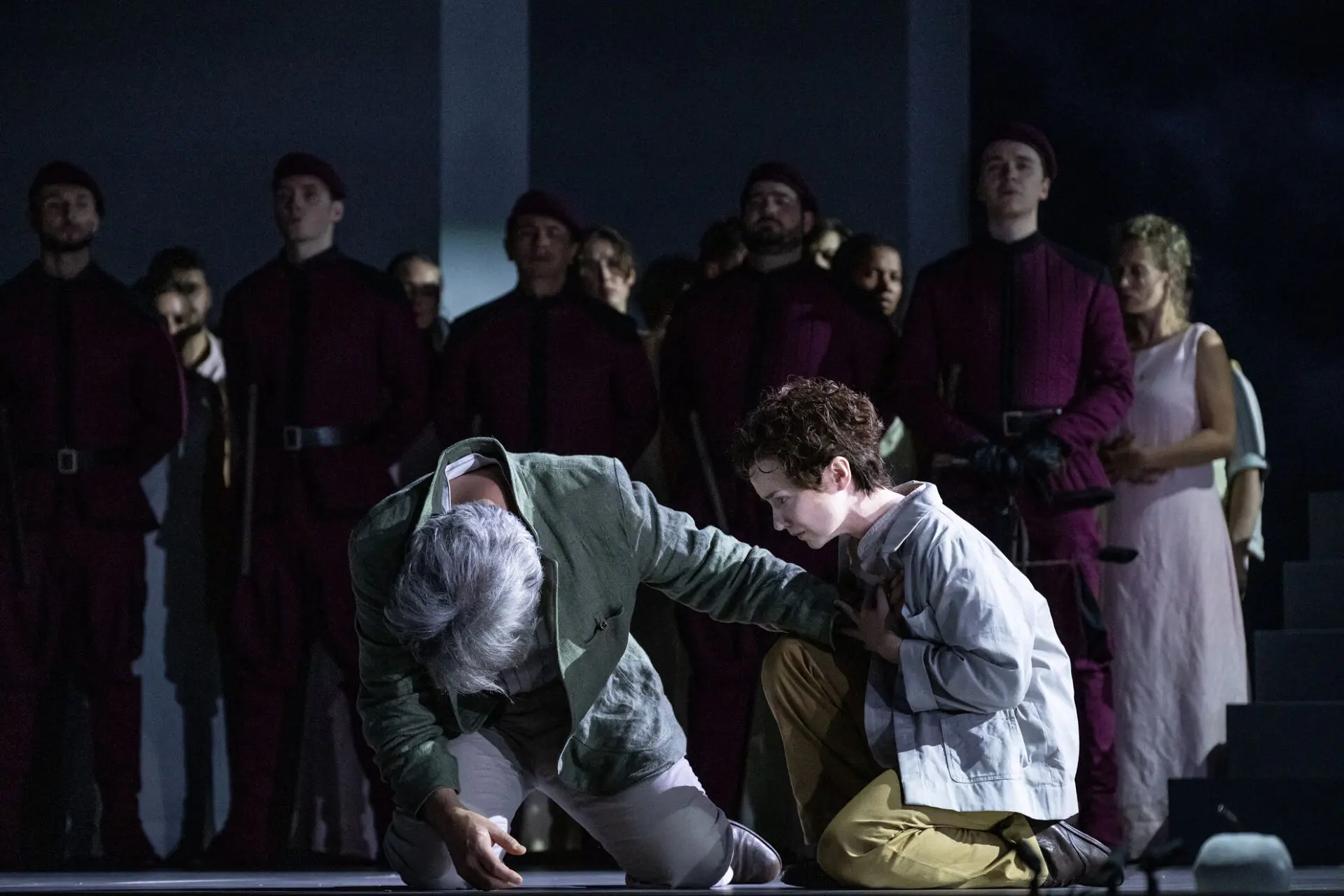
© Carole Parodi
In Guillaume Tell at Opéra de Lausanne
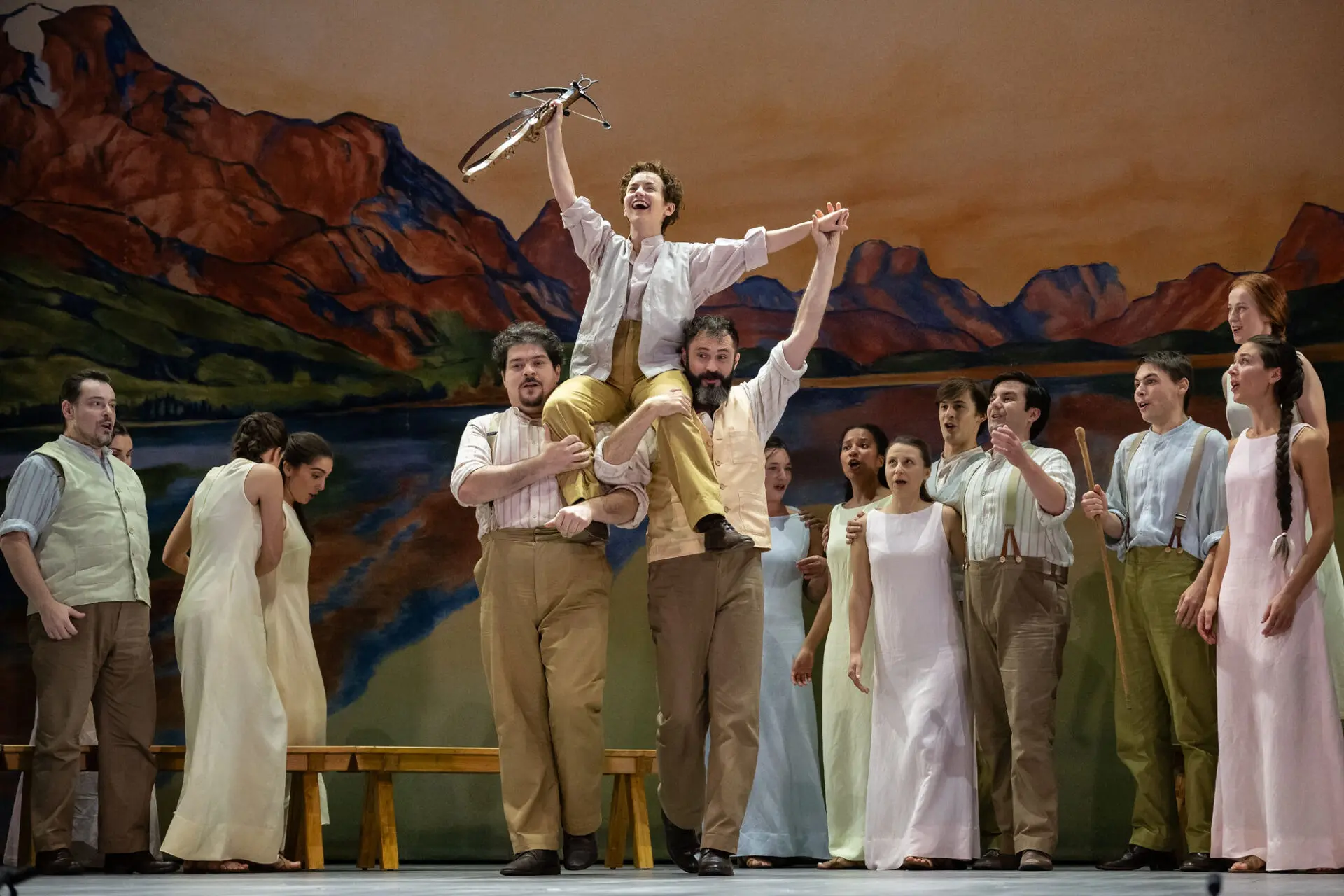
© Carole Parodi
In Guillaume Tell at Opéra de Lausanne
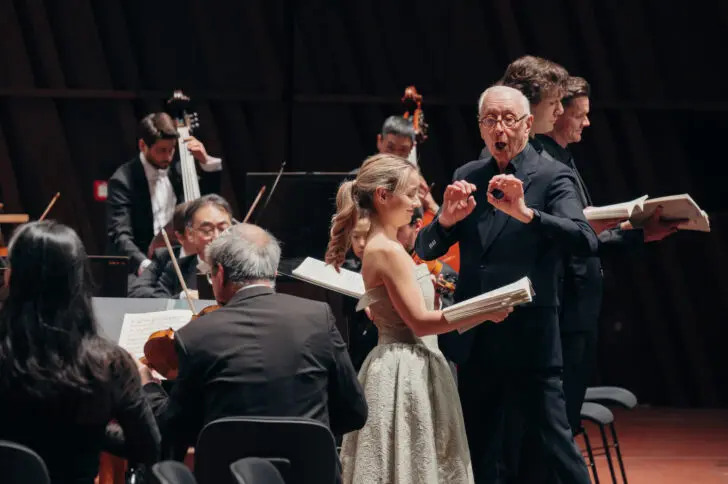
© Ines Rebelo de Andrade
Performing with Arts Florissant in Luxembourg
Cenndrillon
Opéra du Royaume

CENDRILLON: Elisabeth Boudreault
LE PRINCE CHARMANT: Florence Bourget
LA FÉE MARRAINE: Marie-Eve Munger
PANDOLFE: Hugo Laporte
MME DE LA HALTIÈRE: Sydney Frodsham
NOÉMIE: Vanessa Croome
DOROTHÉE: Emilie Baillargeon
MUSIC DIRECTOR: Christopher Gaudreault
STAGE DIRECTOR: John La Bouchardière
SET DESIGNER: Frédéric Ellis
COSTUME DESIGNER: Marie-Pascale Chevarie
LIGHTING DESIGNER: Bastian A. Miranda
CHOREGRAPHER: Aurélie Caron
Plongez dans l’univers poétique de Cendrillon de Jules Massenet, un chef-d’œuvre où tendresse, humour et émotion se rencontrent. Inspiré du conte intemporel de Perrault, c’est une histoire que vous connaissez bien, mais avec une profondeur émotionnelle que vous n’oublierez pas de sitôt ! Loin de la version Disney, Cendrillon de Massenet vous entraîne dans un parcours inattendu, à la fois léger et profond, doux et intense.
À travers un univers visuel éclatant, une mise en scène ludique et audacieuse, et une douceur musicale incomparable, ce voyage féerique et accessible offre une aventure d’émotions et d’émerveillement — à ne pas manquer pour petits et grands.
Une distribution pétillante, incluant deux étoiles internationales de retour sur la scène de leur jeunesse, donnera vie au rêve de Cendrillon lors de cette soirée lumineuse, où chacun (7 ans et +, à titre indicatif) pourra se laisser emporter par l’enchantement. Pour que tout le monde puisse y assister, nous proposons une gamme de tarifs accessibles. Après tout, si tout le monde mérite de pouvoir aller au bal… pourquoi pas à l’opéra ?
Opera Canada depends on the generous contributions of its supporters to bring readers outstanding, in-depth coverage of opera in Canada and beyond. Please consider subscribing or donating today.