The Artist of the Week is Canadian director Weyni Mengesha. She is directing Manitoba Opera's production of Scott Joplin's Treemonisha from November 21st to 27th (tickets and info here).
Weyni is an award-winning and groundbreaking stage and screen director. She has directed projects in London, New York, Los Angles and across Canada. Her accolades include numerous Dora Mavor Moore Awards, two NAACP nominations and recognition from both the Drama League in New York and the Drama Critics’ Circle in Los Angeles, among many others.
This week, Weyni chats with us about how she prepared for the production, her relationship with opera and what music has meant to her work. Read on to find out more.
What inspired you to work on this opera?
What really drew me to Treemonisha was the history surrounding it. Scott Joplin never got to see his opera fully realized onstage. He wrote it in 1911, at a time when the idea of an opera with an entirely Black cast, centred on a young Black woman as its heroine and leader, was incredibly ambitious.
He self-published the score, investing almost all of his savings in the hope that the work would eventually find its audience. He died without seeing that dream fully realized. He was eventually awarded a special posthumous Pulitzer Prize in 1976 for his contributions to American music.
One of the most moving moments for me was visiting the Library of Congress and seeing his original score. There was something incredibly emotional about standing in front of this manuscript, knowing how much he had poured into it and that it had waited so long to be heard. It felt like we were in conversation with someone across a century.
View this post on Instagram
Favourite city you've worked in?
Chicago, when we brought Treemonisha there in May 2025. Joplin had a connection to Chicago, and there was something particularly meaningful about presenting his work in a city that had been part of his journey.
The community's excitement was wonderful. One of my favourite moments was meeting a woman named Treemonisha, whose parents had actually named her after the opera's central character. It was a beautiful reminder of how art can travel through generations and become part of people's identities.
Drink of choice?
An Old Fashioned. Strong, not too sweet, not to bitter. It is the perfect drink to end my work week and kick off the weekend.
What has your directing journey been like, and what has music meant to your work?
I've had a directing career spanning about 20 years, much of it focused on text-driven classical and contemporary plays. Interestingly, the first production that really took off for me was a musical, Da Kink in My Hair, for which I also wrote the music.
It was my first musical and my first experience writing music. We were nominated for a Dora Award for the score, and I learned I had a real passion for music and its power in storytelling. Music can take you somewhere emotionally that words sometimes can't.
Since then, I've worked on smaller pieces incorporating music, but Treemonisha is my first full-scale opera with an orchestra. I absolutely love it. It's been a wonderful new chapter in my relationship with storytelling.
If you could be stuck in an elevator with one person, who would it be?
Scott Joplin. I'd want to know what he imagined when he was writing Treemonisha, what he thought the future of the work might be, how he felt when the world wasn't quite ready to receive it. I'd also love to know what he thinks of the music world today. I think we'd need a very long elevator ride.
Did you grow up listening to opera?
Not at all. I didn't grow up with opera around me, and if I'm honest, it wasn't a world I felt particularly invited into. I had a sense that it was a very specific cultural institution, with traditions and expectations that didn't necessarily reflect my world or the people I grew up around.
My relationship with opera has really been one of discovery. I came to it through storytelling and theatre rather than through a formal love of the art form. I approach it first as a director: What is the story? Who are these people? What are they fighting for? What does the audience need to feel?
I love the possibility of helping expand the idea of who opera belongs to and whose stories get to be told.
Tell us something about yourself that might surprise people.
As a director, I am often in a cerebral space, making a lot of decisions and living in my imagination. To counter this, I love to do things that get me in my body. I take salsa dance classes, I am a roller coaster chaser, and I have always loved snowboarding. I love these things that demand me to be very present and in my body.
Where did you go to school?
I went to York University in Toronto. I initially studied acting before switching into the directing program after my first year.
How long do you spend preparing for a production?
Well, Treemonisha took us eight years! I'm a big researcher. I love learning about the world of a piece, understanding the historical, political and cultural context.
But research is only part of it. I'm equally interested in the imaginative process: how we translate all that knowledge into something alive onstage. I don't want the research to become something the audience sees; I want it to become something they feel.
What is your favourite mind-calming practice?
Meditation. I find it helps me create a little space between everything happening around me and how I respond to it. Directing can be an incredibly busy process. You're holding so many ideas, personalities, practical challenges and creative possibilities at once.
Meditation helps me quiet the noise and come back to myself. I'm not always perfectly disciplined about it, but I notice the difference when I make the time.
Are you a cat person or a dog person?
Well, until six months ago I was neither. My family just welcomed a mini Australian sheppard into our lives. I am absolutley in love with her and actually can't imagine a life with out a dog now. Kind of sad that I lived this many years without one.
What is the best thing about being an opera artist?
For me, it's the scale of collaboration. Having an orchestra, singers, designers, musicians and a creative team all working together to tell one story is extraordinary.
I also love that opera asks us to embrace something larger than life. It allows us to be bold, imaginative and emotionally expansive.
What is something most people don't know about you?
I didn't grow up going to theatre. In fact, when I started university, I didn't even know what a director did. I went in to study acting and discovered directing almost by accident. A teacher noticed my enthusiasm in a directing class and encouraged me to follow it.
It's funny to think that something I now feel so deeply connected to wasn't even on my radar when I was growing up.
What is the ultimate goal of opera?
I think it's the same as any great storytelling: to move us, to make us feel less alone, and perhaps to help us see the world a little differently. Opera has this extraordinary ability to bring together music, language, movement and image to create an experience that goes beyond everyday life.
At its best, it makes us feel something we didn't know we needed to feel.
What is happiness for you?
Being with my family, having a creative project that excites me, good conversations around a dinner table with great food, and enough time to actually enjoy all of it. I think happiness is a combination of connection, curiosity and feeling that you're still growing.
LEARN MORE ABOUT
WEYNI MENGESHA
VISIT HER WEBSITE
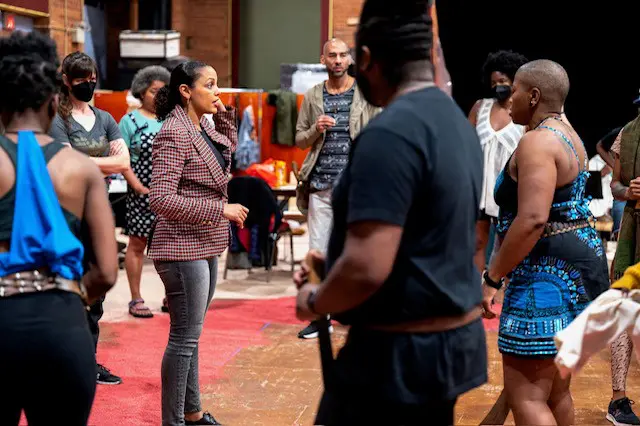
© Photo used with permission form the artist
In rehearsal
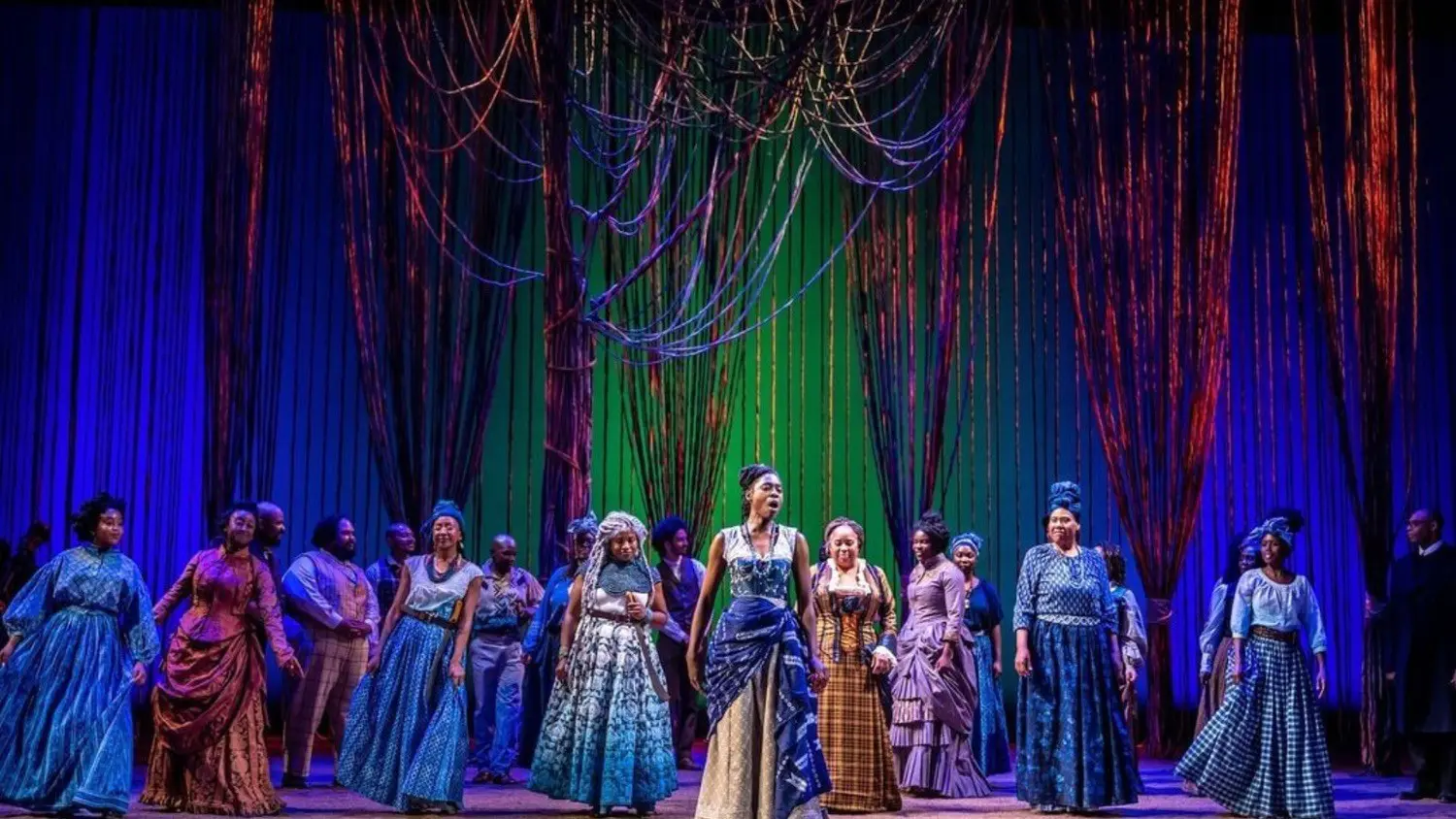
© Dahlia Katz
Volcan Theatre's production of Treemonisha
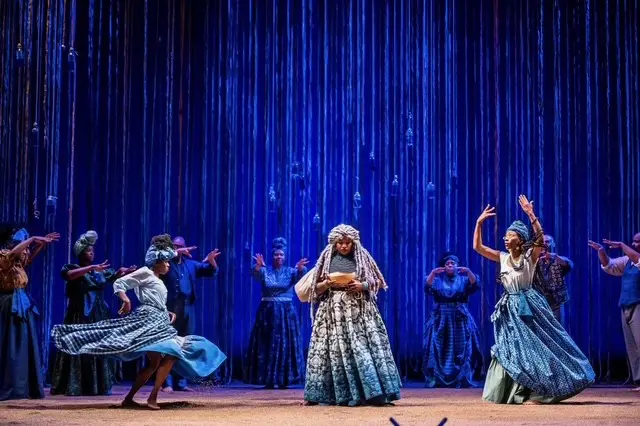
© Dahlia Katz
Volcan Theatre's production of Treemonisha
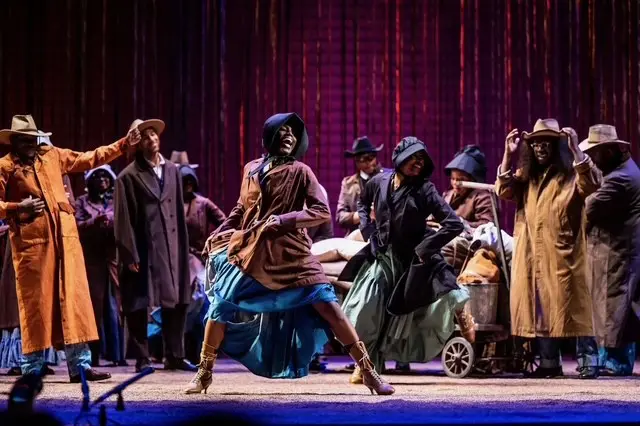
© Dahlia Katz
Volcan Theatre's production of Treemonisha
Treemonisha
Manitoba Opera

ZODZERICK: Cedric Berry
ZODZERICK (STANDBY): Andrew Adridge
TREEMONISHA: Neema Bickersteth
REMUS: Ashley Faatoalia
MONISHA: Alicia Hall Moran
PARSON ALLTALK: Marvin Lowe
PRISCILLA/ENSEMBLE: Ineza Mugisha
NANA: SATE
LUCY: Jonelle Sills
NED: Kevin Thompson
ENSEMBLE: Charles D. Carter, Joema Firth, Nickeshia Garrick, Queen Hezumuryango, Gavin Hope, Pulga Muchochoma, Monique Pascall, Charlotte Siegel, Gerard St. Gerard, Karen Weigold, Dérrell J.J. Woods
A Pulitzer Prize-winning original. A Triumphant adaptation of Joplin's groundbreaking opera, reimagined for the 21st century.
It is the late 1880s in the Deep South. A people are divided against themselves. A group of upwardly mobile Freedmen are now running a plantation near Texarkana. They are striving to become an essential part of an emerging new America.
In the surrounding forest, a group of Maroons are rebuilding a nearly lost connection to their African ancestry. They do not value a country that has so recently seen them as nothing but property.
Their coexistence is fragile but functional, until it is shattered by an act of violence. Into this conflict comes a young woman who discovers she has roots in both communities. At this crucial moment in history her choices will determine the future.
Her name is Treemonisha.
Opera Canada depends on the generous contributions of its supporters to bring readers outstanding, in-depth coverage of opera in Canada and beyond.
Please consider subscribing or donating today.