I had the privilege of doing the pre-opera chat for Brott Opera’s July 17th performance of Carmen at Theatre Aquarius in downtown Hamilton. I was shocked when I asked how many people had never seen Carmen before, and almost half of the listeners raised their hands. I went on to extoll the virtues of Carmen and why it is such a great opera to experience because of its glorious music, compelling characters and simple plot. I also said that any Carmen is only as good as its performance and production team and bid my audience adieu, hoping that this production would live up to my build up.
Director Jessica Derventzis is a genius at taking small stages and turning them into impressive canvases for her creative work. Using multiple levels and creative groupings, the action was never static, and even the gorgeous musical interludes throughout the opera were filled with cast who rearranged the portable staging. Derventzis’s careful attention to details – a wayward glance, a tossed cigarette, a rope doubling as a whip – served to add depth to her intuitive storytelling. Her vision was made possible by her talented cast.
Queen Hezumuryango was a captivating Carmen. Her facial expressions made her character’s inner conflicts readable, and her strong acting made her character’s love of freedom believable. Hezumuryango was vocally strong, her low earthy tones contrasting with her more passionate, soaring notes. As Don José, Elias Theocharidis was totally convincing. Theocharidis’s adept phrasing and well controlled upper register in “La fleur que tu m’avais jetée” was chilling. A sensitive actor, Theocharidis started in Act One with hints of psychosis, which culminated in his terrifying final scene as a murderer.
Gabrielle Turgeon was a vocally strong Micaëla, and “Je dis que rien ne m'épouvante" was particularly suited to her commanding style and was one of the highlights of the evening. Dante Mullin Santone was an athletic and charismatic Escamillo. His striking costumes and stage presence made him a scene stealer. Although his “Toreador” lacked the vocal punch associated with the role, his final duet with Carmen demonstrated a voice with rich tonality capable of sensitive nuances.
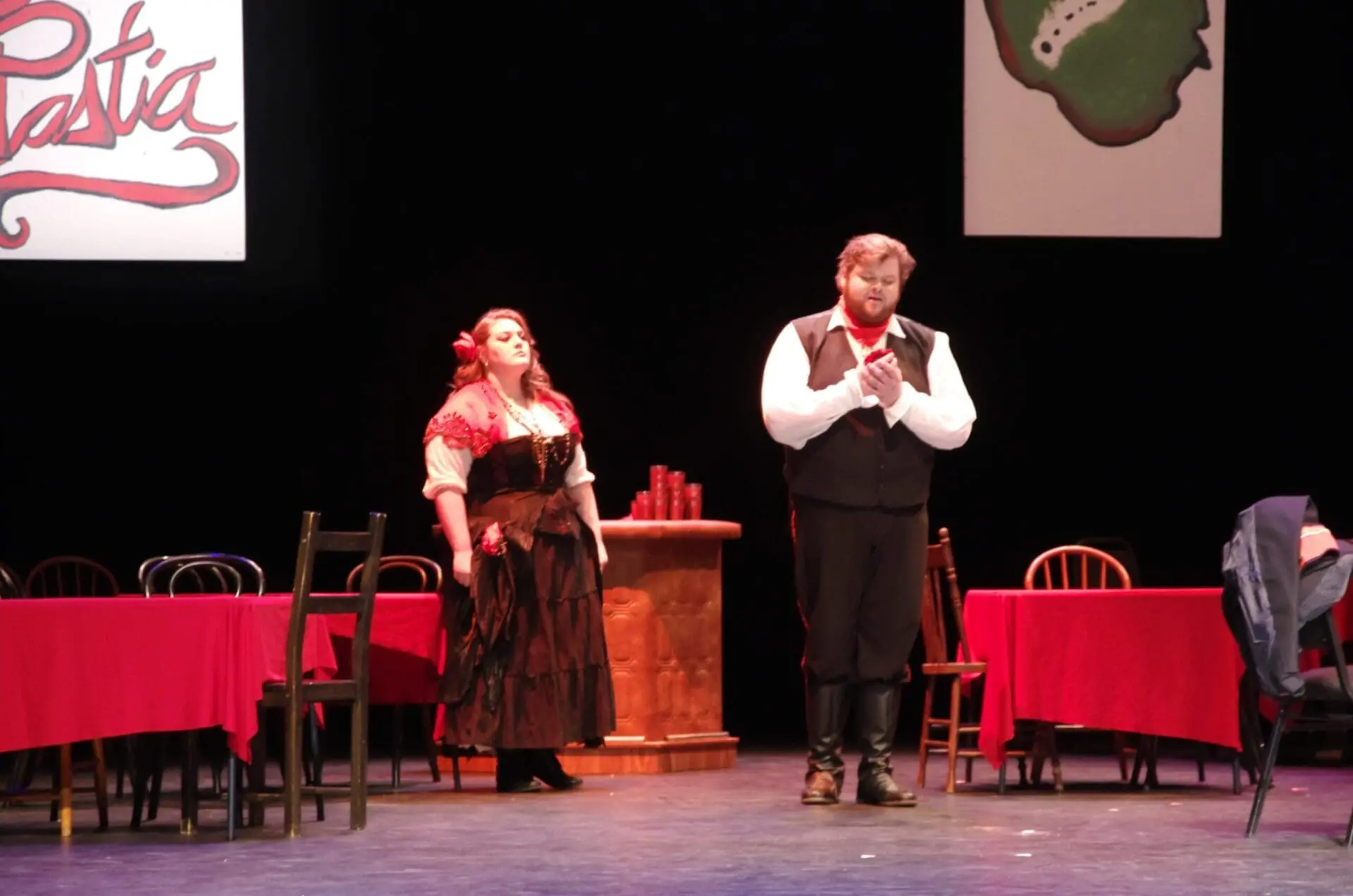
Luke Noftall’s Zuniga was equally magnetically masculine; his strong bass-baritone voice was impressive in solo work but was adaptable and sensitive to smaller ensemble passages. Anne Jean (Frasquita) and Lissy Meyerowitz (Mercédès) blended beautifully in their third act card duet, and their singing and dancing during Act Two’s “Les tringles des sistres tintaient” was seductive and rhythmic. Tenor Jeremy Scinocca (Le Rememdado) and baritone George Theodorakopoulos (Le Dancaïre/Morales) were strong singers and well paired vocally and comically. The second act quintet was sparkling, precise and delightful. I particularly enjoyed the fact that Lillas Pastia was portrayed as a female by Delance Dam. Bravo to Mario Pacheco for some very effective yet simple dances, particularly the ones in Act Two.
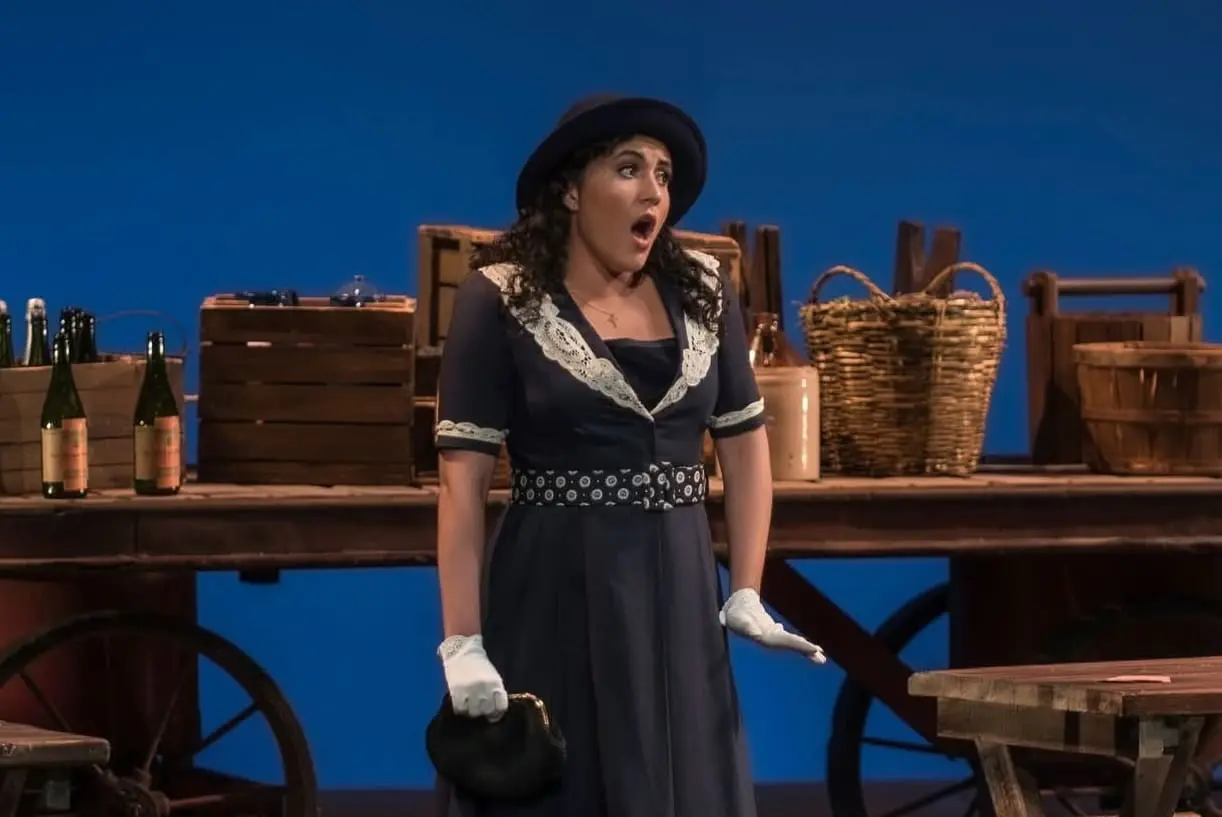
Photo Credit: Bob Hatcher Photography
Gabrielle Turgeon as Micaëla in Brott Opera’s Carmen
One of the most impressive things about this production was the accompaniment by Canada’s top professional training orchestra – the National Academy Orchestra of Canada. The median age of the players is 24, but under the baton of Tania Miller, they sounded like seasoned pros. Forty-three musicians converged from all across Canada, yet Miller made them sound like a cohesive group that had played together for years …regardless of the complex phrasing required when playing opera. Kudos to the singers and orchestra for mostly working in sync, despite the concrete bunker-like pit under the stage that made communication between Miller, the orchestra and the singers extremely challenging. Sound varied greatly depending on where the singers were positioned onstage, highlighting the idiosyncrasies of this particular venue.
Bravo to Shawn Oakes for assembling a 21-person chorus which handled some of Bizet’s trickier passages with aplomb. Particular praise should go to the male chorus. Too often, I have heard smaller companies butcher the opening soldier’s passage, but not in this case. I did miss the children’s chorus, but snippets of its jaunty tune moved the plot along.
Set Designer Echo Zhou’s use of simple risers was effective, and Siobhan Sleath’s lighting design enhanced every scene – whether in dark mountains or in the blazing heat of the sunshine in Seville. Lance Darren Cole’s wardrobe was an eclectic mix of 1950s and traditional Spanish design. Overall, the costumes worked and were complimentary to the leads.
Theatre Aquarius’s 700 seats were completely sold out. This was the first Brott Opera with the orchestra in the pit, which has opened up the possibility of more elaborate and creative productions. Despite the challenges of re-emergence after the pandemic and the devastating loss of the company’s namesake, Brott Opera has evolved into a strong voice in the Canadian opera scene.
I needn’t have worried about whether my pre-opera chat listeners would appreciate the evening. Brott Opera’s Carmen demonstrated why, after 150 years, George Bizet’s work remains one of the most performed operas in the world – in good hands, its music, plot and powerful characters transcend all time and cultures.
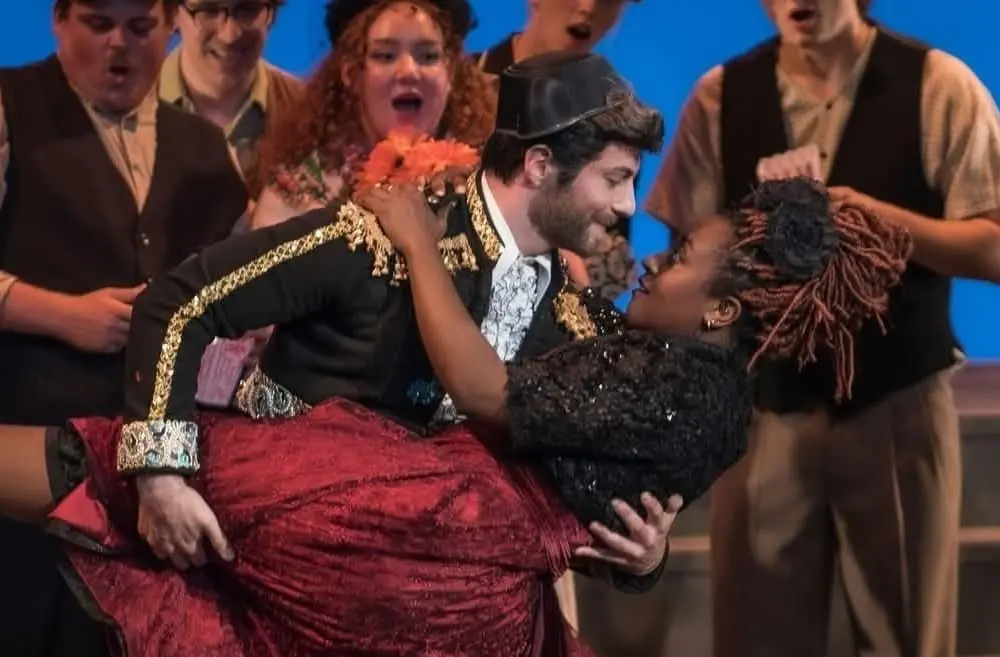
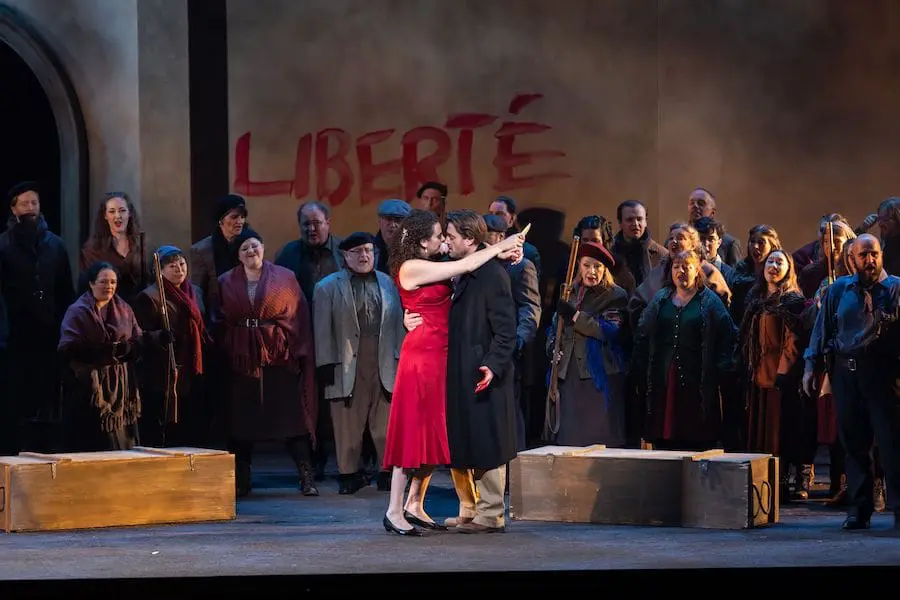
Photo Credit: Bob Hatcher Photography
The flirtation between Escamillo (Dante Mullin Santone) and Carmen (Queen Hezumuryango)
Opera Canada depends on the generous contributions of its supporters to bring readers outstanding, in-depth coverage of opera in Canada and beyond. Please consider subscribing or donating today.