On July 16th and 18th, BrottOpera and the National Academy Orchestra of Canada (NAOC) presented La bohème at Hamilton’s Theatre Aquarius.
Composer Giacomo Puccini said that Bohème was so reminiscent of his life as a destitute young musician that he “began to weep like a child” when he finished writing it. La bohème is the stuff of youth: idealism, energy and passion consume the much-beloved characters, and that celebration of fleeting youth makes it one most performed operas in the world. But how does a company stage a Bohème which rises above the familiarity of the work and leaves a lasting impression on the audience? You do what BrottOpera did: embrace youth.
On opening night, eager young musicians from the NAOC arrived in casual dress with backpacks and instruments in tow. When these same musicians were hidden below stage during the performance, they transformed into seasoned players demonstrating maturity beyond their years. Having not played together until the Brott Music Festival, the NAOC is an example of what hard work and great leadership can produce in limited time. Maestra Tania Miller’s charismatic conducting is precise and emotive. Theatre Aquarius is not the easiest venue to conduct in, but with the aid of monitors, hidden screens and brilliant conducting, the whole thing came together. There is a mesmerizing symbiosis when a conductor relates well to an orchestra, and this was apparent in this dynamic interpretation of Puccini’s sweeping score.
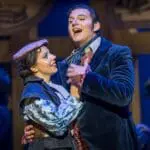
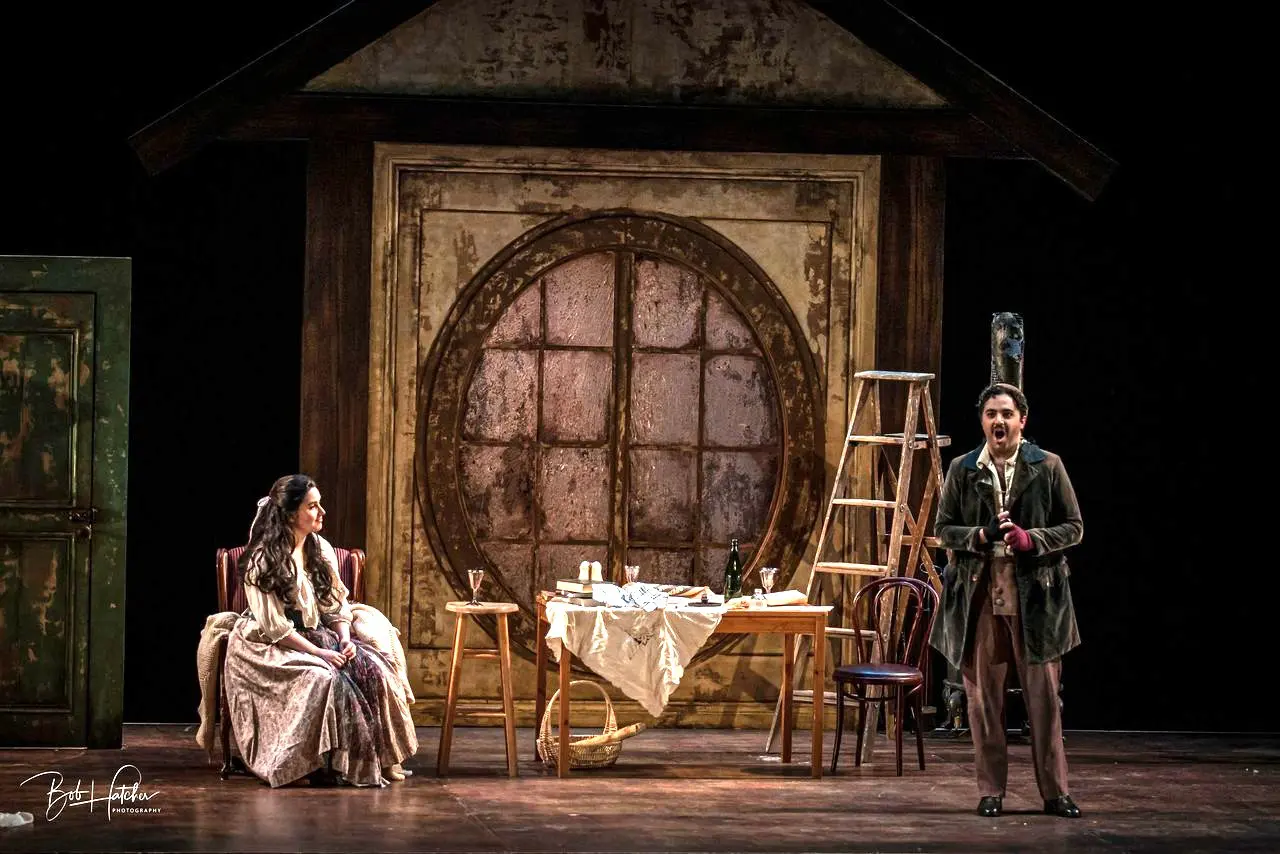
Ariane Cossette was a convincing Mimì whose beautiful phrasing, clear diction and well-rounded tone in “Sì, mi chiamano Mimì” carried on throughout the evening. Her pianissimos in the death scene were chilling. Cossette’s stage presence was strong yet gentle, a paradox that is achieved through skilled singing and sensitive acting. Jeremy Scinocca’s Rodolfo was also well acted, and his bright timbre, ringing top notes and clear pronunciation made for an evening of vocal fireworks. His “Che gelida manina” was Italianate with a magnificently sustained high C. Cossette and Scinocca’s convincing stage chemistry made their love story all that more tragic.
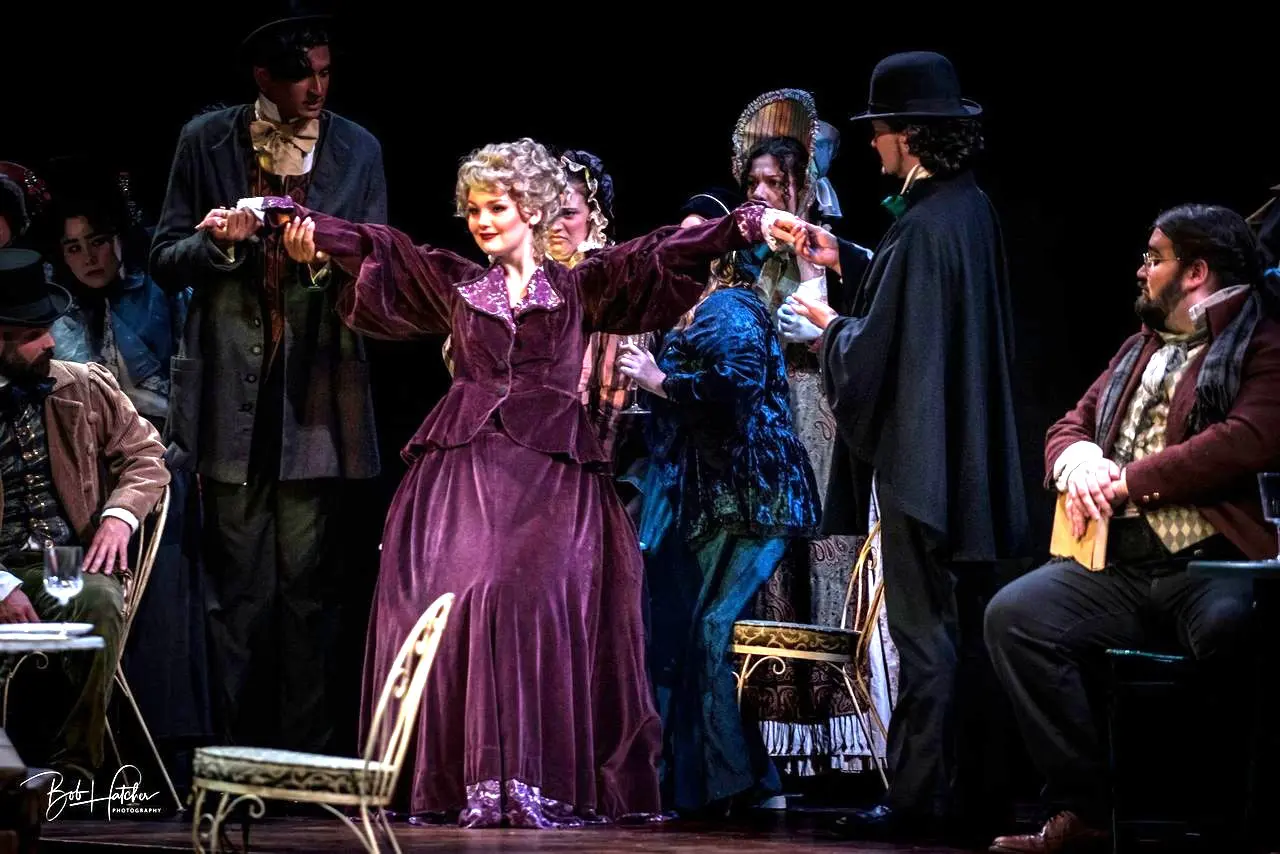
Photo Credit: Bob Hatcher Photography
Karoline Podolak was captivating in her first Musetta
As Marcello, George Theodorakopoulos was vibrant, with a golden tone that added to his character’s attractive masculinity. His robust vocal power in response to Musetta’s flirtations in Act Two was outstanding, but this resonance in ensemble work was beautifully balanced by his gentler tonality in his third act interactions with Mimì. Theodorakopoulos’s comedic timing, as well as his ability to portray deep pathos, made his performance outstanding. It was hard to believe that this was Karoline Podolak’s first Musetta. Her command of crystal-clear high notes in “Quando m’en vo’” contrasted with her lush lower tones in the emotionally charged prayer in the final act. Podolak has a captivating stage presence, and her onstage chemistry with Theodorakopoulis was electric; their duets were spiky, sexy and funny.
Joshua Gibson was a strong-voiced Schaunard with some serious acting chops, and his well-developed baritone voice is capable of a bright future. Nicholas Murphy was a stellar Colline whose sensitive acting and rich bass-baritone made his character convincing. His “Vecchia zimarra” was more than a short passing aria – it was a powerful statement of love and sacrifice made all the more compelling by Murphy taking off his coat while singing, thus imbuing it with a character of its own. Jason Somerville-Kinish was an hilarious Benoît/Alcindoro. His command of physical comedy is strong, and his antics onstage were magnified by his sonorous bass-baritone voice.
The solid chorus was a tribute to Shawn Oakes’ organizational skills, Christopher Gaudreault’s musical leadership, and the fine-voiced, experienced singers in every section. I missed the inclusion of a children’s chorus in Act Two, but the parade scene was cleverly revised and impressively sung.
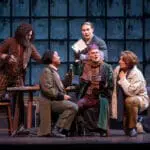
Director Dana Fradkin brought life and delicate nuances to an opera whose familiarity sometimes breeds contempt, and her attention to detail made scenes come alive. During Musetta’s Waltz, every cast member was engaged in some sort of mini-story, and the inclusion of women of dubious nature as well as a drunken beggar emphasized the bohemian and fraught nature of Paris in the 1830s. Fradkin was not afraid to slow down time, allowing characters to pause in doorways, share prolonged eye contact and react to the tragedies surrounding them. The four occupants of the garret came across as a group of friends with unique relationships, not just separate one-dimensional characters.
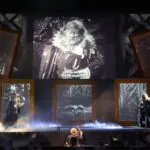
Siobhan Sleath’s elegant lighting design was particularly apparent in the candle scene at the end of the first act, and her changes of colour in the garret window served as a sort of mood ring subtly responding to changing emotions in the music. Adriana Bogaard’s set, props, costume and projection design immersed the audience in 19th-century ambience. Kudos to the co-management team of Holly Kroeker and Topher Mokrzewski who supported a creative Canadian female production team. By supporting young Canadian artists, BrottOpera elevated the story of Puccini’s cherished ordinary characters into an extraordinary experience.
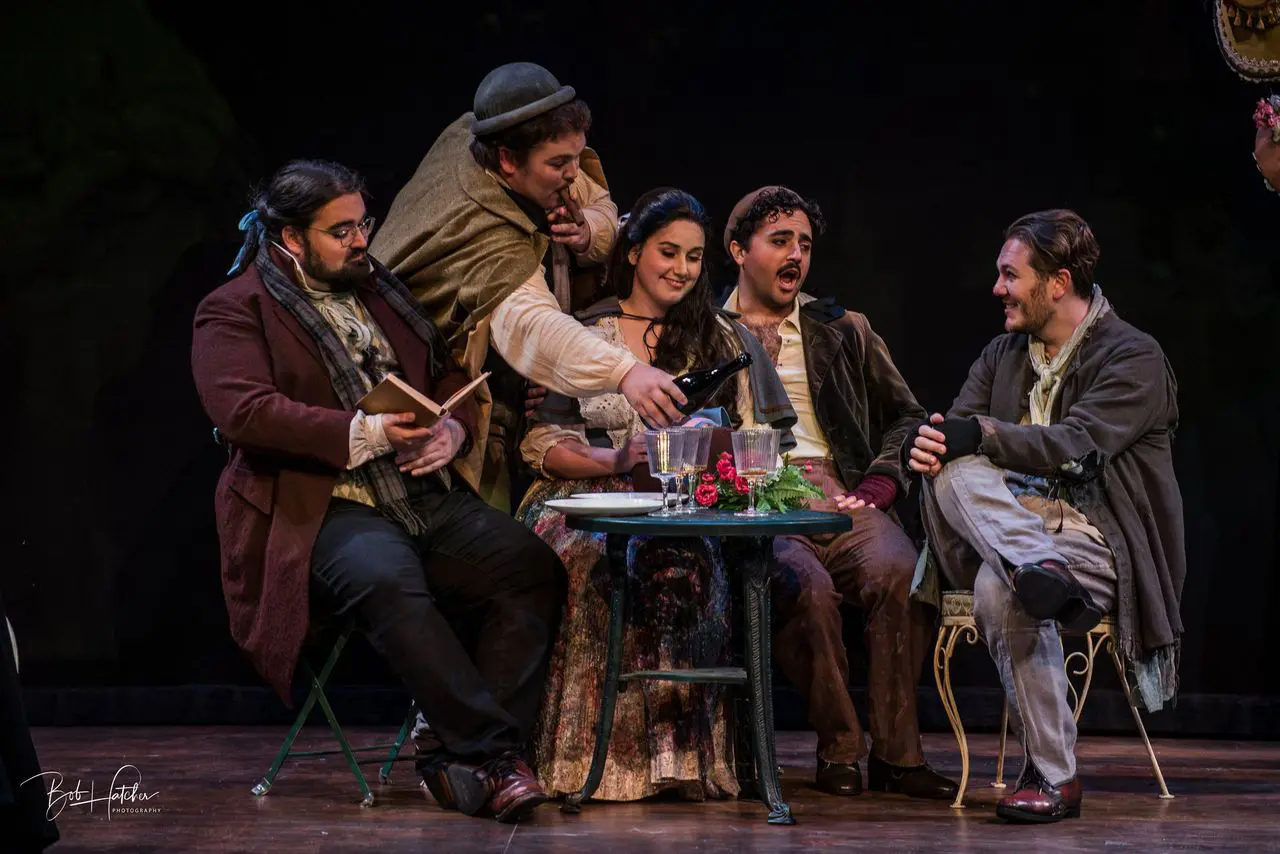
Photo Credit: Bob Hatcher Photography
The bohemians from left to right: Nicholas Murphy, Joshua Gibson, Ariane Cossette, Jeremy Scinocca and George Theodorakopoulos
Opera Canada depends on the generous contributions of its supporters to bring readers outstanding, in-depth coverage of opera in Canada and beyond. Please consider subscribing or donating today.