The COC’s 2026 winter season is a pairing of two very popular operas. The Barber of Seville ranks 9th in operabase.com’s list of most frequently performed titles, just edging out Rigoletto that takes the 10th spot. The company’s current production of Rigoletto was last seen at the Four Seasons Centre for the Performing Arts in 2018. This revival is a great evening at the opera, largely as a result of the exceptional work from the three principals.
Director Christopher Alden has created a dark version of Verdi’s work that all takes place in Michael Levine’s design of “‘the gaming room,’ where the men retire after dinner to…play games of power, control, and domination.”
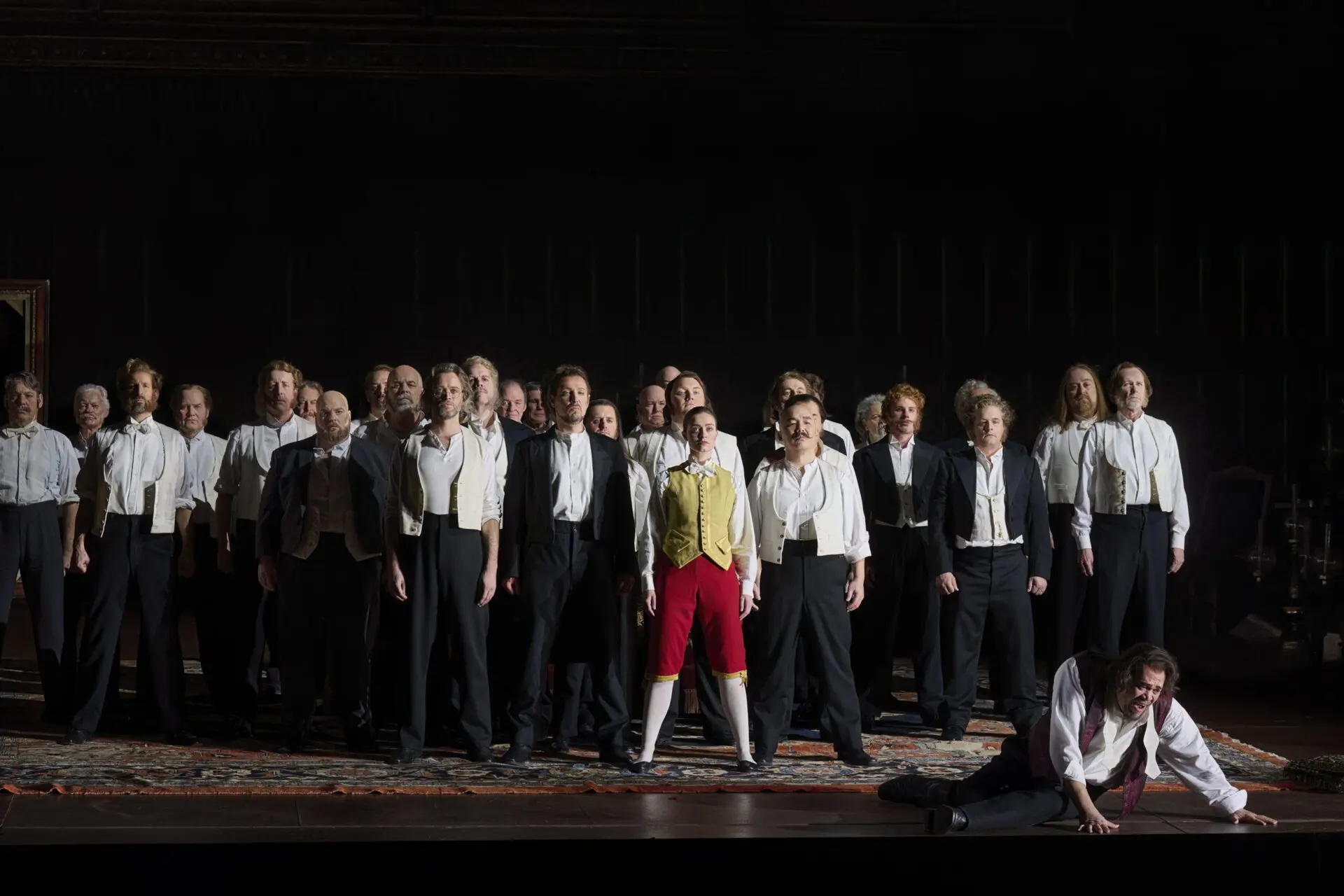
Moving away from a more traditional multi-set presentation requires additional suspension of disbelief on the part of the audience. Allowing some of the more disturbing offstage action to take place on stage – the Duke’s assault of Gilda, for example, takes place at stage centre surrounded (and blocked from view) by the male chorus – makes the production theatrically striking. In this heightened presentation, Rigoletto’s treatment of his daughter Gilda seems to move beyond fatherly care into a kind of terrifying control, verging almost on abuse, highlighting the attempts of the downtrodden hunchback to feel dominance in his home life that he does not experience among the Duke’s cronies.
Several important sequences, however, are played only on the downstage apron, to allow furniture changes on the primary set, in front of a plain black scrim and curtain. These sequences were more awkward theatrically and hurt the dramatic tension. The final payment made by Rigoletto to Sparafucile, for example, takes place in this “limbo” area, and it feels more like strangers passing in a bus stop than an assassin collecting for a murder he did not commit and providing the soon-to-be grieving father with the body of his dead child.
It didn’t help that this part of the stage was more difficult to light, and despite Revival Lighting Designer Mikael Kangas’s exciting work in some of the larger choral scenes, it was difficult to see the performers’ faces in front of the traveller curtain, even in some of the most intense moments.
A good production of a Verdi opera, however, will always rest on the musical performances, and here the COC production meets – and even surpasses – all expectations.
Baritone Quinn Kelsey is an exceptional Rigoletto. He has played this role around the world, including at the Met, LA Opera and Opernhaus Zürich, as well as in the COC’s 2011 production. His rich voice is capable of expressive singing in different colours at all dynamic levels, and he appears equally comfortable mocking the men in the opening scene and singing the gentle duet sections with Gilda. In the final section of his second act aria, “Cortigiani, vil razza dannata,” his command over the long phrases and his legato singing was truly heartbreaking, and it was one of the highlights of the performance.
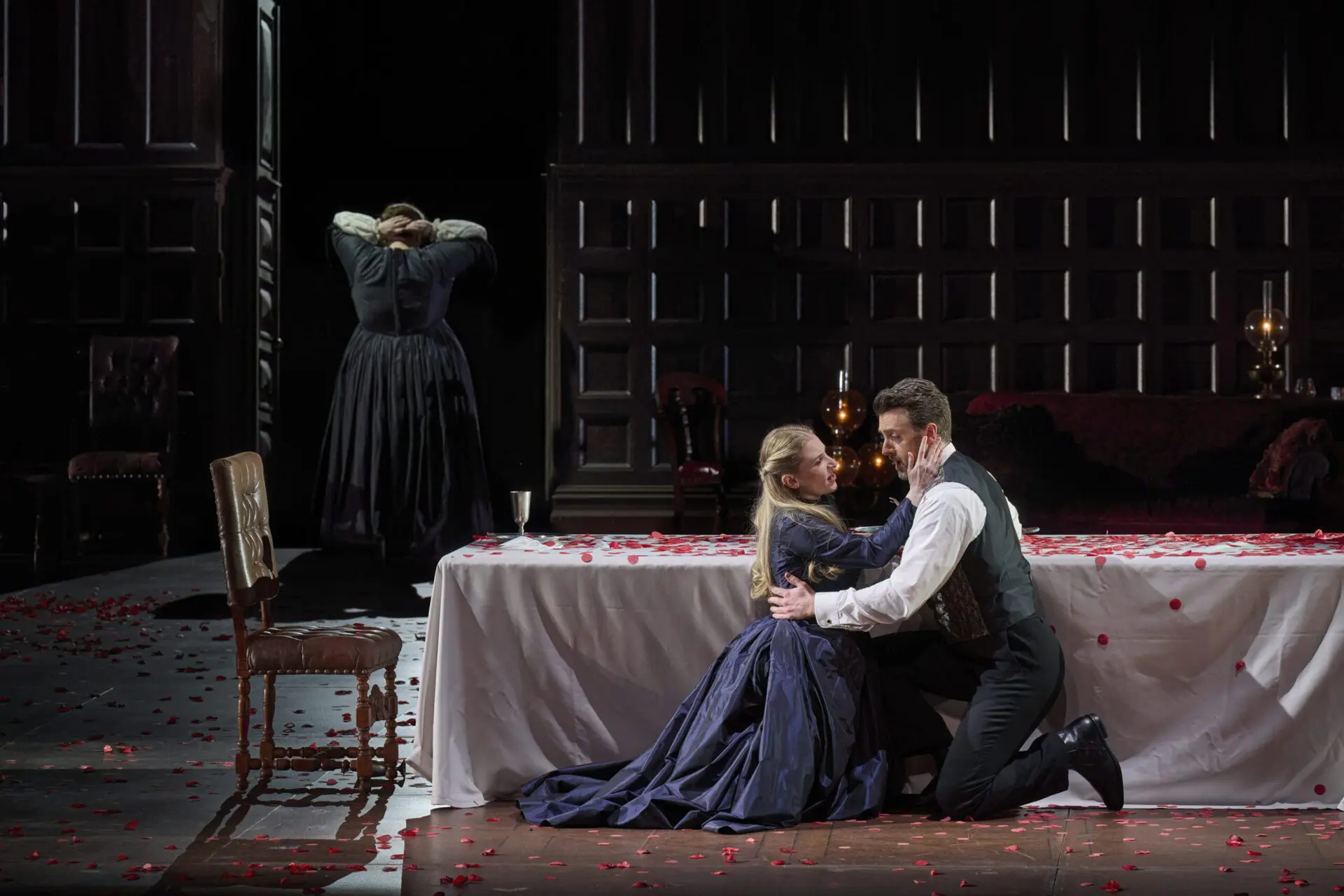
Photo Credit: Michael Cooper
Gilda (Sarah Dufresne) and the Duke (Ben Bliss) express their love
American tenor Ben Bliss makes his role debut as the Duke in this production, which may signal a move to some of the lighter Romantic roles in addition to the Mozart for which he is so rightly known. His instrument is beautiful and responded well to the demands of this repertoire. Although he was effective in the two well-known arias, his delivery of “Ella mi fu rapita!” and “Parmi veder le lagrime” in the second act showed the greatest depth of characterization. Even playing a particularly venal character, Bliss is charismatic onstage, with an easy charm that makes him a believable seducer.
Young Canadian soprano Sarah Dufresne sang Gilda, which she has recently performed for both Pacific Opera Victoria and Vancouver Opera. She and Canadian Andriana Chuchman, who takes over the role on February 10th, were announced as replacements in December after Andrea Carroll withdrew from the production.
Dufresne is at the beginning of what could be a major international career, and she proved her worth in this performance. She showed good facility at both extremes of her range, and her coloratura was light and precise. “Caro nome,” generously staged with the soprano stationary in the downstage centre position, was beautifully sung – clear and resonant. Dufresne is an effective actor with the ability to move quickly through different heightened emotions. She is less so when her character’s story arc is not the primary focus, but that will likely come with more experience.
Rounding out the principals, both Peixin Chen (Sparafucile) and Zoie Reams (Maddalena) were good. Though hampered by the staging, Chen demonstrated a comfortable stage presence and strong lower register, and Reams possesses a beautiful, rich mezzo colour that added depth to the famous quartet.
The COC orchestra always performs well under music director Johannes Debus. They played this score with assurance, remarkable balance between the pit and the singers, and some exceptional highlighting of countermelodies, particularly in the mid-range strings. The male chorus, under the leadership of Sandra Horst, also delivered another commanding performance.
Based solely on the musical performances, this Rigoletto would be a good showing from the COC. Add in an interesting – if sometimes problematic – staging that brings the audience more fully into some of the most dramatic moments, and it becomes a truly memorable evening at the theatre.
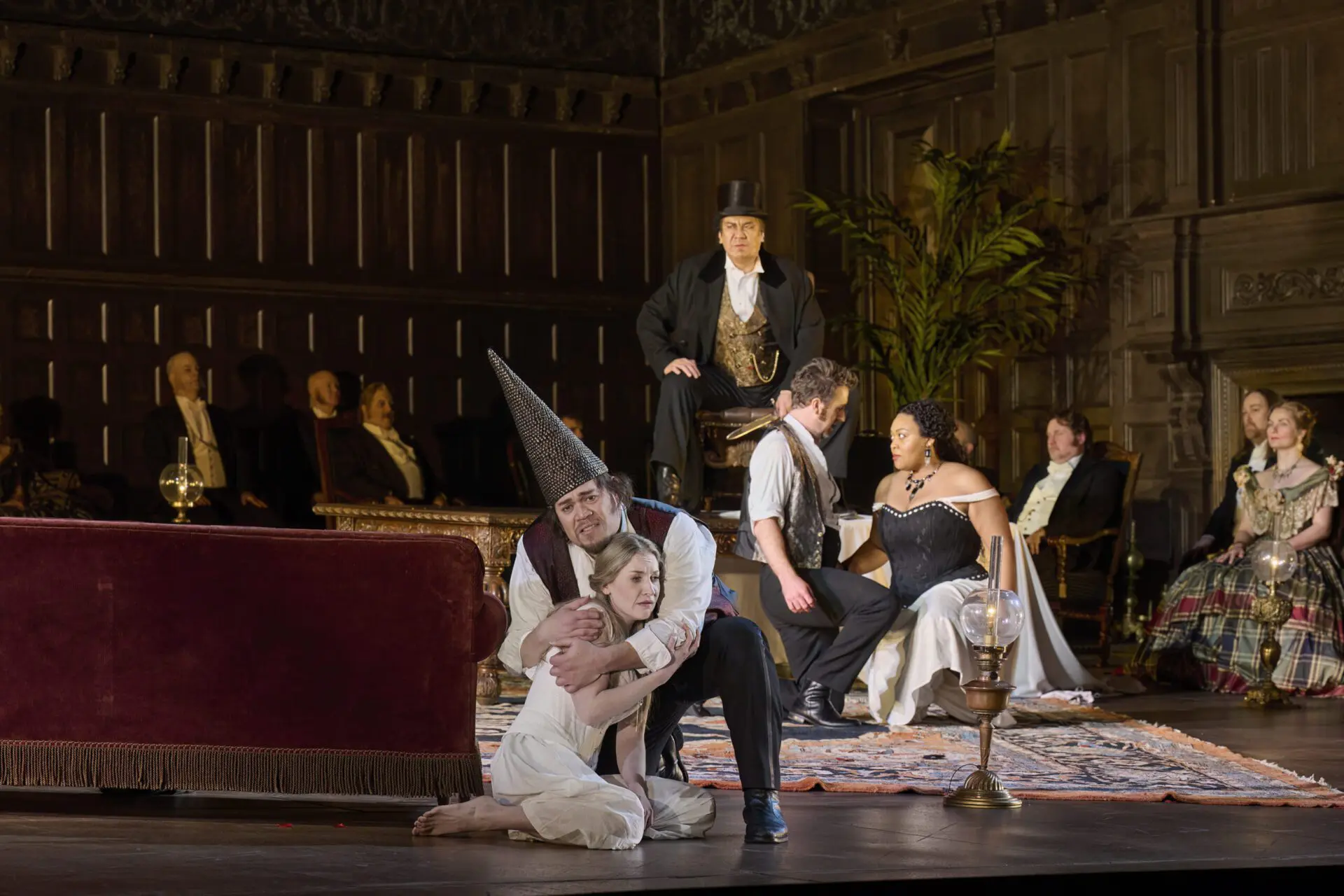
Photo Credit: Michael Cooper
“Bella figlia dell’amore,” performed by Quinn Kelsey, Sarah Dufresne, Ben Bliss and Zoie Reams
Opera Canada depends on the generous contributions of its supporters to bring readers outstanding, in-depth coverage of opera in Canada and beyond. Please consider subscribing or donating today.