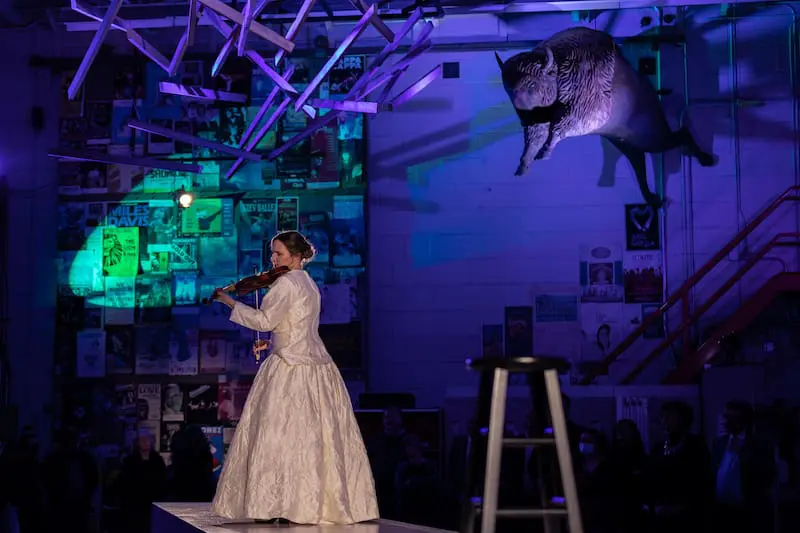
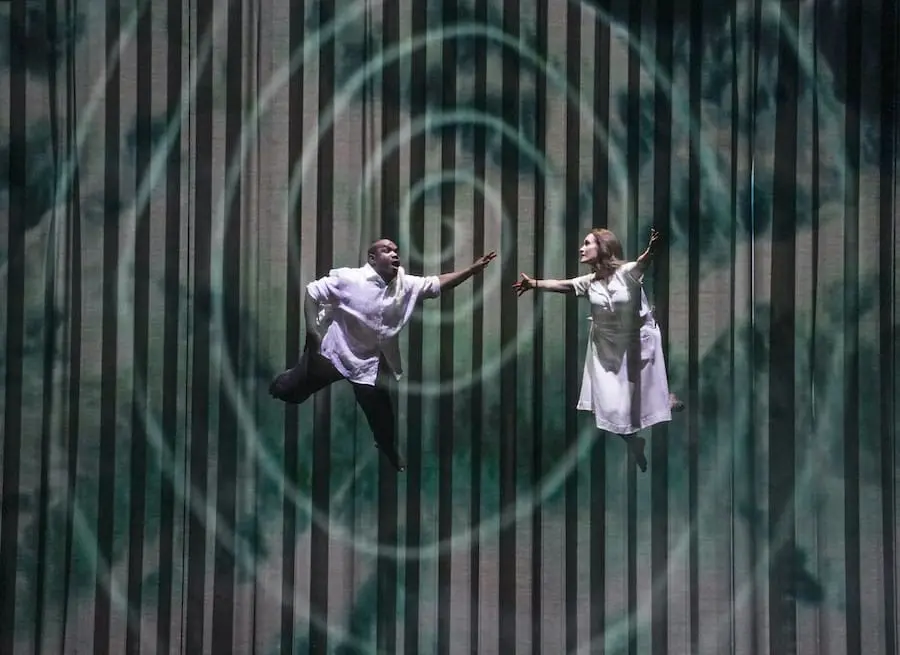
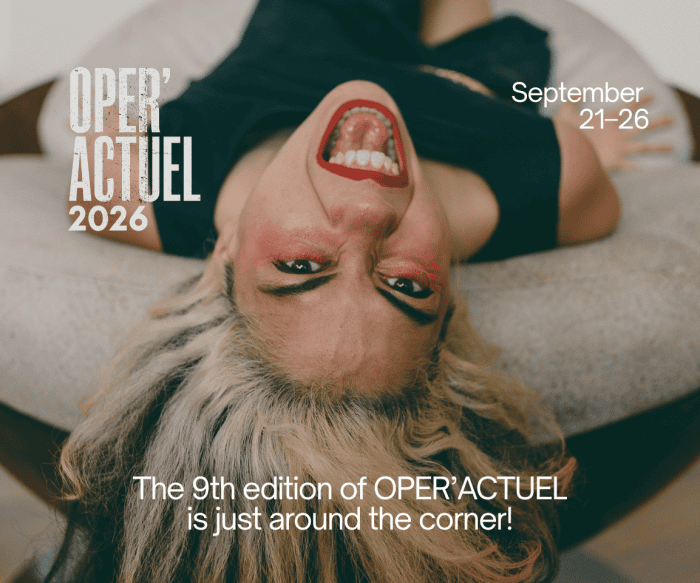
Akasha is a new opera created by and starring Longueil-based soprano Kripa Nageshwar. It was premiered on September 21, 2026, as part of the inaugural OPER’ACTUEL festival, a week of contemporary opera events organized by Montreal’s Chants Libres.
The Sanskrit word “Akasha” means, among other things, the ethereal space that souls emerge from at birth and return to at the end of each lifetime. Nageshwar describes the show as a performance piece and opera dance drama, blending Western classical vocal music with Indian music and poetry.
This abridged concert version of the new opera featured an aria from Bizet’s Les pêcheurs de perles; songs by Maurice Delage, a contemporary of Debussy’s who spent time in India; a contemporary piece identified as “Invocation” from a larger work by Sothivannan, who I couldn’t find more information about; a brand-new piece by Canadian composer Colin Eatock, “Ashes of Soldiers”; and about a dozen different sung or spoken Indian poems, mostly delivered in Indian languages – presumably Bengali for the works of Rabindranath Tagore, and perhaps Sanskrit for those of Bhartrhari or Adi Shankaracharya. The poems could also have been translations into Hindi or another unfamiliar-to-me language. These elements were woven into Nageshwar’s spoken narration, which also flowed freely between English, French and an Indian language. As the singer and central figure, Nageshwar embodied the soul’s journey of incarnation, from the ether to the body and back.
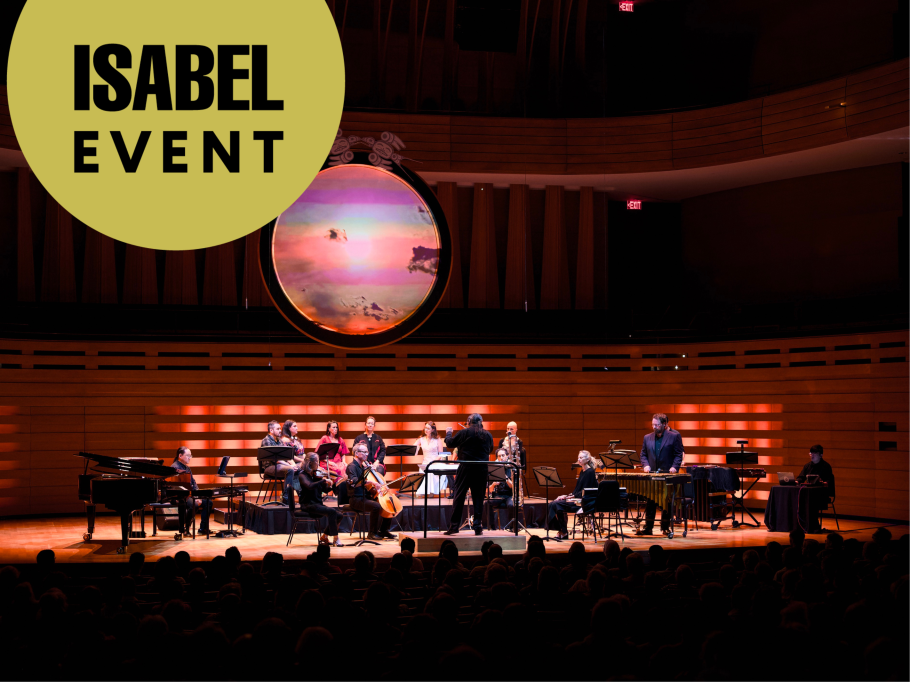
There were five performers onstage besides Nageshwar, all excellent. Raja Bhattacharya played sarod, manjira and steel tongue drum. Anjana Srinivasan on Carnatic violin sat beside him. Both also provided readings of texts as part of the narrative. Katayoun Malekmotiee was virtuosic and versatile on the santoor, adding her sound to the narration and the French classical pieces as well as the Indian music-making. Soo-Hyun Ahn played piano, providing close support to Nageshwar and the other musicians. Clarinetist Julien Deguire had a lovely solo in the Eatock piece and provided some simple plucking on the tanpura.
Together, the six musicians and the production team skillfully crafted an atmosphere of earnest, enraptured spirituality. Slow, microphone-amplified breaths were a recurring motif – “the breath of life, the breath of the universe.” The show ran about 75 minutes, and this mood shifted very little; Nageshwar also had little interaction with the instrumentalists, who were sitting behind her. If the show is to get longer, I would hope to see some slightly more dynamic elements added.
I enjoyed the combined lyrical contemplation and emotional intensity of the Colin Eatock and the Maurice Delage songs, which were new to me. Nageshwar’s vowel quality was a little uneven during the Bizet, which prevented some of the coloratura from fully coming across, and she lost some of the warmth in her tone for uppermost notes of the Sothivannan. I thought she shone brightest in the Carnatic vocal music with the ensemble. There is a sleek, supple ease to her voice, and her elegant and expressive stage presence held my attention whether or not I understood the language.
This is an exciting direction for contemporary opera to take, and I will be very interested to see its evolution. There is a lot here for lovers of all kinds of music to discover.
Opera Canada depends on the generous contributions of its supporters to bring readers outstanding, in-depth coverage of opera in Canada and beyond. Please consider subscribing or donating today.