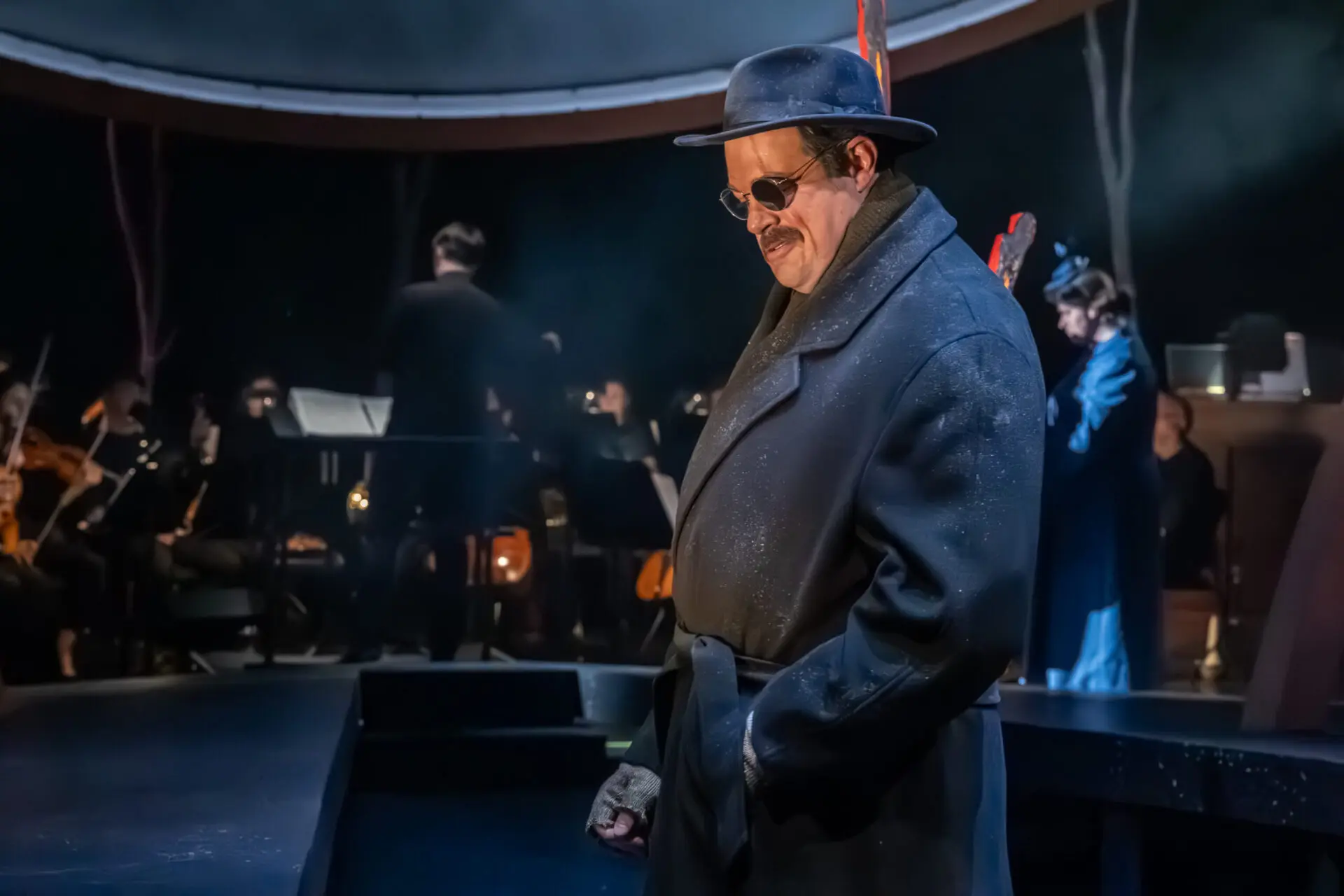
Edmonton Opera wrapped its disrupted season with an abridged version of Wagner’s Siegfried at a downtown Edmonton theatre.
The company produced the first two parts of Jonathan Dove’s pared down Ring Cycle in the previous two seasons. The entire Ring Cycle is shorter than the original by about five or six hours in Dove's versions, created to make the works more accessible to a broader range of companies. Artistic director Joel Ivany says the final opera in the cycle, Götterdämmerung, will be programmed sometime in the future, but not next season. With the return, next season, to the company's once regular venue, the 2,000-seat Jubilee Auditorium for Rossini’s Barber of Seville and Mozart’s Magic Flute, as Ivany is, as he says in the program, inviting "us to dream at scale once again.”
This season, the company experienced a significant setback after commissioning a new opera from composer Ian Cusson and librettist Royce Vavrek, based on Thomas King’s novel Indians on Vacation, which it planned to present last February, but the production was cancelled in November after learning that the author of the novel admitted he was not, in fact, Indigenous, notwithstanding the fact that the composer and most of the hired singers were. So, the company has been almost invisible in 2025-26, offering nothing that would count as opera until this miniaturized Wagner.
For the most part, the central theme of heroism in Siegfried, with larger-than-life characters engaged in existential conflict, is difficult to convey realistically with a diminutive orchestra of nineteen players and a bare-bones set, dominated by a large oblong-shaped scrim above the thrust stage that often mirrored in black and white what we saw on the performance platform. Early on, it also showed a bank of what looked like 50s-style TVs emitting unstable images of what appeared to be sparks from Mime’s forge, gnarly clusters of branches, and those same sparks fluttering about. There was no depiction of Fafner, the dragon, on the big screen, which I have seen done.
Choosing modern garb isn’t unconventional, but why the hero Siegfried (Samuel Levine) wore a skull-cap-sized red toque and a dull, zippered vest was a stumper. Granted, Siegfried is a charismatic teenager, but he’s certainly not a B-boy or an insouciant skateboarder. Neil Craighead, reprising his role as Wotan, looked sharp in a belted overcoat and a dress hat. He wore a black double-breasted blazer under the coat. Putting Erda (Sydney Frodsham) in a satin night gown, given she’d been summoned from her slumbers by her husband, Wotan, made sense.
Under the direction of the company’s music director Simon Rivard, the modest contingent of excellent musicians, many drawn from the ranks of the Edmonton Symphony, rendered the gist of Wagner’s score with polish and unnoticeable strain. They played within themselves, as it were. The second act horn work of the ESO’s principal, Allene Hackleman, was impeccably sonorous. Levine’s kazoo work, on the other hand, before he found his natural voice to commune with the birds, was humorously sputtery. The high winds also stood out in the bird song scenes.
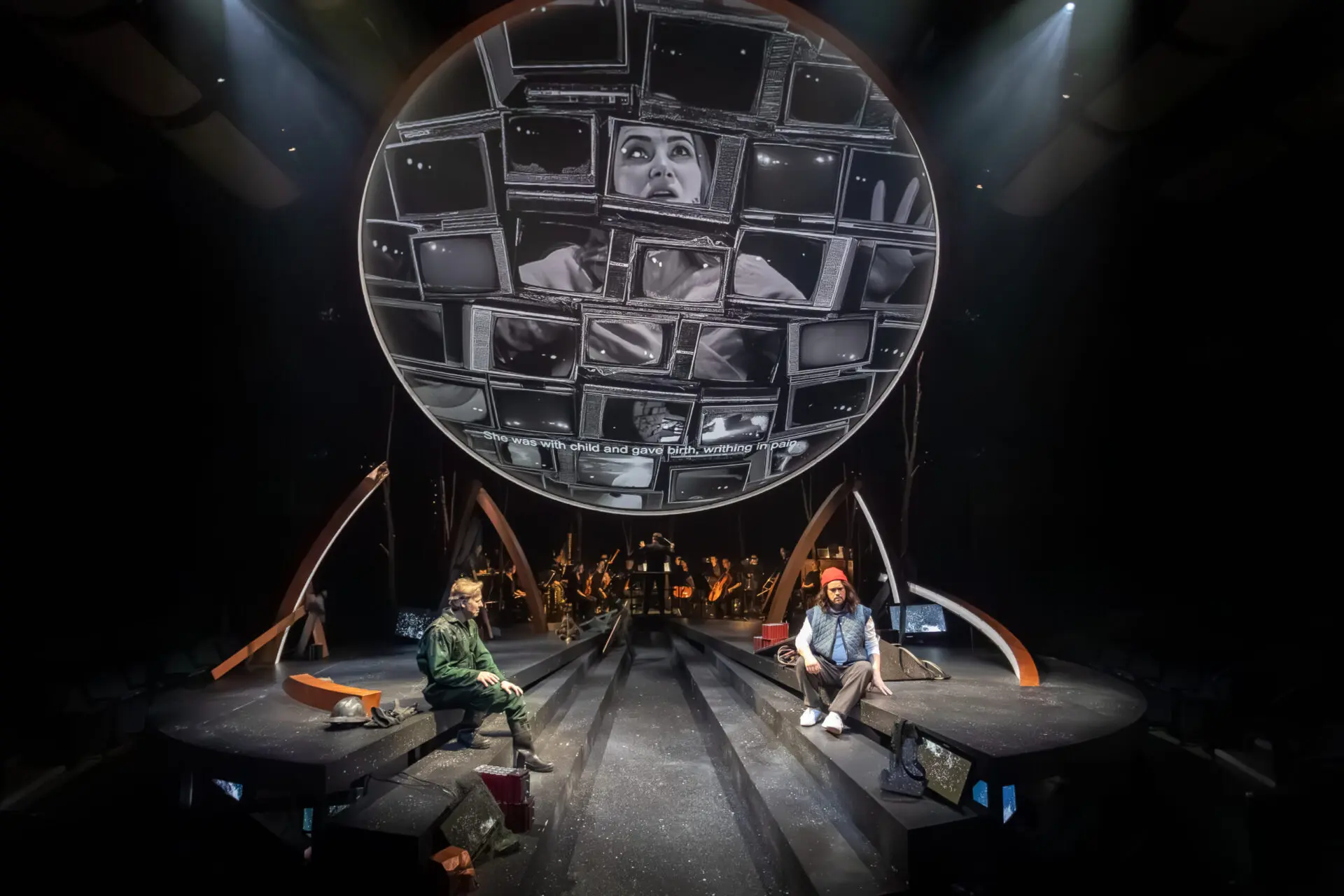
Photo Credit: Nanc Price
John Tessier as Mime and Samuel Levine in the title role of Siegfried at Edmonton Opera
Cutting the opera in half gave all the singers a less taxing night than they’d have otherwise. Mime (John Tessier) and Levine had the most stage time, and both delivered the largely parlando roles clearly and at times playfully. Their act one bickering about getting the hero’s sword repaired was theatrically engaging, and Mime’s final scene, when Siegfried’s treacherous guardian tries to poison him, was lively enough. Tessier is a fine lyric tenor who has played many roles requiring his bright, happy sound. His role in Siegfried is set in a lower tessitura, so that feature of Tessier’s talent was less evident, but overall, his Mime served the drama solidly.
Levine, another tenor, showed little of the bravado one might expect from a heroic role. The small venue didn’t require full-force heldentenor chops, but he might have embellished his portrayal more just to add more “music drama” to the occasion, but his climactic scene with Brünnhilde did have punch.
Craighead distinguished himself once again with his robust baritone and an imperious stage presence befitting the chief of the gods. His scene with Erda in Act Three also showed his struggle to hide his vulnerability, and his final confrontation with his grandson, Siegfried, displayed one final attempt to protect his dwindling power. Even as a spent force, Wotan projected angry resistance to his encroaching twilight.
Baritone Dion Mazerolle impressed as the ambitious Niebelung dwarf in Das Rheingold. He had less to do in Siegfried, but he made the most of it in his standoff with Mime after Siegfried has slain the dragon, Fafner (bass Alex Halliday). Halliday’s fatal stage fight with the hero hardly inspired awe, but his dark singing captured the monster’s menace.
In the final scene, we hear Jaclyn Grossman as Brünnhilde, reprising her role from Die Walküre. She made the most of her small contribution, elevating the tone of the evening to truly operatic heights. The audience was roused to vigorous applause at the end, I think partly by what Grossman brought to the production.
Director Rodula Gaitanou managed the comings and goings of the singers fluidly. She used the whole Maclab Theatre sensibily to give the audience many places to look as the performance unfolded.
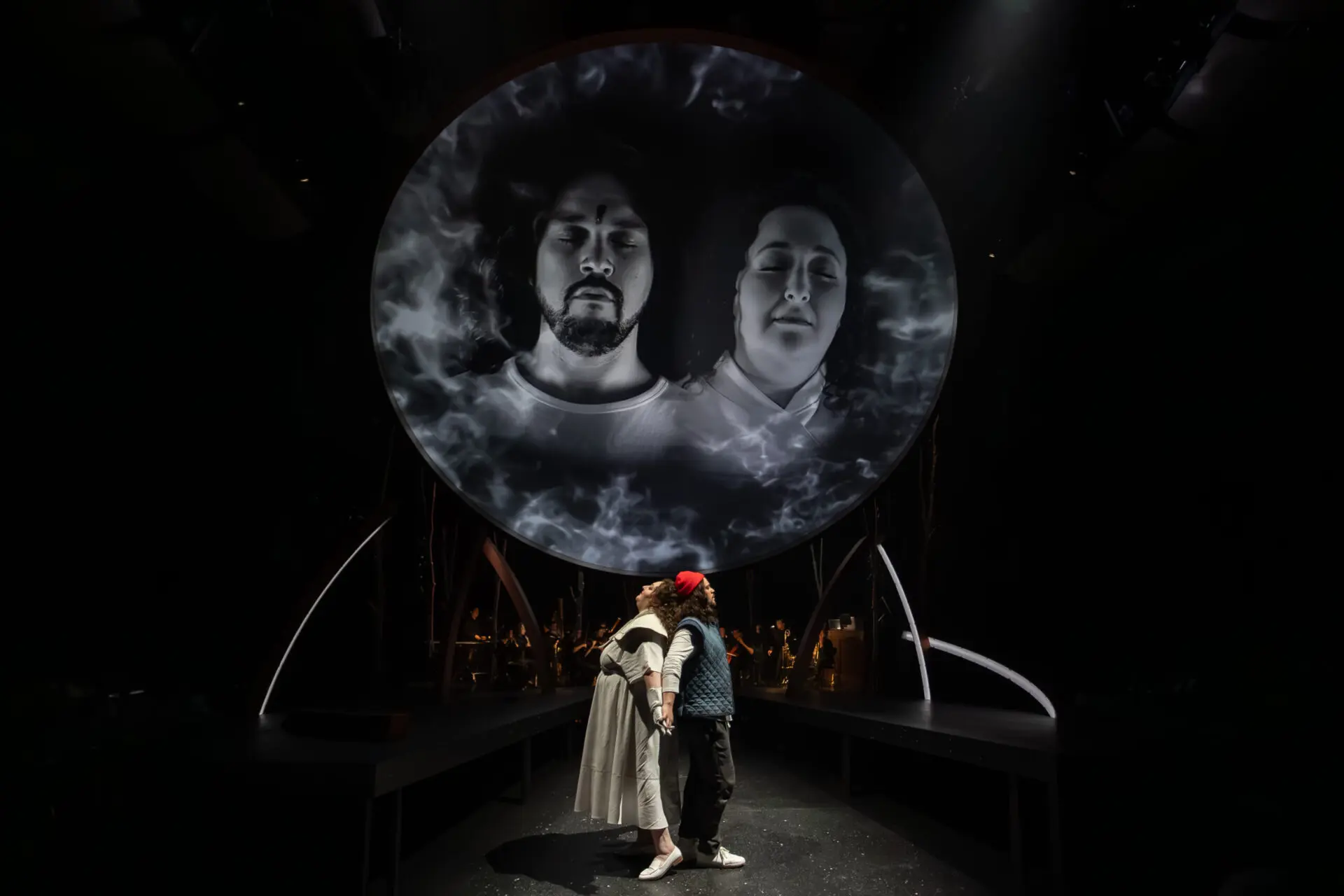
Photo Credit: Nanc Price
Jaclyn Grossman and Samuel Levine underneath the giant scrim that often mirrored the characters onstage
Opera Canada depends on the generous contributions of its supporters to bring readers outstanding, in-depth coverage of opera in Canada and beyond. Please consider subscribing or donating today.