The 14th Festival d’opéra de Québec took place from July 23rd to August 3rd. As a result of difficult conditions that all arts organizations have been experiencing since the pandemic, it was reduced from 12 paid programs to 10 this year, omitting the inaugural major opera concert. This did not prevent the Festival from combining tradition and innovation by including, in addition to the three performances of Bizet‘s Carmen, two world premieres highlighting the richness of French-speaking repertoire. It also focused on women and their quest for freedom, which sometimes ends tragically.
Pocket Operas
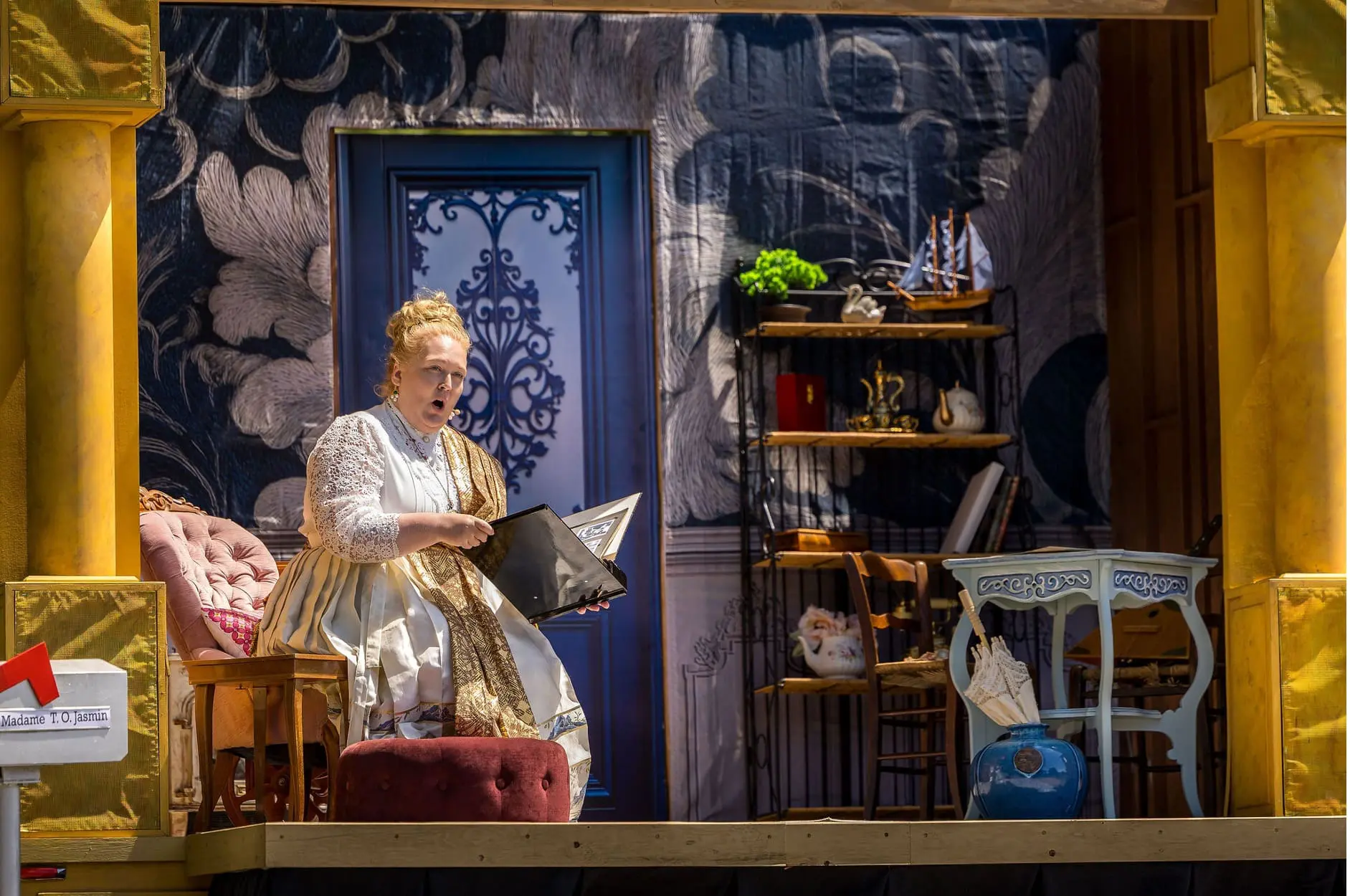
Faithful to its mission to promote the talents of Quebec singers and to make opera accessible to all through free activities, the Festival d’opéra de Québec gave 11 outdoor performances of two short operatic works that are easily transportable, staged by actress Érika Gagnon and showcasing Sophie Martel‘s remarkable sets and costumes.
The Brigade Opéra presented La théière, a world premiere by Jean-Philippe Lavoie (libretto) and Jean-François Mailloux (music). Operas for children presented by their company, Cont’Opéra, have been well-received for several years. This time, they targeted a wider audience with a little-known tale by Hans Christian Andersen. Tailored for contralto Priscilla-Ann Tremblay, Mailloux’s music, which nods to bel canto, beautifully captures the joys, disappointments and second life of a broken teapot.
The Brigade Opérette chose À Clichy, a one-act comic opera by Adolphe Adam that premiered in Paris in 1854. The action takes place in a prison where the cell neighbors, a little-known poet and a composer, end up becoming friends and discovering familial ties. Tenor Étienne Quirion and baritones Pierre Rancourt and Michel Desbiens, accompanied on the piano by Jean-François Mailloux, showed real pleasure in playing and singing the work of the composer of “O Holy Night.”
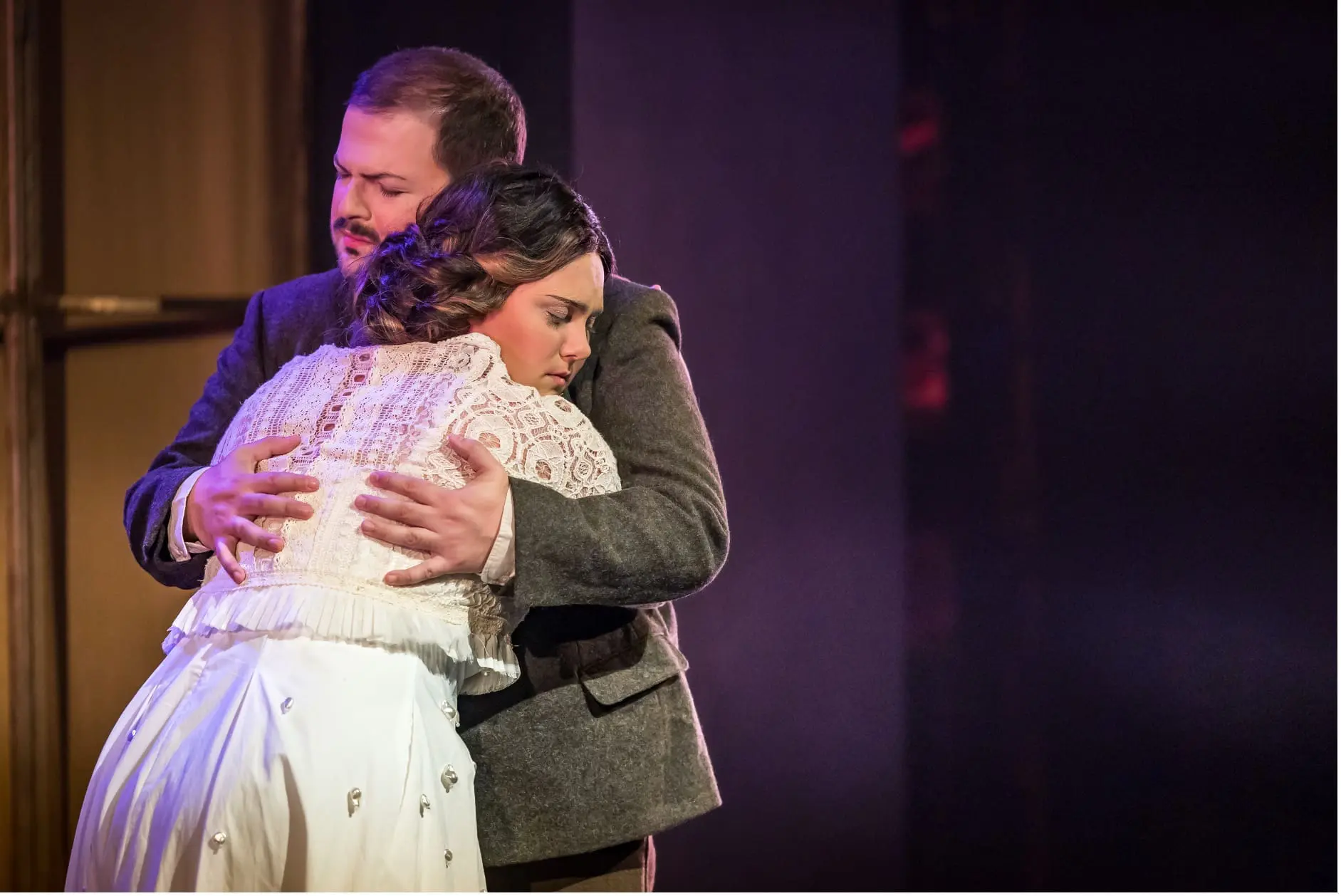
Photo Credit: Jessica Latouche
Azur Simard and Joé Lampron-Dandonneau in Souvenirs de Lakmé
Singing and Religious Heritage
Circuit Opera, which has allowed young singers to gain exposure at major cultural sites in Old Québec since 2022, was held in five churches rich in history and works of art, which sheltered the concerts from the vagaries of the weather. In each church, a singer (sopranos Émilie Baillargeon, Geneviève Dompierre-Smith and Andrée-Anne Laprise, tenor Louis-Charles Gagnon and bass-baritone Marc-André Caron) and an instrumentalist (vibraphone, piano, organ, guitar, accordion) allowed listeners to experience unexpected sound combinations and original or newly arranged work.
Souvenirs de Lakmé (Remembering Lakmé)
For its ninth collaboration with Jeunesses Musicales Canada, the Festival returned to the stage of the Théâtre La Bordée for Souvenirs de Lakmé, an abridged version of Léo Delibes’s Lakmé. Four young singers and a pianist presented the impossible love story of Lakmé, daughter of the Brahmin Nilakantha, and the British officer Gérald. With a narrative serving as a common thread, Lakmé’s servant Mallika remembered the sad fate of her mistress.
Directing her first opera, the actress Constance Malenfant underlined Lakmé’s passion and Mallika’s powerlessness in the face of brewing tragedy. In the costumes by Ontario’s Margarita Brodie and on the sober set by Marianne Lonergan Pilotto, the singers, who were very well prepared by music director Esther Gonthier, showed real promise.
Baritone Élie Lefebvre-Pellegrino (Nilakantha and Frédéric) has a round, warm voice and played the inflexible father figure with conviction. Tenor Joé Lampron-Dandonneau, as Gérald, shone with his agility and power, even if his high notes were sometimes a little short. Mezzo-soprano Julie Boutrais, a passionate narrator, made Mallika a devoted servant whose voice blended harmoniously with Lakmé’s, notably in the famous Flower Duet. The focal point of the evening, however, was soprano Azur Simard, a moving Lakmé, whose exceptional interpretation of the Bell Song earned her a long and spontaneous ovation. Very attentive to his singers, pianist Jean-Luc Therrien brought out all the facets of the score.
From October 15th through November 16th, Souvenirs de Lakmé will tour Quebec and New Brunswick.
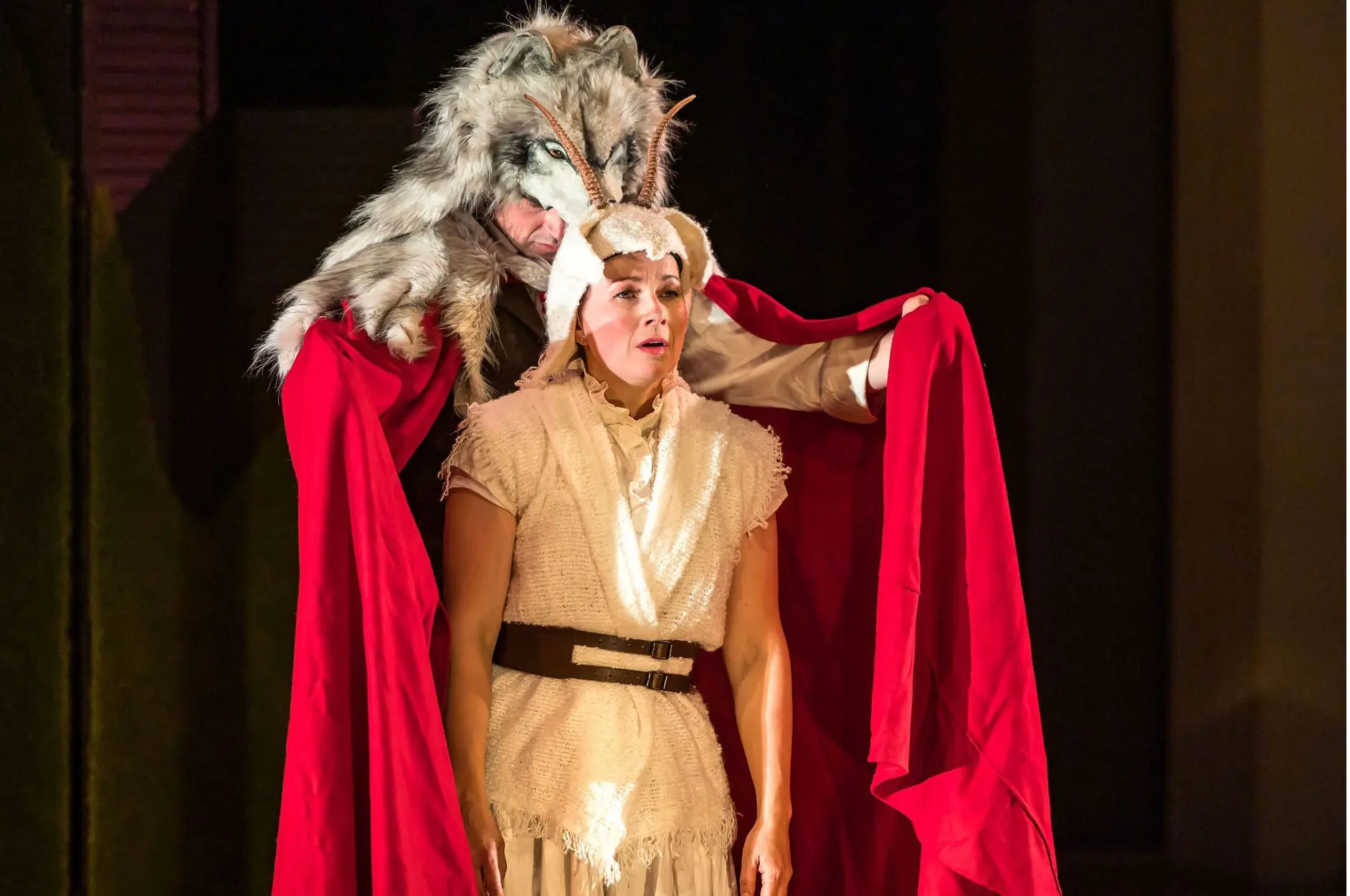
Photo Credit: Jessica Latouche
La chèvre de Monsieur Seguin in Salle Henri-Gagnon
Opera for Young Audiences
In keeping with what now seems to be a tradition at the Festival d’opéra de Québec, a musical tale for the whole family was presented at Université Laval‘s Salle Henri-Gagnon. La chèvre de Monsieur Seguin, inspired by Alphonse Daudet‘s Lettres de mon moulin (1869), is a “turnkey” production by Montreal company Voxpopuli. It combines narrative and music with the contemporary style of the company’s director, Patrick Mathieu.
La chèvre was directed by actor Claude Tremblay, with costumes and sets by Leïlah Dufour-Forget, and is a touching blend of humour and drama. It was brilliantly told and performed by actors Jacques Piperni and Félix Tremblay-Therrien. Accompanied by pianist Marie-Michèle Raby, baritone Pierre Rancourt, playing several roles including that of the wolf, and mezzo-soprano Maude Côté-Gendron as La Chèvre were vocally impeccable.
Around Pierrot lunaire
For its fourth consecutive year, the Festival d’opéra de Québec has included contemporary creation, this time in co-production with the Vancouver company Ne.Sans Opera and Dance and the Berlin-based collective Crown the Muse. Pierrot entre 3 lunes premiered at the Théâtre Périscope on July 31st. The work combines choreography, pantomime and electronic music with Arnold Schoenberg‘s Pierrot lunaire sung in French.
To the 21 poems of this 1912 expressionist work, British Columbian composer and soprano Rachel Fenlon, now based in Berlin, added a prologue, two vocalises and an epilogue drawn from poems of Albert Giraud not used by Schoenberg. The piece created an enveloping universe, by turns lyrical, dramatic and mysterious. Fenlon and mezzo-soprano Mireille Lebel, both partners in Crown the Muse, divided up the movements of Schoenberg’s work. The voices were beautiful, sometimes even too beautiful, being more inclined towards lyricism than towards the cabaret Sprechgesang intended by Schoenberg. I would have liked to have understood more of what Fenlon was singing, so surtitles would have helped. Visually, the legendary character of the commedia dell’arte sailed in an ambiguity of gender and social class. Fenlon’s Pierrot, often tormented, contrasted with the graceful and feminine Pierrot of Mireille Lebel, dressed as a ballerina.
Staged and choreographed by Israeli-Canadian Idan Cohen, founder of Ne.Sans Opera and Dance, paired dancer Will Jessup with the two Pierrots. With a feline agility, Jessup twirled in their wake, running on the spot and whirling with virtuosity. Dancing sometimes with a mop and a bottle of cleaning product, he reflected those we don’t want to see, subjugated as we are by the crown that the two Pierrots were fighting over.
German pianist Karl Hirzer, who in Fenlon’s work sometimes played directly on the strings of the instrument, led an excellent Québecois instrumental ensemble consisting of Austin Wu (violin), William Foy (viola), Dominic Painchaud (cello), Mireille Duchesne (flutes) and Mélanie Bourassa (clarinets).
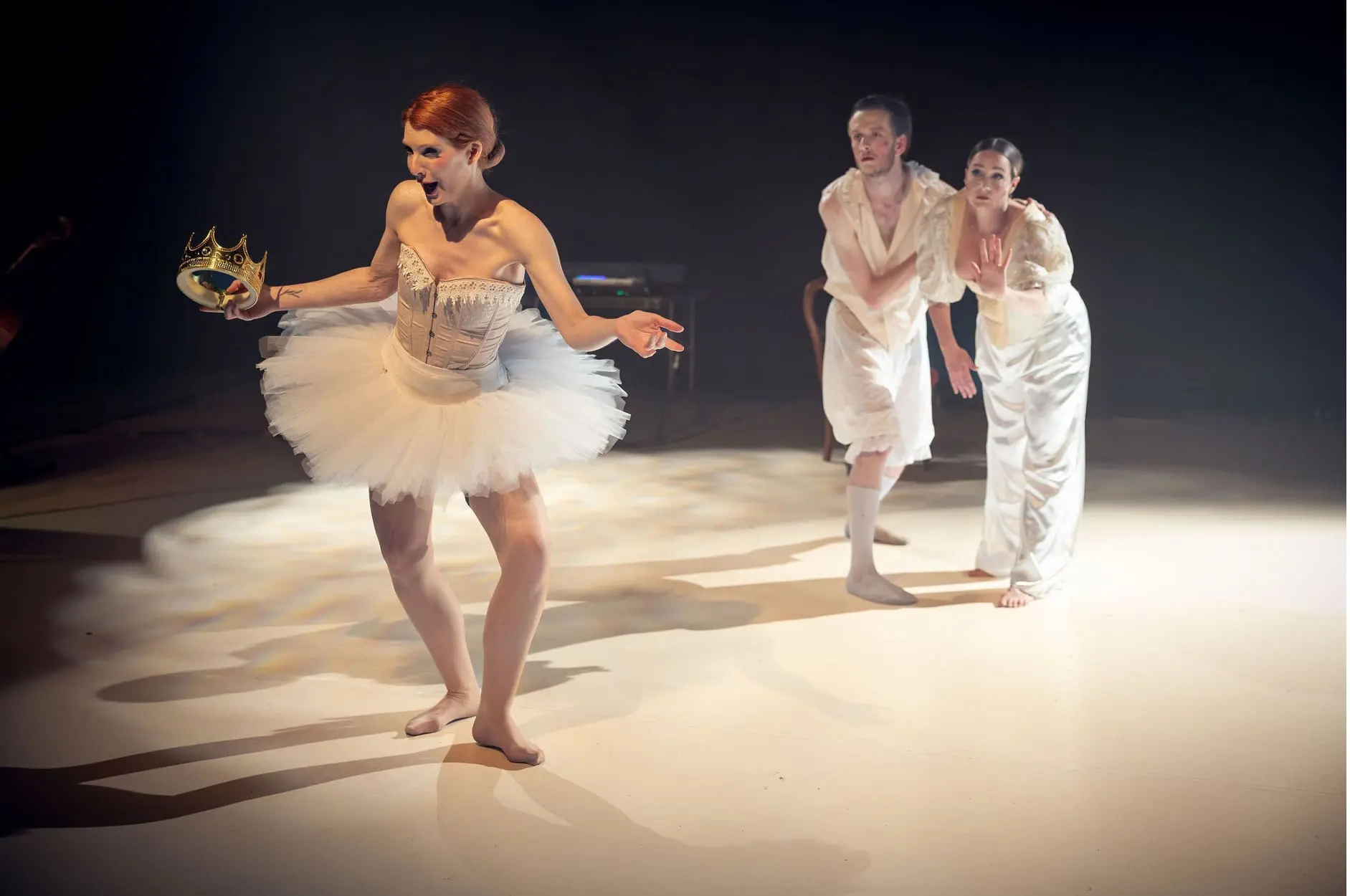
Photo Credit: Jessica Latouche
Mireille Lebel, Will Jessup and Rachel Fenlon in Pierrot entre 3 lunes
Opera Canada depends on the generous contributions of its supporters to bring readers outstanding, in-depth coverage of opera in Canada and beyond. Please consider subscribing or donating today.