Opéra de Montréal opened its 2026/27 season with Turandot. In this co-production between Opéra de Montréal, Washington National Opera and Dallas Opera, Puccini’s unfinished final work has a new ending, with music by Grammy-winning composer Christopher Tin and a libretto by Susan Soon He Stanton, a playwright and Emmy-winning screenwriter whose credits include Succession.
Maida Hundeling stars as Princess Turandot opposite tenor Andrea Shin as Calaf – signature roles for both singers. The opera’s massive crescendi and long, luxurious lines felt safe in their hands. Hundeling has a rich dramatic soprano with an edge and all the regal bearing required of the Princess. Her vibrato sometimes strayed slightly from the pitch during recitative, but her high notes and vocal climaxes were electrifying throughout.
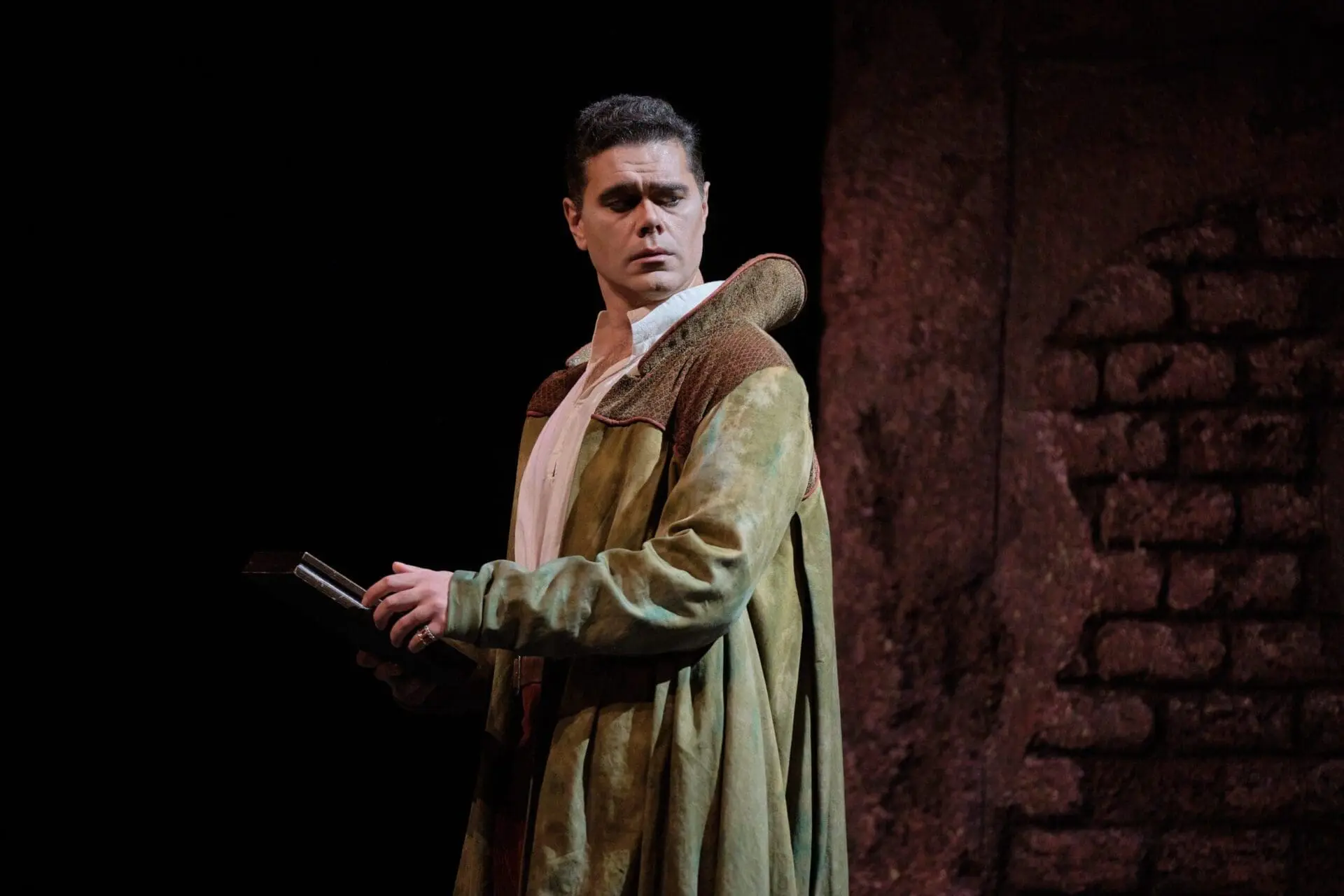
In his physical acting, Shin felt static to me, sticking mostly to straightforward operatic gestures and postures. (Maybe this is just the curse of the unsympathetic leading man – I felt the same way about Don José in last season’s Carmen.) But his warm, incisive tenor made for a confident and compelling “Nessun dorma,” drawing cheers and applause from the packed house.
Liù is the heart of the opera, and I think Kirsten MacKinnon was the heart of the cast. Her warm, generous soprano was beautifully phrased, with emotional swells alongside twinkling, pianissimo high notes that carried effortlessly across the hall. Her body language communicated all her desperation, hurt and courage, melding with her voice to create the night’s most spine-tingling moments.
Meanwhile, the Orchestre Métropolitain gave an impeccable performance under Paolo Arrivabeni. Much of the show’s atmosphere depends on the orchestra, and they rose to the challenge, revelling in Puccini’s dense, driving and colourful score while maintaining excellent balance with the singers.
Raymond Aceto’s rich, focused bass played very well as Calaf’s father Timur, and there seemed to be real tenderness between him and MacKinnon’s Liù. Richard Margison unfortunately under-projected as Altoum, although his air of frailty may have been a directorial choice: in the new Tin/Stanton version, he dies offstage after the riddle ceremony.
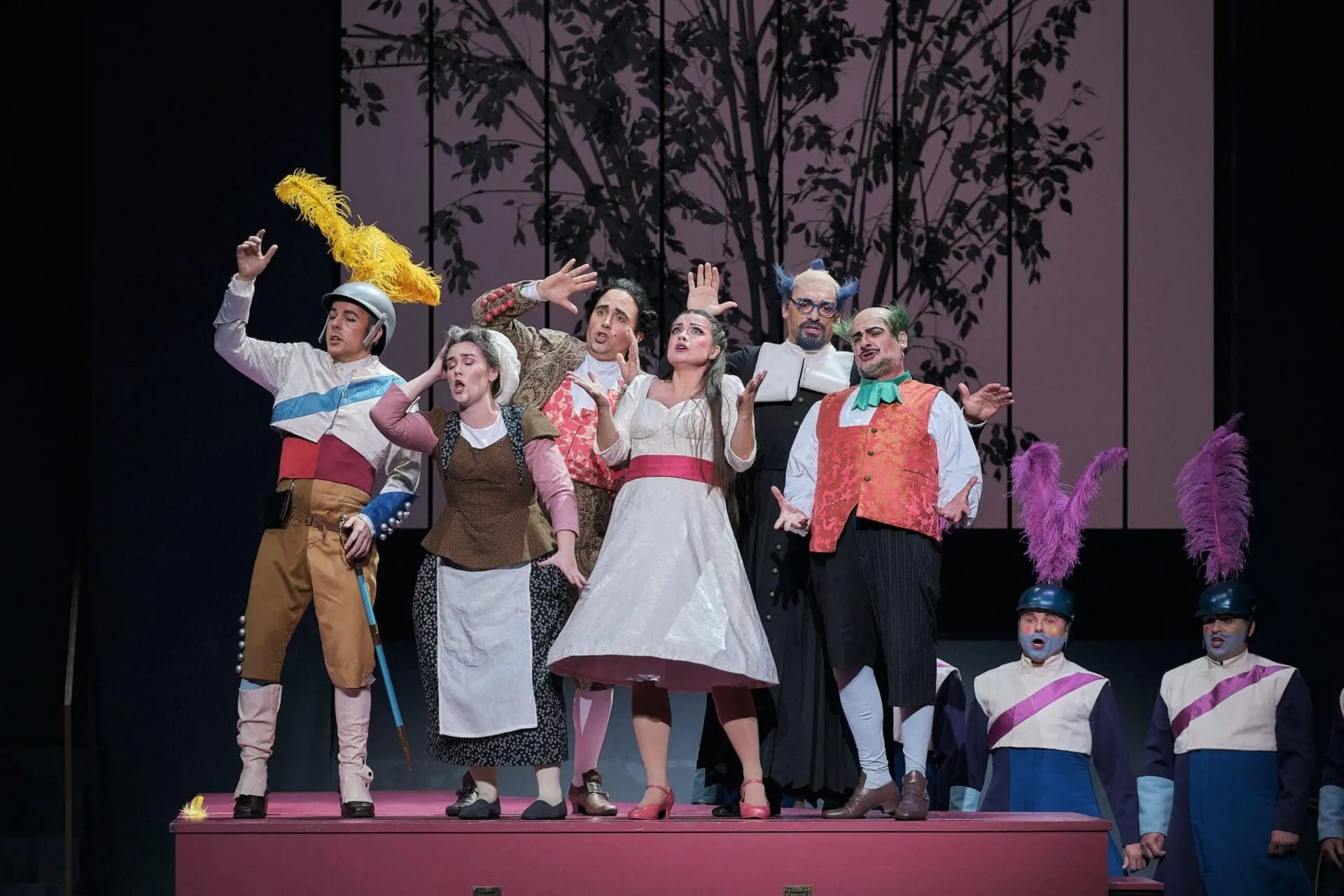
The Mandarin, who kicks off the opera by reading Turandot’s decree, found an admirable singer in baritone Colin Mackey, a member of the Atelier lyrique. Baritone Nathan Keoughan, tenor Rocco Rupolo and tenor Angelo Moretti – all former Atelier lyrique members – played the palace bureaucrats originally known as Ping, Pang and Pong, here rebranded as the Chancellor, Majordomo, and Head Chef. (Their names don’t matter to the opera at all, so I’m all for keeping the change.) The trio executed their tricky, fast-paced music with intensity and flair; their presence walked the line between humanizing Turandot’s world and highlighting its cruelty.
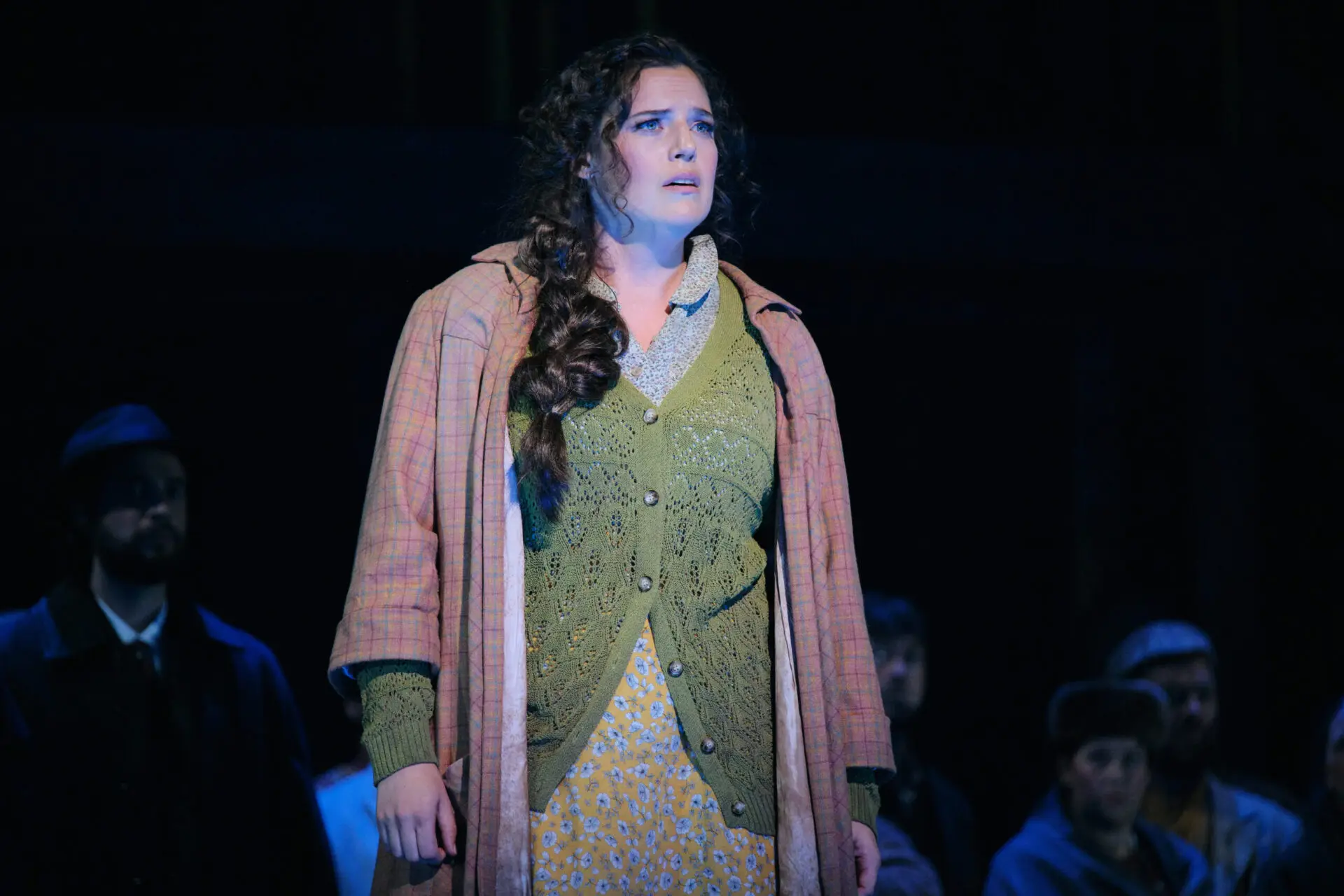
Photo Credit: Vivien Gaumand
Kirsten MacKinnon, as Liù, “is the heart of the opera"
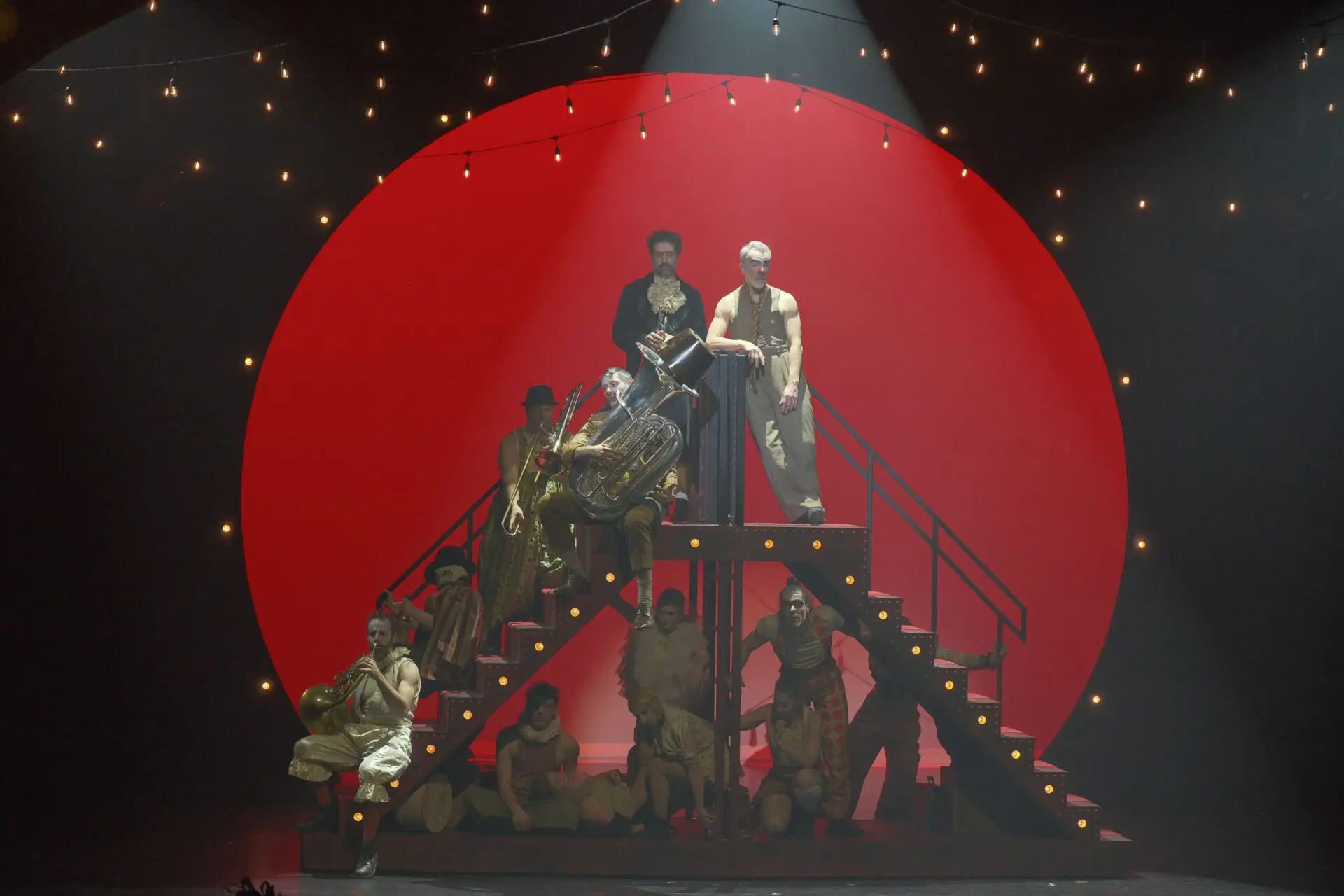
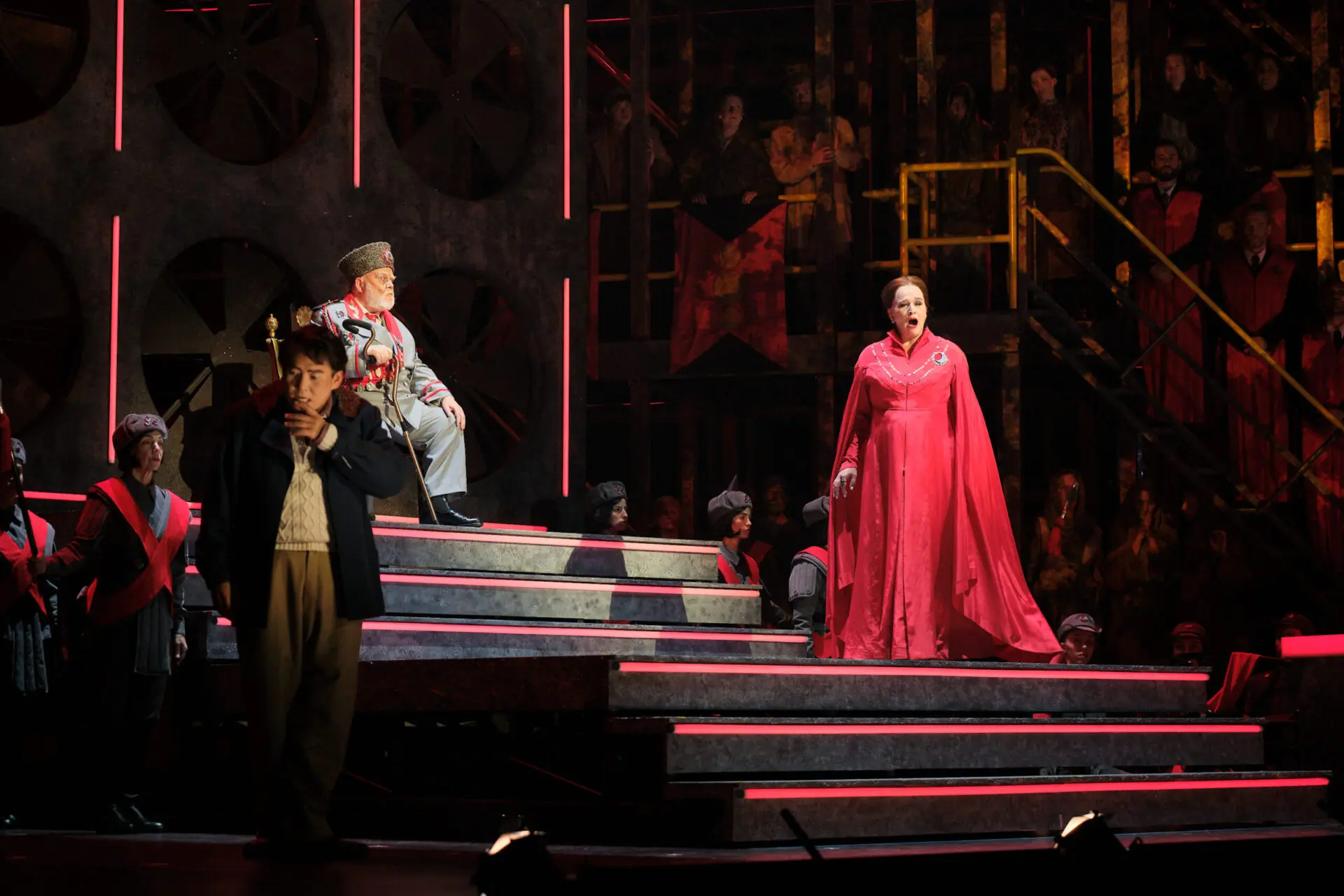
For the audience, a big part of Turandot’s world is spectacle. Francesca Zambello’s staging, styled as a retrofuturist communist dictatorship, does not disappoint. Amith Chandrashaker’s lighting design and S. Katy Tucker’s efficient video projections heightened the atmosphere of Wilson Chin’s grim, larger-than-life sets. I see from press photos that Linda Cho’s costumes for the chorus included hijabs, fezzes and other elements meant to evoke cosmopolitanism – but since their colour palette was uniformly muted, and since the set was often dark and foggy, that aspect was not readable from the audience. Dancers, choreographed by Jessica Lang and Kanji Segawa, played palace guards in twirling gray trenchcoats; they were wonderful to watch, though they didn’t always feel well integrated.
Here’s the thing: nothing in the Opéra de Montréal program or the production itself makes specific reference to China. If I was asked to pinpoint the reference, I might have said North Korea. But on the Kennedy Center blog, Zambello more than once refers to “Princess Turandot’s Beijing.” If Zambello’s goal was “to correct the way China and the characters were depicted,” as an NPR interview claims, was this really the way to go? I don’t think so. The production’s “China” still felt like a threatening, incomprehensible Other, a world of autocrats and sycophants redeemable only by outside forces wielding the power of love. Instead of an exotic fairytale East, it’s the Red Scare.
Setting that aside, the true novelty of this Turandot is the new ending by Tin and Stanton, who were specifically commissioned by Zambello. Here’s what happens (spoilers ahead).
Left alone after Liù’s death, Calaf and Turandot argue bitterly. The Princess says her people need a strong leader – the Emperor has just died, and she must prepare to take the throne. Calaf presses Turandot for the true reasons behind her violence. She eventually snaps, exclaiming, “Because the pain is mine!” There is an auditory flashback, and Turandot describes being kidnapped and sexually assaulted during an attack on the palace. She killed the man who raped her, and since then, every man who has tried to possess her has been killed.
Calaf seems to soften and change his tone, telling her she must find peace and choose life instead of death. They almost kiss, break apart, and then kiss passionately. (The audience cheered.) Calaf tells Turandot his name, putting himself at her mercy. They are finally united. Dawn breaks; the chorus gathers for the crowning of a new Empress, Turandot the Merciful, who calls for Liù to be buried alongside her ancestor Princess Louling. She tells the crowd that she knows the stranger’s name: his name is “Love.” A final triumphant chorus bursts forth, echoing Calaf’s “Vincerò.”
Tin’s music is gorgeous: urgent dialogue, orchestral swells, expressive chromaticism, poignant callbacks to themes from earlier in the opera. As for Stanton, this is her first opera libretto, and it’s remarkably seamless. It may not “solve” Turandot, but it’s far more compelling than what we’re used to. For one thing, in the standard Turandot completion by Franco Alfano, Calaf forces himself on the Princess. After he kisses her, she admits she loves him. It’s very “No means yes.” She loved him all along! All he had to do was kiss her against her will for her to reveal the truth! In the new ending, Turandot herself initiates the transformative kiss, making room for a touch of actual romance.
The other genuinely impactful change is that Turandot now has a motive besides avenging a long-dead ancestor – or simply being frigid and bloodthirsty. I thought the account of her assault was very well done. It’s clear how she came to conflate strength with violence.
That said, I don’t think Turandot’s 180-degree pivot is much more believable than before. Calaf, who has only ever been remorseless and monomaniacal, somehow manages to summon some truisms about healing and finding peace, and somehow that instantly works. The deeply traumatized Turandot – whose father has also just died – suddenly gets extremely cheerful and civic-minded, and her recently tortured populace rejoices. I suppose these two are a good match, in that they’re both willing to forfeit the lives of everyone around them to achieve their goals, but is that a “true, mutual partnership,” as the program’s plot synopsis claimed? Is that the power of love?
It’s worth the price of admission to see for yourself. In fact, I would love for the Tin/Stanton version to become standard, so that new stagings can offer new readings of it. In the meantime, you should not miss this Opéra de Montréal production, with its foreboding spectacle and triumphant, tragic Liù.
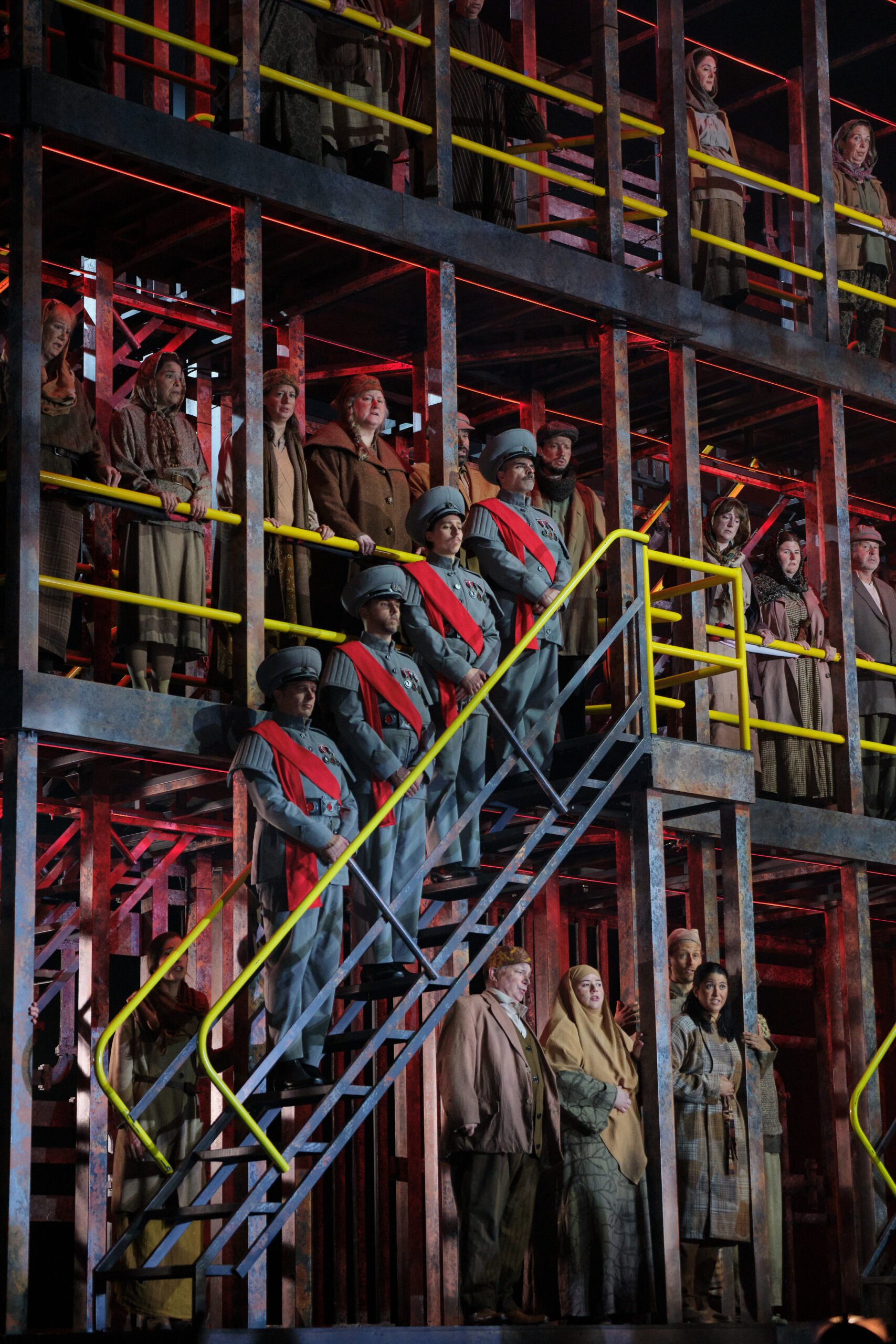
Photo Credit: Vivien Gaumand
In Francesca Zambello’s staging, Turandot takes place in a retrofuturist communist dictatorship
Opera Canada depends on the generous contributions of its supporters to bring readers outstanding, in-depth coverage of opera in Canada and beyond. Please consider subscribing or donating today.