On January 31st, the Opéra de Montréal presented the world premiere of Clown(s), a weird and wonderful new work by Serbian-born, Quebec-based composer Ana Sokolović. I’ve never seen anything remotely like it, and I doubt I ever will again.
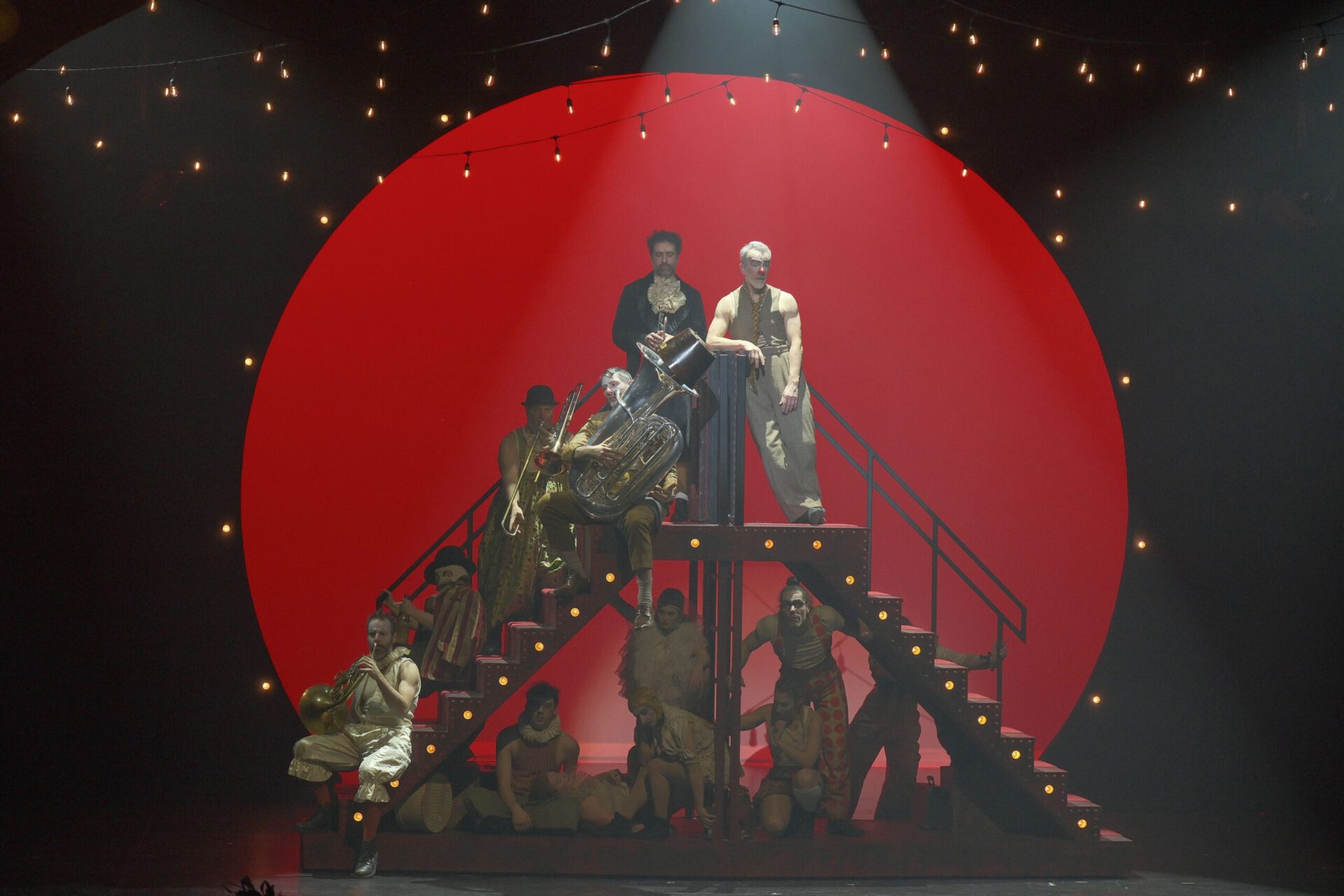
The show unfolds in seven tableaux on the stages of life, from birth to death, interspersed with five intermezzi and framed by a prologue and epilogue. The action is an amalgam of opera, circus, commedia dell’arte and cinema – especially silent cinema, with allusions to the masterful slapstick of Charlie Chaplin or Buster Keaton. The score is written for four solo singers, chorus, brass ensemble, percussion and ondes Martenot, and the musicians are joined onstage by eight performers from Montréal circus company DynamO Théâtre.
But that summary doesn’t do justice to the viewing experience. Here’s how it started. Before the house lights went down, the DynamO Théâtre performers started silently pushing a (broken-down) car onto the stage, smoking and lugging boxes of kit. The “Turn off your cell phones” announcement played several times, growing increasingly absurd: “In case of emergency, enjoy the show.”
Then the circus troupe began slinging suitcases to each other, unpacking with plenty of slapstick as the other performers trickled onto the stage. Everyone was wearing some sort of clown or circus costume – including the instrumentalists and the conductor, Jiří Rožeň, who burst triumphantly from a tall crate once everyone else was onstage.
Once the band had settled down in front of the stage, screens on either side of the stage lit up, showing the word “Prologue” as if it were a silent movie intertitle. No supertitles, though – presumably because Sokolović’s libretto moves freely between real and fake Italian, French, English and Serbian, so a lot of the words are expressive gibberish.
Without words, there was definitely no “plot” in the traditional sense, and many of the tableaux and intermezzi seemed open to various interpretations. Did the muscular strong-man puppet in “Adolescence” represent adult authority or another part of the teenage mind? Did the acrobatic trampoline act in “Young Adult” – which drew spontaneous, awed applause from the audience – represent romance or the unpredictable twists and turns of life?
Even without a strong grasp of what was going on, it was truly impossible to be bored. I caught words and gags here and there – the six-seven meme, the soprano pouring a drink for the horn player into the bell of his instrument – but mostly I let the music and visuals wash over me, riveted.
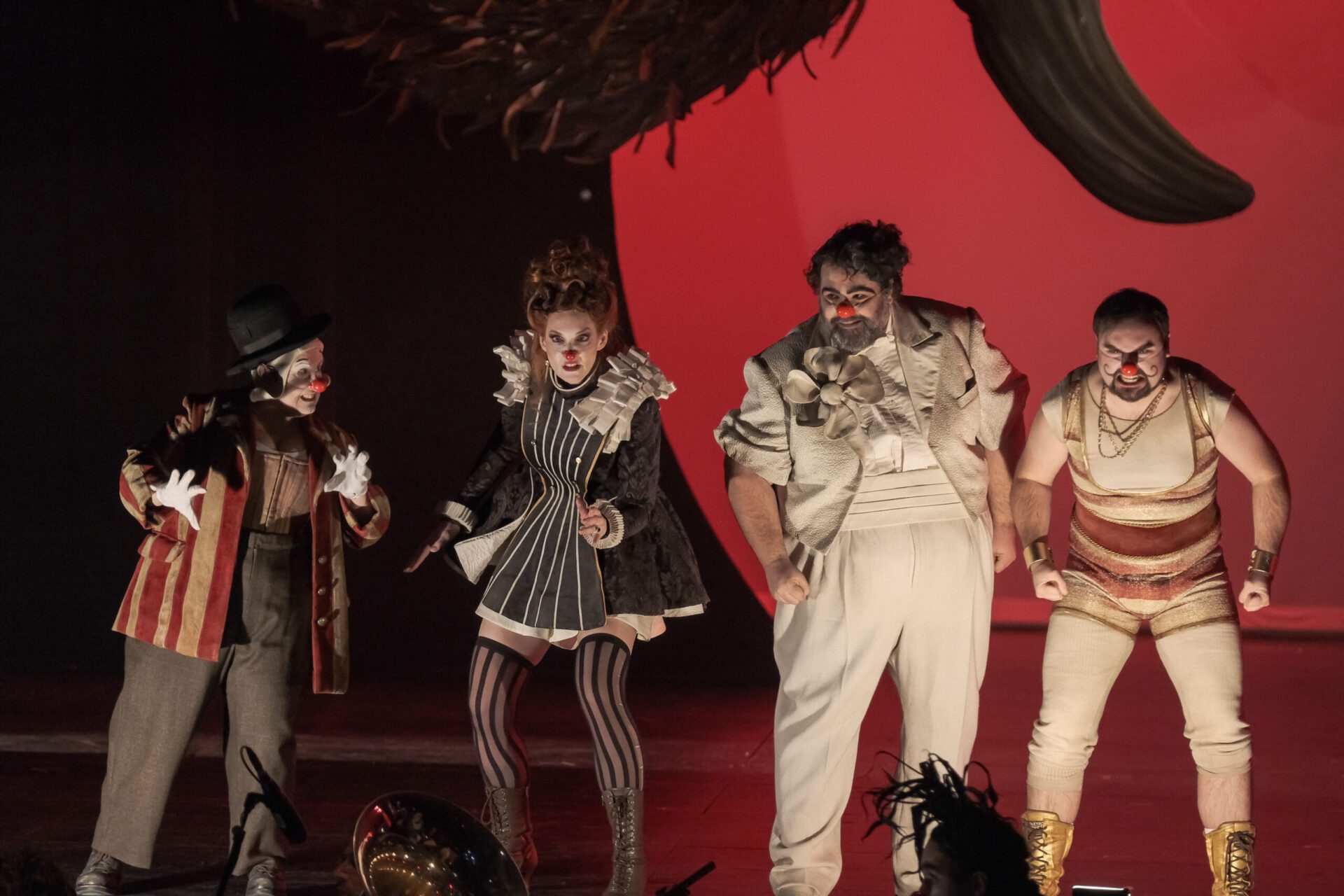
Photo Credit: Vivien Gaumand
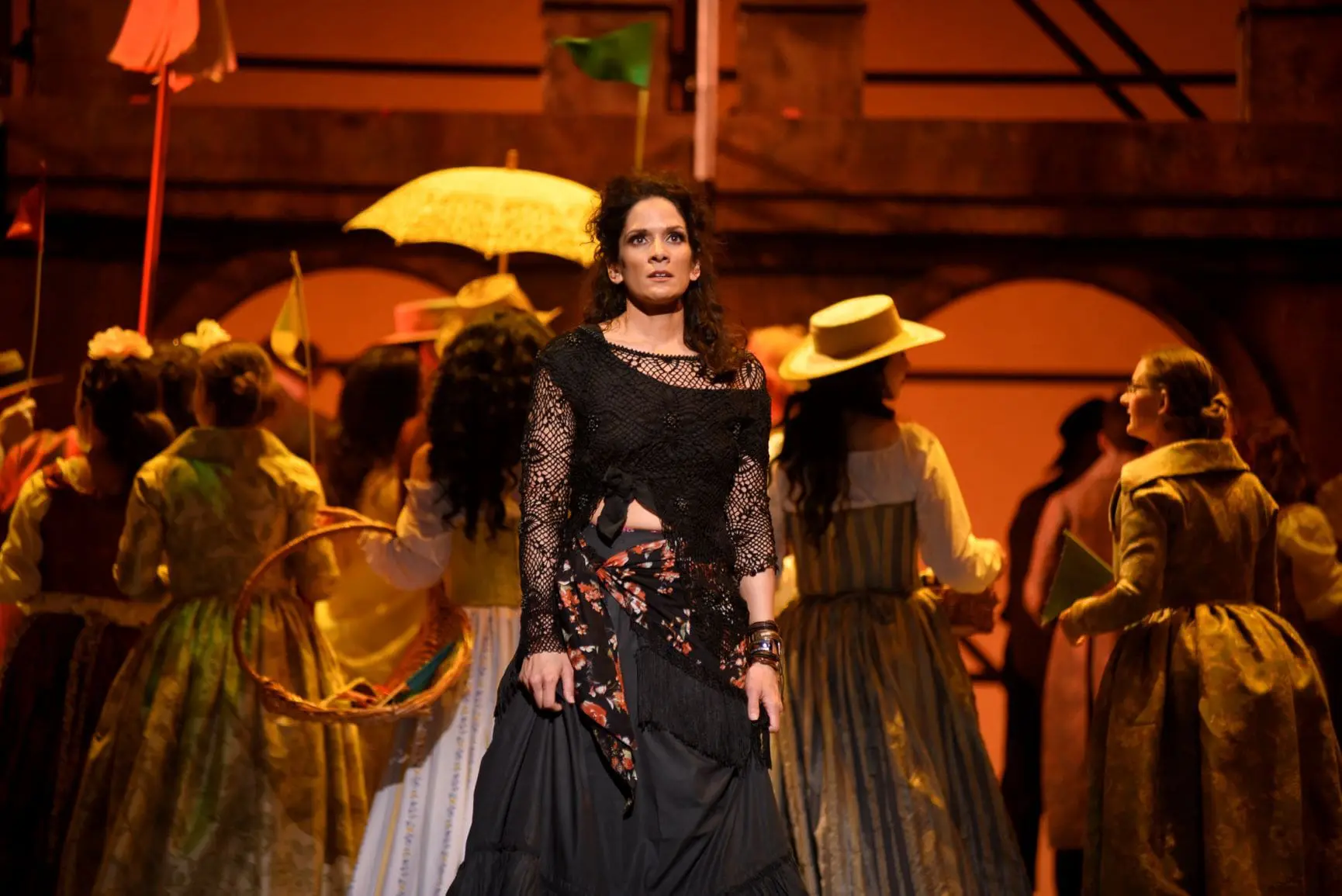
The clowns, from left to right: Aline Kutan, Mireille Lebel, Andrew Haji and Bruno Roy
In the words of director Martin Genest, who worked with Sokolović throughout the creation process, Sokolović’s music is extremely visual, and Sokolović herself refers to its “raw physicality” in a video interview. I can see it: Clown(s) is full of driving rhythms, strong contrasts and call-and-response, not to mention haunting melodies and striking dissonance.
Musical coordination felt very tight, despite the extremely high demands placed on all the musicians. The ondist, Wesley Shen, supplied everything from slapstick sound effects to otherworldly solo music. The brass band had to play a whole tableau, memorized, as part of the onstage action. The chorus executed precise rhythms and extreme vocal effects while navigating complicated blocking on moving sets, keeping up their clownish physicality.
The four solo singers (listed as Clowns 1 through 4) were soprano Aline Kutan, mezzo Mireille Lebel, tenor Andrew Haji and baritone Bruno Roy – all Canadian. They all rose to the occasion, although it’s difficult to separate their individual performances from the rest of the show’s moving parts. I thought Mireille Lebel, who essentially played the “diva” clown, did an especially good job of maintaining tone, projection and stage presence throughout.
Opéra de Montréal clearly went all in on this production, and the result is something special. A team of mostly Quebec-based talent brought Montreal’s love of circus into the world of opera, upsetting operatic conventions about who does what and who goes where.
More than that, the production was given enough time, resources and enthusiasm to feel fully realized on opening night. It’s rare for an opera to feel genuinely interdisciplinary, with so many different types of performance sharing centre stage: voice, acoustic and electronic instruments, clowning, acrobatics, mime, puppetry, shadow theatre, film and more, not to mention props, costumes, sets and lights.
The giddy curtain call was a testament to the show’s collaborative spirit: by the end, not only the composer but the entire crew – designers, tech team and all – were standing side by side onstage, almost all of them wearing red clown’s noses.
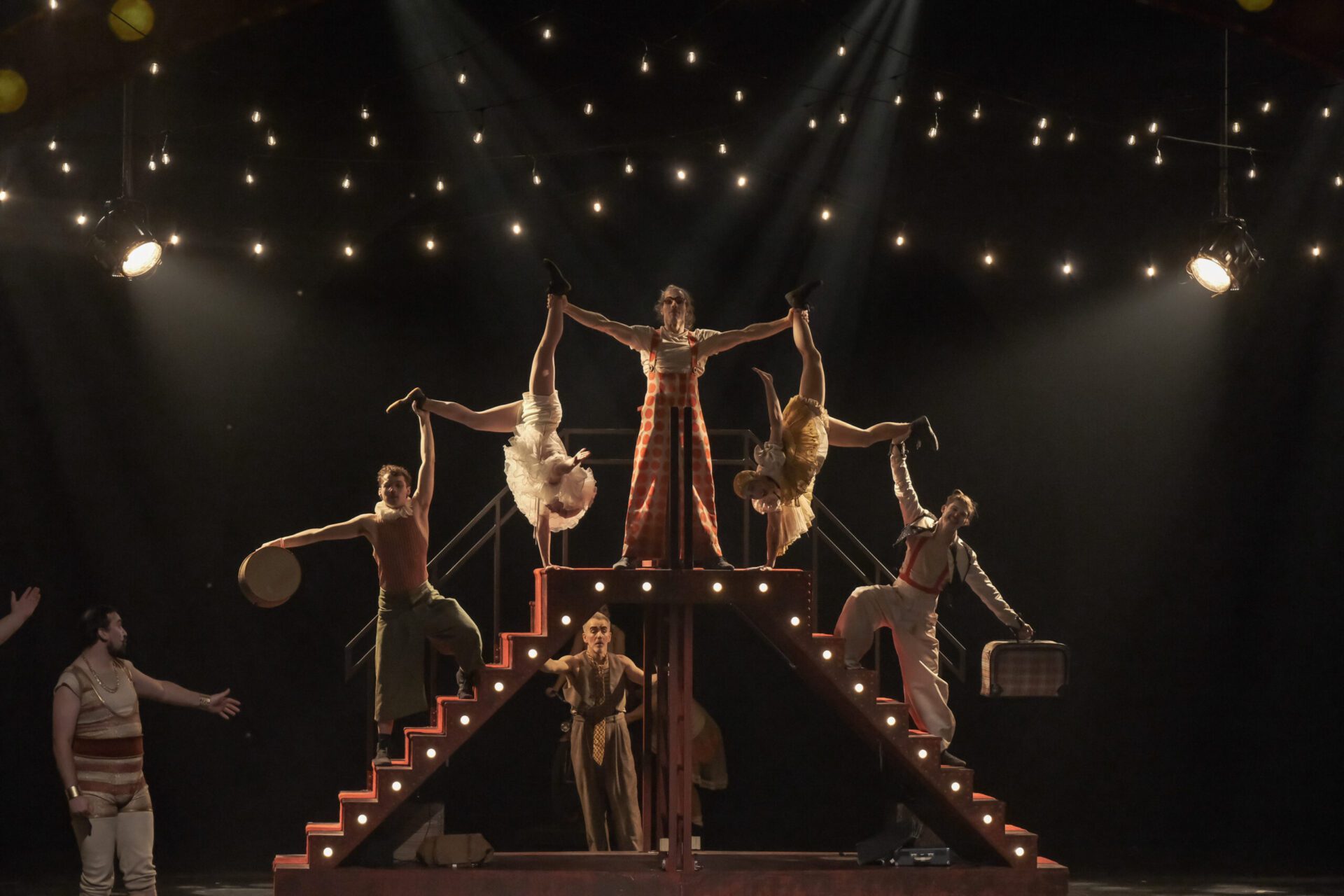
Photo Credit: Vivien Gaumand
The company of Clown(s) at Opéra de Montréal
Opera Canada depends on the generous contributions of its supporters to bring readers outstanding, in-depth coverage of opera in Canada and beyond. Please consider subscribing or donating today.