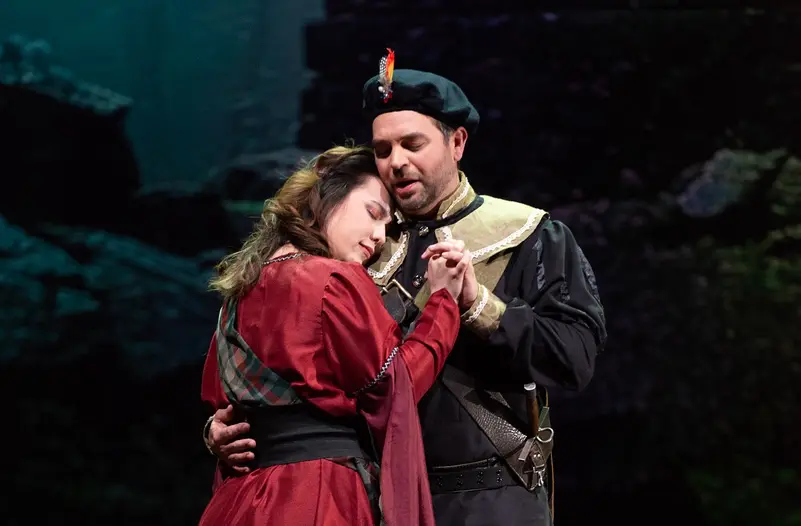
He was the unknown son of a pawnshop caretaker and a seamstress, but he became the leading composer of bel canto style, writing 70 operas which designated him as opera royalty. Gaetano Donizetti’s Lucia di Lammermoor, written in 1834 during the peak of his reputation as a composer, is a demanding work because it needs vocal virtuosity, intense dramatic acting and believable staging of a 19th-century mystical story. Opera York took up the challenge and made a valiant effort to make this great work fit into their motto: “Opera for Everyone.”
The story is relatively simple. Originating from Walter Scott’s novel, The Bride of Lammermoor, is a tale about feuding clans in 17th-century Scotland. Lucia is caught in the middle of quarrelling families when her brother, Enrico, uses deceit to promise her in marriage to Arturo. The problem is that Lucia is in love with Edgardo. She is forced into a marriage of convenience with Arturo, but she has the last word when she kills her husband before she herself collapses from delirium. Edgardo hears about this tragedy and kills himself. It’s an opera horror story complete with ghosts, stabbings and enough blood to satisfy any macabre-seeking Goth.
Maestro Geoffrey Butler set the mood in the prelude, with his 23-piece orchestra playing dramatic, dark tones. Kudos to the brass, timpani and bass drum for their stirring playing. Butler did not rush the score, carefully bringing out dramatic phrases while also taking a relaxed tempo with some arias, a pace that at times challenged some singers. Brava to Vicki Blechta for her flute solo in the mad scene.
Holly Chaplin convincingly portrayed a heroine trapped in a male-dominated world, a feminist defiantly refusing to follow historical rules. As she used her stratospheric head voice, Chaplin’s ornamentations during the mad scene were chilling. Chaplin is a good actor, and her scenes with Joel Ricci (Edgardo) were touching and believable.
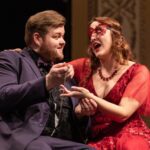
Ricci’s tenor was strong from his first notes in the opera until his marathon at the end of Act Three. Rather than something to be endured after the soprano dies, Ricci’s “Tu che a Dio spiegasti l’ali” was a testament to his bel canto training with its mixture of agility, range and strength. As Lucia’s conniving brother Enrico, baritone Andrew Tees had a powerful stage presence. His vocal outbursts directed at Lucia were intense, while his sustained notes gained strength throughout the evening. His rich lower voice added colourful power to ensemble numbers.
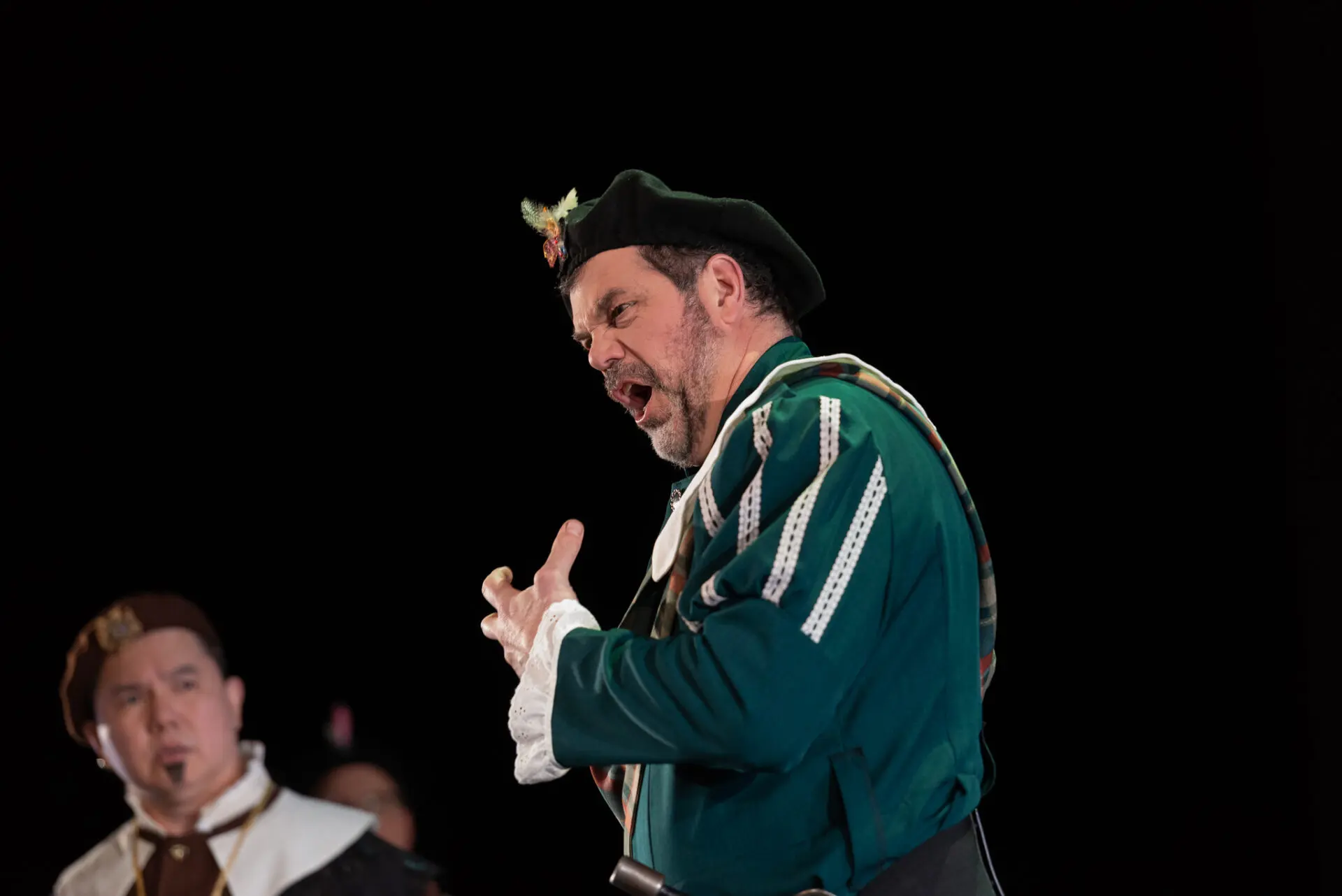
Photo Credit: Robert Kisin
Andrew Tees as Lucia’s “conniving” brother Enrico
Emilio Fina was a poised Arturo. At times, his sweet tenorial tones were overshadowed by the orchestra, but his voice rounded out the rich harmonies of all the leads in the second act sextet. Baritone Handaya Rusli (Raimondo) was a welcome addition to a well-balanced quartet in Act One, and his “Ah! cedi, cedi” was a heartfelt duet with Chaplin. Although I expected Raimondo to be played by a bass, Rusli’s voice blended well in all ensembles. Maddy Cooper was Lucia’s sympathetic maid, Alisa. I wish we could have heard more of Cooper, as her voice has a lush mezzo quality to it. I also wish she had been situated closer to Chaplin in the mad scene, as she was too fine an actor to be relegated to the sidelines. Tenor Cameron Mazzei was an effective Normano whose delicate upper tonality eerily belied his character’s malevolent intentions.
Chorus work in Lucia is not for the faint of heart. It demands strong singing with intense vocal precision. The opening scene was particularly challenging for the male chorus, partly because there were only eight men and also because the staging had them lined up in a straight row at the back of the stage, as far away from the conductor as physically possible. This linear direction continued in all chorus numbers, although the sound of the full chorus fared better in the wedding scene. Still, there was a push me/pull me feeling between the orchestra and chorus that persisted throughout the entire opera. Most solos were focused on centre stage, giving a feeling of “stand and sing” to the bulk of the arias. The dancers in the wedding scene were enthusiastic and well-choreographed, and they added much-needed movement to the stage.
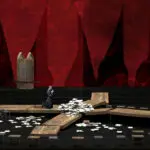
Robert Kisin’s projection designs evoked a feeling of Scotland with images of castles, gothic windows and ancient forests. A short-throw projector would help eliminate shadows from the singers, and it would have added a more polished look if the images had been centred on the back screen. Amanda Eason’s costumes were a high point of the production, mixing earthy tones and tartans with rich reds reminiscent of blood. Thanks to Eason’s creativity, the cast appeared coordinated, professional and historically accurate.
It is commendable for a community-based company with a volunteer chorus and a very limited budget to take on such an intense work, and the enthusiastic audience was clearly appreciative of the effort. Some great voices were highlighted throughout the performance, and the entire cast was committed to producing the best performance possible. I’m sure Donizetti would have been fascinated to see such a rich mixture of ethnicities performing a Scottish opera in Italian. If you think about it, that’s quite a feat in itself.
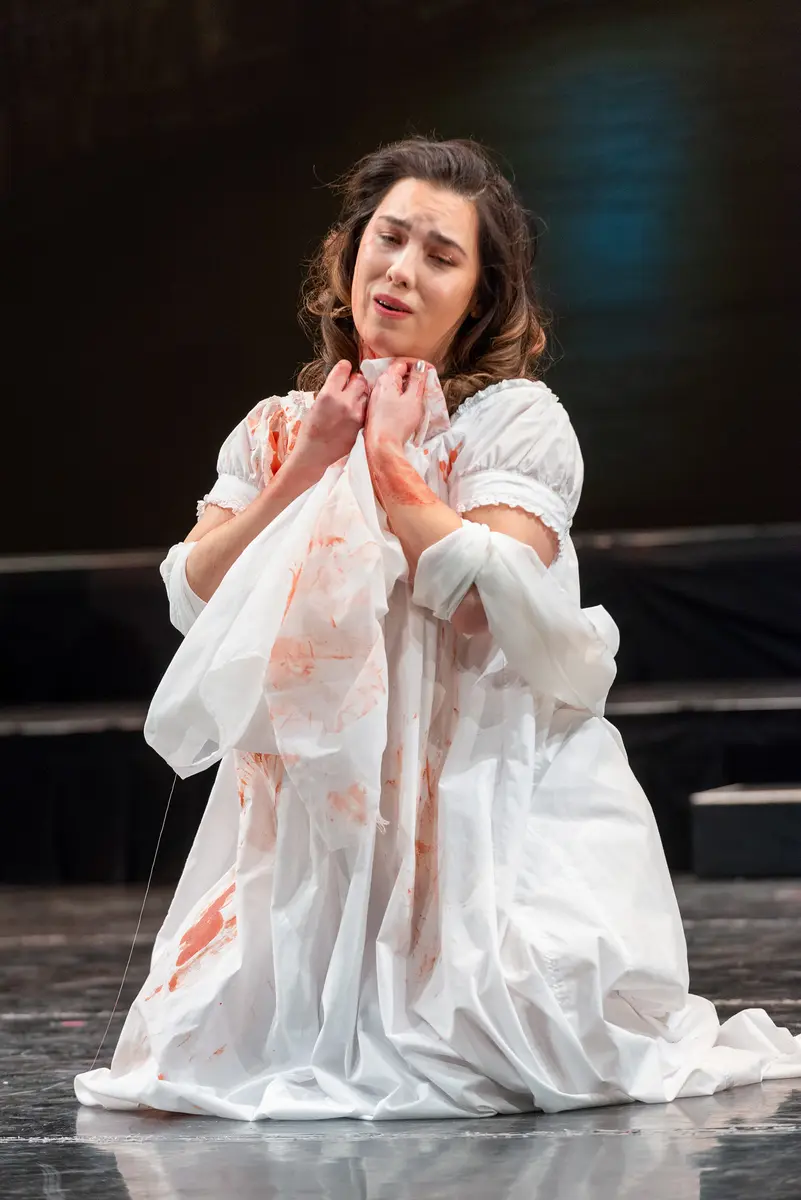
Photo Credit: Robert Kisin
“Chaplin’s ornamentations during the mad scene were chilling.”
Opera Canada depends on the generous contributions of its supporters to bring readers outstanding, in-depth coverage of opera in Canada and beyond. Please consider subscribing or donating today.