With flawless technique and heart-stopping tone, Ukrainian-Canadian soprano Andriana Chuchman single-handedly rescued Pacific Opera Victoria’s Orpheus & Eurydice from sinking beneath the weight of its own misguided staging.
A bona fide star whose grace and beauty match her stunning voice, Chuchman made her Eurydice a living, breathing woman – not merely a figure of myth – by turns joyful to be reunited with her husband, angry then grief-stricken with his seeming rejection, and finally at peace with her own death. It was a long wait (Eurydice does not sing until the final act), but it made all the difference.
Maybe the ampersand in the title should have been a warning. (“We’re too hip for an ordinary ‘and’”?) Certainly, the stage director’s statement to the Victoria Times Colonist was that this opera “is hundreds of years old, and the way we understand storytelling is very different now.” Didn’t know that. Do know that audiences understand the difference between good storytelling and bad, especially in opera, where countless untraditional stagings have triumphed, provided they were also in service to the story and the music.
Christoph Willibald Gluck’s Orfeo ed Euridice – sung in Italian with a libretto by Ranieri de’ Calzabigi – premiered at Vienna’s Burgtheater on October 5, 1762. With its direct and universally relatable story about love and death, emphasis on the chorus as a character, continuous use of the orchestra and near total lack of vocal ornamentation for the three lead singers, Orfeo was revolutionary in its time, though some early audiences missed the traditional, more ornate Baroque style.
A second version, that Gluck composed 12 years later for the Paris Opéra, met with no such resistance. Now called Orphée et Eurydice and sung in French, it was a huge hit, appealing specifically to Parisian tastes by starring a high tenor rather than a castrato in the title role and adding more ballet sequences.
Since then, opera companies have a long track-record of taking liberties with Gluck’s original. Most have chosen one version or the other, but some have mixed the two together. Orpheus has been sung by countertenors and mezzo sopranos. Arias have been cut or transposed. Dances have been kept in, left out, choreographed by baroque, classical ballet, contemporary and even circus choreographers. And it’s been set in all eras and locations, including a modern-day insane asylum.
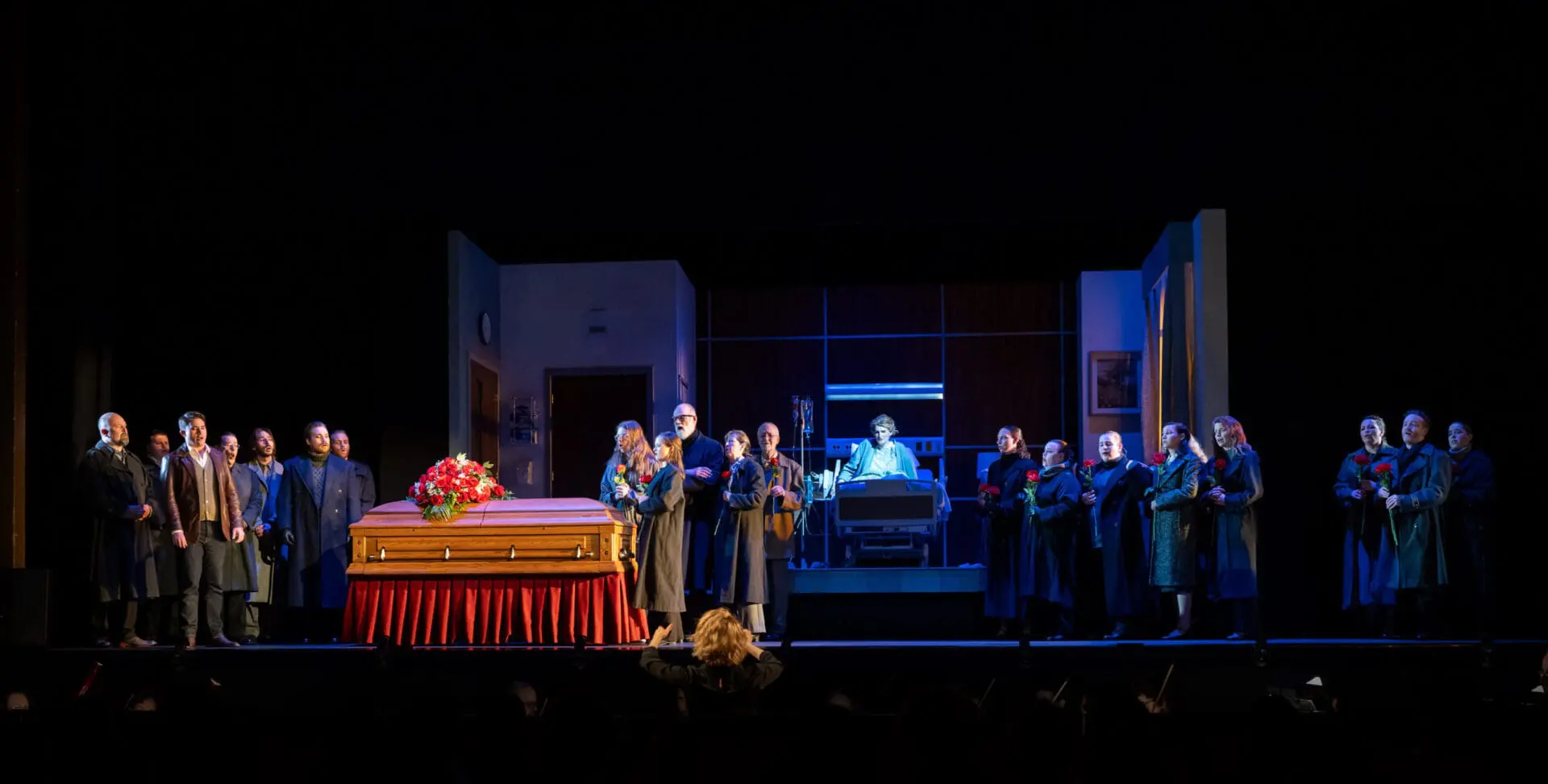
Photo Credit: Emily Cooper Photography
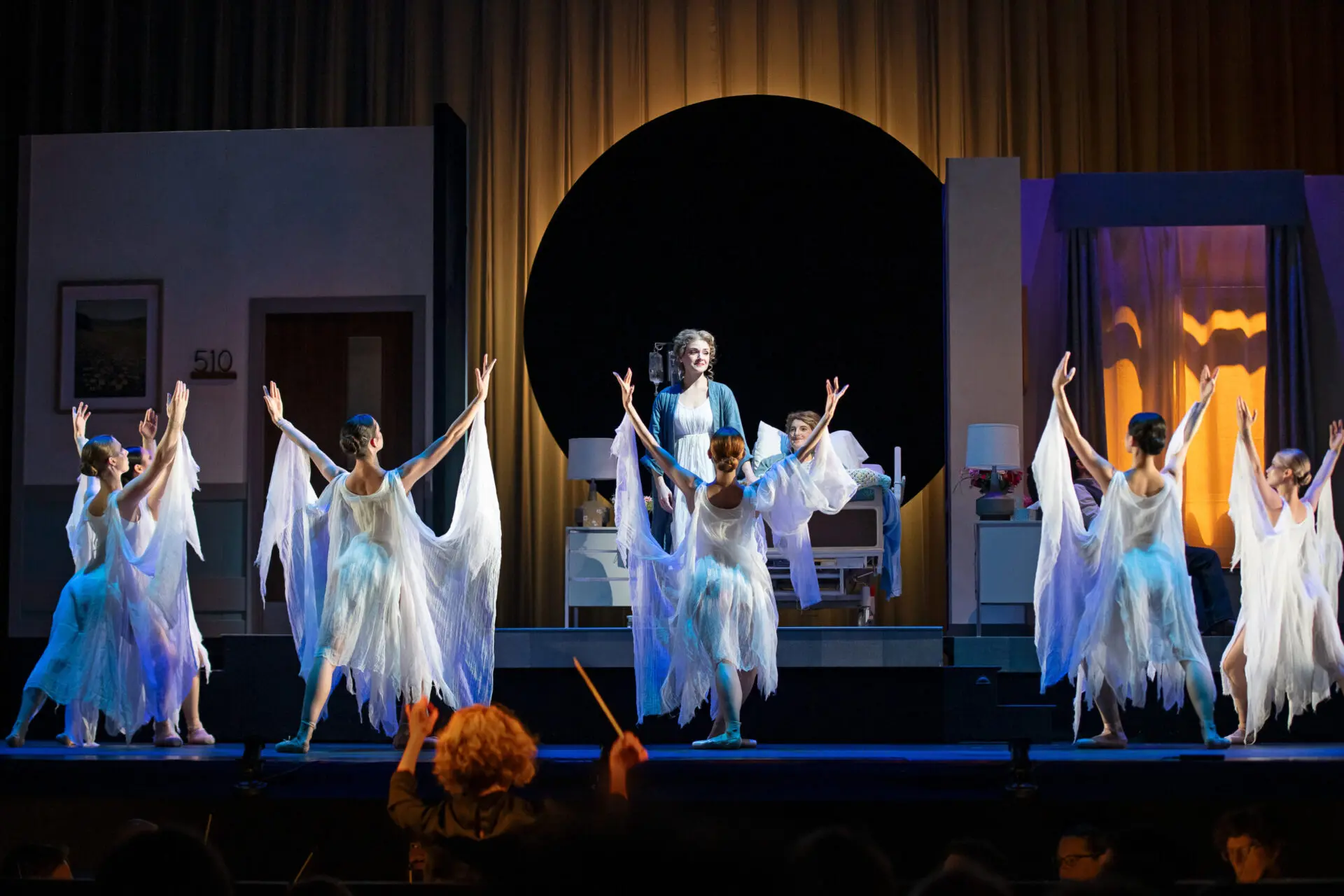
Director Amanda Testini stages the Orpheus myth as a fever dream of a hospitalized, terminally ill woman
After choosing the French version over the Italian, POV followed tradition by, among other liberties, moving bits and pieces from one act to another; offering dance interludes more than set ballet-pieces (prettily handled by dancers from Ballet Victoria, even within the narrow confines dictated by the bulky set); transposing the music down to suit the tenor’s vocal range; and, most significantly, deciding to add a second plotline.
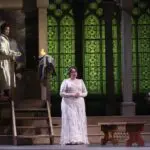
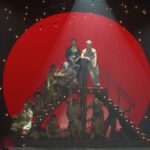
Director Amanda Testini’s Orpheus & Eurydice began as it should, with Gluck’s miracle of an overture – beautifully played by the Victoria Symphony under formidable guest conductor Nicole Paiement – that somehow captures love, longing, loss and hope, all at the same time. But instead of allowing that overture to sink into the mind, it was overlaid by a busy scene within a modern-day hospital room. There, a woman lies in bed, her husband nearby, various hospital workers enter and exit – one carrying x-rays that clearly spell the woman’s doom. It’s a sight meant to evoke tragedy, and yet it does not. It feels hollow, performative, opposite to the music.
Under the influence of morphine, the woman begins to see the Orpheus myth come to life with herself, it seems, as Eurydice. In front of her bed, where she stays throughout, there arrives a casket, wheeled in by the consistently fabulous POV chorus, followed by Orpheus (American tenor Christian Sanders) whose lyre, according to the Greeks, could charm anyone and anything including the trees to his will.
Sanders possesses a very pretty voice and good acting skills. He was a standout as the Snake/Vain Man in POV’s The Little Prince last year. This role, however, requires a lighter, brighter, more flexible voice, one that sounds like it’s dancing with the music and can easily dispatch the virtuosic coloratura passages that dot the score early on. Sanders found more solid ground later, however, and acquitted himself nicely in his duets with Chuchman and the trio with the always excellent soprano Suzanne Rigden. She sang Amour, the minor god sent to tell Orpheus that the major gods will allow him to visit the Underworld to bring his beloved back from death, provided he never looks at her.
Fortunately, the Greeks knew a thing or two about how to tell a story, and so did Gluck and his librettist. Even a dubious concept that sat like a black cloud over the real thing and questionable costuming from an unlovely era (70s? 80s?) could not destroy the dual pleasures of hearing this score played so well and being wowed by the voice of Andriana Chuchman.
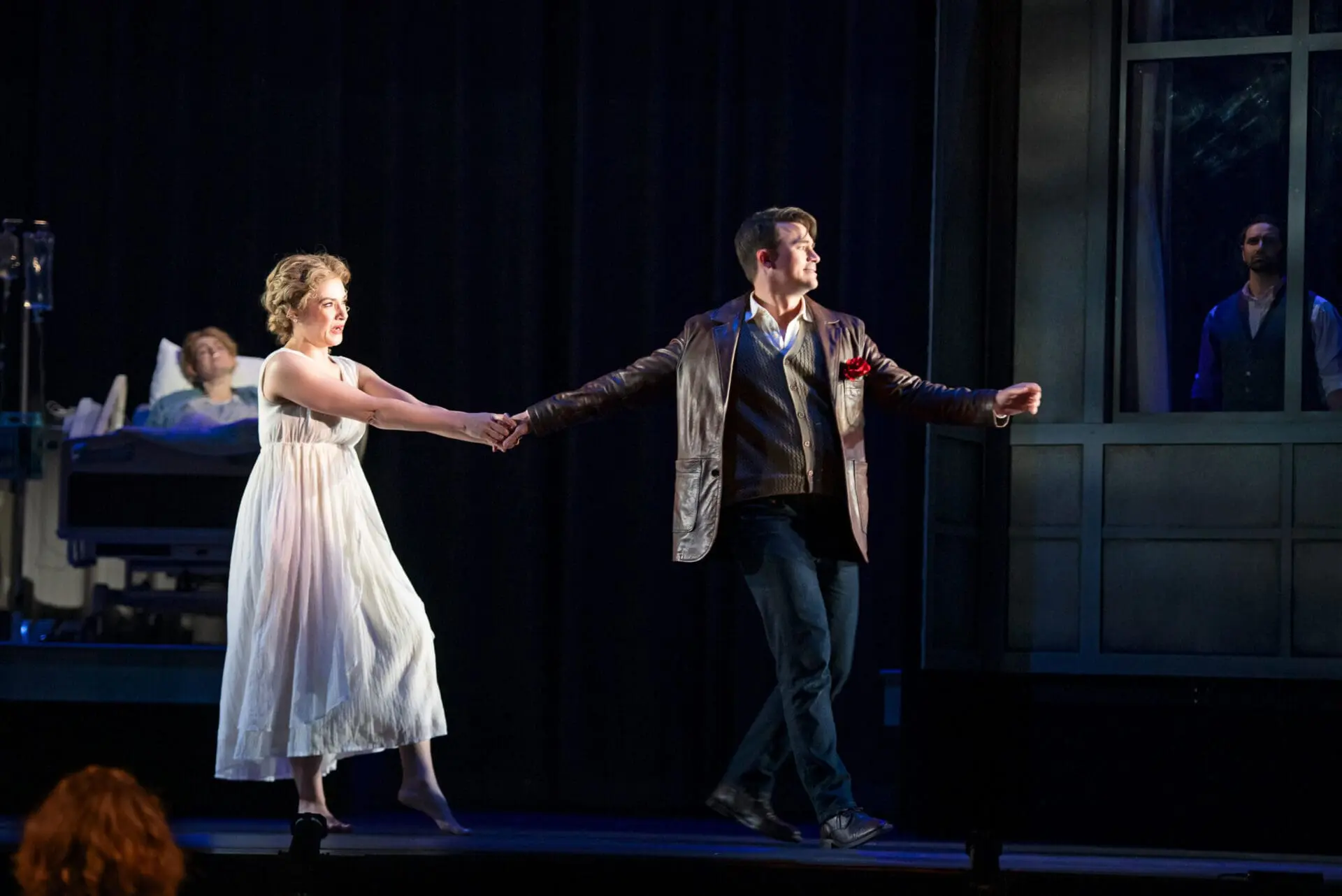
Photo Credit: Emily Cooper Photography
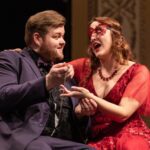
Andriana Chuchman and Christian Sanders as the title characters in Pacific Opera Victoria’s Orpheus & Eurydice
Opera Canada depends on the generous contributions of its supporters to bring readers outstanding, in-depth coverage of opera in Canada and beyond. Please consider subscribing or donating today.