Giacomo Puccini’s Tosca is a melodrama of the first order, innately over-the-top, and when allowed to just be itself – not modernized or tamed in any way – immensely cathartic and satisfying. It’s why people love it. And it’s why people who have not yet got their tickets to Pacific Opera Victoria’s production should fix that oversight immediately.
Directed by Brenna Corner, this production celebrates all that is fabulous about Tosca: its larger-than-life characters, its sublime music and its historical setting.
While Tosca premiered in Rome in 1900, it is set in the same city one-hundred years earlier, two years after Napoleon gained control of it in 1798. He promptly closed down the papal government, exiled the Pope, and established a republic with seven consuls. But just one year later, in 1799, the French troops withdrew and the soldiers of the Kingdom of Naples took over. Napoleon responded by returning to Italy and, shortly before the opera opens, is threatening to re-take Rome.
Against this backdrop, former Consul and now escaped political prisoner Cesare Angelotti takes refuge in the church of Sant’Andrea della Valle, helped by his friend, the artist Mario Cavaradossi, who is there to paint a portrait of Mary Magdalene. The two are idealists and revolutionaries, intent on returning Rome to a republic, out from under the oppression of the Pope. Baron Scarpia, the evil Chief of Police who pursues Angelotti into the church, is equally intent both on viciously punishing the rebels and having his way with the beautiful Floria Tosca, a famous opera singer and Cavaradossi’s lover. From there, torture, attempted rape, murder and suicide inevitably ensue.
A through-composed opera, Tosca begins with a bang, forgoing an overture for immediate immersion in the action, and the music never lets up from there. As sung by this cast and chorus and played by the Victoria Symphony, it’s a series of one Puccini hit after another, performed with commitment, passion and style.
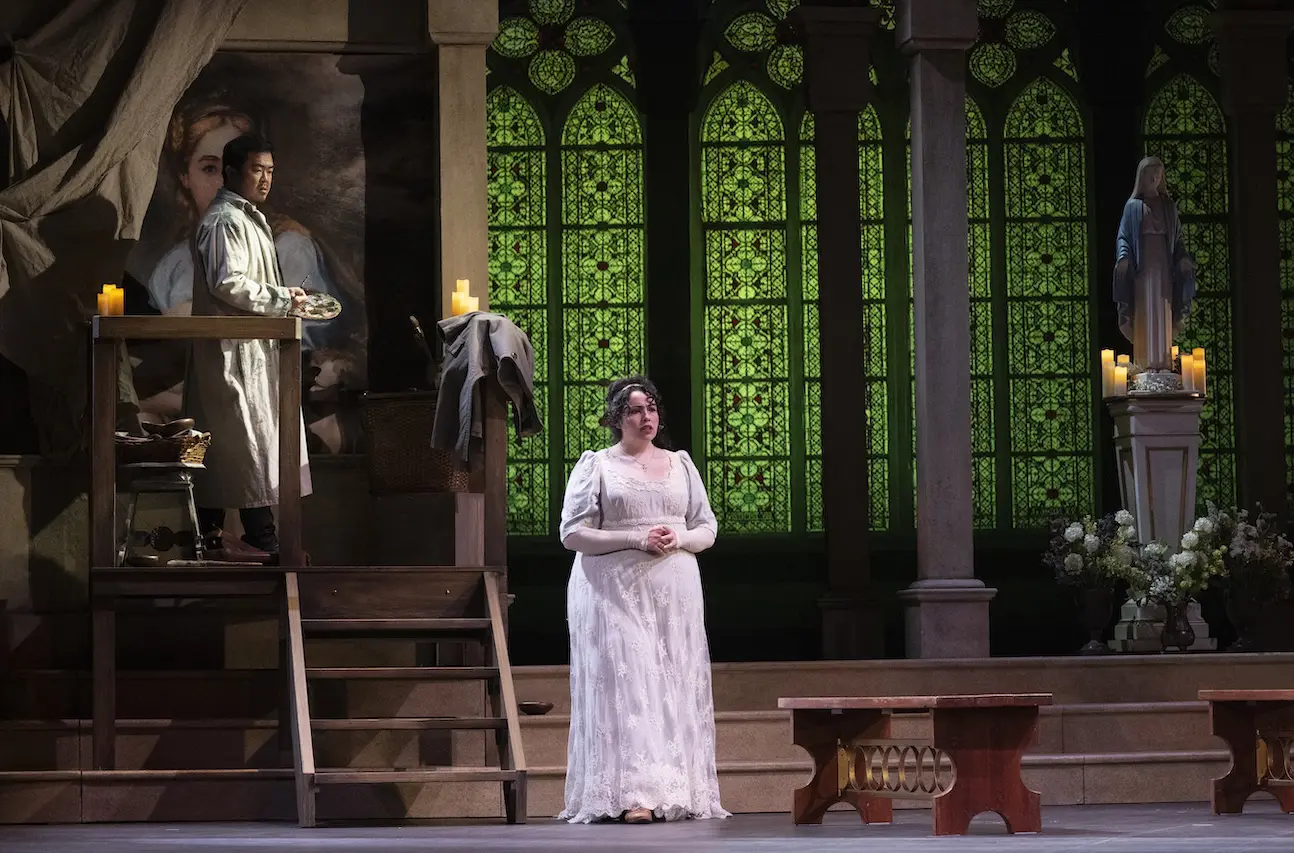
Chinese tenor Yongzhao Yu has, over the past few years, made major moves into the most significant US opera houses, including the Met, and for good reason. As Cavaradossi, his voice gleamed with emotion and power in “Recondita armonia,” the aria at the very beginning of the opera where he declares “My only thought is of you, Tosca, it is of you!” even as he paints a blond, blue-eyed Mary Magdalene. But when the dark-haired, brown-eyed Tosca sees the portrait, things do not go well.
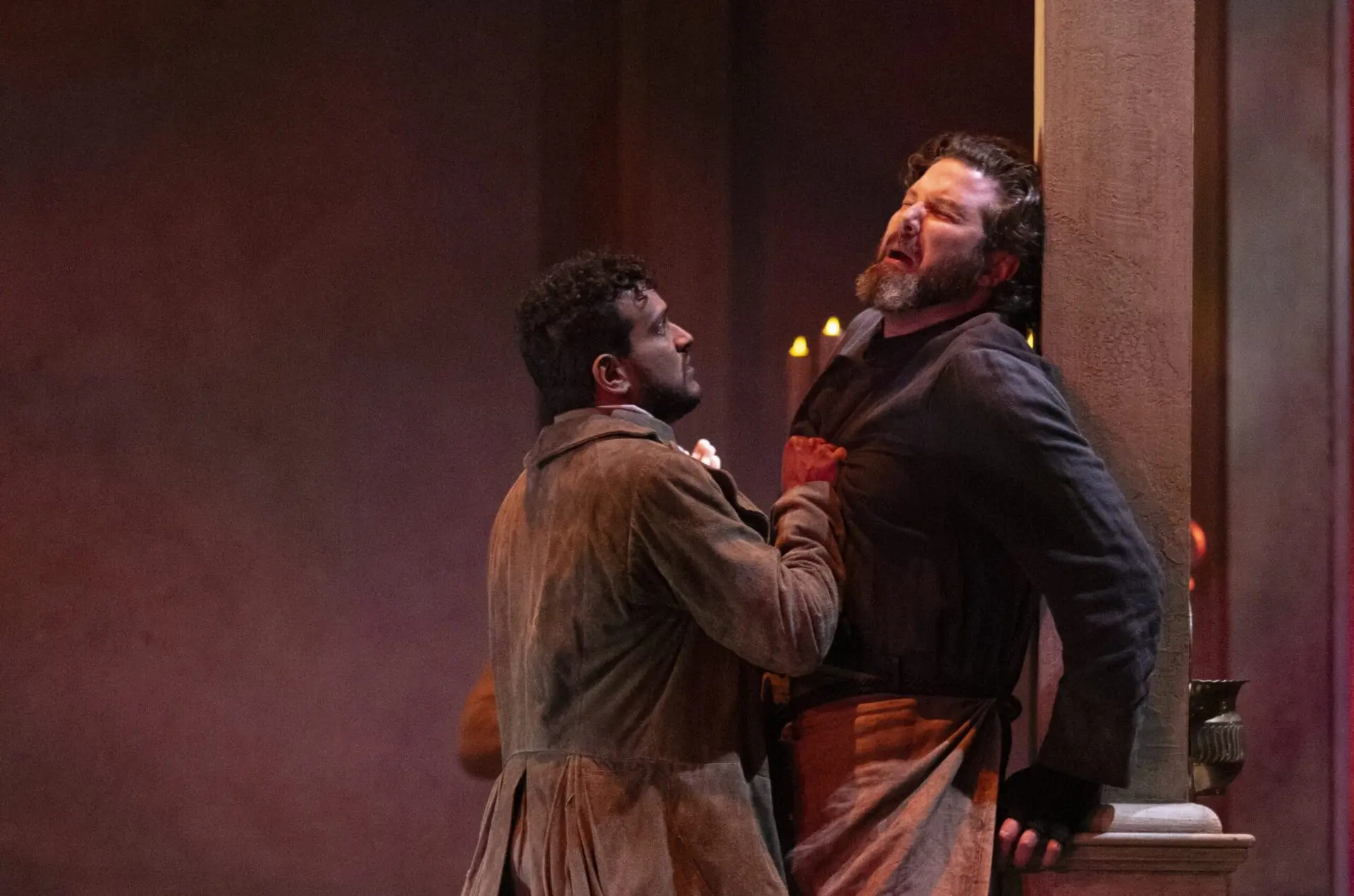
Photo Credit: David Cooper Photography
Asitha Tennekoon as Spoletta with Peter Monaghan as Sacristan in Puccini’s Tosca
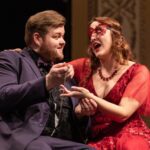
The talented Mexican-American soprano Catherine Thornsley made even Tosca’s unreasonable jealousy seem charming, and her chemistry with Yu, while gentle, was undeniable in the lyrical love duet, “Quale occhio.” Her second act lament, “Vissi d’arte” (“I lived for art. I lived for love … Why, oh Lord, why dost Thou repay me thus?”), delivered after Scarpia offers his devil’s bargain – succumb to me now or your lover dies – should secure her many more Toscas in the future.
The biggest honours of the night, however, go to the evil Baron himself, Canadian-Italian baritone Brett Polegato. He sang brilliantly, with ease, focus and power. But more than that, when Polegato was on stage, he owned it, without even a tinge of over-acting. His Scarpia’s arrogant self-confidence, creepy willingness to use torture, and stinging scorn for women ensured he earned his huge round of boos at the end of the show.
Beyond the three stars, Canadian bass-baritone Peter Monaghan stood out in the minor role of the Sacristan. His rich-as-molasses voice added a thrilling layer to the counter-melody in “Recondita armonia,” usually known only as a showcase for the tenor. The chorus, too, which included members of the Victoria Children’s Choir, must be mentioned. Their “Te Deum” at the end of Act One was soul-stirring.
The set, by designer Scott Reid, with its references to classical Roman architecture, was both lovely and practical. The projections he also designed were, however, a mixed bag. The static images behind the arches – stained-glass windows for the church, a starry night over Rome from the roof of Castel Sant’Angelo – were beautiful and effective, but the moving projections, which included shadows of Roman citizens slowly promenading behind a scrim during intermission, tended to feel fussy and unnecessary. The costumes, supplied by the Canadian Opera Company, were appropriate to the tone and feel of this production.
Finally, the orchestra under conductor Giuseppe Pietraroia was magnificent throughout, alternately thundering and delicate as required, with some terrific playing by individual musicians, including clarinettist David Boutin-Bourque. His poignant solo in the midst of Cavaradossi’s third act aria, “E lucevan le stelle” (“And the stars were shining”), movingly sung by Yu, amplified the tragedy of our hero’s impending death.
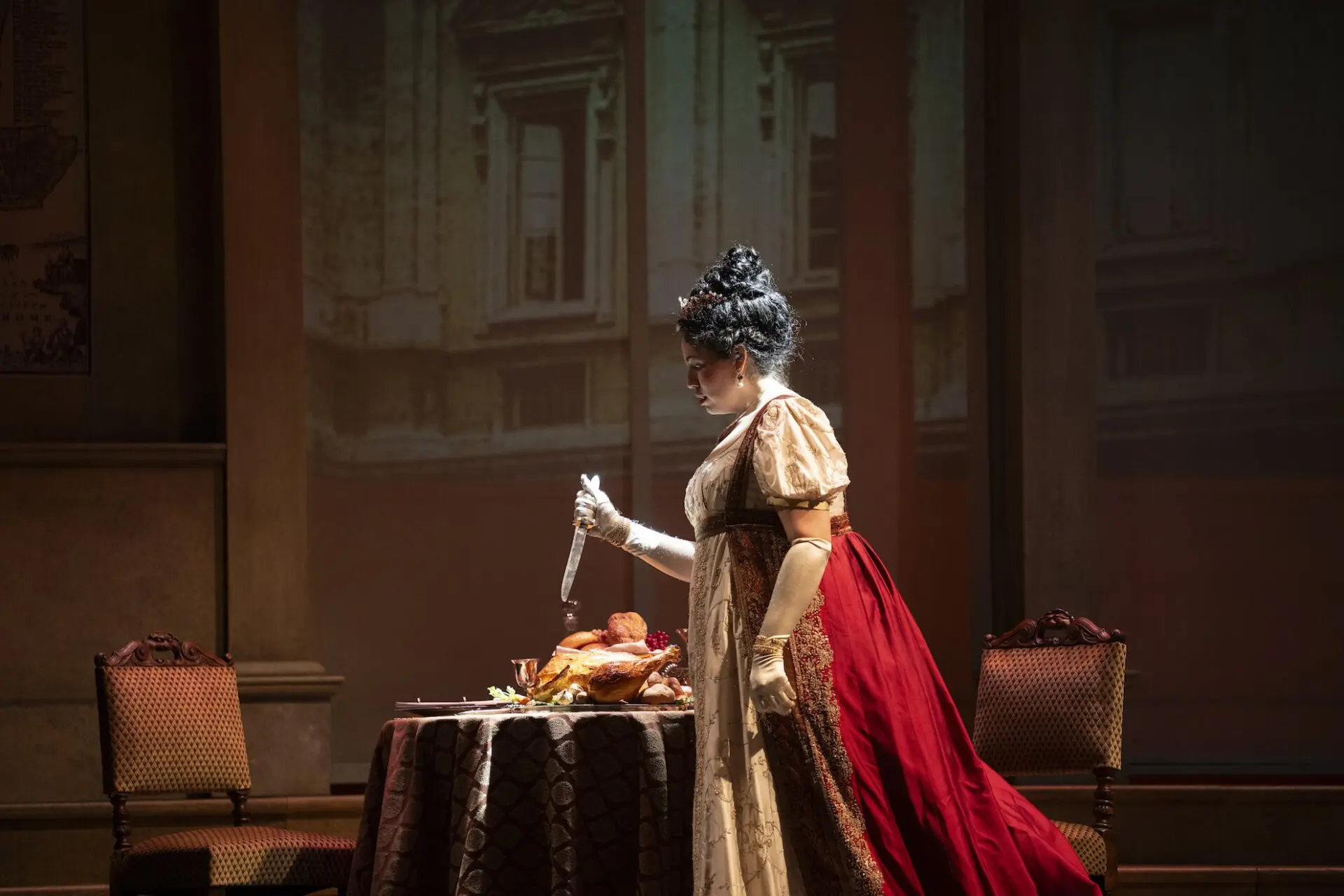
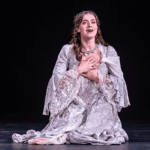
Photo Credit: David Cooper Photography
Catherine Thornsley in the title role of Tosca
Opera Canada depends on the generous contributions of its supporters to bring readers outstanding, in-depth coverage of opera in Canada and beyond. Please consider subscribing or donating today.