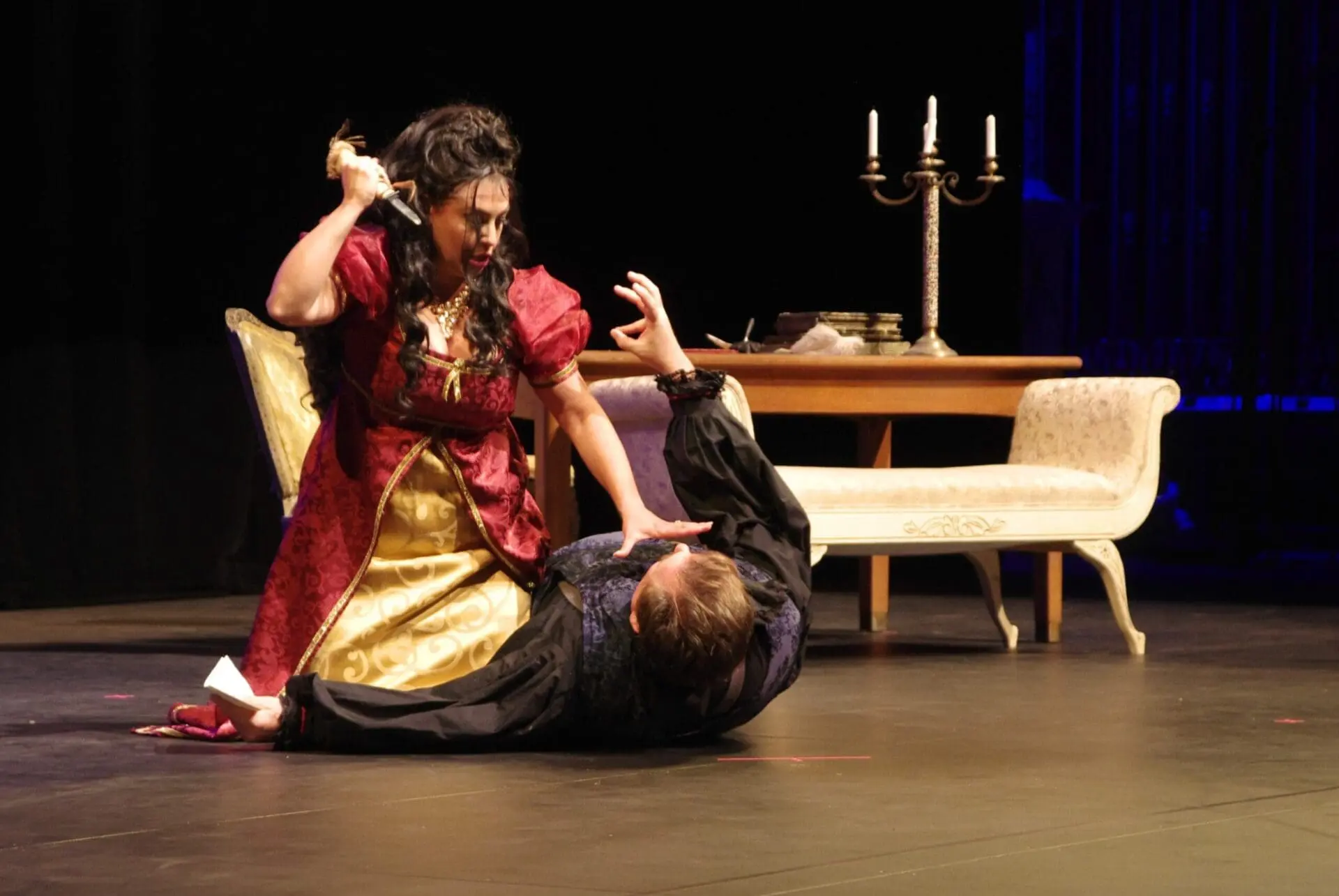
Southern Ontario Opera (SOLO) chose Puccini’s Tosca for its season opener at the Burlington Performing Arts Centre. Tosca is consistently one of the most performed operas worldwide, so a packed house filled with a veritable who’s who of Canadian opera was not totally unexpected. What was the particular buzz about this performance? They were there to revel in Puccini’s glorious score embedded in a plot which rivals any CSI show. But they were also out in droves to see the woman playing Tosca: Maria Vetere.
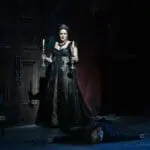
It is unfathomable that a singer who specialises in Puccini heroines and who has performed on five continents – including at Carnegie Hall and in Puccini’s villa – had yet to debut Tosca. The anticipation was palpable, and Vetere held nothing back. The moment she stepped on stage, she inhabited the character physically and vocally in a way that was almost eerie. She embodied Tosca’s innocence, artistry, jealousy and passion throughout the evening, growing from a flirtatious lover to the original “#MeToo” girl. Her “Vissi d’arte” was a study in superb vocal technique with its sustained pianissimos and emotive phrasing. That she sang this aria while sitting cross-legged on the stage added to the heartbreaking feel of youthful innocence and isolation. In Tosca’s final moments, Vetere unleashed a powerful upper register that proclaimed her character’s desperation and pain.
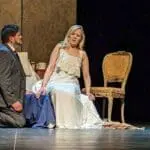
Her lover, Cavaradossi, was sung by Romulo Delgado. His chemistry with Vetere was outstanding and their first act duet was a study in erotic lyricism. Delgado’s “Recondita armonia” was beautifully sung, not forced and gentle in nature, so much so that I felt he was testing the vocal waters for the marathon ahead. Delgado was indeed in it for the long haul, and his “E lucevan le stelle” was strong, sweet in timbre, and emotionally compelling. His high notes were beautifully sustained and dramatically sung.
James Westman was the despicable Chief of Police, Scarpia. Every movement on stage – whether it was touching a statue of the Madonna while listening to Tosca or straightening his jacket after a rejection from her – showed narcissistic sadism. His “Te Deum” was a tour de force, a powerful demonstration of his rich baritone voice, the same voice that embraced softer phrases with villainous delight. Together, Vetere and Westman fascinated the audience with their exquisitely sung and wonderfully acted cat-and-mouse game. During the intermission after Act Two, I turned to the woman next to me and asked her how she was enjoying the opera. She responded, “I hate Scarpia.” I know that feeling was mutual for the entire audience.
Ryan Hofman was Jekyll and Hyde playing both the bumbling Sacristan and the slimy Sciarrone. His baritone has a warmth to it, and he was able to adjust his tone colour in order to sing both roles effectively. Chris Palmer was a full-voiced Angelotti, and Anthony Bellissimo was a welcome addition as the jailor. John Darrigo was a suitably arrogant and creepy Spoletta. Brava to Sofia Marquez for her sweetly sung shepherd boy.
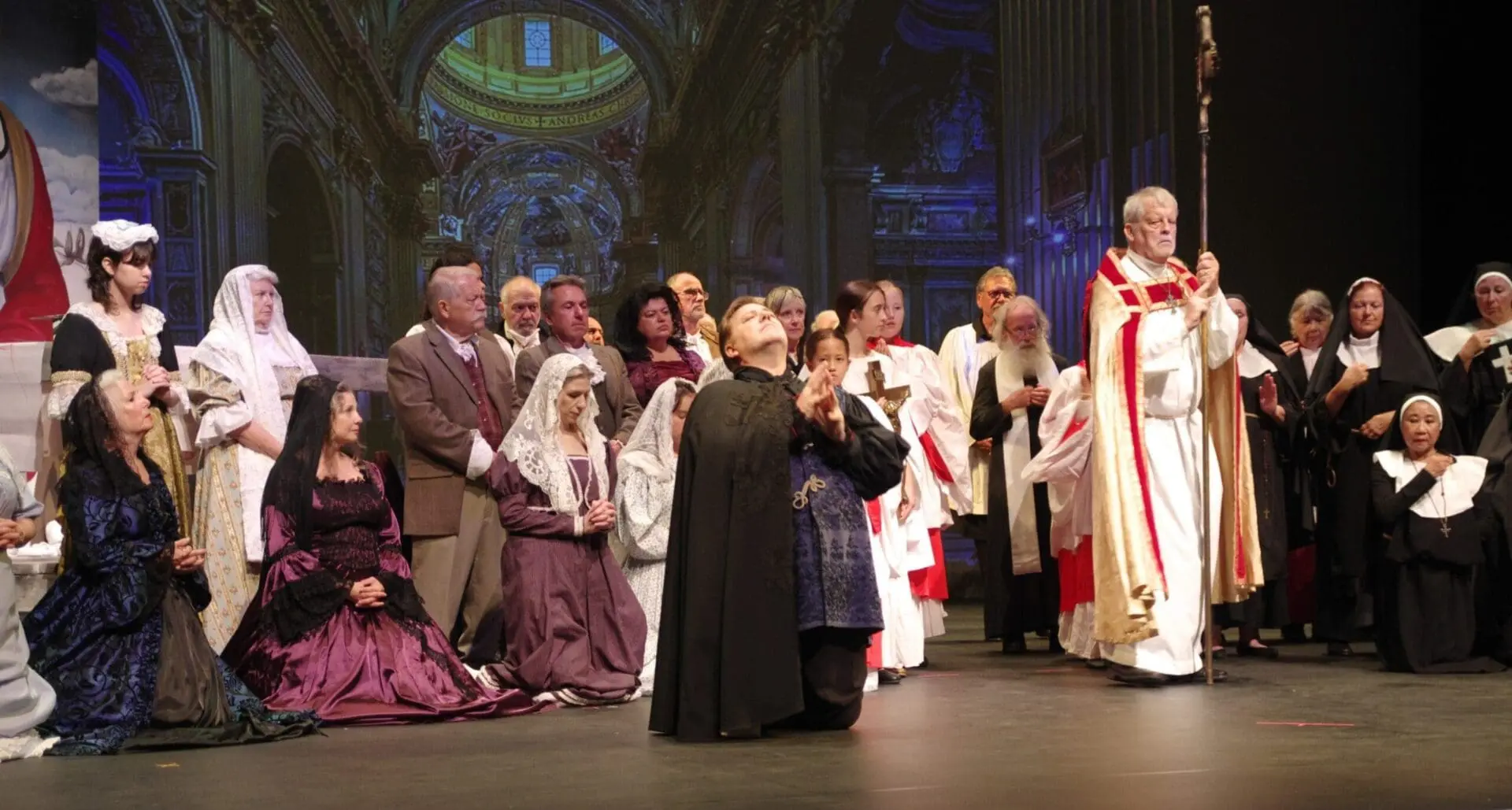
Photo Credit: John Martens
The chorus, with James Westman as Scarpia at centre, in the “Te Deum”
The 38-person chorus produced the vocal punch needed for the “Te Deum.” Keeping the chorus together was a difficult task: there were some singers at the back that I couldn’t see, which meant they couldn’t see the conductor, and the orchestra was under the stage, inhibiting what the singers heard onstage. But they were a united group, and this was the best SOLO chorus yet. The 11-voice youth choir also added to the fullness of sound.
The beefed-up orchestra did a fine job of navigating Puccini’s complex rhythmic score. It is the largest SOLO orchestra I have seen, and, given the mixture of experience and skill levels, they did an excellent job of seamlessly playing the leitmotifs and the lush romantic melodies of Tosca. The four french horns were particularly effective in the Scarpia motif as well as the beginning of Act Three. Sabatino Vacca’s passion for Puccini carried into his orchestra, and during moments of intense emotion, he was able to elicit feverishly loud chords as well as lovely pianissimo work.
Director Gabriel Graziano gave us a traditional rendering of the story without resorting to any gimmicks. True, he was blessed with a strong Tosca, Cavaradossi and Scarpia, but principals are made stronger by a steady directorial hand. His set design was simple and effective. The projections of the Sant’Andrea della Valle, the Palazzo Farnese and Castel Sant’Angelo were lush, but a short-throw projector would make it possible for the images to be less circumscribed by the large surtitle screen. The lighting was effective for the most part, but the use of garish blue tones in the second and third acts did nothing to enhance the Napoleonic mood of the opera. Given the budgetary constraints of a small regional opera company, Pamela Blackwood-Marques did an admirable job of costuming the large cast. Her use of ecclesiastical reds in the “Te Deum” scene was particularly striking.
Puccini biographer Mosco Carner wrote, “The ingredients for Tosca were sex, sadism, and art, mixed by the hands of a master-chef with the whole dish served on the platter of an important historical event.” The audience at the Burlington Centre for the Performing Arts partook of all this and rewarded the creative team with a long standing ovation, recognizing a production that was a large step forward for SOLO.
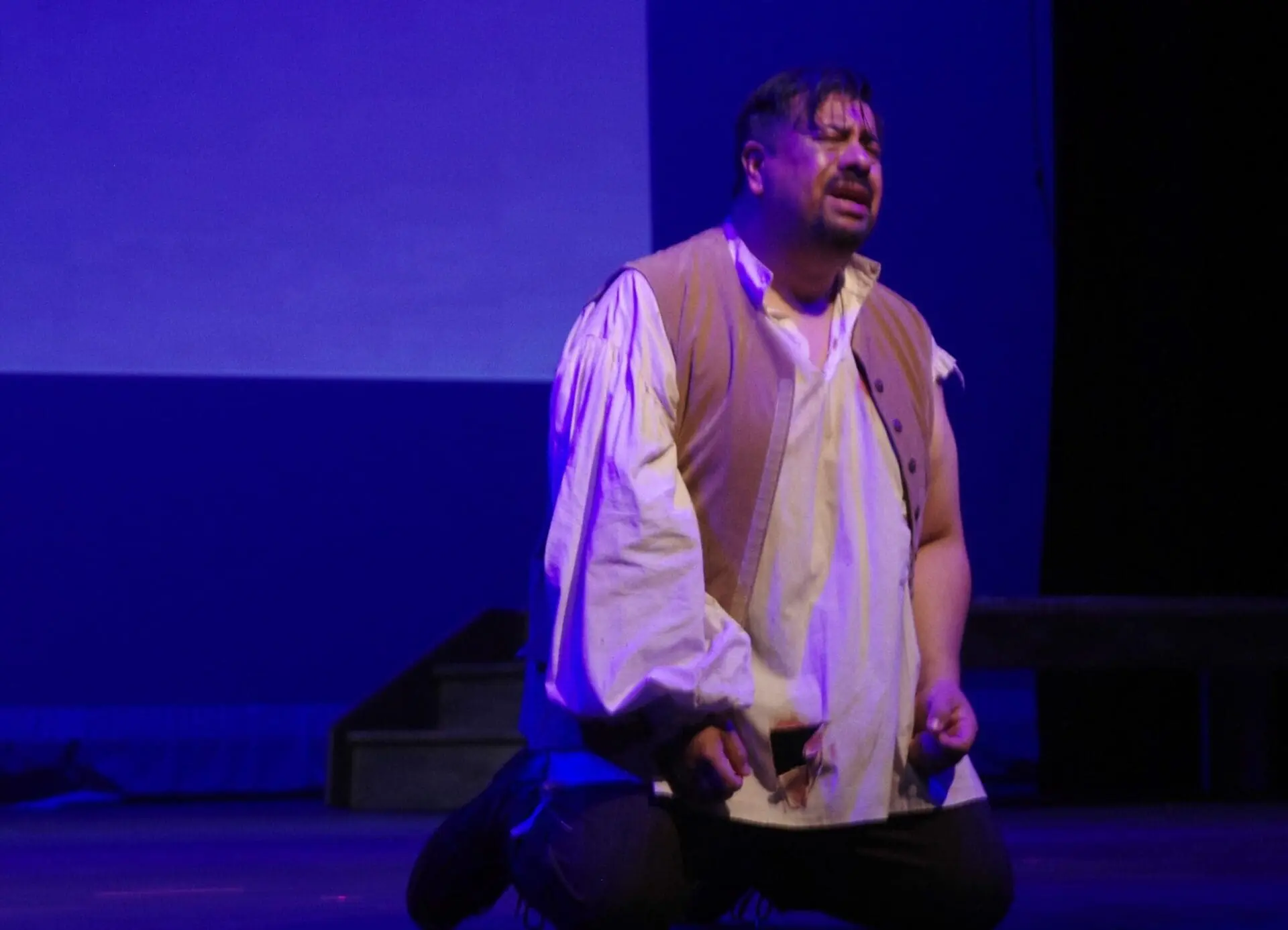
Photo Credit: John Martens
Romulo Delgado sings “E lucevan le stelle” in the final act of SOLO’s Tosca
Opera Canada depends on the generous contributions of its supporters to bring readers outstanding, in-depth coverage of opera in Canada and beyond. Please consider subscribing or donating today.