June in Toronto is traditionally a quiet month when it comes to opera. The Canadian Opera Company season has almost always wrapped up its spring season by then, and – apart from Opera 5’s newly minted festival – we opera lovers must wait until July and the Toronto Summer Music Festival to get our vocal, and hopefully opera, fix.
Well, Toronto fans lucked out this year! A new opera had its Canadian premiere this week, a co-commission from Tapestry Opera and Opera Philadelphia: 10 Days in a Madhouse by composer Rene Orth and librettist Hannah Moscovitch. It is being co-presented by the Luminato Festival and the Canadian Opera Company in association with TO Live.
10 Days had its world premiere in Philadelphia in September 2023, and it is finally receiving its inaugural Canadian run at the Bluma Appel Theatre. It was well worth the wait. I was blown away on opening night by the galvanizing power of the score and the drama. The Bluma Appel Theatre was nearly full, and it was a musically knowledgeable and attentive crowd – you could hear a pin drop, a few coughing episodes notwithstanding.
I found myself glued to my seat during the 90-minute opera, which is performed without an intermission. At the end, the singers and the orchestra received huge ovations. It’s clear that the music and the story touched many hearts. I hesitate to say that it’s an opera created to be “enjoyed” in the traditional sense. A story about a reporter feigning madness to get inside a mental institution to do undercover investigation isn’t your typical operatic entertainment!
Indeed, 10 Days is based on the real-life experience of New York World journalist Nellie Bly, who wrote a book by the same name. In 1887, Bly pretended to be insane to get inside the asylum on Blackwell’s Island in order to do an exposé on the conditions. She observed first-hand the inhumane treatment to which the female patients were subjected. After her mission was accomplished, she was even unable to convince the authorities that she was not insane and to let her out. In fact, the opera, which unfolds chronologically backwards, provides no explanation of how Bly managed to get out of the asylum, which seems an important omission. Bly’s uncovering of the deplorable conditions of the asylum led to increased funding in the 19th centurey and, ultimately, policy change.
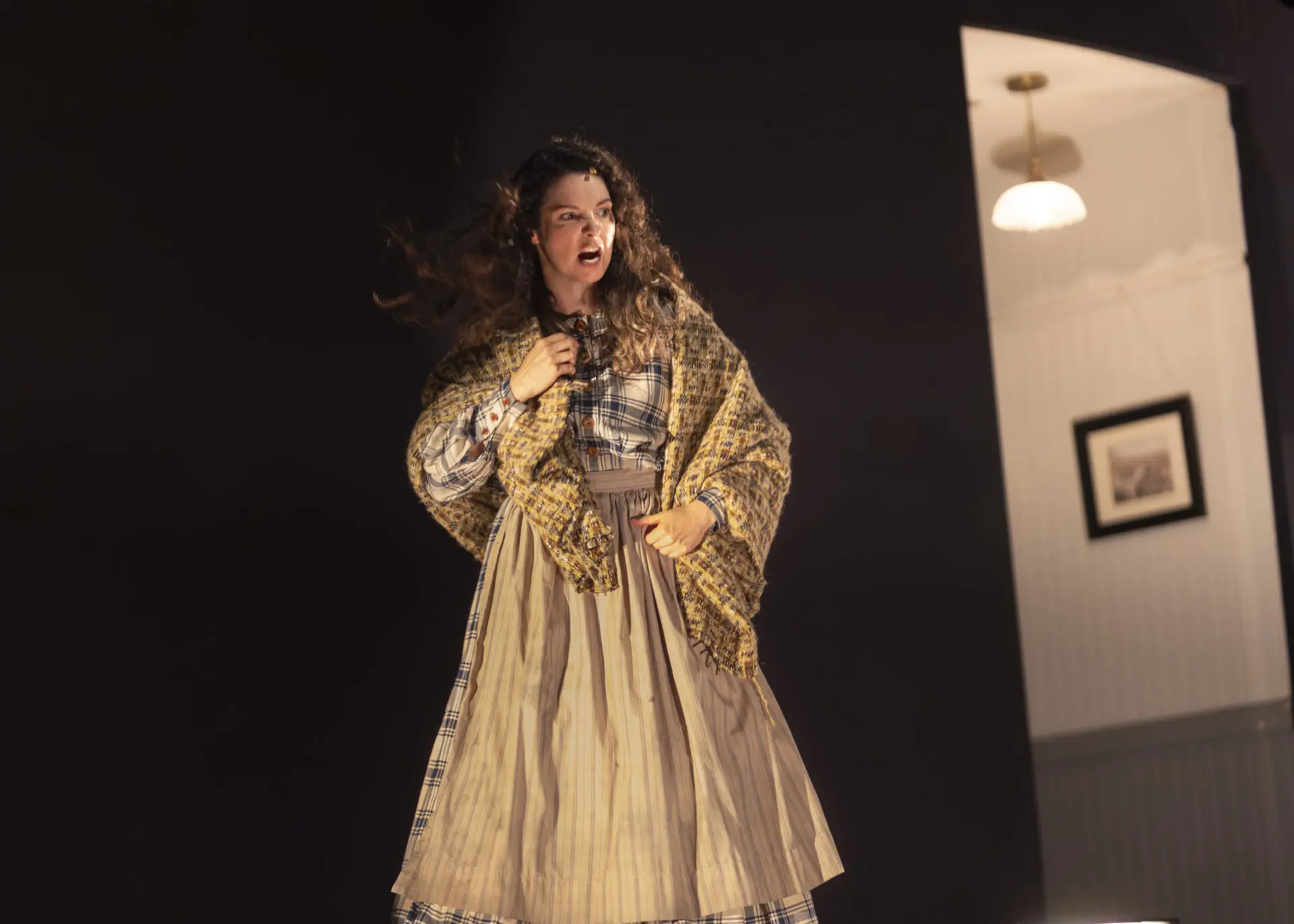
Photo Credit: Eric Forget Photography
Mireille Asselin as reporter Nellie Bly in 10 Days in a Madhouse
To depict sanity versus insanity, composer Rene Orth deftly uses two different sound worlds – essentially conventional musical writing to depict reality, while electronic sounds plus peculiar sound and vocal effects are used to represent madness. The contrast is striking and effective. It also pushes the vocal boundaries of the singers. Much of the score requires fortissimos at the top of the vocal range.
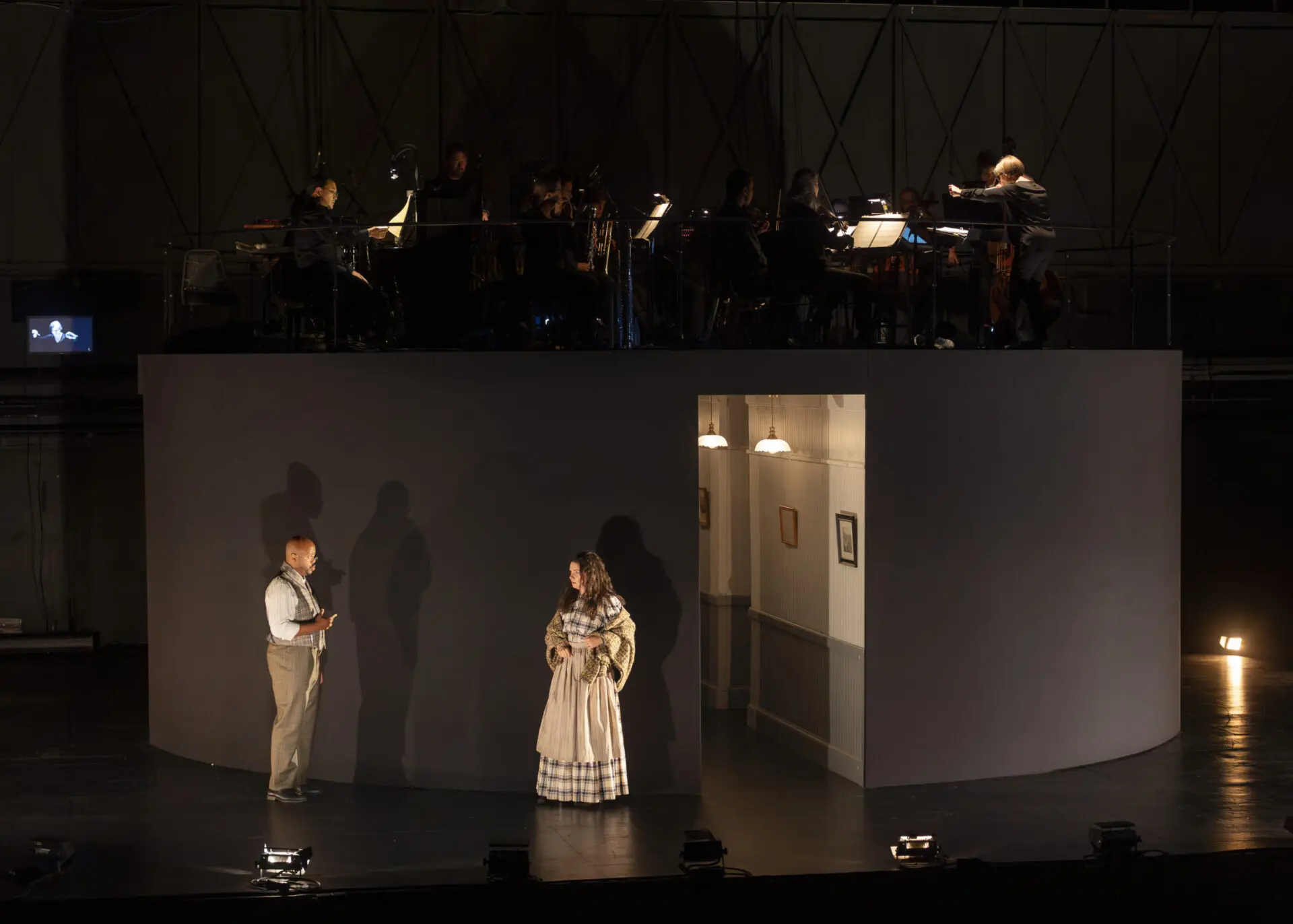
The 13-member chamber orchestra under Sandra Horst was positioned on an upper level, invisible to the performers, which explains the presence of TV monitors on stage. Horst did an outstanding job leading the chamber orchestra. I found the composition tonal and accessible, even melodically inspired, rather uncommon in new works.
Set designer Andrew Lieberman’s cleverly conceived unit set with passageways allow fluid movement by the performers. Costume designers Ásta Hostetter and Avery Reed have all the women in typical late 18th-century working women garb, giving it a period feel. Director Joanna Settle did a fine job with the blocking of the female chorus.
Kudos to the whole cast for their committed performance – indeed, there was not a weak link. Top vocal honours deservedly went to soprano Mireille Asselin (Nellie), whose heartfelt portrayal of the central character moved me. Vocally she was superb, as much of her music is very high and forte. She threw caution to the wind and sang her heart out. There were moments of lyrical beauty in her music as well, something that resembles a traditional aria near the end, which she sang beautifully.
Taylor-Alexis DuPont (Lizzie) was also impressive. Her character suffers from typhus, and her scenes were emotionally touching, particularly since Lizzie appears to have only been declared “mad” and shut away as a result of the extreme grief following her child’s death. Also remarkable was Lauren Pearl, who is reprising the role of the Nurse she created in the world premiere three years ago. Baritone Jorell Williams as Dr. Blackwell, the only male voice in the cast, offered a nice contrast and sang with cool detachment totally suited to his character.
There you have it – a unique piece with a fascinating story, one destined for the memory bank.
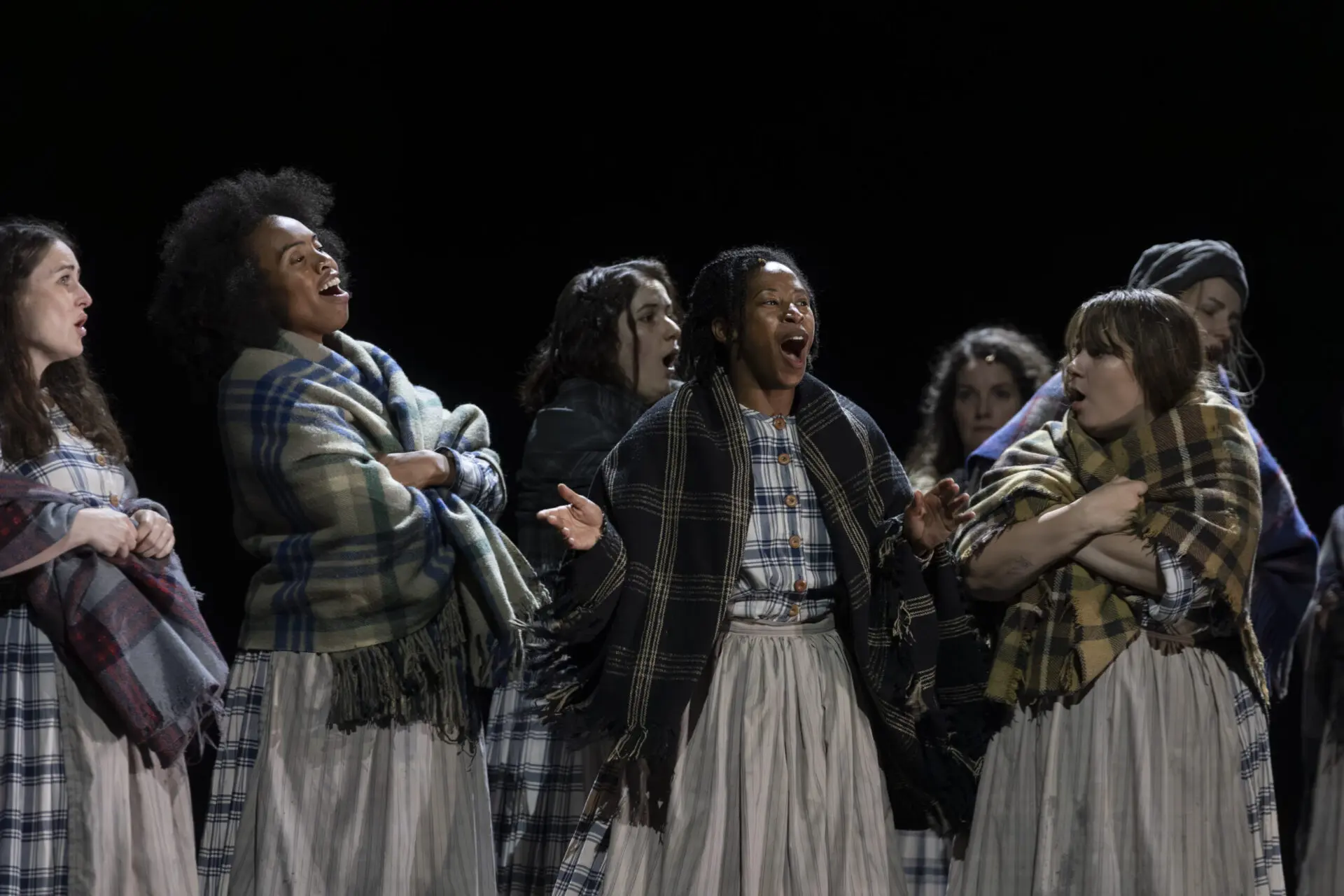
Photo Credit: Eric Forget Photography
Lizzie (Taylor-Alexis DuPont, second from right in foreground) with female inmates (from left to right) Caitlin Wood, Jonelle Sills, Ariane Cossette, Elizabeth Polese, Natalya Gennadi
Opera Canada depends on the generous contributions of its supporters to bring readers outstanding, in-depth coverage of opera in Canada and beyond. Please consider subscribing or donating today.