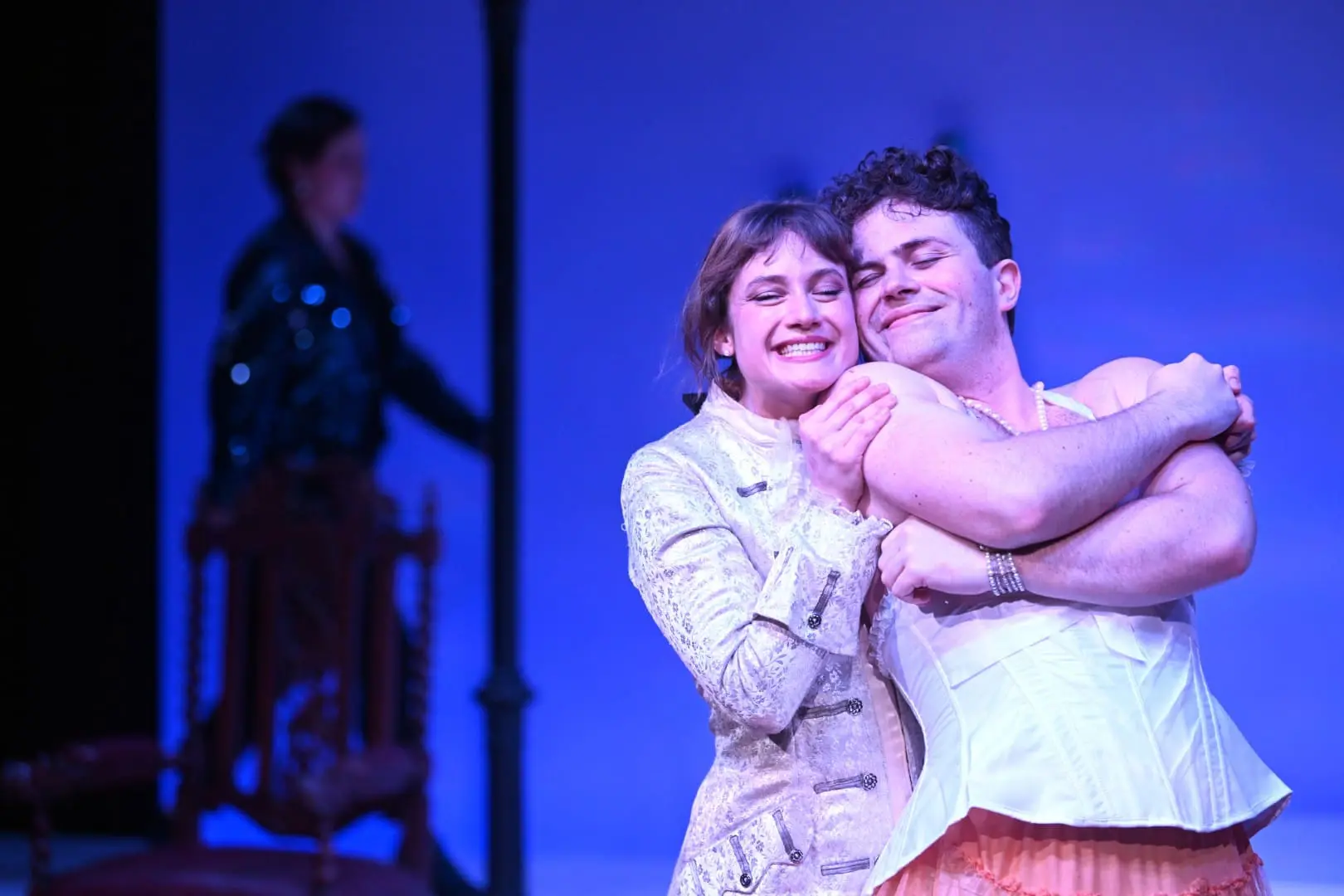
My husband and I hopped on the GO train to Toronto to attend Toronto Operetta Theatre’s opening night of Johann Strauss II’s A Night in Venice. It was worth the hour-long commute to catch the latest offerings from TOT, a company which supports young Canadian talent.
Not to be outdone in distance, a group of 60 students and staff from École secondaire Saint-Edmond in Greenfield Park, Quebec, made an eight-hour bus trip to the production. Thanks to their bass-baritone opera-loving teacher, Alexandre Sylvestre, a night at the operetta was part of their Toronto itinerary. How would a group of teenagers enjoy the performance?
A Night in Venice offers everything an operetta should: mistaken identities, dances, spoken dialogue full of intrigue and farce, all wrapped up in deliciously frothy music that is complex yet accessible. There’s a lecherous Duke, a frustrated senator, and a fisher girl named Annina who tricks the Duke during a Venetian carnival. Throughout the evening lovers are separated and reunited, with a happy ending when the servant Caramello marries his true love, Annina.
Even before a note was played, general director and founder Guillermo Silva-Marin’s greetings were met with rapturous applause. And then came the music – conductor Kate Carver masterfully led the ten-piece orchestra through the eight-minute overture filled with melodic twists and turns as light, quick sections turned on a dime into melodic, soaring waltzes. The score was a treasure hunt, as musical gems reminiscent of Strauss’s other masterpiece, Die Fledermaus, shone through. The musicians were with Carver every step of the way, and each player should be commended for their part in the tight ensemble. Brava in particular to Diane Doig, whose soaring horn playing in the overture foreshadowed an evening of skilled playing.
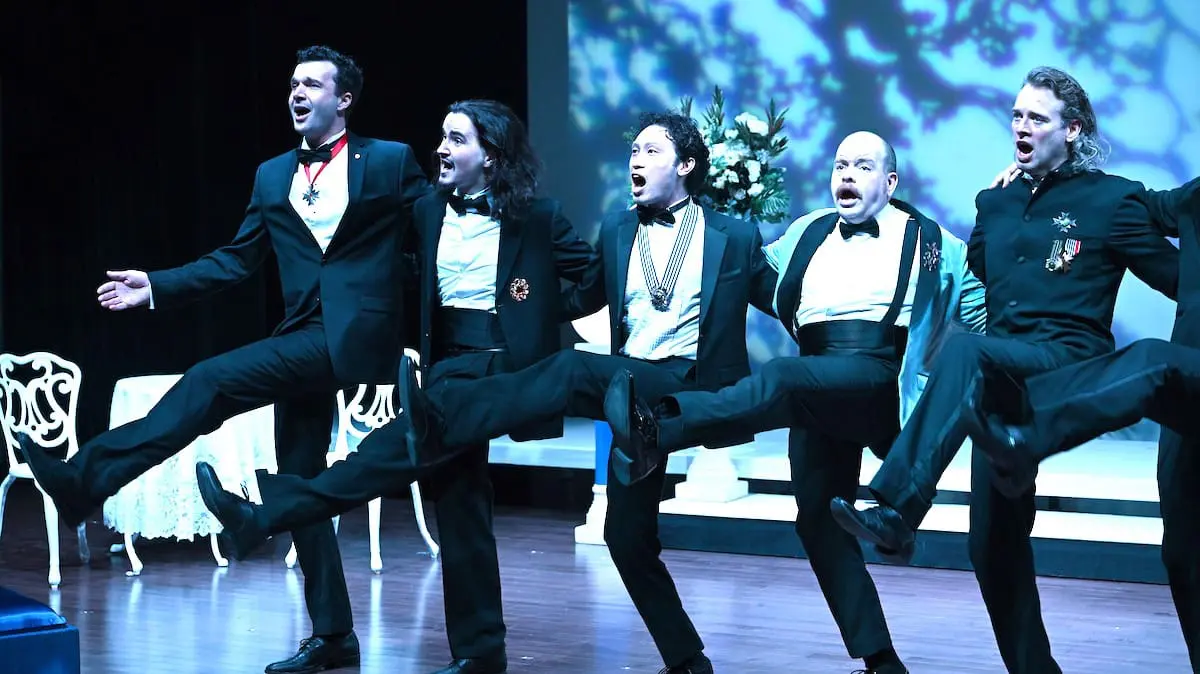
Carver’s skills with the orchestra extended into sensitive collaboration with soloists. Operetta may be comic, but the different tempi and rapid-fire lyrics come with careful coordination between the orchestra and singers. Tenor Marcus Tranquilli started the evening with a rousing rendition of “To be a macaroni cook.” Tranquilli is a triple threat: he can act, dance up a storm and is developing a lovely upper register. His cross-dressing shenanigans in Act Two were comic gold. I look forward to hearing more from Tranquilli in the future.
Tenor Ryan Downey was Caramello, the Duke’s barber (not of Seville). This role requires a voice that can hit the money notes, but it also demands breath control to sustain some challenging lower passages. Downey delivered in both areas, adding a charismatic joie de vivre to his performance. It’s a marathon of a role, and, although some flatness occurred in upper pitches, his overall execution was excellent. Andrea Nuñez was a spunky and beautifully sung Annina. Her first solo, “Fresh from the sea,” never made seafood sound so good. Not only is her lower voice compelling, but her coloratura produced some spine-tingling moments. Her final note in the operetta was a brilliant culmination to a grand night of singing.
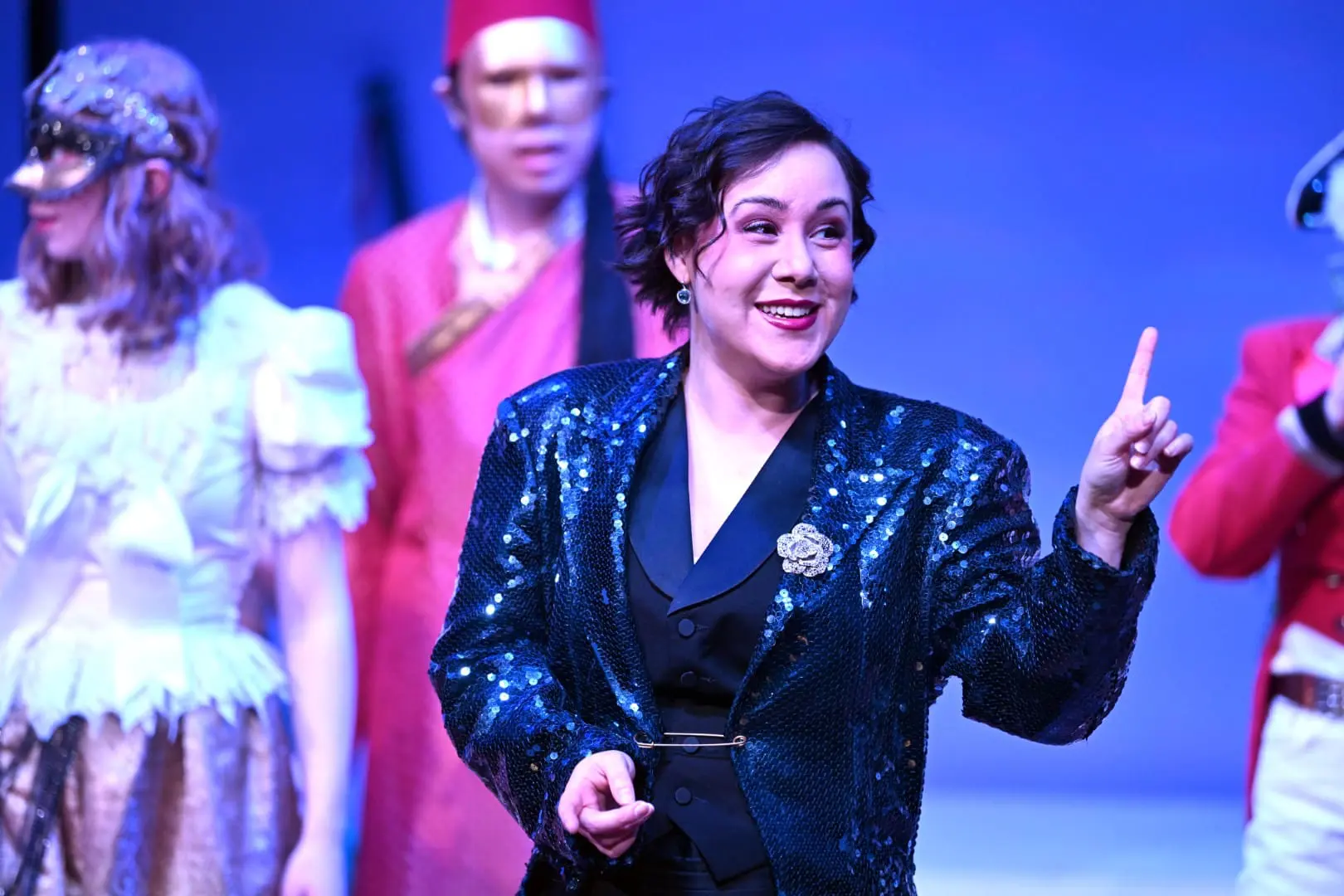
Photo Credit: Gary Beechey (BDS Studios)
Andrea Nuñez “was a spunky and beautifully sung Annina” at Toronto Operetta Theatre
Jeremy Scinocca was a smarmy Duke of Urbino who was intent on seducing every woman at the carnival. Scinocca’s “Dear city of dreams” was magical with beautiful phrasing, excellent breath control and lovely sustained pianissimos. Scinocca was so funny in his over-the-top performance that the audience was almost tricked into ignoring the outstanding vocal technique involved in his role. Whether strutting his stuff in front of the ladies or serenading his next conquest, Scinocca was a scene stealer with a voice to match. His segment with the four candidates for Queen of Carnevale (including Tranquili in a corset and four-inch heels) is one of the funniest segments I have ever seen in operetta. (It reminded me of the SNL skit with Jon Hamm singing as Johnny Prosciutto with the four Maharella sisters and Kristen Wiig as the unfortunate Dooneese.)
Mezzo Madeline Cooper was a charming and well-sung Ciboletta with a smooth mezzo tone, a sparkling upper register and an appealing stage presence.
Smaller roles were equally compelling: Mezzo Meghan Symon was a full voiced Agricola with fine acting, Anna O’Drowsky was a sweet voiced and innocent Nina, and Amanda Vallejos demonstrated fine stage presence as Fiordiligi. Austin Larusson, Everly Conrad-Baldwin, and Connor Glossop were strong singers as menacing yet hilarious Senators. As the leader of the Venetian Senate, Sean Curran was a comic actor with superb timing and an impressive speaking voice. Bravo as well to the entire singing ensemble which produced a well-balanced, strong sound.
The set was elegantly simple, and the costumes were evocative of sunny Venice. The capes and masks in the Carnival scene were particularly striking. The audience enjoyed the evening because the entire cast was clearly enjoying the romp. Tranquilli was an audience favourite, garnering sustained applause and many shouts of approval.
After the show, I sidled up to the group from Quebec and listened to what they were saying. Their enthusiasm was overflowing. Their critique? They told Sylvestre that they enjoyed the acting and singing skills and the quality and projection of the various voices. I admire their teacher for getting them to an operetta, but I also applaud the students for their excellent audience skills.
Congratulations to Toronto Operetta for entertaining such a wide range of attendees, and for bringing operetta to a whole new generation of listeners.
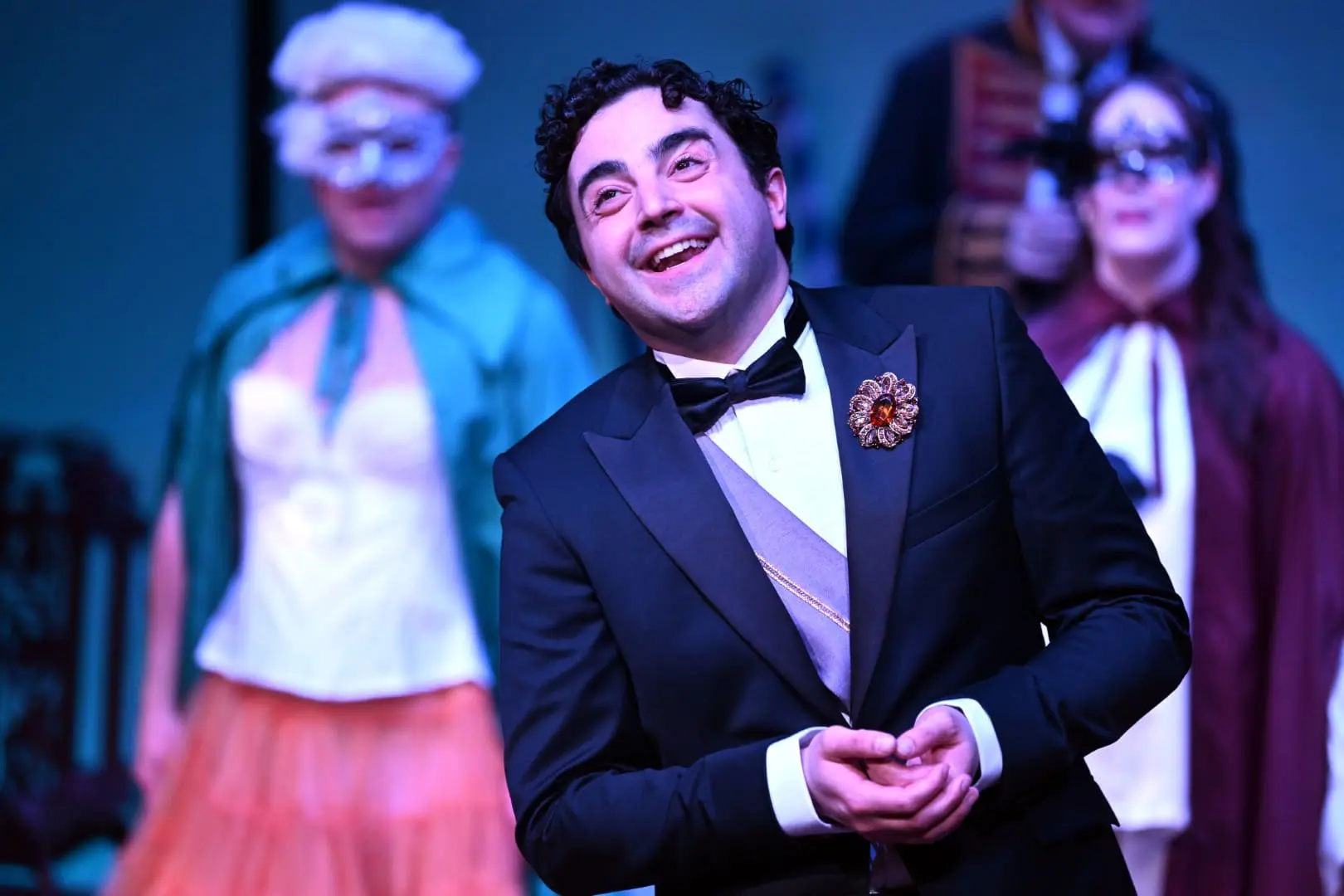
Photo Credit: Gary Beechey (BDS Studios)
Jeremy Scinocca as the womanizing Duke of Urbino in A Night in Venice
Opera Canada depends on the generous contributions of its supporters to bring readers outstanding, in-depth coverage of opera in Canada and beyond. Please consider subscribing or donating today.