The Little Opera Company tore the tinsel off the tree as it opened its 2025/26 season with the Canadian premiere of Ricky Ian Gordon’s The House Without a Christmas Tree, a heartwarming chamber opera unafraid to delve into Yuletide’s inherent slipstream of darker emotional complexities. The planned three-performance run, stage directed by Winnipeg’s Rob Herriot – its second show abruptly cancelled after a blizzard walloped the city – also marked the company’s inaugural appearance at the University of Manitoba’s “acoustically perfect” Desautels Concert Hall.
It was also, notably, the largest production in the troupe’s 31-year history, boasting a cast of five principals, a 12-member chorus and an 18-piece orchestra crisply led from the pit by music director/conductor Armand Singh Birk, a 2023 conducting fellow at the Tanglewood Music Center who recently completed a fellowship with the Orchestre Métropolitain under maestro Yannick Nézet-Séguin.
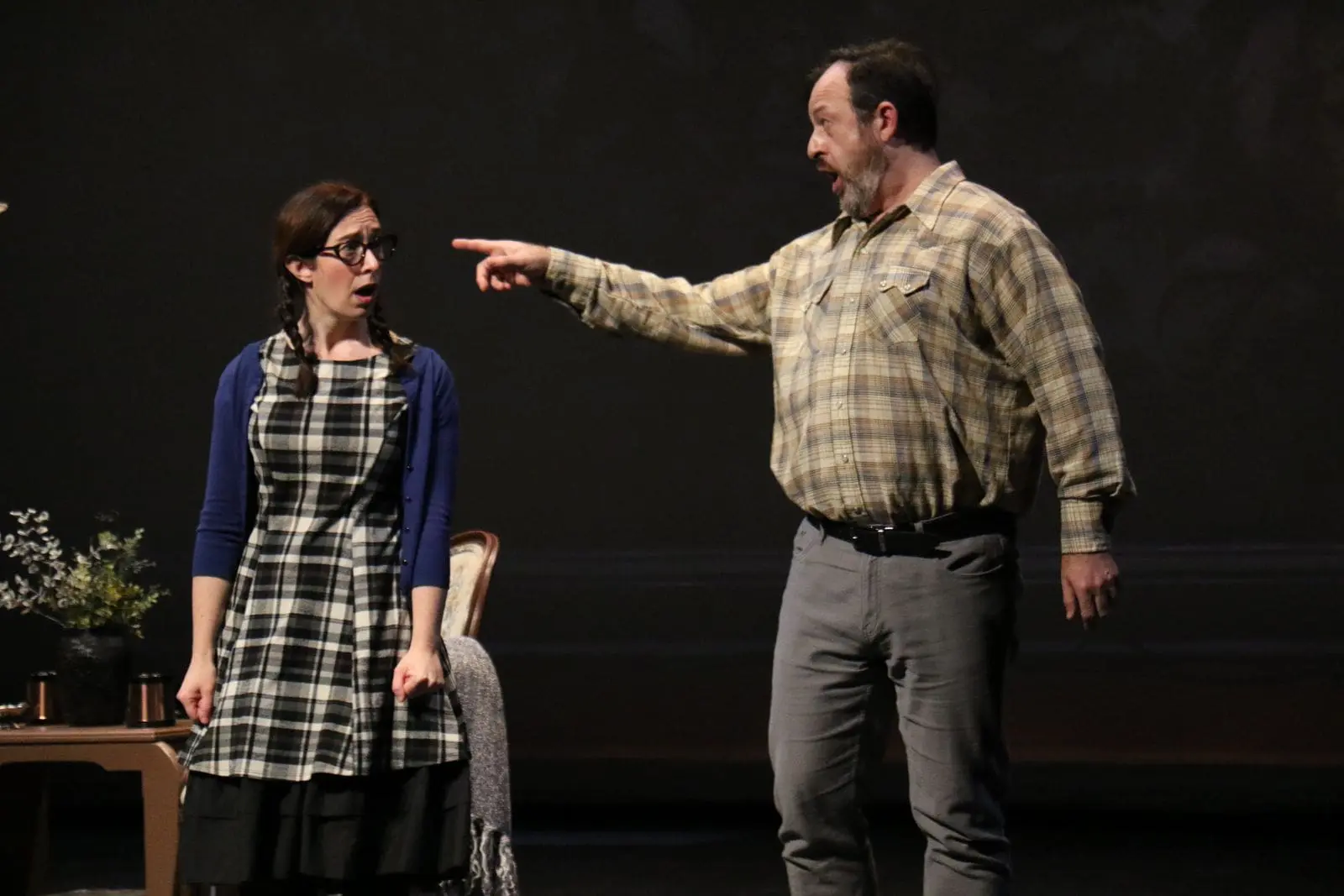
Originally commissioned for the Houston Grand Opera in 2017 to a libretto by Canadian Royce Vavrek, the 80-minute work is set (mostly) in the fictional town of Clear River, Nebraska during the mid-1940s. It was, in turn, adapted from an Emmy award-winning television film that stole hearts annually after its 1972 premiere. Vavrek takes poetic license with the story’s narrative. It tells the tale of 10-year-old Addie Mills, a bespectacled, pig-tailed girl who begs her father James for a Christmas tree. Still paralyzed by grief after losing his beloved wife Helen to pneumonia shortly after Addie’s birth, James turns a deaf ear to his daughter’s pleas, but he ultimately realizes Addie’s selflessness in this feel-good, family-friendly story of healing.
Soprano Sara Schabas crafted her wholly believable Addie with both youthful innocence and can-do practicality. Her compassionate portrayal of the young girl’s raw emotions – and even grace after her embittered father cruelly bullies her – avoided gratuitous stereotype. Her crystal-clear vocals soared through each of her arias, including her heartrending “Won’t You Please Buy me a Tree,” as well as giggling and smashing “eggheads” with BFF Carla-Mae (mezzo-soprano Ashley Schneberger) during one of the early kitchen scenes.
Winnipeg-based soprano Lara Secord-Haid served triple duty as kind-hearted classroom teacher Miss Thompson, Addie’s late mother and the “Adult” Addie, now living in Manhattan. Her opening aria “I’m a Writer Now,” sung as the latter character frames the story as a memory play, showcased the versatile singer’s stratospheric range. Her ghostly appearances as the late Helen, who tenderly waltzes with her grieving husband and sings “Promise me,” packed one of the evening’s greatest emotional punches.
Photo Credit: Heather Milne
Addie (Sara Schabas) prepares for Christmas with the help of her grandmother (Donnalynn Grills)
Acadian baritone Dion Mazerolle, a former member of the Atelier lyrique at Opéra de Montréal, hit all the right notes as James Mills, a role that could have far too uncomfortably tipped toward child abuse as he tricks and torments his daughter. The singer’s impressive acting skills were matched by deeply resonant vocals and effectively created an ocean of sub-text, which was most pronounced during his scenes with the ghost of Helen. Although it could have been pushed even further, it allowed us to glimpse his broken, aching heart that was yearning to heal.
A longtime pillar of the local music community, mezzo-soprano Donnalynn Grills created a sympathetic Grandma Mills caught between her love for her plucky granddaughter and struggling son, with her “Ask Him!” proving another highlight. Jyoti Jhass marked an impressive operatic debut in the supporting role of Billy Wild capturing the volatility of young love, and his innate dramatic flair made one want to see more of this dynamo. He was joined by Abby Corpus as Addie’s school chum Gloria Cott.
Digital backdrops with a Norman Rockwell flavour were projected on the upstage screen, ranging from a 1940s-styled kitchen to winter wonderland scenes – a propos with the city already staring down the barrel of an Alberta clipper on opening night. Furniture pieces schlepped on and offstage by cast members became distracting despite the company’s best attempts for seamless set changes.
Robert Butler’s colourful costumes included a poinsettia-red tartan skirt for Addie, prim ‘n’ proper dresses for Miss Thompson, and a menagerie of animal headpieces for the barnyard creatures in the Christmas pageant scene.
Herriot’s keenly sensitive direction navigated the narrative’s convenient glossing over of aspects of the plot – why did it take ten years for the whip-smart Addie to ask for a tree? – that undermine the opera’s true power to stir the soul. James’s turnaround from embittered Scrooge to loving father also occured at lightning speed, but his placing Helen’s homemade star atop the glowing Christmas tree – eliciting many “oohs” and “ahs” from the crowd – tugged hard at the heartstrings.
An original carol, “Gather ’Round the Christmas Tree,” became a leitmotif while adding overall cohesion to the Coplandesque score’s plentiful wide leaps and dissonances, but it did create a false ending after being belted out by the choristers during the pageant scene. Still, Adult Addie’s return to the stage, with the chorus now encircling the singers with tiny votive candles, created a potent emotional and visual counterpoint while gently reminding that it’s never too late to believe in the spirit of Christmas. Its joy to the world provided a balm for old wounds never too late to heal.
Photo Credit: Heather Milne
Sara Schabas and Jyoti Hass in front of the Norman Rockwell-flavoured digital backdrops
Opera Canada depends on the generous contributions of its supporters to bring readers outstanding, in-depth coverage of opera in Canada and beyond. Please consider subscribing or donating today.