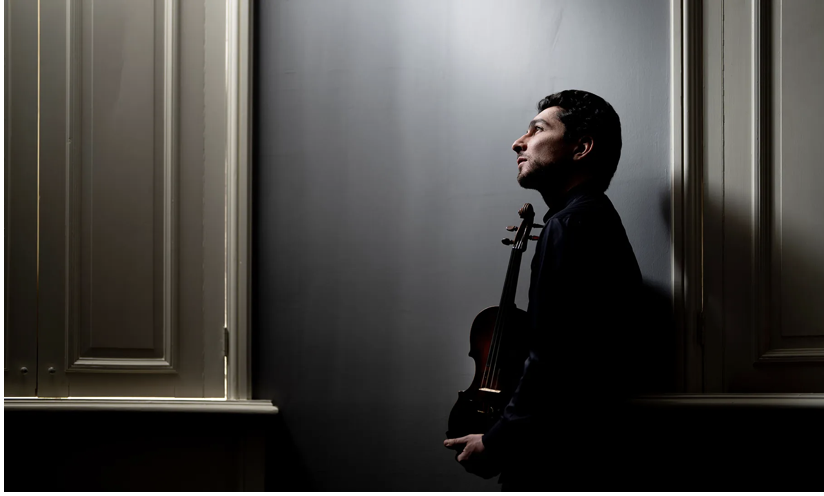
Edmonton’s Douglas Graham has sung professionally and experienced the journey of the emerging artist’s short, hopeful stints with development programs, but he also knows that life often means only intermittent employment. The precarity, though, of a life in opera, especially when your success depends on others deciding whether they like your potential or not, has not deterred him from making his mark in the industry on his own terms.
Largely at his own expense, Graham has mounted a production of Massenet’s Cendrillon in the Edmonton region, including performances in Edmonton, Sherwood Park, Bonnyville and Camrose to, as he puts it, “introduce opera to new audiences in both large and small theatres.” And to do this, given the cost of staging opera in general, Graham has created an innovative way to tell the operatic story without requiring a million-dollar budget. He has made his own work and provided employment to numerous young artists.
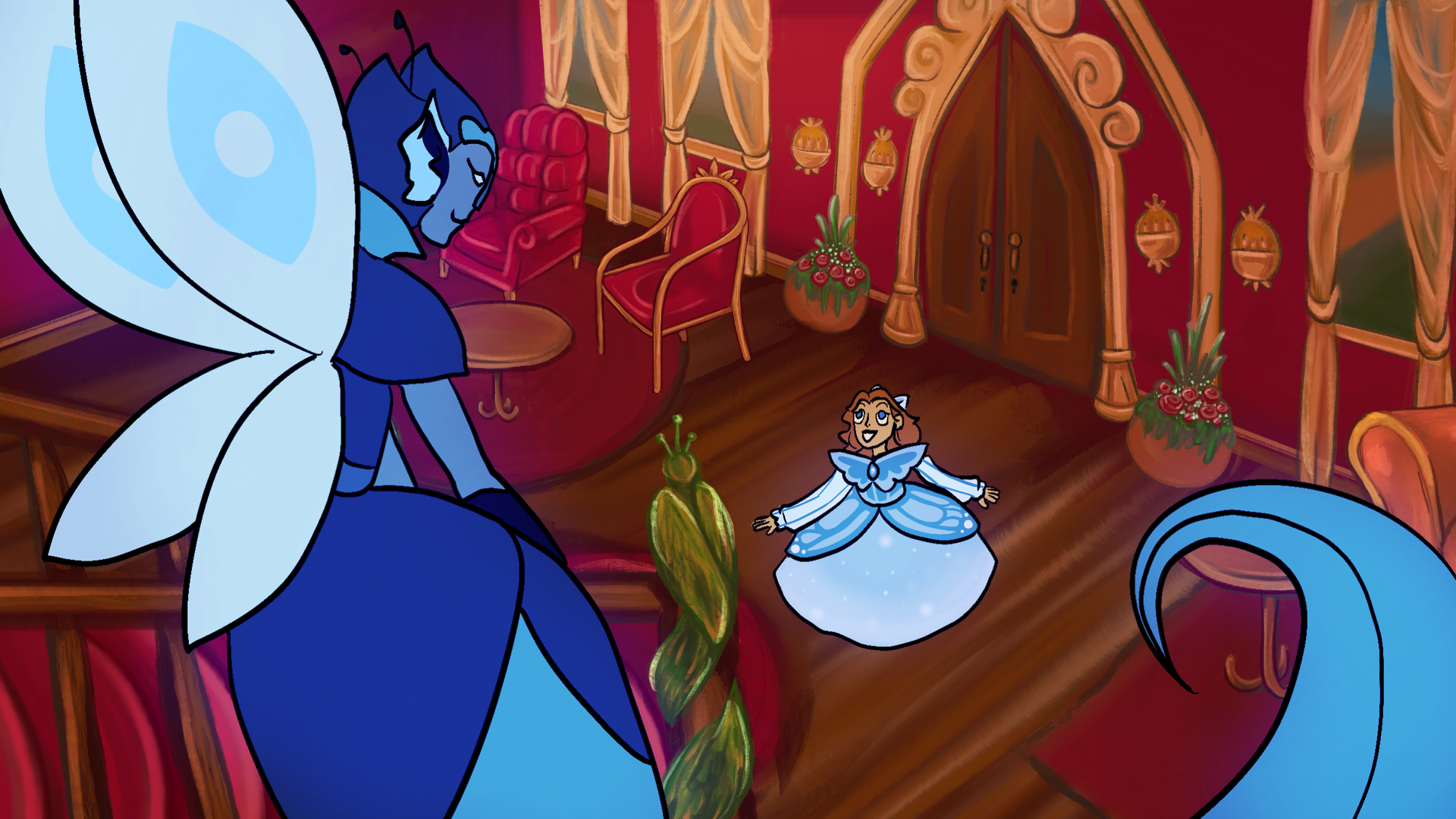
He calls his company Comic Book Opera because the singers and the musicians deliver the story through an original comic book format, with panels projected behind the performers conveying, in this case, the story of Cinderella through voice bubbles and professionally illustrated characters. He hired three visual artists to create the comic. And to make his rendition of Massenet’s work more accessible to largely non-francophone audiences, Graham, himself, translated Henri Caïn’s original French libretto into English, adding another populist touch to his project.
His cast ranges in experience, most of them holding master’s degrees in voice and some of them boasting professional performances in North America and Europe. Tagging singers as “emerging artists” can shade their place in the music profession. Almost unequivocally in this concert presentation of Cendrillon, there was little wanting in any singer’s contribution.
Graham has double cast most principal roles (a true entrepreneurial gesture), and the cast I heard at Sherwood Park’s Festival Theatre, just east of Edmonton, was musically engaging, and given they were parked to the side of the small orchestra and emerged to the front of the stage only when their part was called, they did what they could to project their characters beyond the score and words.
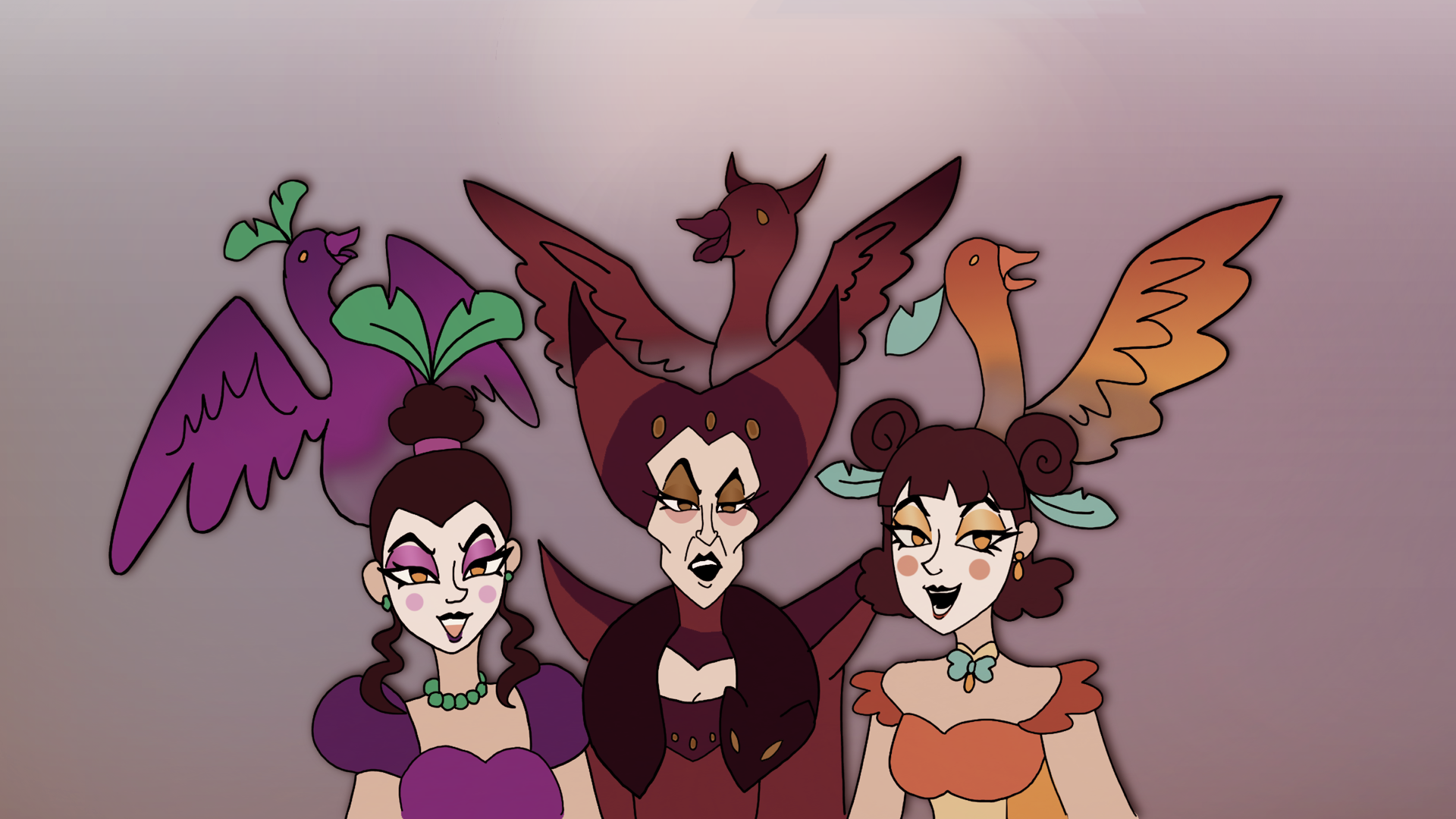
Photo Credit: Comic Book Opera – Hannah Berg, Lee Conrad, Emilee Wittke
Cendrillon’s stepmother (centre), with her two daughters, telling what happened at the ball
I heard Juilliard-trained soprano Lara Secord-Haid as Cendrillon. She delivered the demure personality of the put-upon stepdaughter plaintively, and she also captured the moments when Cendrillon escapes her limited lot in wistful fantasy.
The two unruly, ambitious stepsisters, Noémie (Alexandra Brigley) and Dorothée (Olivia Mitchell), played their parts for laughs, but when they rose to sing, the production crackled with female aggression and an over-the-top desperation that impressed dramatically and was musically attention-grabbing. The daughters’ cacophonously shrill outburst late in the opera may not have been the height of operatic technique, but their zeal to make a deafening racket was impressive and appropriately unpleasant. Their mother, Madame de la Haltière (Ashley Schneberger) sang her role with authority, not exactly menacingly but with suitable lack of empathy.
The toughest part, if not the largest test of endurance, is the Fairy Godmother’s (La Fée). It requires a blend of sparkling coloratura singing vocally constrained enough to convey the character’s bright, ethereal place in the plot. Vivien Illion moved in and out of the lightness of projection the role calls for, at times generating volume at the expense of the fairy-like demeanor, likely because of the effort required.
Prince Charming is sung by a woman in this opera, and mezzo Sofia Durante presented a “man” clearly struggling because he has not found his mate. Her tone was suitably warm, and it added a level of seriousness that anchored some of the other plot directions.
In this version of Cinderella, the heroine’s father, Pandolfe (Max van Wyck), plays a buffering role between his unfortunate daughter and his second family. Van Wyck has a rich, confident baritone sound, which he used commendably to comfort Cinderella and to forcefully correct the rest of his female household. The ensemble of spirits did an excellent job in their supporting roles, especially when they were required to sing in almost a whisper.
The comic book concept called for more reading than even a prolix series of surtitles would require, but in the context of the well-drawn, coherent rendering of the fairy tale, the unique artistic effort got the job done.
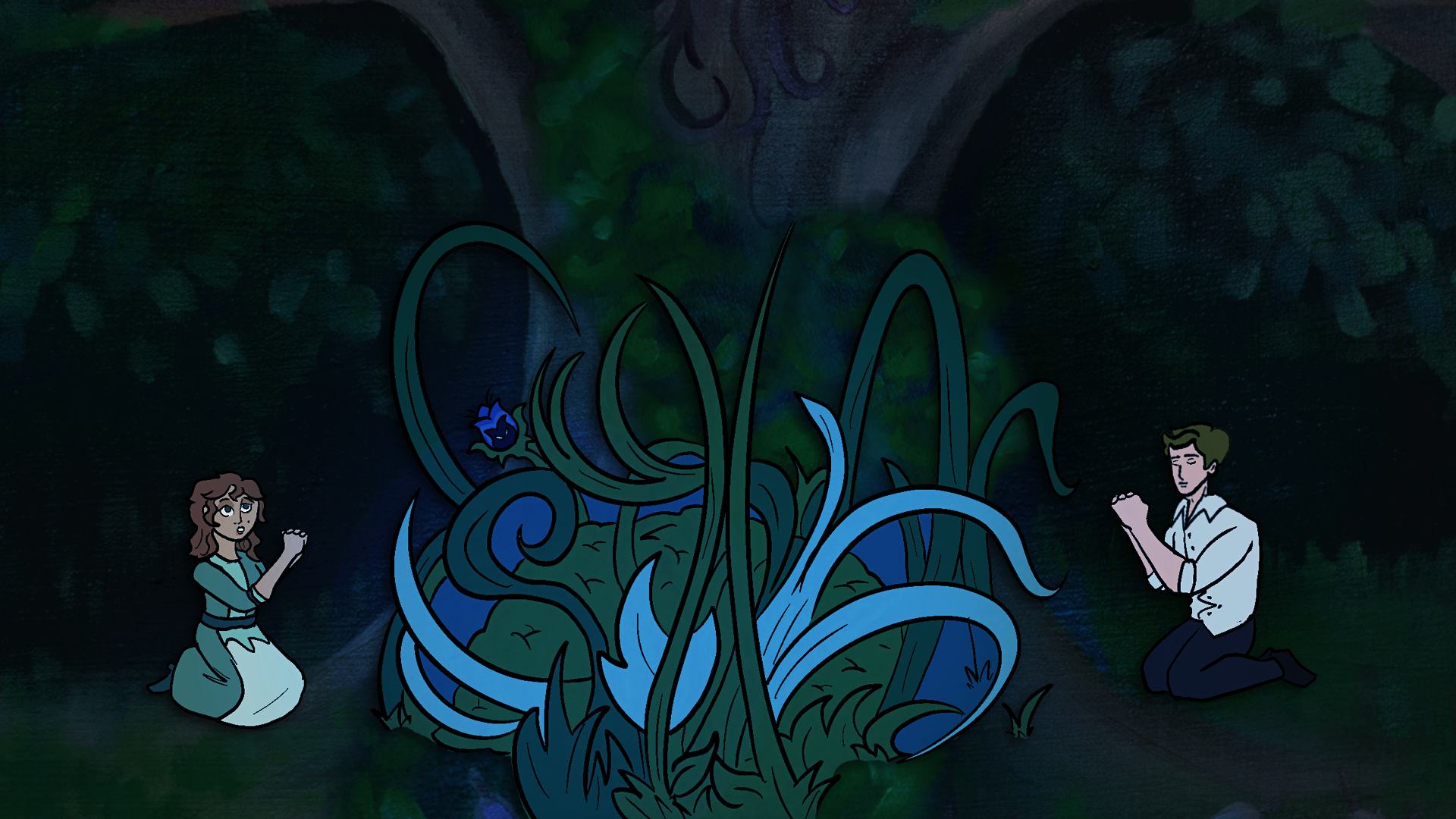
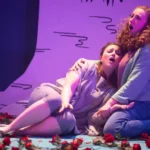
Photo Credit: Comic Book Opera – Hannah Berg, Julian Gabriel Aguilar, Hunter Murray, Dani Franke, Aida Bishop
Cendrillon and Le Prince Charmant are drawn together under a magic oak tree
Opera Canada depends on the generous contributions of its supporters to bring readers outstanding, in-depth coverage of opera in Canada and beyond. Please consider subscribing or donating today.