One thing was easily predictable about Teatro Nuovo’s Il Don Giovanni: it wouldn’t sound like any ordinary Mozart Don. That Il offers a clue. That’s how the title appeared on the original score, and that’s how the opera was billed when it made its American debut at New York City’s Park Theatre in May 1826. And Will Crutchfield’s young (eight years old) ensemble is all about authenticity: period instruments, scholarly editions, historically informed style. At its best, though – as in last summer’s Macbeth and this year’s Il Don – Teatro Nuovo transcends mere scholarship to offer performances that vibrate with an in-the-moment theatrical and musical life.
At Jazz at Lincoln Center’s Rose Theater on July 15th, Mozart’s masterwork assumed, as much as research could uncover, the guise of its New York premiere, with its imported troupe led by the illustrious Manuel García and with the opera’s septuagenerian librettist, Lorenzo da Ponte (then a New Yorker and Columbia professor), on hand to supervise and tweak.
Offering a mixture of the opera’s original Prague version and its subsequent reworking for Vienna, Teatro Nuovo’s performance was full of surprises, small and large. Prime among them was the startling appearance of Elvira’s second act “Mi tradì” (written for Vienna) in the middle of Act One, replacing “Ah! fuggi il traditor!” This was not an infrequent practice in the 19th century, though it is less common than omitting the aria altogether. There were the many other omissions: Don Ottavio’s “Dalla sua pace,” Masetto’s “Ho capito,” Don Giovanni’s “Metà di voi,” Leporello’s “Ah, pietà! Signori miei!” and the whole of the final, moral-pointing ensemble.
There were the instrumental surprises: a solo cello taking charge of the secco recitatives; in the Don’s serenade, a silky solo violin instead of the plucked mandolin. And what should show up as the centerpiece of the banquet scene’s opera-tune entertainment? Why, the “Piano, pianissimo” opening of Il barbiere di Siviglia, even though its composer was five years short of birth when Il Don was written; García, after all, was not just New York’s first Don but its, and Rossini’s, first Almaviva. Throughout the two acts, both the musical numbers and the recitatives offered embellishments galore, most of them delivered confidently by the singers and only occasionally teetering on the edge of excess.
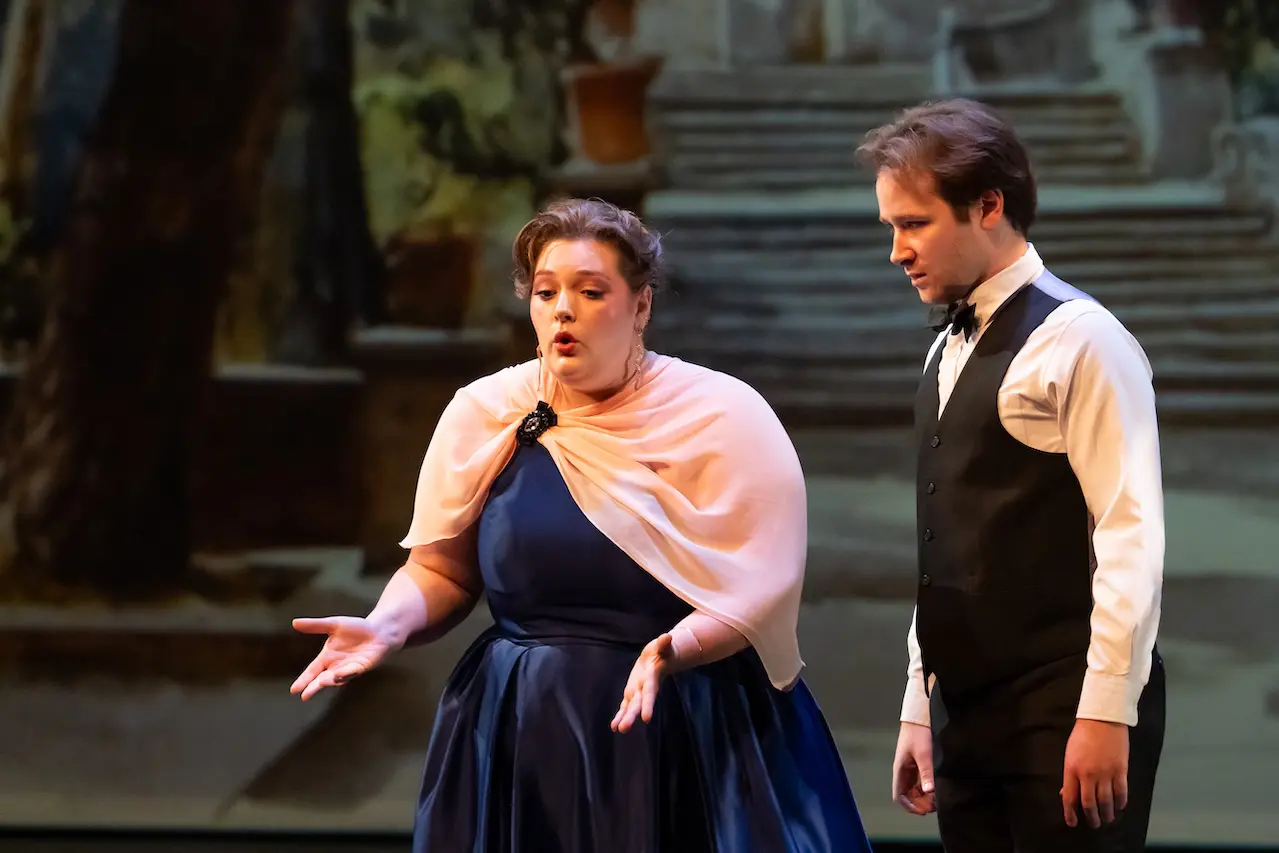
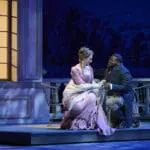
Photo Credit: Steven Pisano
Canadian mezzo-soprano Simona Genga as Zerlina with Noah B. Rogers as Masetto at Teatro Nuovo
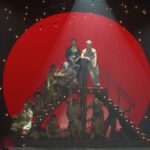
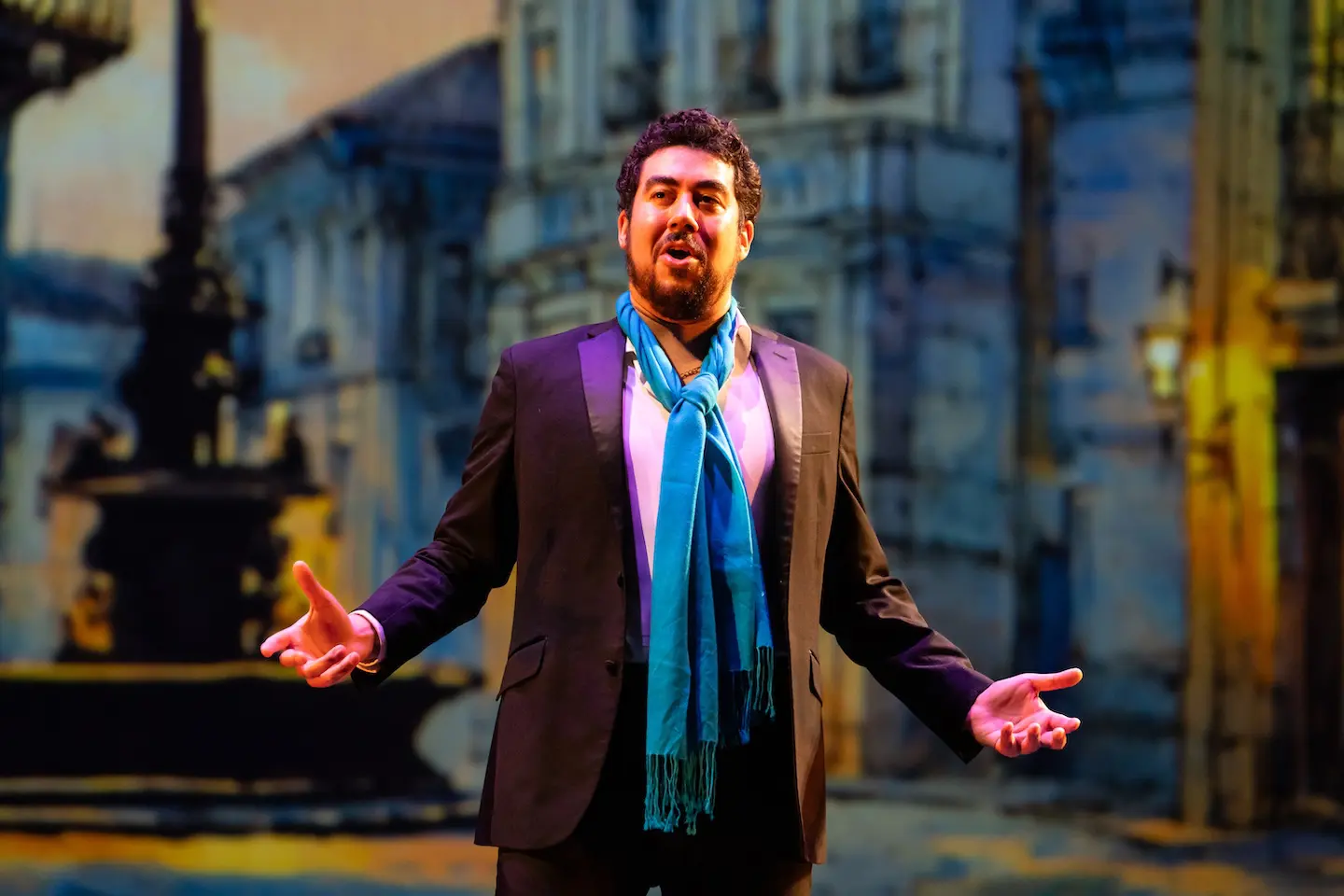
The performance was semi-staged, played in front of changing projections of scene-setting period prints. The supertitles, adapted from the translation made by da Ponte’s son Luigi for the García troupe, were so quaintly charming that they often distracted from the goings-on beneath them. The cast – with one exception, all Americans – wore modern dress, with some oddities: why, for example, was Giovanni, implausibly mask-less for the opening scene while Anna, Elvira and Ottavio wore theirs for their trio?
But, in what da Ponte dubbed a dramma buffo, the singers gave both the drama and the comedy their committed all. The three women were well contrasted vocally and physically. Soprano Elizabeth Novella, an airier-voiced Anna than usual these days, sang a literally show-stopping “Non mi dir,” and Sedona Libero, a mezzo-soprano, had no trouble with Elvira’s range, though she occasionally let vibrancy impede clean articulation. Toronto’s Simona Genga, a darker-voiced fellow mezzo, played Zerlina – the role created in New York by García’s 18-year-old daughter, Maria, soon to become Mme Malibran – with a notable absence of soubrette clichés. Her velvety “Vedrai, carino” was among the evening’s highlights.
Sturdy-voiced bass-baritone Kevin Spooner, in sport coat and bow tie, initially seemed a rather sobersided Leporello, but he sang a capital “Madamina!” and loosened up winningly for his second act antics. Tenor Martin Luther Clark, a more vocally assertive Ottavio than most, managed some impressively lengthy phrasing in “II mio tesoro.” As the Commendatore, bass-baritone Daniel Mobbs, a longtime Crutchfield associate, had the wrong voice but the right spectral presence, and what little young baritone Noah B. Rogers had to do as Masetto, he did quite nicely.
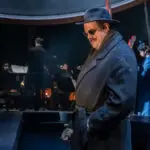
But the performance’s undoubted star was, rightly, its Giovanni: Ricardo José Rivera, last year’s splendid Macbeth and this past winter’s short-notice Riccardo in the Met’s Live in HD I puritani. I doubt that timbrally, his true Verdian baritone much resembles the Rossinian tenor of García, who adjusted his music to suit his own capabilities and strengths, and apart from a few incidental flights upward he stuck to the role’s traditional range. But I doubt, too, that even García could have performed the Don with more swagger, suavity and style.
Geoffrey Loff, the evening’s direttore al cembalo, led the expert Teatro Nuovo Orchestra with ear-catching pungency and power. One more doubt: could García’s Park Theatre aggregation have played the score so well?
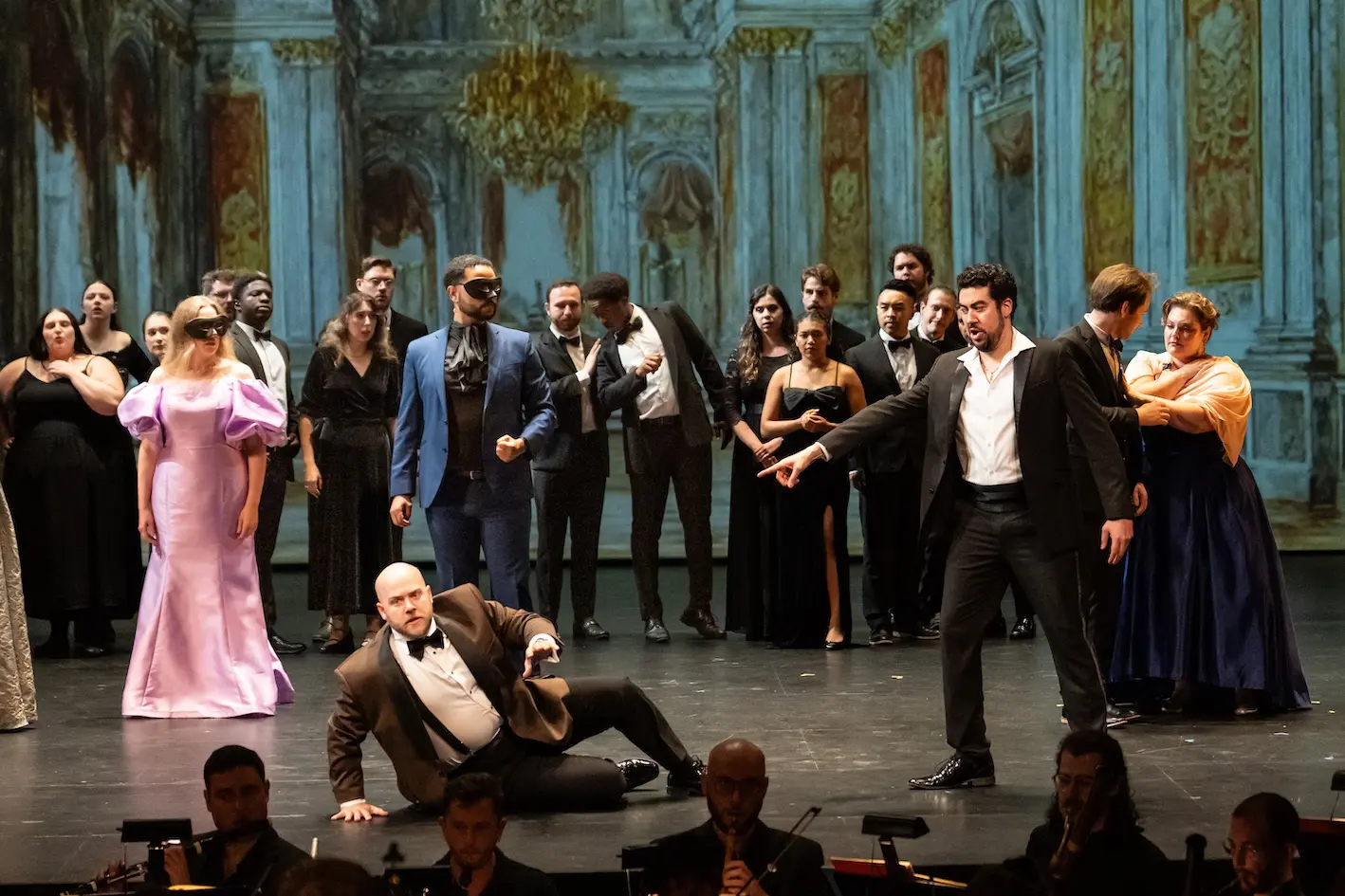
Photo Credit: Steven Pisano
Leporello (Kevin Spooner) accused by Don Giovanni (Ricardo José Rivera)
Opera Canada depends on the generous contributions of its supporters to bring readers outstanding, in-depth coverage of opera in Canada and beyond. Please consider subscribing or donating today.