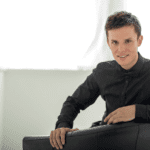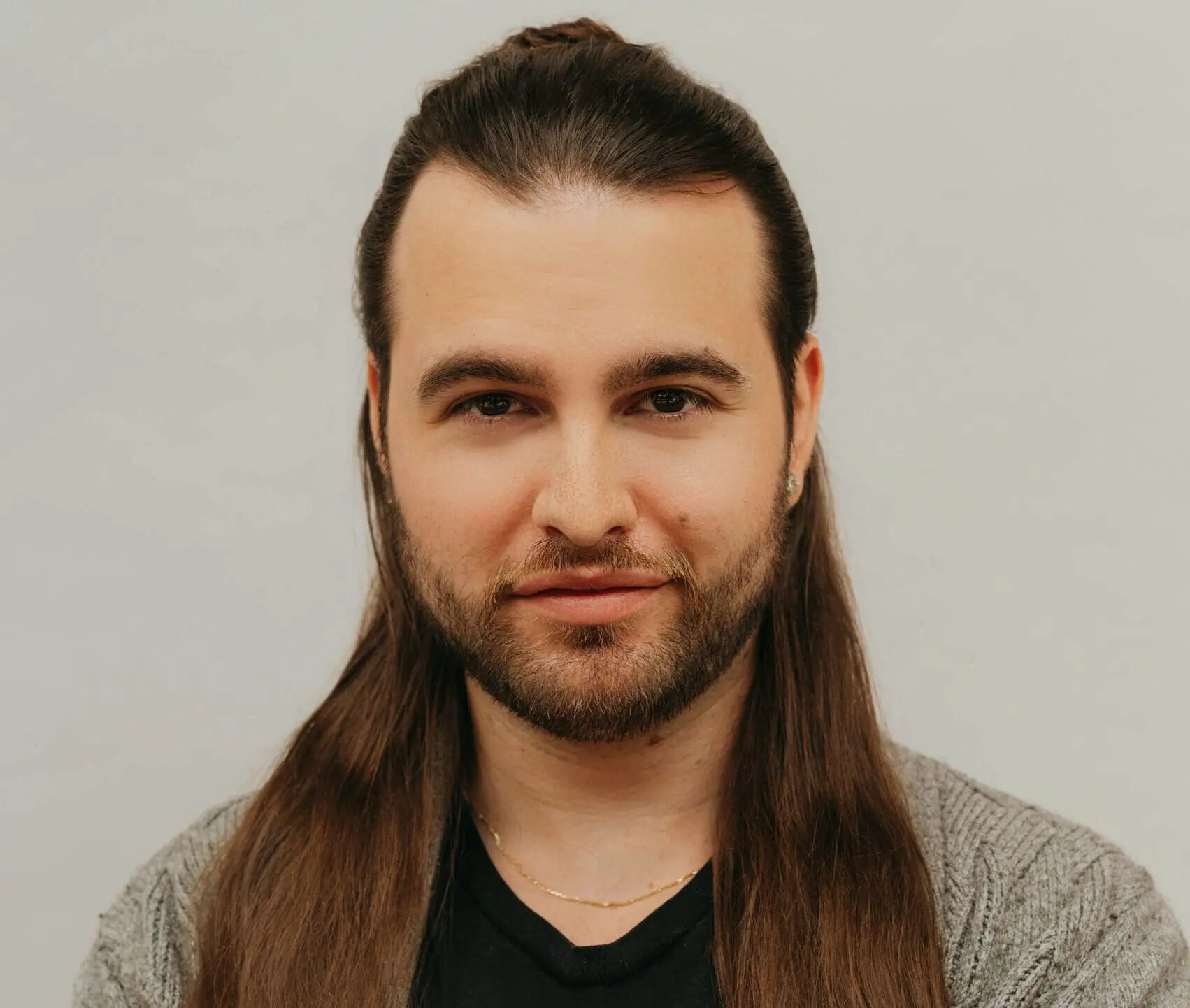
The Artist of the Week is Canadian bass-baritone Alex Halliday. He will be singing the role of the Duke and covering Frère Laurent in the Canadian Opera Company‘s production of Roméo et Juliette from September 27th to October 18th (tickets and info here).
Alex is a star on the rise. He was recently named one of CBC’s 30 hot Canadian classical musicians under 30 and placed third at Edmonton Opera‘s Rumbold Prize in 2024. After his return to the COC this season, he will be heading west to make company debuts with Pacific Opera Victoria, Vancouver Opera and Edmonton Opera.
This week, Alex chats with us about the singers he admires, the role he wants to sing next and how his high school teachers helped him to get where he is today. Read on to find out more.
When was your first singing lesson (and with whom)?
My first singing lesson was somewhere in the fall of 2012 with Janice Alcorn. After I discovered my voice she did all she could to help fast track my skills and materials to apply for undergraduate music programs. Without her, I never would have made it to where I am today.
What/who inspired you to sing?
I cannot say that anyone inspired me to “sing.” I always enjoyed singing on my own and to various music genres – I just never knew I had any talent. I can say that I had numerous people inspire me to perform, take risks and believe in the abilities they could see clearly where I could not. Joel Pratt was the first to identify my passion for performance and he firmly nudged me in that direction with utmost confidence. He knew I could succeed in an art form I had zero experience or skills in and was there to congratulate me the largest when the curtain closed. I always say Joel Pratt was perhaps the single most important person I crossed paths with, since without his mentorship and belief I would be somewhere else doing something completely different that I love a lot less.
Favourite city that you’ve worked in?
I still love working in Toronto. This is the city that shaped me as a professional artist with people I adore and respect. Aesthetically, I’m sure there will be more beautiful and historic cities I’ll work in, but nothing will ever beat returning home to work with the people that believed in me the most. It is always a gift to share my continued growth with the individuals who could only first see the potential and believed I could be something more.
Top 3 favourite composers?
My three favourite composers are Verdi, Puccini and Mozart (in that order).
Top 3 favourite operas?
My top three operas are La bohème, Don Giovanni and Don Carlo.
Which opera role do you want to be singing right now?
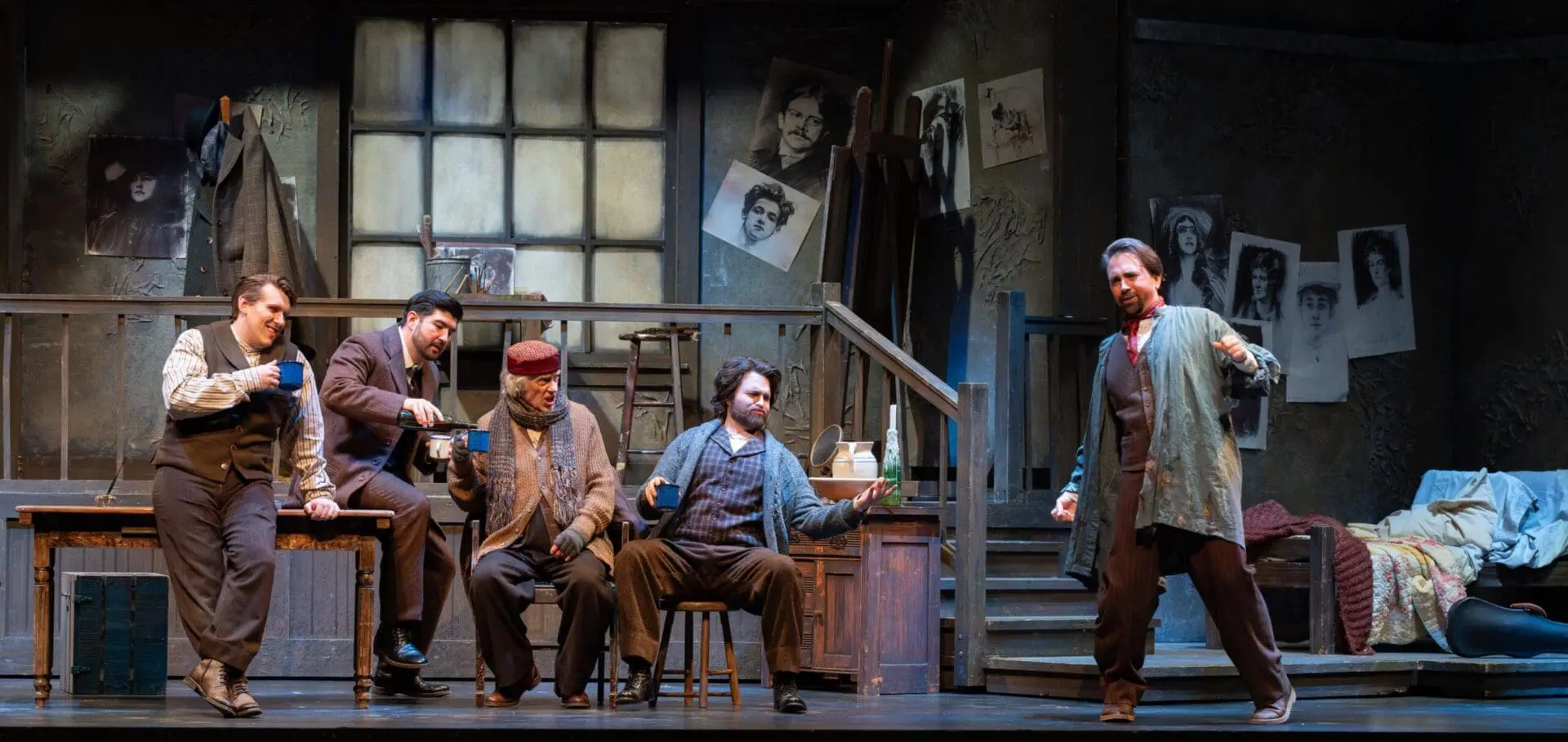
I currently have been singing Colline, and it is a role I’ll never tire of. It’s a perfect vocal and character fit for me. No matter how I am feeling on the day or month I can put all of myself into bringing him to life.
Which opera role do you want to be singing in 10 years?
A role I would love to sing in 10 years is Banquo from Macbeth. I’d like to be singing that in five years, but the Verdi lyric bass roles are my long term career dream more generally, so he is a great start.
Who is a singer you admire that is currently working?
The first low voice I was drawn to as I started my undergraduate degree was Ildebrando D’Arcangelo. He sang all of the repertoire that seemed to call to me and fit my voice vocally the best. He brings this unbelievable vocal colour to everything he sings and carries a powerful stage presence that you cannot look away from. He was the first singer I looked up to, and I hope to work with him one day so I can see his process up close.
Who is a singer you admired from the past?
Giorgio Zancanaro is debatably the greatest singer I have ever heard in my life. He is known for Verdi baritone repertoire but sang all of the great baritone arias. Music and singing is obviously very subjective, but to me he reached near vocal perfection. I wish he was still working so I could hear him in performance.
What’s the strangest/funniest thing that has happened to you on stage?
During a performance of Le nozze di Figaro when I was singing Figaro, the chorus forgot to enter during their first big number. I knew something was wrong because they’re supposed to enter behind me and not a single member was on stage. We later found out the calls weren’t getting through to the dressing rooms, but you can imagine how awkward a chorus scene without chorus would be. All of the leads worked together to keep the show moving and it worked out in the end. It is a very amusing memory to look back on.
What’s your favourite thing about singing with an orchestra?
It’s difficult to describe the feeling I get when singing with an orchestra. I always love that I have a Maestro in front of me to help keep me in time and on target with my entrances. It allows me to have more freedom to tell the story and focus on what I’m singing, but the greatest thing about the orchestra is it always brings the very best out of me. I make sounds with an orchestra I very rarely am capable of without the unique support all of those players bring to every show and rehearsal. To me, it is the ultimate form of collaboration.
What’s your favourite mind-calming practice?
My favourite mind-calming practice is playing hard video games such as Sekiro or Elden Ring (Soulsborne). I know it might seem counterintuitive that hard, frustrating games can be calming but there is no better way for me to distract from the stresses of life and work than with a video game that needs my total focus to succeed. While failing a ton, I let out a lot of pent-up stress and frustration which is replaced by the satisfaction of eventually overcoming the challenge. It refreshes my mind/soul for the next day.
What’s your favourite non-classical band?
I’m on a pretty big Polyphia kick right now. I like a lot of different kinds of music so I can’t say any one band or artist is a favourite, but outside of the roles I’m learning for this season Polyphia has been on repeat.
What’s the downside of being an opera artist?
The downside of being an artist is that you’re never guaranteed to land a contract and thus are often regularly stressed about your upcoming seasons or work in general.
What’s the best thing about being an opera artist?
The upside of being an artist is that you get to do something not many people can, which is work in the field we are often most passionate about. The non-guarantee of work also means the only thing I can control is my own improvement and perfection of my craft/skillset. Singular focus on improvement is deeply rewarding and is a mindset that transfers to everything in life.
Are you a cat person or dog person?
I’m a dog person, though I love most animals. I own a mixed breed dog who is nearly two. His name is Milos.
What was your childhood dream job?
My dream job as a child was zookeeper, because I always loved animals.
Which TV show did you binge-watch last?
I have very little interest in TV series or movies. I am not engaged enough by them.
The music industry is tough, and filled with rejection. How do you cope? Does it get easier?
Rejection will likely be eternally frustrating and in many cases has nothing to do with you as an artist. This field is often shaped by taste and bias since music, performance and art are largely subjective. I don’t think there is anything wrong with this either, and it does make coping with rejection easier once it is understood. The only thing you can do is keep moving forward, keep trying to improve yourself and your skillset and eventually somebody with a bias for what you are doing will be on the other side of the table listening. I believe persistence, modesty, patience, confidence and graciousness are keys to succeeding in the arts.
Were there any directors in the past that have really inspired you?
Sir David McVicar opened my eyes to the heights opera can reach. I personally believe his direction to be the pinnacle of the art form, and working with him on his production of Macbeth at the COC was the most inspiring thing I have done.

© Michael Cooper
In rehearsal for The Cunning Little Vixen with the COC
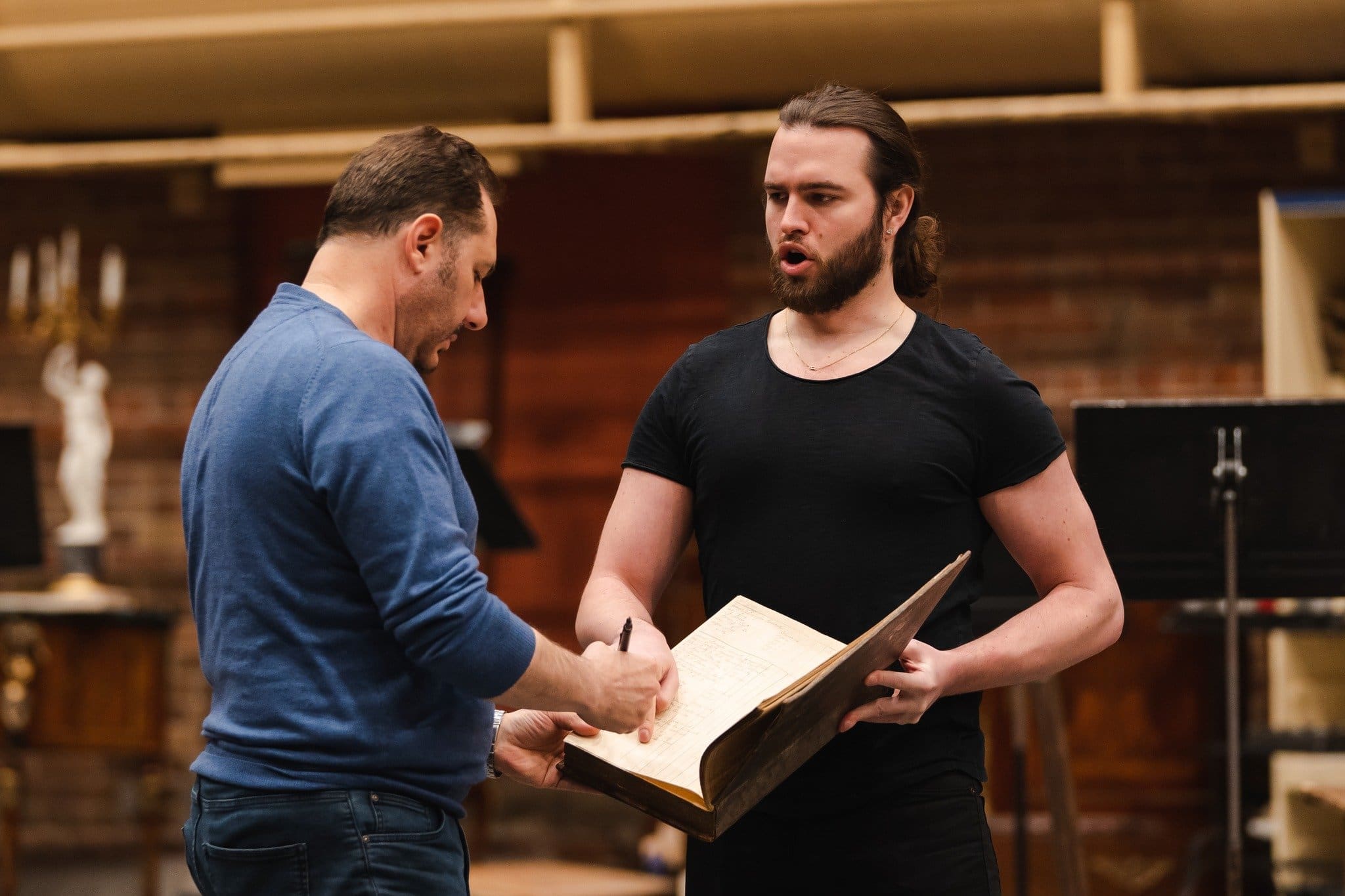
© Taylor Long
In rehearsal for Tosca with the COC
© Mark Rash
As Colline in La Bohème with Manitoba Opera
Roméo et Juliette
Canadian Opera Company
ROMÉO: Stephen Costello
JUILETTE: Kseniia Proshina
FRÈRE LAURENT: Robert Pomakov
MERCUTIO: Gordon Bintner
MERCUTIO: Korin Thomas-Smith (October 16th & 18th)
BENVOLIO: Angelo Moretti
GERTRUDE: Megan Latham
TYBALT: Owen McCausland
COUNT CAPULET: Mark Stone
PARIS: Ben Wallace
THE DUKE: Alex Halliday
STÉPHANO: Alex Hetherington
CONDUCTOR: Yves Abel
DIRECTOR: Amy Lane
SET AND COSTUME DESIGNER: Emma Ryott
LIGHTIMG DESIGNER: Charlie Morgan Jones
Opera Canada depends on the generous contributions of its supporters to bring readers outstanding, in-depth coverage of opera in Canada and beyond.
Please consider subscribing or donating today.