To the classical voice fan, there’s nothing quite like attending a good old singing contest. It’s the perfect venue for voice fanciers to hear new singers and to discover the ones destined to grace the operatic and concert stages at home and abroad. For the contestants, a competition is a surefire way to get noticed by conductors, opera directors, agents and the opera-going public. Operatic lore is full of real-life stories of young, previously unknown singers leaping into the limelight through winning a singing competition.
Toronto opera lovers are fortunate in that the city is host to the best-known classical singing competition in Canada. I am referring to Centre Stage, hosted by the Canadian Opera Company. Aspiring singers compete for prize money and a chance to join the COC’s Ensemble Studio.
I have been attending this competition annually from the start. It began in 2011, then simply known as the Ensemble Studio Competition. For the first two years, it took place in the Richard Bradshaw Amphitheatre at the Four Seasons Centre, where audience members sat on glorified stairs without back support – not the most comfortable arrangement! To the diehards eager to sample brilliant young voices, it was worth the backache. This competition was so successful that two years later, the COC rebranded it as “Centre Stage” and pumped in more resources, turning it to a gala event. It moved to the main auditorium, supported by the full COC orchestra.
This year, they also honoured the great Canadian tenor Ben Heppner, who got his start by winning the CBC Talent Competition in 1979. He was also a member of the COC Ensemble Studio way back from 1982 to 1984. He is a fine example how successes in competitions can help build a career.
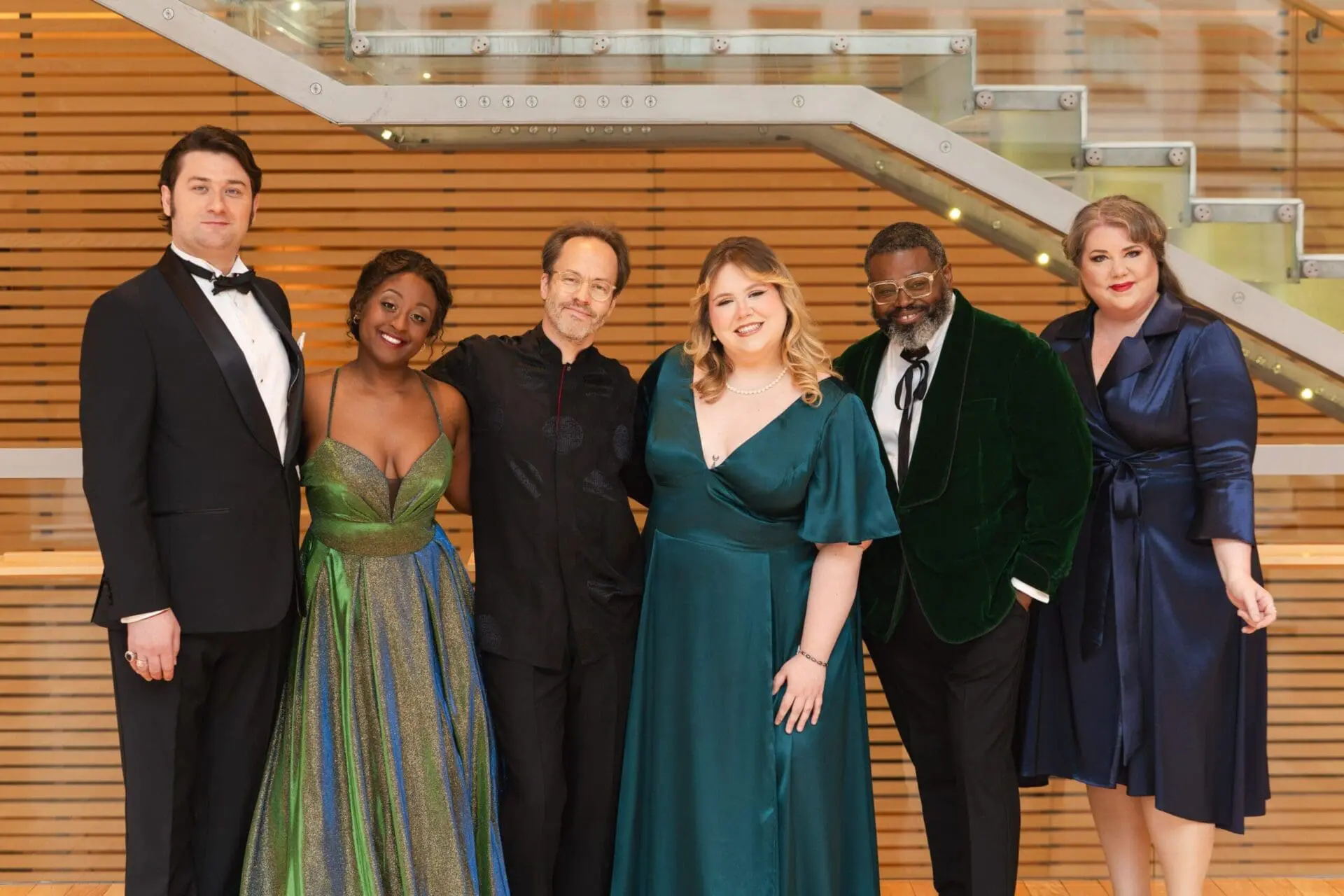
The seven finalists, in alphabetical order, were: Jacob Abrahamse (tenor), Jackson Allen (tenor), Sarah Anderson-Caulfield (soprano), Onur Hilaloglu (bass), Nikan Ingabire Kanate (soprano), Camila Montefusco (mezzo) and Søren Pedersen (baritone). The only voice that I was familiar was that of Montefusco, whom I have heard many times at the Glenn Gould School of the Royal Conservatory, where she was a Rebanks Fellow.
A competition, by its very nature, will have winners and “losers.” I put the latter in quotation marks, because for any contestant to reach the finals of a high-level competition like Centre Stage, we can be sure that he/she has the potential and the promise of a career. To my ears, all seven have the innate talent and solid training to be in the winner’s circle. The results reflect individual preferences of the judges and the audience.

Photo Credit: Michael Cooper
All seven finalists (from left to right): Onur Hilaloglu, Jacob Abrahamse, Sarah Anderson-Caulfield, Jackson Allen, Camila Montefusco, Søren Pedersen and Nikan Ingabire Kanate
My thoughts? Lots of highlights, right from the start.
Søren Pedersen opened with a highly theatrical “Largo al factotum,” showing off a compact lyric baritone with an attractive timbre. Camila Montefusco followed with a lovely version of Sesto’s aria “Parto, parto” from La clemenza di Tito, demonstrating in no uncertain terms that she’s ready for prime time.
Tenor Jackson Allen offered a heartfelt “Ah! Fuyez, douce image” from Manon. Kudos to Sarah Anderson-Caulfield for the courage to select “Lo vidi e’l primo papito,” a rather obscure aria from the seldom staged Luisa Miller, and she did it well. Jacob Abrahamse chose a much more familiar piece, Alfredo’s “De miei bollenti spiriti” from La traviata, impressing us with beautiful timbre.
Bass Onur Hilaloglu sang Banquo’s aria, a well-known aria ideal for his bass cantante, showing off his powerful top register. The last contestant was Nikan Ingabire Kanate, and she picked “Depuis le jour” from Charpentier’s Louise. It’s an opera that’s hardly ever performed, although this particular aria is often featured in concerts and recordings. Kanate sang it with lovely tone and the requisite chiaroscuro and mezza voce.
After the contestants’ performances, the jury panel retired for their deliberations. At that point, the audience was supposed to be entertained by soprano Anna Sophie Neher, the Euridice in the current run of Orfeo ed Euridice. She was to sing two arias, but she was unfortunately indisposed.
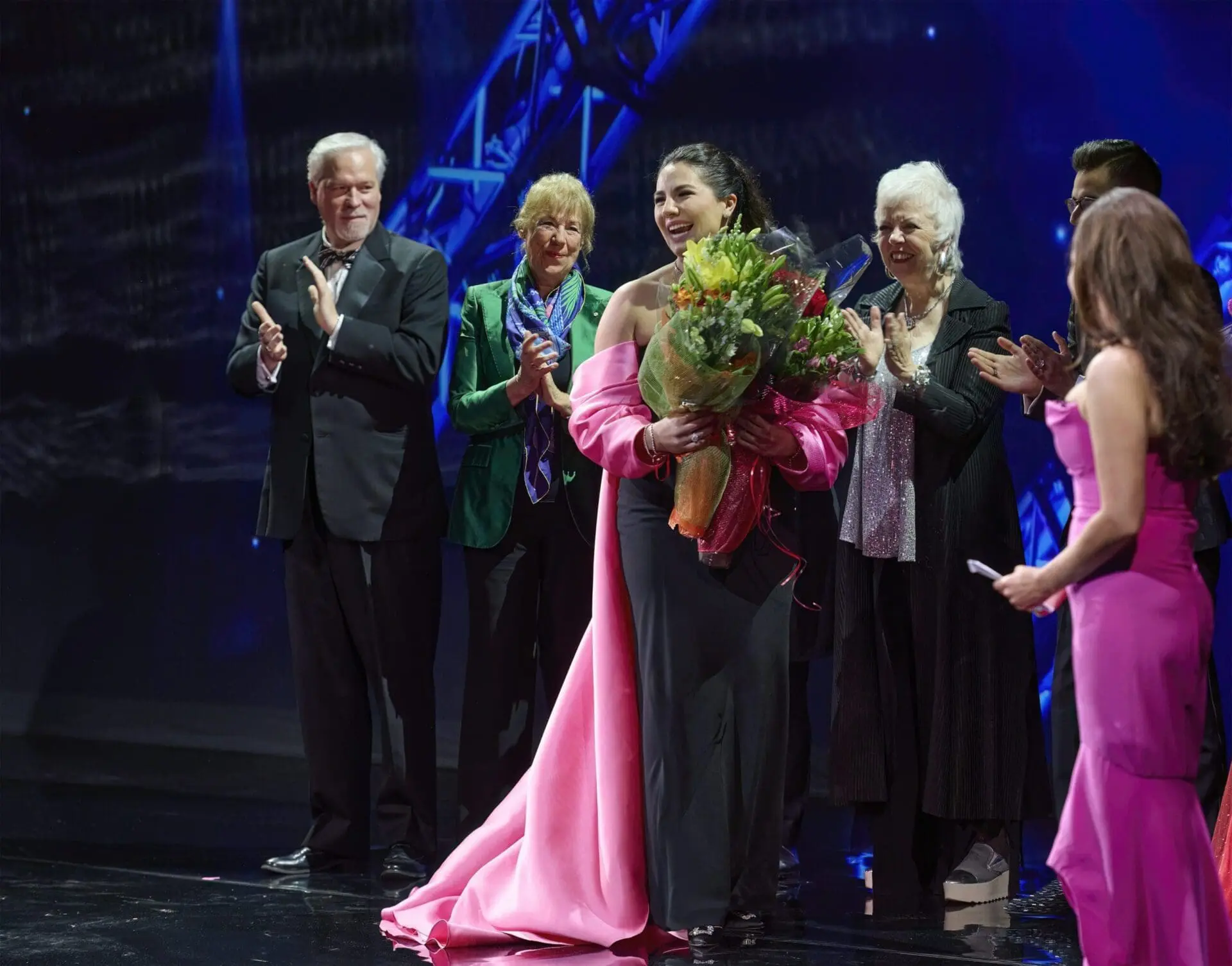
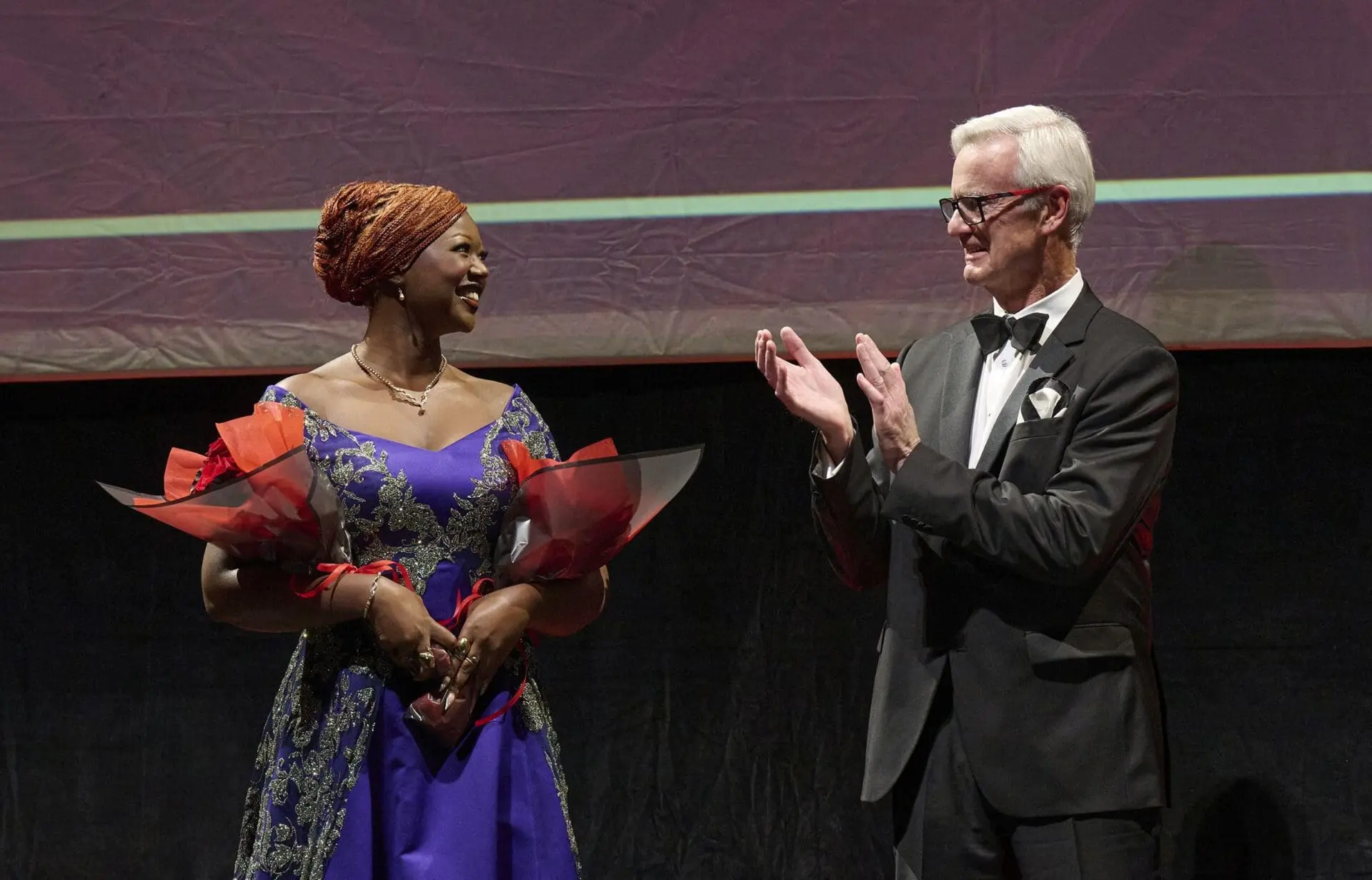
In no time, the jury panel returned with the verdict. First Prize went to Nikan Ingabire Kanate, a $12,500 award, and she also received the Hatch Audience Choice Prize of $3,000. Mezzo-soprano Camila Montefusco won the Second Prize of $8,000. Søren Pedersen took the newly established Erin Wall Prize of $5,000, an award in memory of the late soprano who passed almost exactly five years ago.
My own thoughts? I can say that Kanate got my vote for the Audience Prize. I was very impressed by her “Depuis le jour” for the beauty of her tone and, in particular, for her soft singing. She was able to attack the final B-natural pianissimo, followed by crescendo into forte, all under perfect control, without edginess. Beauty of tone and firm technique to me is a winning combination. Montefusco’s voice is well-known to me, and she sang beautifully, so her Second Prize was not a surprise. To my ears, Mr. Pedersen has the lyric baritone to have a fine career and was fully deserving of the Erin Wall Prize.
As I indicated earlier, it takes innate talent, sound training, solid technique – not to mention determination and drive – to compete and be successful at this high level. As far as I am concerned, each of them is already a winner. I wish all of them the best, and I look forward to hearing them on opera and concert stages in the future.
Opera Canada depends on the generous contributions of its supporters to bring readers outstanding, in-depth coverage of opera in Canada and beyond. Please consider subscribing or donating today.