It’s that time of year again!
Every autumn, Toronto area opera fans can look forward to the start of the Canadian Opera Company’s season. This year’s fall offerings are particularly enticing – two beloved works of the standard repertoire, Roméo et Juliette and Orfeo ed Euridice. Opening night took place last Saturday with the Gounod masterpiece, in a production from Malmö Opera and the same creative team as last season’s Faust.
This R&J revival is long overdue – the last time it was staged by the COC was way back in 1992, a long 33 years ago. I recall that run vividly. Korean soprano Hei-kyung Hong was Juliette opposite the late Italian tenor Marcello Giordani as Roméo. They were making beautiful sounds but were hampered by the dreadful acoustics of the cavernous barn that was the O’Keefe Centre. Thankfully, since 2006, we opera fans have been enjoying the marvelous sonics of the Four Seasons Centre. Opening night last Saturday was a vocal and orchestral feast, signifying an auspicious start to the new season.
Of the six Gounod operas, Roméo et Juliette and Faust are his most popular. With R&J, one is struck by Gounod’s skillful take on the Shakesperean drama, set to a resplendent, melodically inspired score. When it’s as well done as this revival, it’s a truly memorable evening at the opera.
The cast was uniformly strong. To my ears, top vocal honours went to American tenor and frequent COC guest artist Stephen Costello, who is making a welcome return. I have enjoyed his Edgardo and Duke of Mantua in past seasons, but what intrigued me the most is his Roméo. I had the good fortune of hearing it seven or eight years ago at Santa Fe Opera, and it was memorable. I was curious to experience it again.
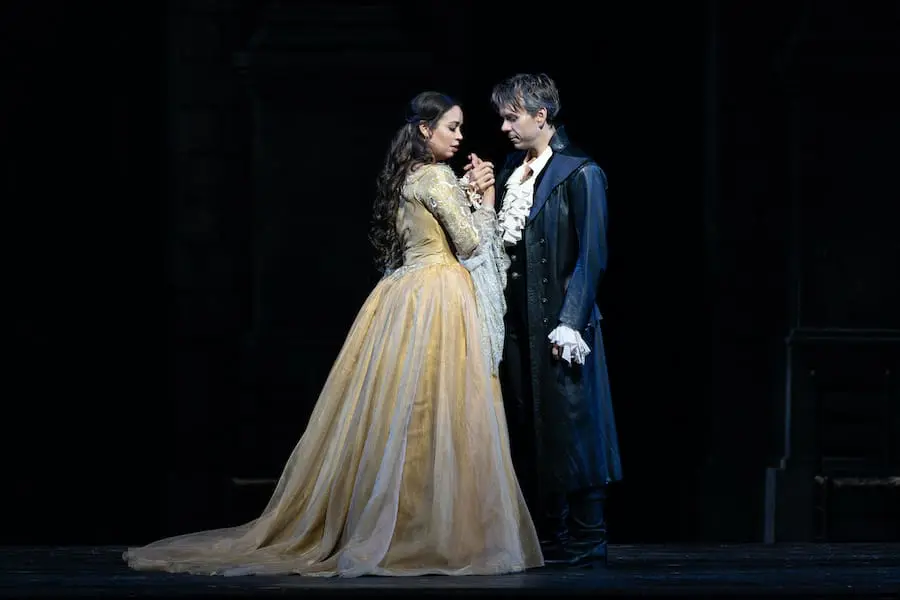
As Roméo, his clarion tenor with its fearless top register never sounded better – his “Ah! leve-toi, soleil!” was an unalloyed pleasure. Heart-on-sleeve, his ardent Roméo truly came alive. It helped that he has great chemistry with his Juliette, beautifully portrayed and sung by Russian soprano Kseniia Proshina. The purity and gleam of her lyric soprano during “Je veux vivre” was lovely. Add to that her sympathetic stage persona, and everything was believable. They had a total of four(!) duets, and each was a highlight of the evening.
The large supporting cast was no less impressive. The singers were mostly present or former COC Ensemble members. Owen McCausland offered solid vocalism as Tybalt, sounding the best I have heard him. Also praiseworthy was the sturdy-tone and surefire theatricality of Gordon Bintner as Mercutio. Mezzo Alex Hetherington has the ideal voice for Stéphano, and she did beautifully. Bass Robert Pomakov provided the requisite gravitas as Frère Laurent, as did the only non-Canadian in the supporting cast, British baritone Mark Stone as Count Capulet.
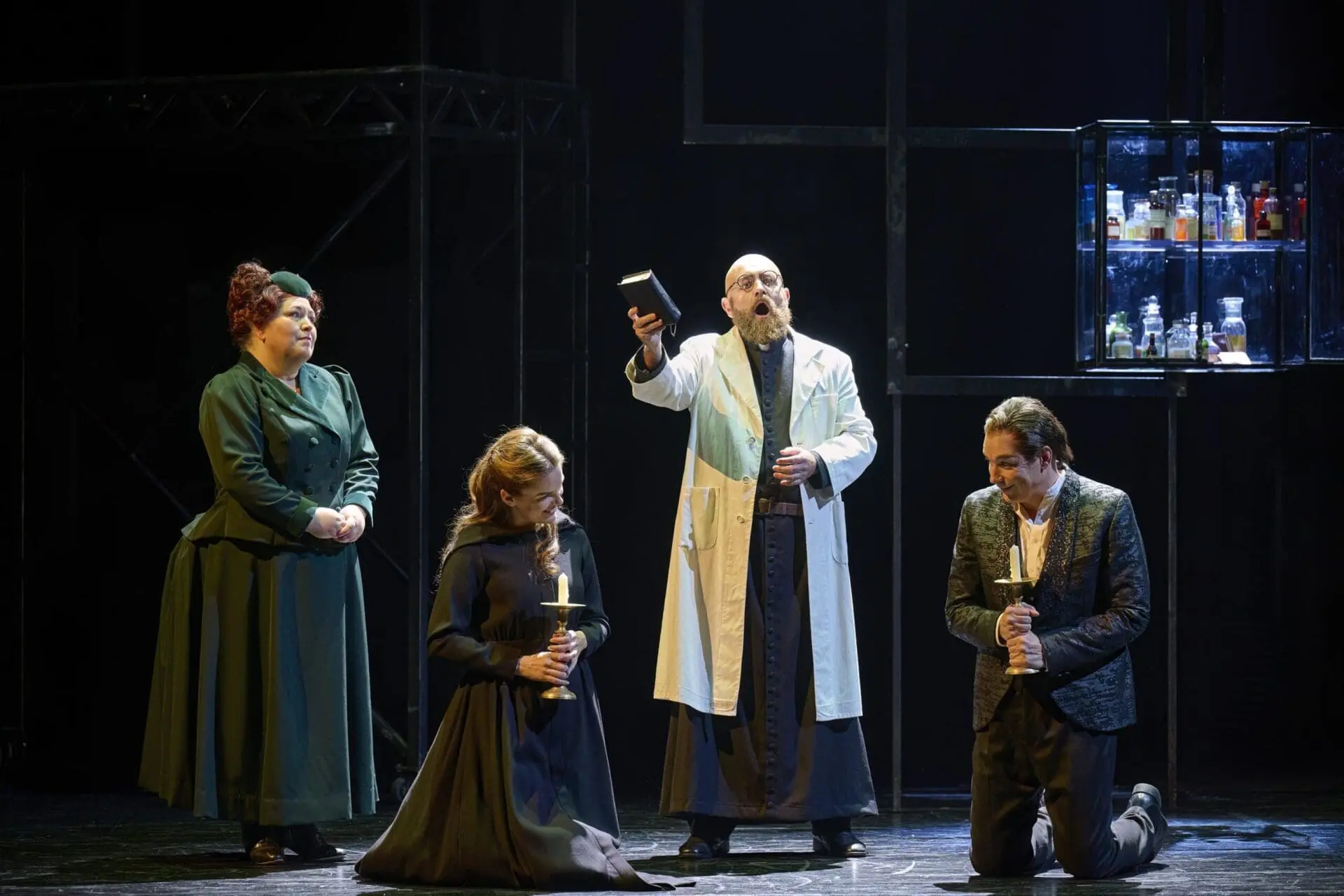
Photo Credit: Michael Cooper
The wedding scene from Roméo et Juliette, with Megan Latham (Gertrude), Kseniia Proshina (Juliette), Robert Pomakov (Frère Laurent) and Stephen Costello (Roméo)
Canadian conductor Yves Abel, last in town for L’elisir d’amore a few seasons ago, made a welcomed return and led the COC forces in an idiomatic performance, coaxing lovely sounds from the pit. While there is not a huge amount of choral writing in this piece, the COC Chorus sounded impressive as usual, making every musical moment count. There was also a team of eight dancers specially engaged for this production. Together with the many supers who also had highly choreographed movements, the stage action was abundantly theatrical.
I have reserved my comments of the production to the last, because a critique of a “concept” production is often complex and multi-faceted. COC audience will recall Ms Lane’s striking production of Faust last season, a good example of “Regieoper,” a German term for the director-driven opera productions commonplace in European houses. Given it’s the same creative team – Emma Ryott (set and costumes) and Charlie Morgan Jones (lighting) in addition to Lane – there’s a noticeable stylistic kinship between the two productions.
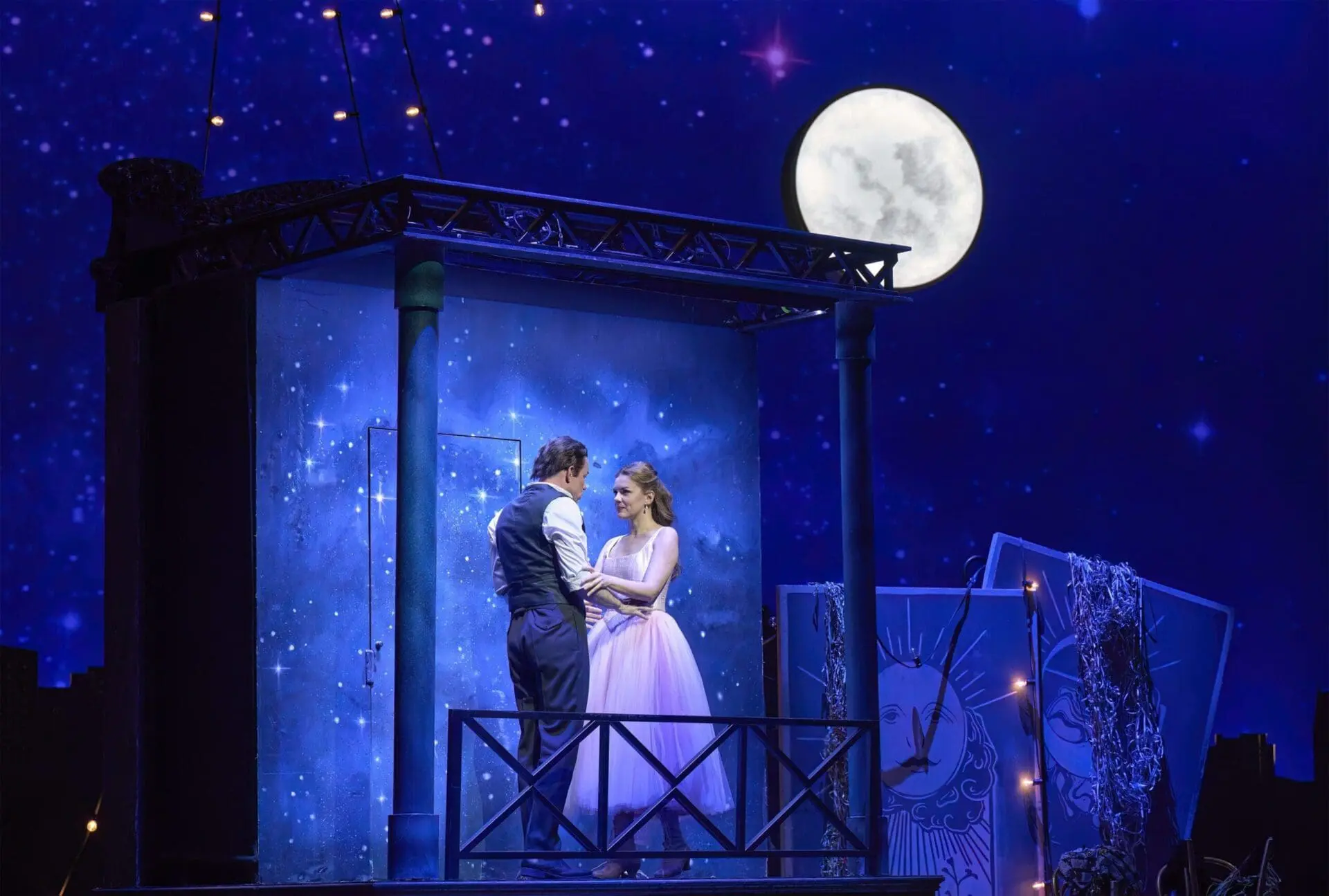
Compared to her Faust, this Roméo et Juliette is relatively mild on the “Regiemeter,” so to speak. The Shakesperean story has been time-shifted to 1890 New York City, during the so-called Gilded Age. The Capulet-Montague conflict is now a struggle between “native” New Yorkers represented by the more established Capulets, versus the more recent immigrants, the Montagues. West Side Story, anyone?
While this re-conceptualizing of the original is interesting, the execution is somewhat problematic. Visually, the masked ball in Act 1 is turned into a garish spectacle complete with neon lights and mad dancers. I suppose given that the story has been transplanted to Manhattan, a bit of Broadway doesn’t hurt. By contrast, the sets for the other acts are rather drab, with black paint, and are frankly ugly and anti-Romantic.
A more fundamental question is “Does one want a re-visioning of a Shakesperean classic?” The answer is obviously up to the individual audience member. For some, dramatic verisimilitude as close to the original as possible is of utmost importance. Others might find a fresh take on an old standard stimulating. Some may see the musical values of a particular performance to be paramount, and that includes yours truly.
In my case, “prima la musica” all the way. As I have noted above, the music-making of this revival is superb, so I have absolutely no hesitation in rating this show as a must-see.
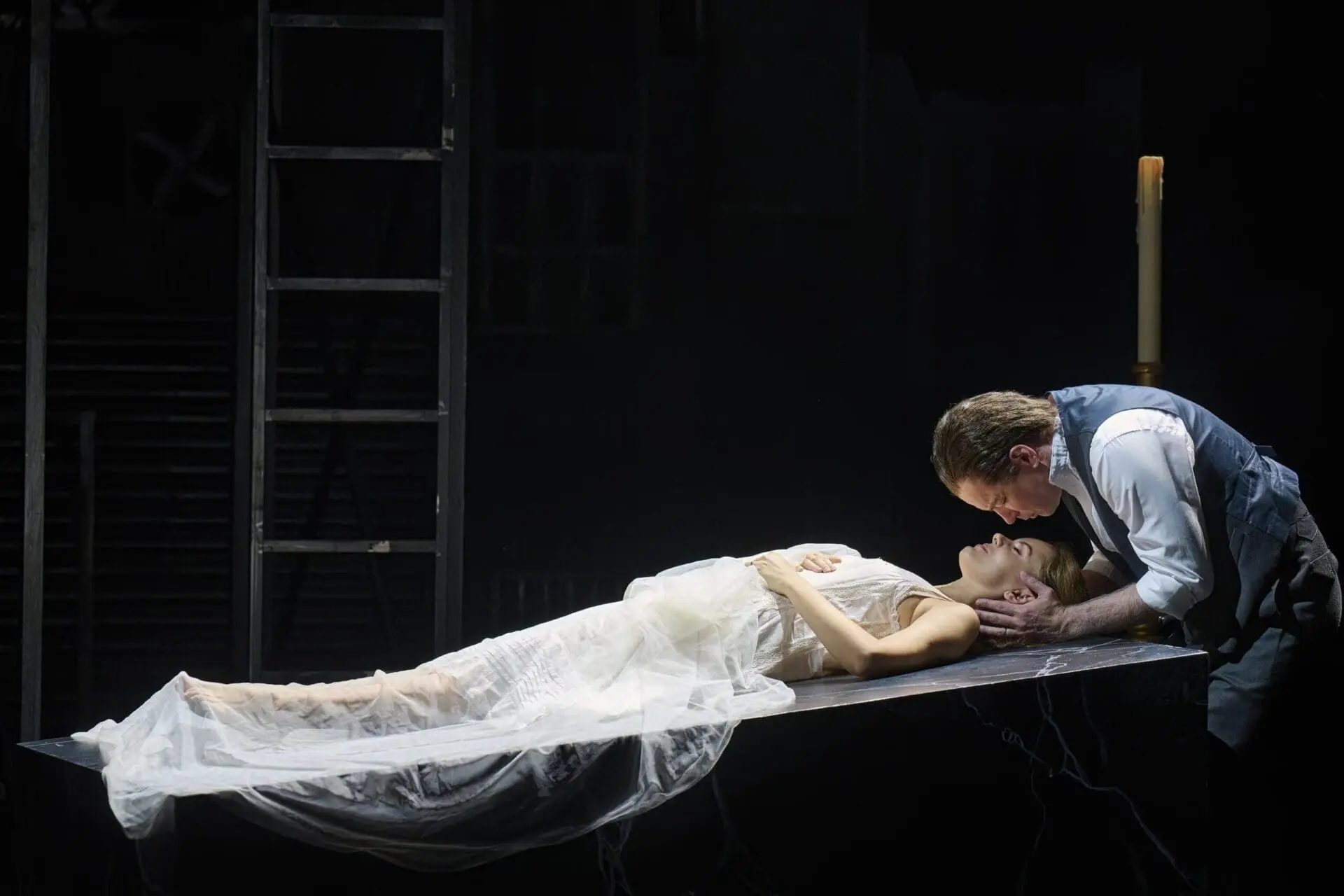
Photo Credit: Michael Cooper
Roméo mourns Juliette, whom he believes to be dead
Opera Canada depends on the generous contributions of its supporters to bring readers outstanding, in-depth coverage of opera in Canada and beyond. Please consider subscribing or donating today.