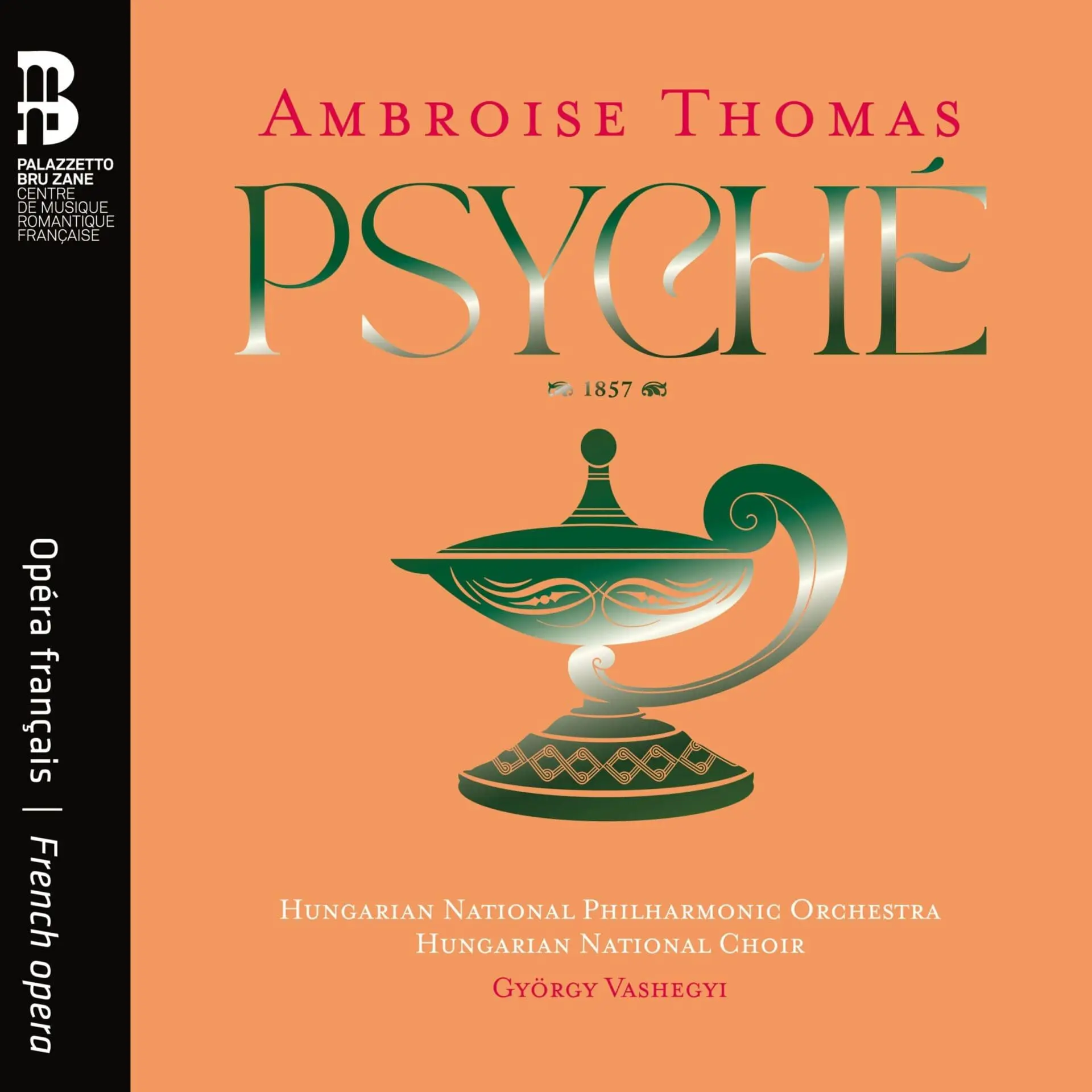
Like so many 19th-century French operas, Ambroise Thomas’s Psyché has a somewhat convoluted performance history. It premiered at the Opéra Comique in 1857 to critical acclaim but was not taken up by provincial houses owing to casting issues. It was revived in 1878 in a version intended for the Palais Garnier, with all the usual grand opera features like replacing dialogue with recitatives, more ballet and so on. Oddly enough, that version ended up being performed back at the Opéra Comique! The Bru Zane recording broadly follows the 1857 version with a couple of numbers from the later version added and abbreviated dialogue.
The story is typical of the treatment of classical themes in this period, moving on from the highly respectful treatment of myth found in Lully, Gluck and even Spontini, but falling short of the outright parody of Offenbach’s operettas. There’s some humour. Mercure, in particular, is given a comic twist, and Psyché has two sisters who play almost the same role as the stepsisters in in Cinderella. It sits in much the same “between space” as some other classical treatments of this period, such as Saint-Saëns’s Phryné.
So, what’s it about? Psyché is the daughter of the king of Lesbos and is so beautiful that she makes Venus jealous. The goddess sends Mercure to chuck Psyché off a rock into the sea but Eros, who has fallen in love with the girl, has her whisked off to his pleasure palace. Venus is not pleased but agrees that Psyché can live as long as she doesn’t see Eros. The sisters mess this up, and Psyché is destined for Hades, but the Olympic goddesses intercede with Zeus, who makes Psyché a goddess instead.
Musically, it’s perhaps best described as a hybrid. At times the music is grand, even Wagnerian, like in the first act finale, but at others times it’s more like an operetta. There’s a drinking song and some strophic numbers in rhyming couplets, like Mercure’s Act Two aria “Simple mortelle ou déesse.” It’s reasonably interesting, but there are much better French operas that are just as ignored!
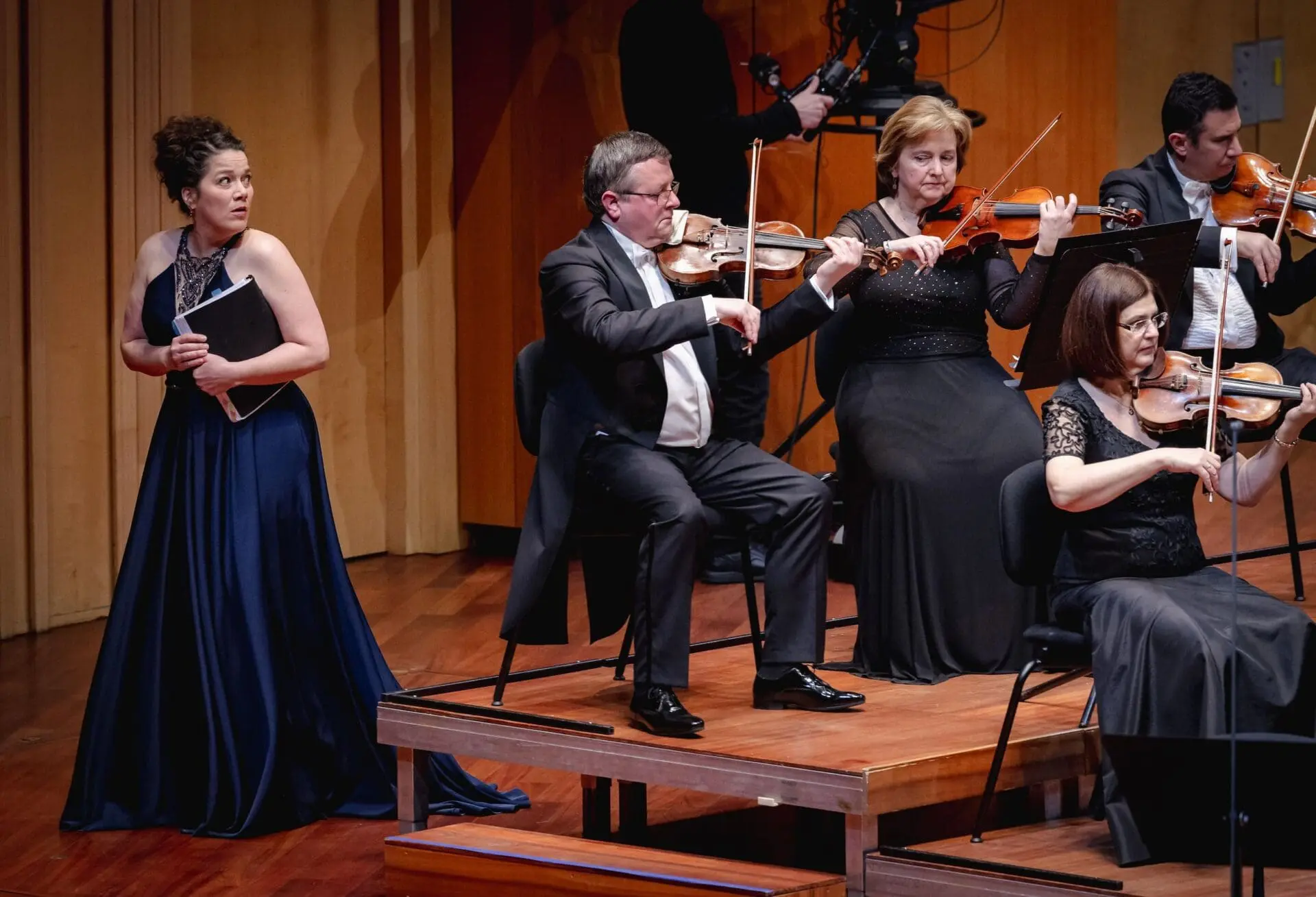
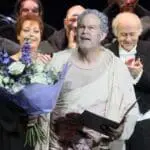
Photo Credit: Szilvia Csibi
Hélène Guilmette in the concert performance of Psyché
It gets an excellent performance, though, in this recording. Canadian Hélène Guilmette sings the title role (a role, alas, originally intended for Jodie Devos who died of cancer at age 35). She’s excellent. Her tone is sweet, with very clean high notes heard to good effect in her third act aria “Ô Venus, es-tu contente.”
She’s well matched by Antoinette Dennefeld in the mezzo role of Eros. The part lies very high for a mezzo, but Dennefeld copes admirably. Mercure is sung brilliantly by Tassis Christoyannis. Not only does the role go high for a baritone but there’s even some coloratura. He also carries a large part of the humour very well. Supporting roles are all also well sung.
The chorus, the Hungarian National Chorus, and orchestra, the Hungarian National Philharmonic, are well up to the task, and conductor György Vasheggi navigates the changes of mood and musical idiom skillfully.
This recording was made in Béla Bartók National Concert Hall in Budapest and is clean, clear and detailed, (though (as is usually the case with audio recordings) the voices are probably balanced a bit further forward than one would experience live. The recording is being released as two physical CDs, MP3 and lossless digital in 44.4kHz/16bit and 48kHz/24bit. I listened to the higher resolution version. Being a Bru Zane release, there is a 165-page booklet (English/French) with the libretto and a wealth of contemporary and modern critical commentary.
Another French opera quite successfully rescued by Bru Zane from the Valley of Lost Things.
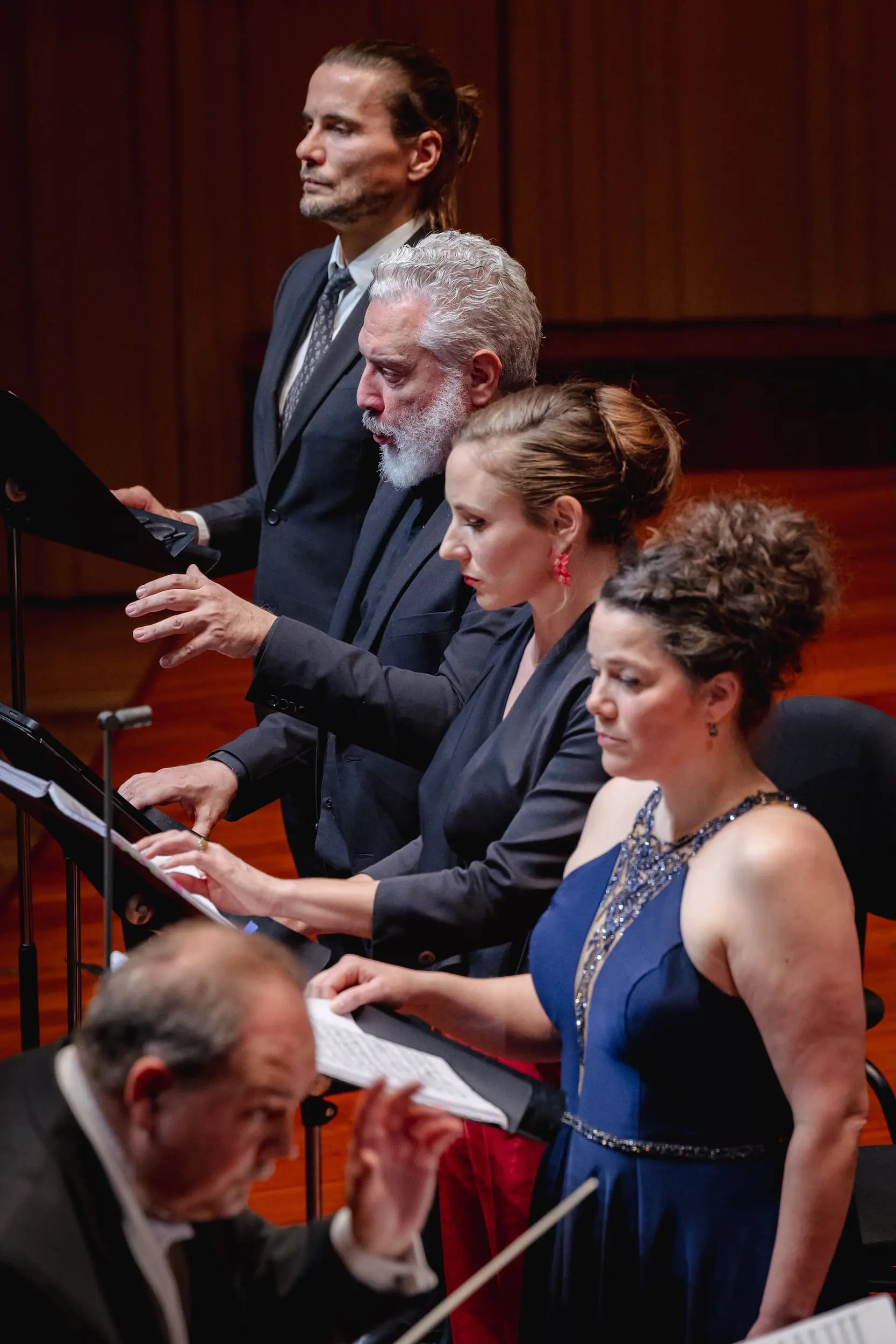
Photo Credit: Szilvia Csibi
Christian Helmer, Tassis Christoyannis, Antoinette Dennefeld and Hélène Guilmette
Opera Canada depends on the generous contributions of its supporters to bring readers outstanding, in-depth coverage of opera in Canada and beyond. Please consider subscribing or donating today.