Grand River Opera (GRO) is a fledgling, women-led organization enriching the Waterloo Region by featuring talented local artists. Their first staged production was Suor Angelica in March 2023, and they have since presented The Turn of the Screw and Hansel and Gretel. For their opening production this season, they chose Mozart’s Idomeneo, a work known for its stunning vocal and choral writing.
Mozart was just 24 years old when he wrote Idomeneo. Based upon a 1712 play written by French poet and tragedian Crébiliion père and with words by Italian librettist Giambattista, the opera is a curious mix of its collaborators’ musical backgrounds as well as crystal ball which foretells Mozart’s future compositions.
The plot centres around Idomeneo, King of Crete, who is rescued from a shipwreck by Neptune. But there’s a catch – Idomeneo must sacrifice the first person he sees onshore. The gods are cruel, and that person is his son, Idamante, who happens to be in love with Ilia, the conquered Trojan princess. And what is a tragedy without a love triangle? Elettra, the daughter of King Agamemnon, also lusts after Idamante.
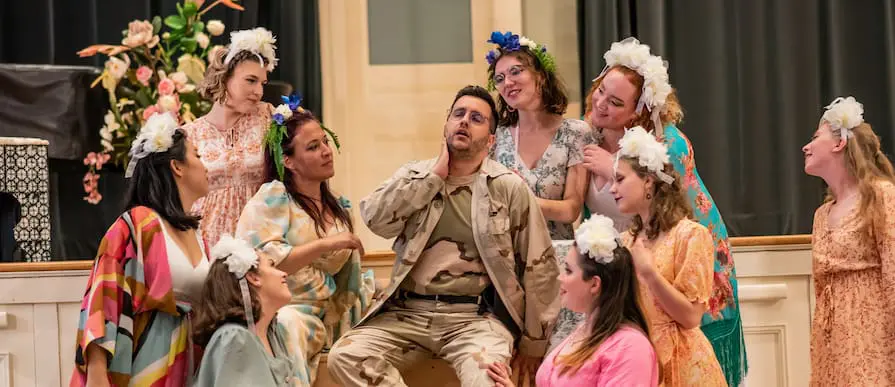
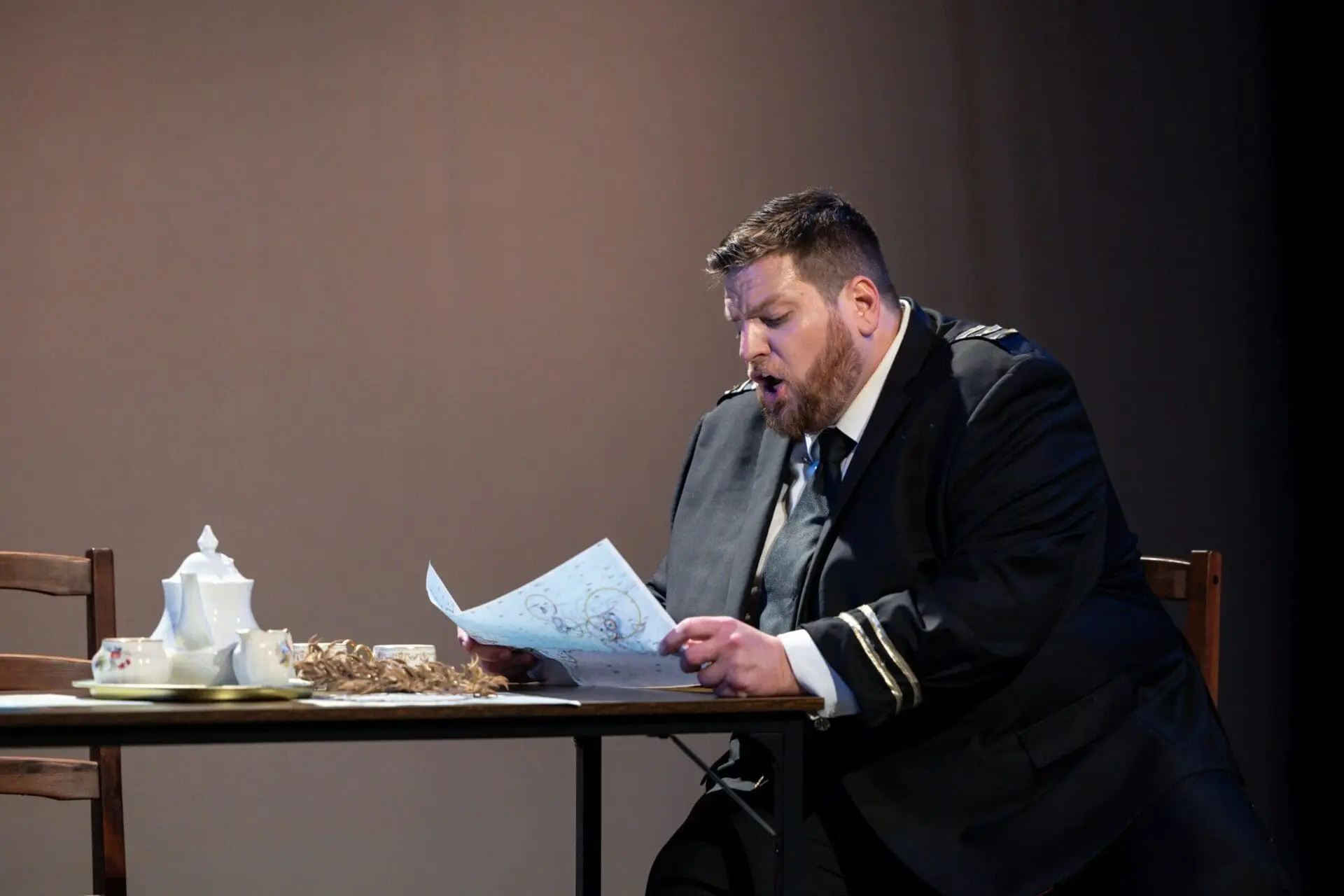
Rather than a traditional staging in 1200 BC, director Bridget Ramzy reimagines the story in modern day Crete, making Idomeneo a captain, the chorus asylum seekers and undocumented refugees, and the final setting a solidarity clinic for those in need. I am generally not a fan of updates, but this one worked. Ramzy challenges the audience to look into the pacts we ourselves make with gods or governments, forcing us to reflect on how we respond to crises.
Marcel van Helden was a compelling Idomeneo. He acted up a storm (literally and figuratively) and carried the audience through his journey as the regal, conflicted title character. Idomeneo’s turmoil is central to everything that happens in the opera, and it takes a fine actor and singer to carry the opera; Van Helden was both. “Fuor del mar” is one of the most taxing arias in tenor repertoire, and Van Helden’s soaring melodic passages, combined with his well-executed florid sections, showcased his richly dynamic voice. Van Helden’s slower duet work revealed a voice capable of sensitive blending and sustained breath control. His voice, combined with other leads, made the third-act quartet a sensory delight.
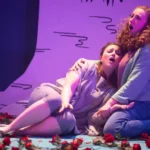
Kenzie Spoltore’s lyric mezzo was well-suited to Idamante. In this trouser role, Spoltore was an actor who subtly embodied the persona of a conflicted young hero. Her “Non ho colpa” was an expression of love, grief and conflict wrapped up in a vocal performance that demonstrated strong technique. “Il padre adorato” vividly expressed the despair of someone rejected by their own father.
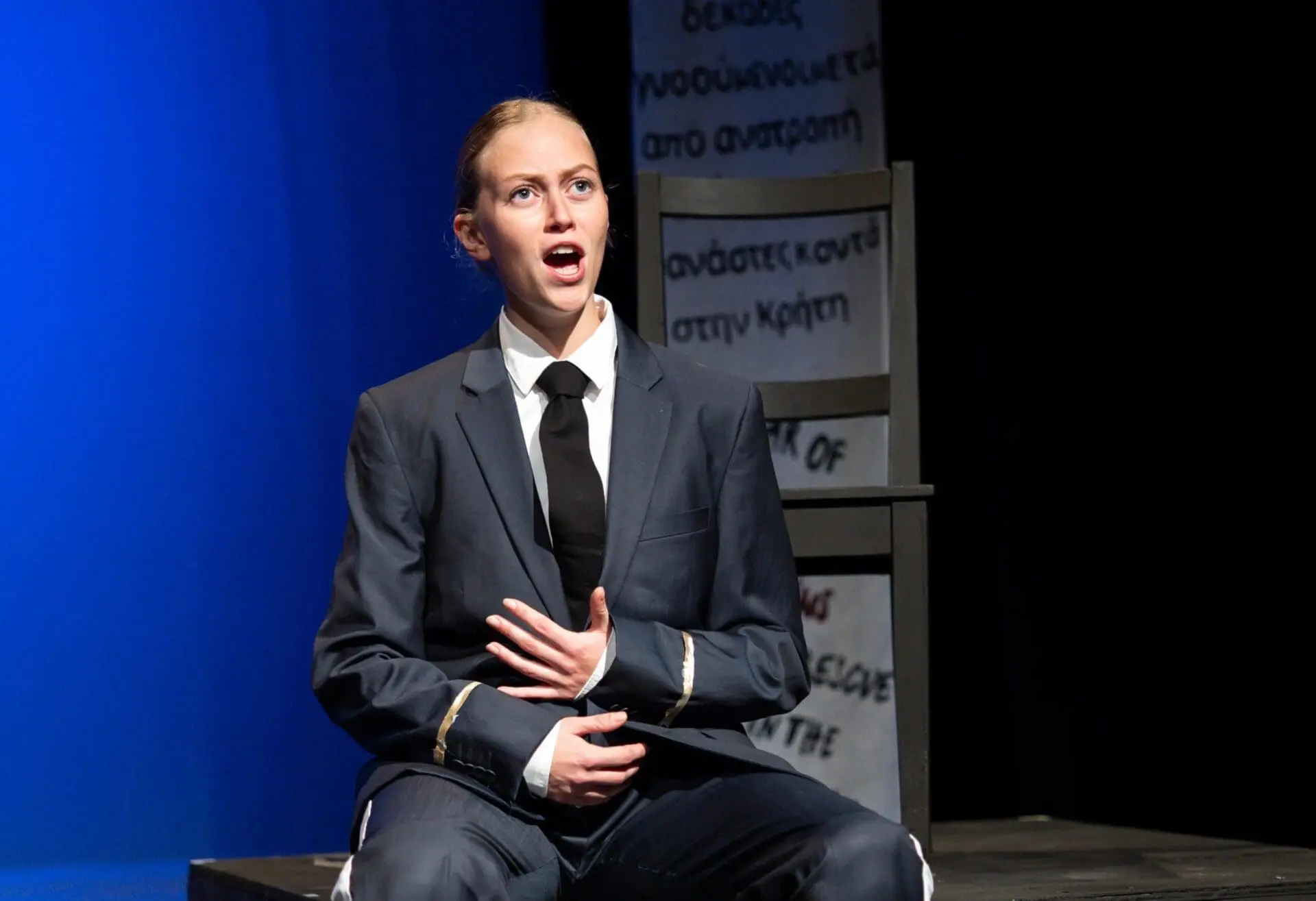
Photo Credit: Kinsey Winger Photography
Kenzie Spoltore’s lyric mezzo was well-suited to the trouser role of Idamante
Kathryn Rose Johnston was a compassionate, well-acted Ilia. Her soprano voice was particularly suited to “Padre, germani, addio”, an aria in which she projected some powerful upper tones while also using her mellow lower register. Her scenes with Spoltore were acting and vocal highlights. Their “S'io non moro a questi accenti” luxuriated in the close and rich melodic harmonies that were later revisited by Mozart in "Sull'aria... che soave zeffiretto,” the duet for Susanna and the Countess in Le nozze di Figaro.
Jennifer Carter’s Elettra was exhilarating. Every move onstage – a sideways glance, a turned heel or a violent kick at a prop – added to her portrayal of a jealous and vengeful character. "Tutte nel cor vi sento furie del cupo averno” suited her high dramatic soprano, while the vocal power unleashed in her "D'Oreste, d'Ajace ho in seno i tormenti" embodied a character torn apart by torment and fury. Elettra’s vocal fireworks foreshadowed Mozart’s Donna Anna in Don Giovanni which, not surprisingly, is part of Carter’s repertoire.
Kudos to Alexander Muth in their sonorous turn as the Oracle, to Autumn Wascher for their powerful portrayal of the High Priest in Act Three, as well as to Melosa Wang for her heartfelt rendition of Arbace’s "Se colà ne' fati è scritto".
Idomeneo is an opera for high voices, so it was refreshing to hear the strong lower tones Mozart wrote for the chorus. Whether singing a lament in a minor key or portraying jubilant triumph, the community chorus was well-balanced and in sync throughout the opera. The 14-voice ensemble was filled with adept actors and their precise choreography in the shipwreck scene was very effective.
Seated at the piano was pianist and music director Charmaine Fopoussi, who was an orchestra unto herself. Her virtuosity and fine technique were apparent as she led choruses, accompanied soloists and even played on as a staging cue was missed. She was a true professional in every sense of the word.
Lighting designer Noah Snow made the most of The Registry Theatre’s limited equipment, which he skilfully coordinated with action. His transitioning colours on the back wall were enhanced by surtitle projections that allowed the audience to see the performers while reading the translations clearly. The set pieces were minimalistic and were complemented by costume designer Linda Hillier’s muted tones.
Mozart said, “They probably think because I am so small and young, nothing of greatness and class can come out of me; but they shall soon find out.” Grand River’s Idomeneo is a chance to see greatness and class come out of a young, small opera company that Mozart himself would have delighted in.
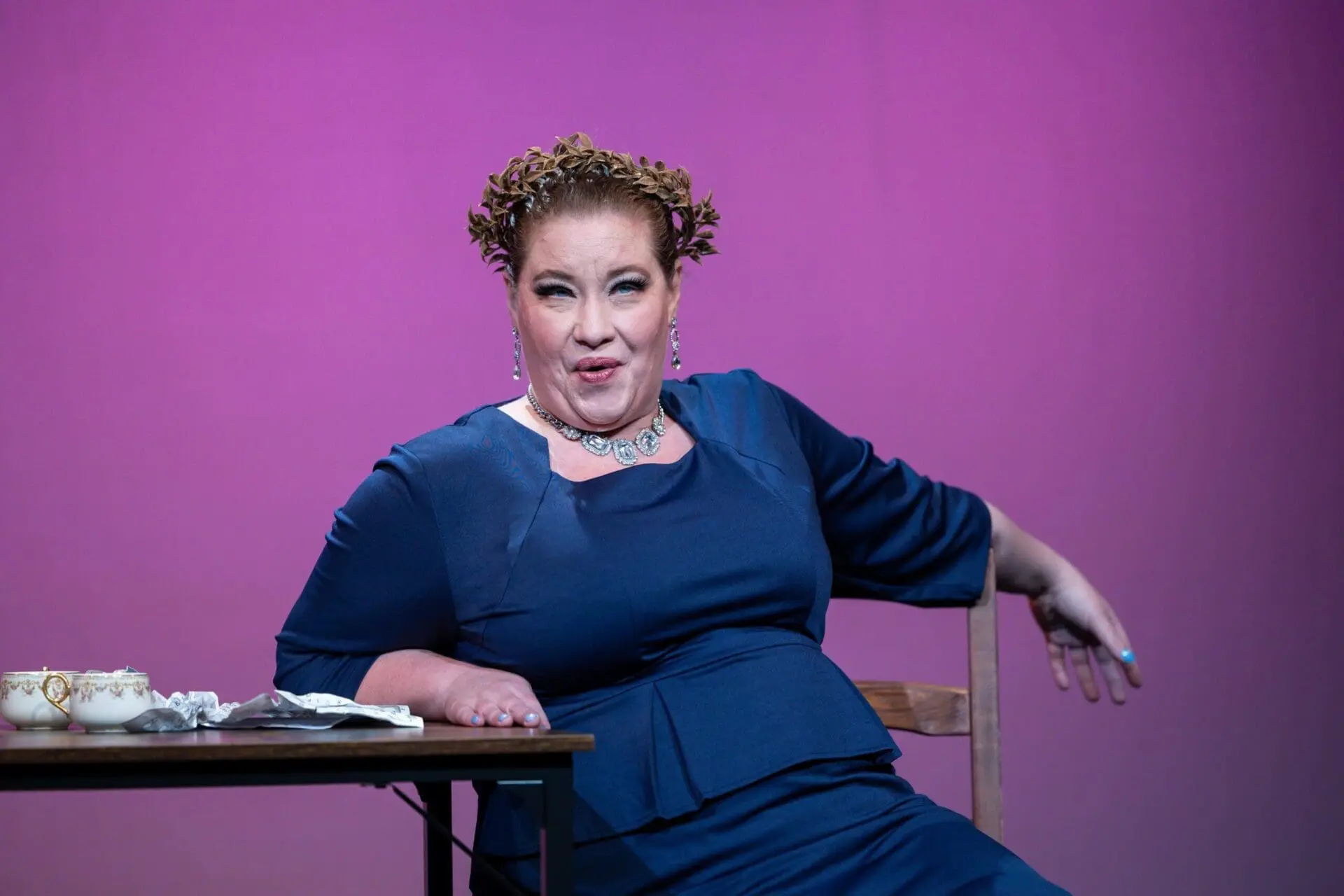
Photo Credit: Kinsey Winger Photography
Jennifer Carter’s Elettra was exhilharating
Opera Canada depends on the generous contributions of its supporters to bring readers outstanding, in-depth coverage of opera in Canada and beyond. Please consider subscribing or donating today.