It’s the 20th anniversary of Highlands Opera Studio (HOS), and Haliburton has been a veritable hub of operatic activity, hosting everything from concerts on the lake, to masterclasses in a church, to inspiring concerts in a theatre. On August 22nd, at the Northern Lights Pavilion, HOS showcased an operatic triple threat: a premiere and two Puccini works.
The evening began with a snippet of Ian Cusson’s upcoming Canadian Opera Company commission, Empire of Wild. Cusson himself gave a brief introduction, then he let his music speak for itself. There is no pretence in Cusson’s score and Cherie Dimaline’s libretto, just a burning desire to tell a meaningful tale clearly with beautiful music. It was a pleasure to hear the lush interpretation of Empire of Wild by HOS participants Elena Howard-Scott, Kcenia Koutorjevski and Maria Milenic. Their beautiful harmony no doubt heightened the anticipation for the work’s full premiere at the COC in May 2027.
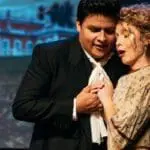
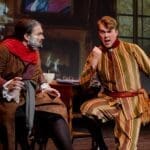
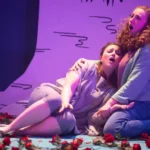
Next came excerpts from La bohème. Valerie Kuinka and Richard Margison chose the evening’s music, with Margison providing the elegant direction for Bohème. The first act scene featured Noé Moreno as Rodolfo and Ella Jeon as Mimì. Moreno has a powerful tenor voice, with commanding and rich middle tones, accompanied by a strong stage presence and genuine acting. No doubt Margison will assist him in developing his comfort zone with the higher “money notes.” Joen was a charming Mimì who sang with confidence and acted with sincerity. Her rich lower voice contrasted effectively with her strong upper register.
In the excerpt from the final act, Moreno’s voice mixed beautifully with that of Neil Hong as Marcello. Hong has a well-centred voice, and his stage presence is remarkable given his very young age. In fact, Hong is the exact age that Puccini envisioned for Marcello. This Bohème was a striking example of how HOS’s training school provides young singers with chances to showcase their artistic development with a live audience. Accompanist Simi Luttrell’s mastery of Puccini’s nuances made the Bohème excerpts musically cohesive and captivating.
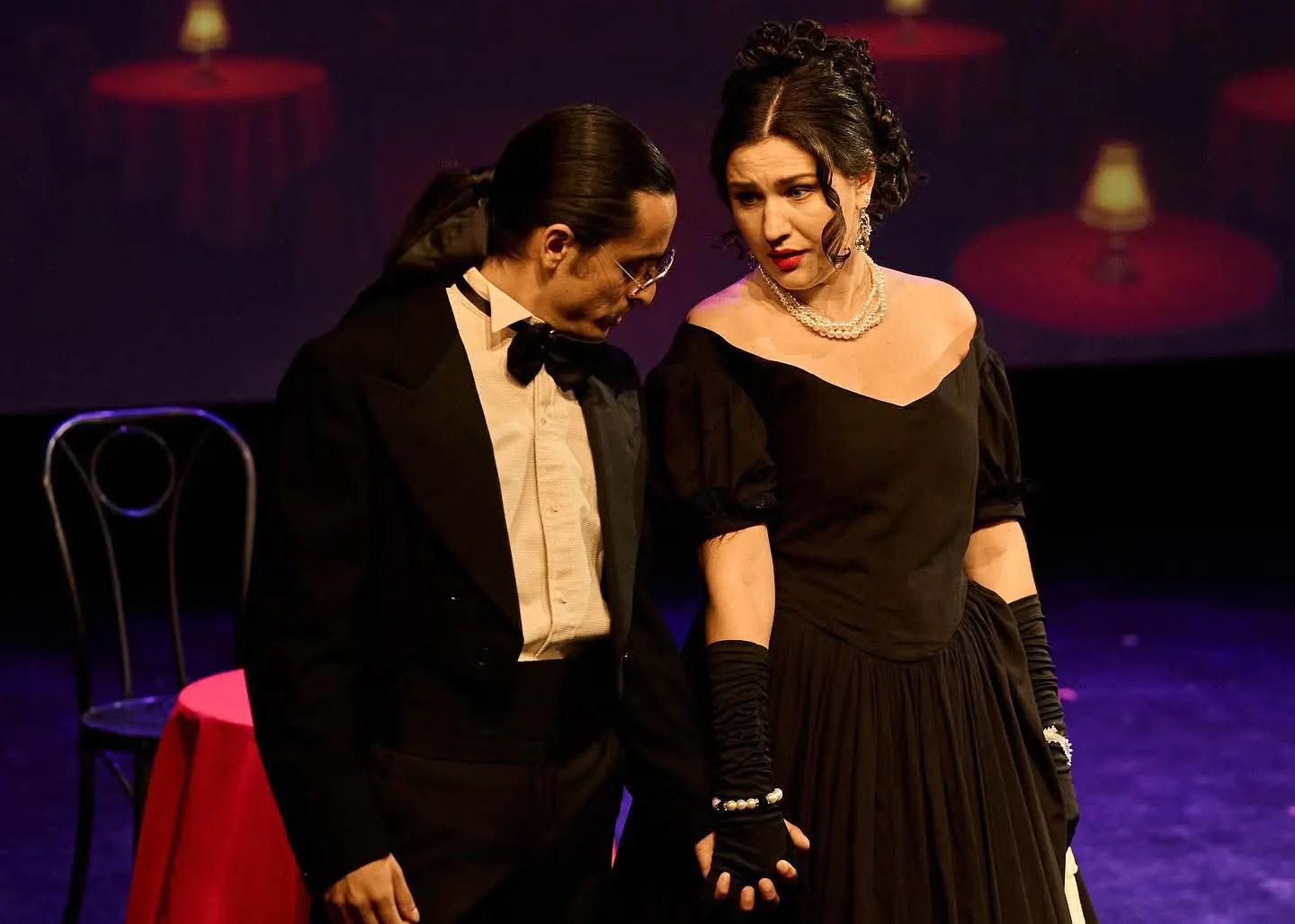
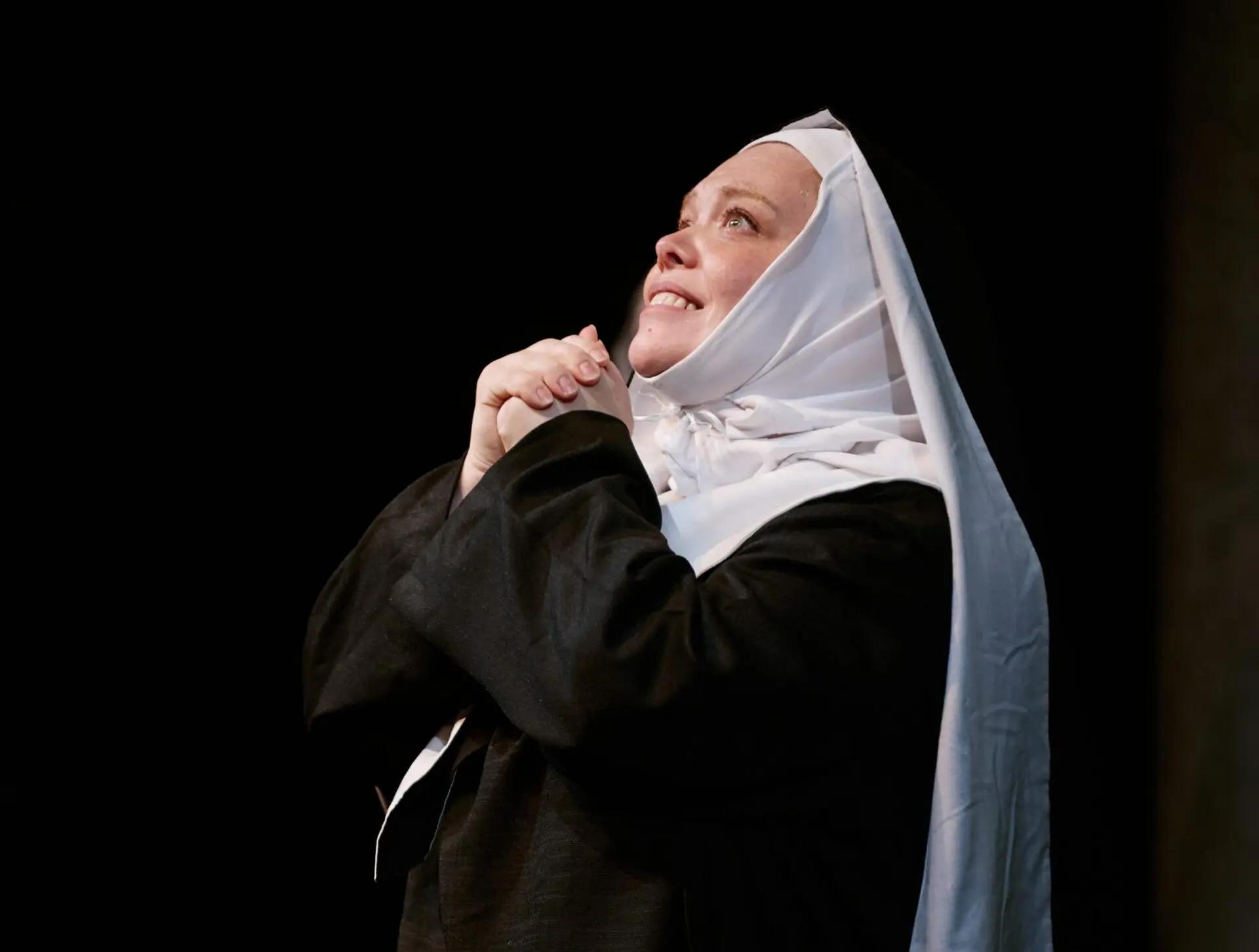
The pièce de résistance of the evening was Suor Angelica, with Lauren Margison in the title role. Margison is not only a gifted, expressive actor, but her voice was evocative of the saintly character. Her “Senza mamma” was beautifully crafted, expressing Angelica’s profound grief over the loss of her child; the emotional climax of the aria, "Quando potrò morire," was gut wrenchingly beautiful. Margison’s sustained pianissimos were exquisite, and her cries of anguish were equally impressive. Clearly, this is a role that Margison loves, and it shows in her unabashed emotional commitment to Puccini’s tragic heroine.
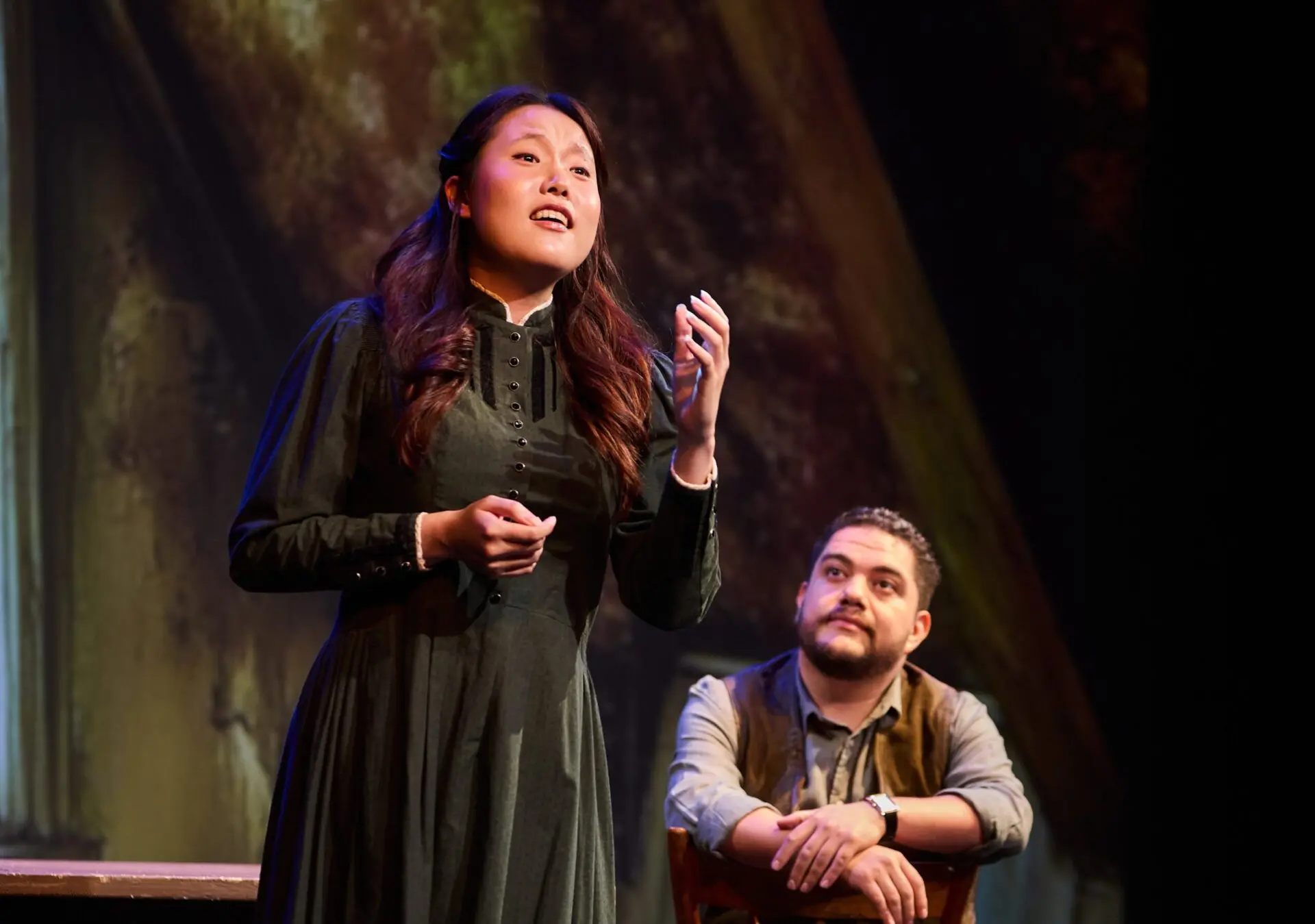
Photo Credit: Brenden Friesen
Ella Jeon and Noé Moreno in a first act excerpt from La bohème
Maria Milenic was magnificent as The Princess. Her chilling acting made her character’s confrontation with Margison a highlight of the opera, and her velvety mezzo voice gave her the air of a powerful aristocrat.
Kcenzia Koutorjevski was a vocally strong and powerfully acted Mother Superior, while Madeline Cooper was a well-voiced Sister Madeline. Jennifer McCredie (Sister Jennifer) and Christine Jonas-Scott (Sister Christine) and supernumerary Gwen Atkinson (Sister Gwen) are singers and actors enrolled in HOS’s Haliburton County Community School. These local actors and singers added to the tight harmony in chorus numbers while displaying some fine acting skills. Ella Jeon was strong in her roles as not one, but four nuns (Sister Osmina, Sister Ella, a novice and a nursing student), with Joen seamlessly pivoting between her characters. Elena Howard-Scott demonstrated fine acting and vocal versatility as Sister Genieve.
Director Kuinka allowed each nun to personalize their roles, something essential as their costumes anonymized their appearances. Kuinka made use of the entire theatre, creating some very effective acoustics with chorus placement in particular. This production of Suor Angelica had an emotional depth and realism that I have not seen in other productions, which was likely enhanced by the fact that Kuinka and her daughter, Margison, combined forces to portray one of the most tragic yet loving mother/child relationships in operatic repertoire.
Another star of Suor Angelica was technology. As Margison’s character succumbed to her poisonous potion, a technically brilliant and emotionally powerful video played depicting Margison as Angelica in a field, playing with and embracing her son, played by Olivier Newman. Other opera companies could learn from Brenden Friesen’s effective creation and integration of a sensitively rendered video clip. Throughout the evening, David Sweeney’s simple lighting design enhanced Friesen’s impactful background images. Music Director Suzy Smith’s understanding of Puccini’s stunning score was evident as her fingers caressed the piano in quieter scenes, only to forcefully accompany the louder passages. Her direction of the chorus was clear and concise.
Three operas. Three performances united by what makes Highlands Opera such a unique program. Co-Artistic Directors Kuinka and Margison embraced all levels of singing: seasoned artists, newly emerging voices and community school participants. What resulted was a stage triumph in triplicate
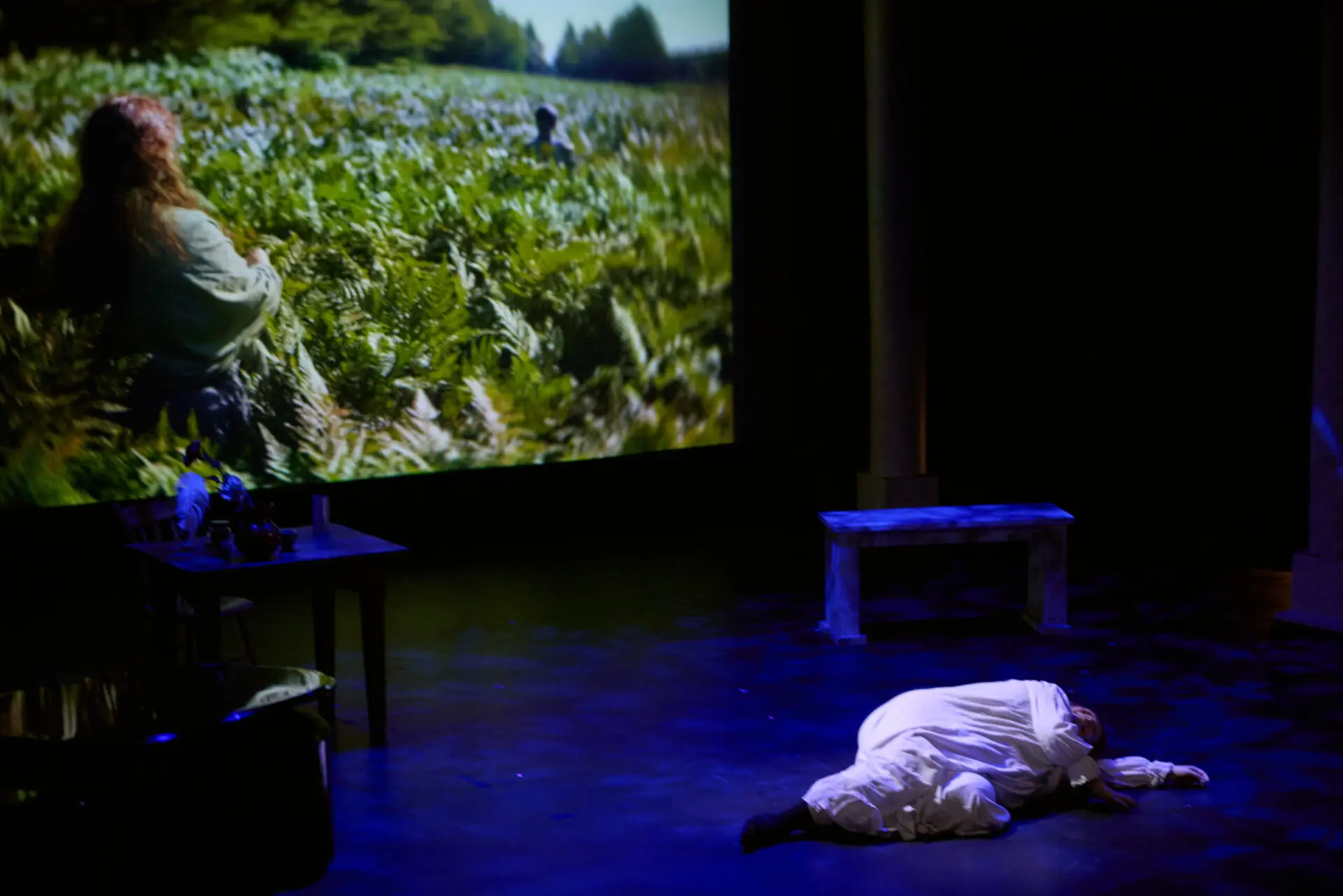
Photo Credit: Brenden Friesen
As Suor Angelica succumbed to poison, an emotionally powerful video played depicting a life with her son
Opera Canada depends on the generous contributions of its supporters to bring readers outstanding, in-depth coverage of opera in Canada and beyond. Please consider subscribing or donating today.