Manitoba Opera’s latest production of Puccini’s beloved tragedy Tosca held nothing back, as the company launched its 2025/26 season with the thriller – as volatile as a keg of gunpowder thanks to a crackerjack cast of exceptionally fine principals.
All but one of its leads have graced this stage numerous times before. The sole exception to that illustrious coterie is Italian-American soprano Marina Costa-Jackson, who marked her auspicious Canadian debut with her sophomore portrayal of the title role. Her passionate performance of the doomed heroine enthralled throughout, while also recalling her sister (mezzo-soprano Ginger Costa-Jackson), whose equally fiery appearance led the MO’s 2023 Carmen.
Set in Rome following the French Revolution in 1800, the three-act opera’s whipsaw narrative follows prima donna Floria Tosca and her lover, the artist Mario Cavaradossi (tenor David Pomeroy). Enter Baron Scarpia (baritone Gregory Dahl), a diabolical police chief on a manhunt for Cavaradossi’s friend, an escaped political prisoner. He quickly sets his crosshairs on Tosca, and he vows to have her for his own lecherous appetites.
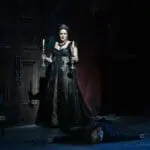
From her very first offstage “Mario! Mario! Mario!” we knew we were in for a treat as Costa-Jackson embarked on her emotional trajectory from jealous diva to flesh-and-blood heroine willing to risk it all for love. The singer’s impeccable vocals, including pitch-perfect intonation in her uppermost notes and a full, throaty chest voice (albeit at times her lowest register became subsumed by the orchestra), were matched by flawless acting skills.
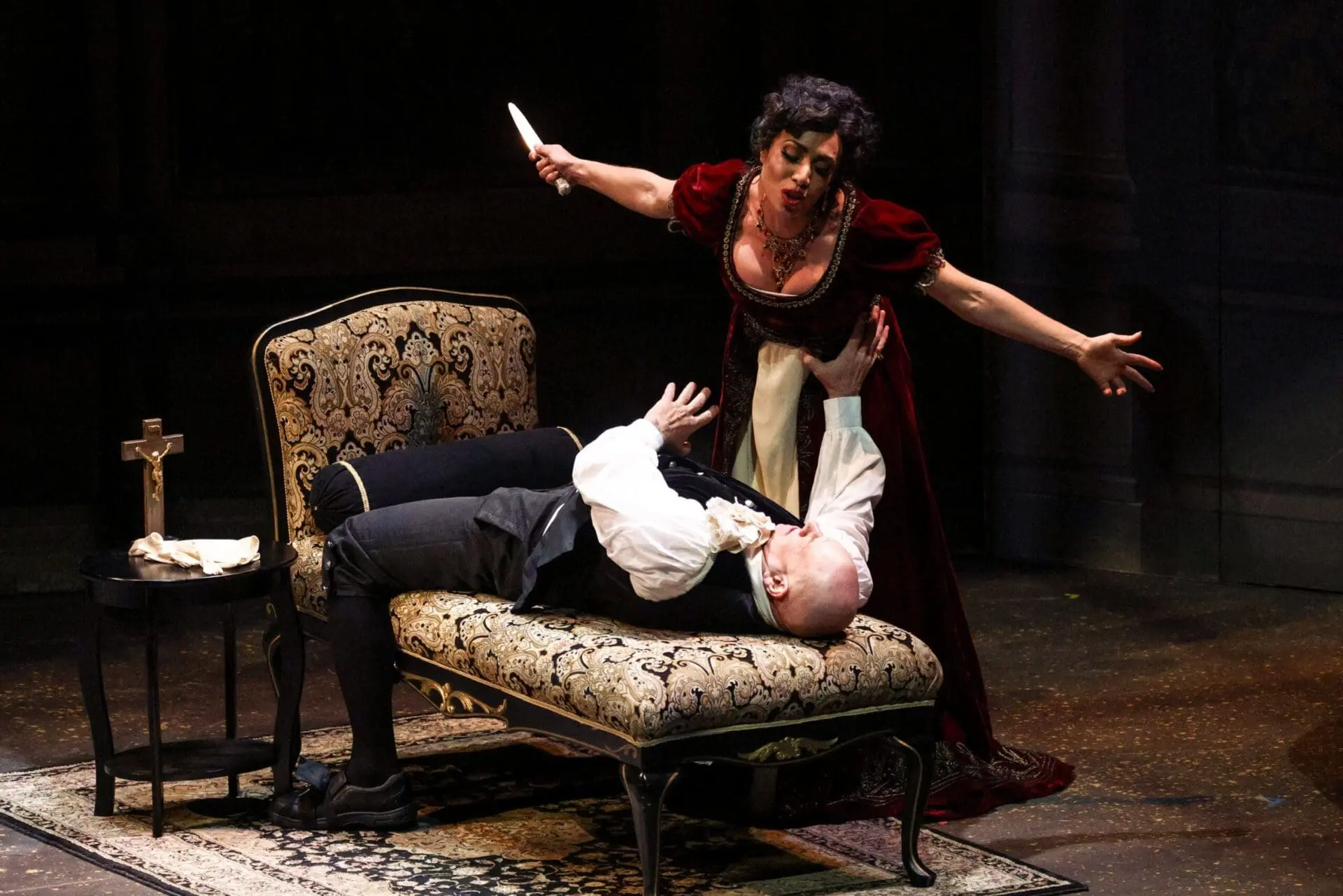
She proved particularly strong during Act Two’s interrogation scene, in which Scarpia cruelly bullies her into submission; her rising desperation palpable until she takes matters into her own hands – literally – as she repeatedly stabs her tormentor in the heart. The evening’s still point, naturally, became Costa-Jackson’s searing “Vissi d’arte.” Every shimmering, deeply felt note revealed her ill-fated character’s innermost soul, eliciting open sobs in the audience and well earning its mid-show applause and cries of “Brava.”
Kudos to stage director Anna Theodosakis for not sugar-coating or over-stylizing Scarpia’s violent (near) rape of Tosca. Both singers’ ironclad commitment to their roles showing us the full depths of Scarpia’s depravity, which is integral to the plot albeit difficult to watch.
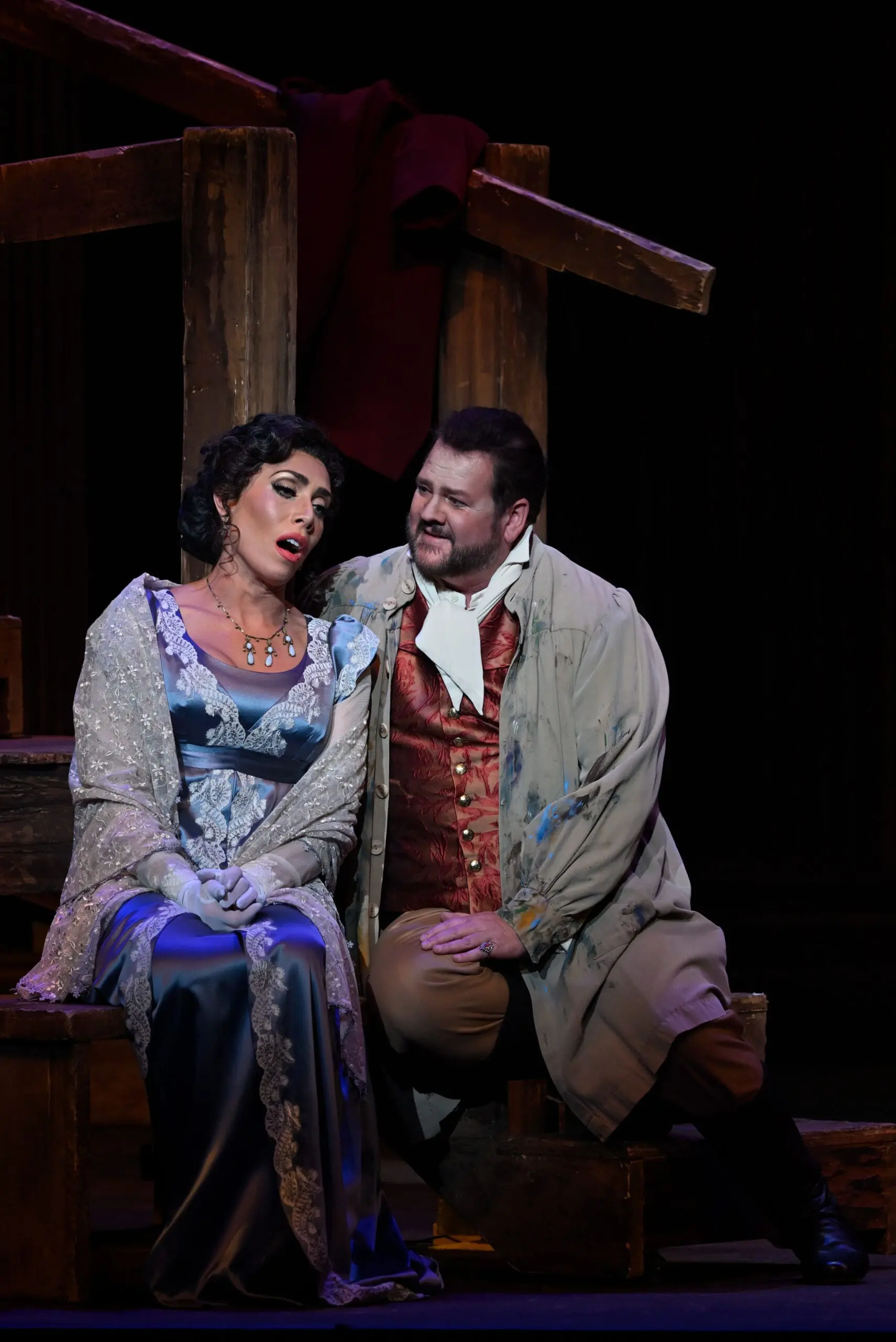
Photo Credit: R. Tinker
The first act love duet, with Marina Costa-Jackson as Tosca and David Pomeroy as Cavaradossi
Pomeroy painted his own heroic character with dramatic flair, with his resonant tenor and ringing high notes soaring throughout the entire hall during his opening “Recondita armonia.” Every clearly enunciated syllable propelled his sweeping lyrical phrases, and his triumphant “Vittoria! Vittoria!” (including nailing his treacherous high A-sharps) elicited goose bumps. He also wrung every ounce of emotion from his own big aria, “E lucevan le stelle,” which built to a grief-soaked “Never have I loved life so much!” that had listeners gasping for breath.
The Winnipeg-born Dahl chilled to the bone with every appearance as the villainous Scarpia, including booming through Act Two’s “Ha più forte sapore,” and “Già, mi dicon venal.” His compelling acting was fascinating as a study in character motivation – trying everything under the sun to get his prey to break under his evil ways – that added further dimension to his character.
Despite these stellar performances, the stage direction itself felt uneven at times. Act One suffered from relatively static blocking, with many arias delivered from centre stage à la opera’s proverbial “park ‘n’ bark.” Various townspeople, suddenly floating into the church to pray, helped add visual texture but felt a superfluous distraction. The third act fared better despite the sentries’ prolonged marching at the top of the act that made one fear they would be on watch until the final bows. Act Two offered the tightest, strongest and most compelling scenes of the night, with its dramatic tension rising to fever pitch.
The oldest “star” of the production was its hand-painted canvas “soft sets,” built in the 1950s in Milan and on loan from Seattle Opera. Notably the last example of trompe l’oeil sets still being used today in North America, it recreated the opera’s three locales in glorious, 3D effect. Sumptuous period costumes designed by Andrew Marley for New York City Opera were rounded out with additional designs by Heidi Zamora for Seattle Opera. Local lighting designer Larry Isacoff created effectives shadows and light throughout, including spotlighting Tosca during “Vissi d’arte.”
Bravo to guest conductor Tyrone Paterson for artfully leading the Winnipeg Symphony Orchestra through Puccini’s lushly romantic score. The maestro, who served more than 20 years as MO’s music advisor and principal conductor, officially retired at the end of last season, and he now hangs up his baton after leading his stated all-time favourite opera.
The Manitoba Opera Chorus (prepared by Tadeusz Biernacki) and Children’s Chorus (Carolyn Boyes) infused the stage with energy during the first act “Te Deum.” The juxtaposition of pious priests, monks, nuns and youthful choirboys against the black-hearted Scarpia created a striking counterpoint encapsulating Tosca’s entire ethos.
As expected, the performers received a rousing standing ovation, including thunderous boos for Scarpia, with a now grinning Dahl blowing kisses back and giving thumbs up. This outpouring of emotion offered a cathartic relief to nearly three hours of unrelenting drama, with its immortal battle of evil versus the enduring power of love still so resonant today.
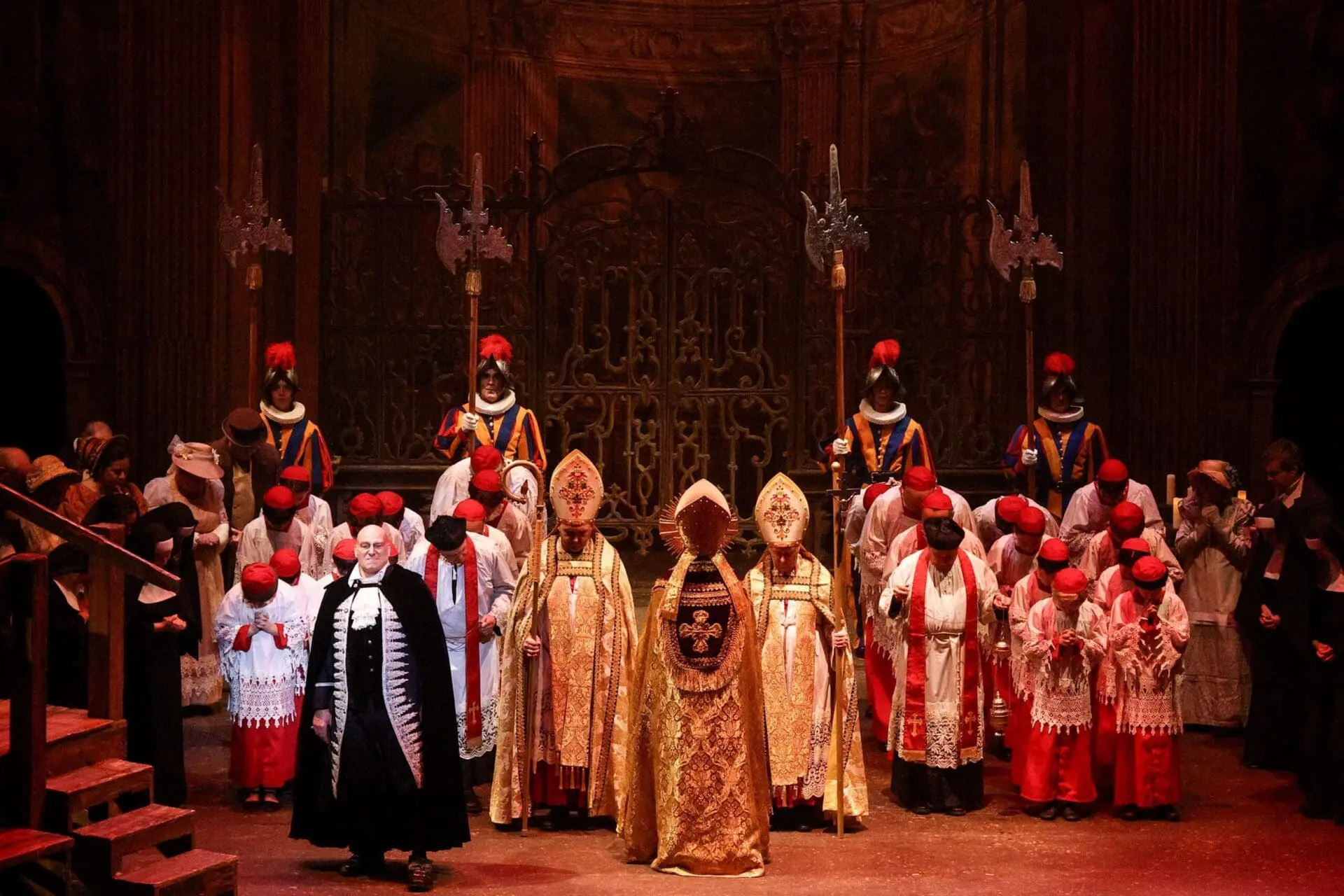
Photo Credit: L. Norman
Scorpia (Gregory Dahl) with the company in front of the beautiful trompe l’oeil sets, built in Milan in the 1950s
Opera Canada depends on the generous contributions of its supporters to bring readers outstanding, in-depth coverage of opera in Canada and beyond. Please consider subscribing or donating today.