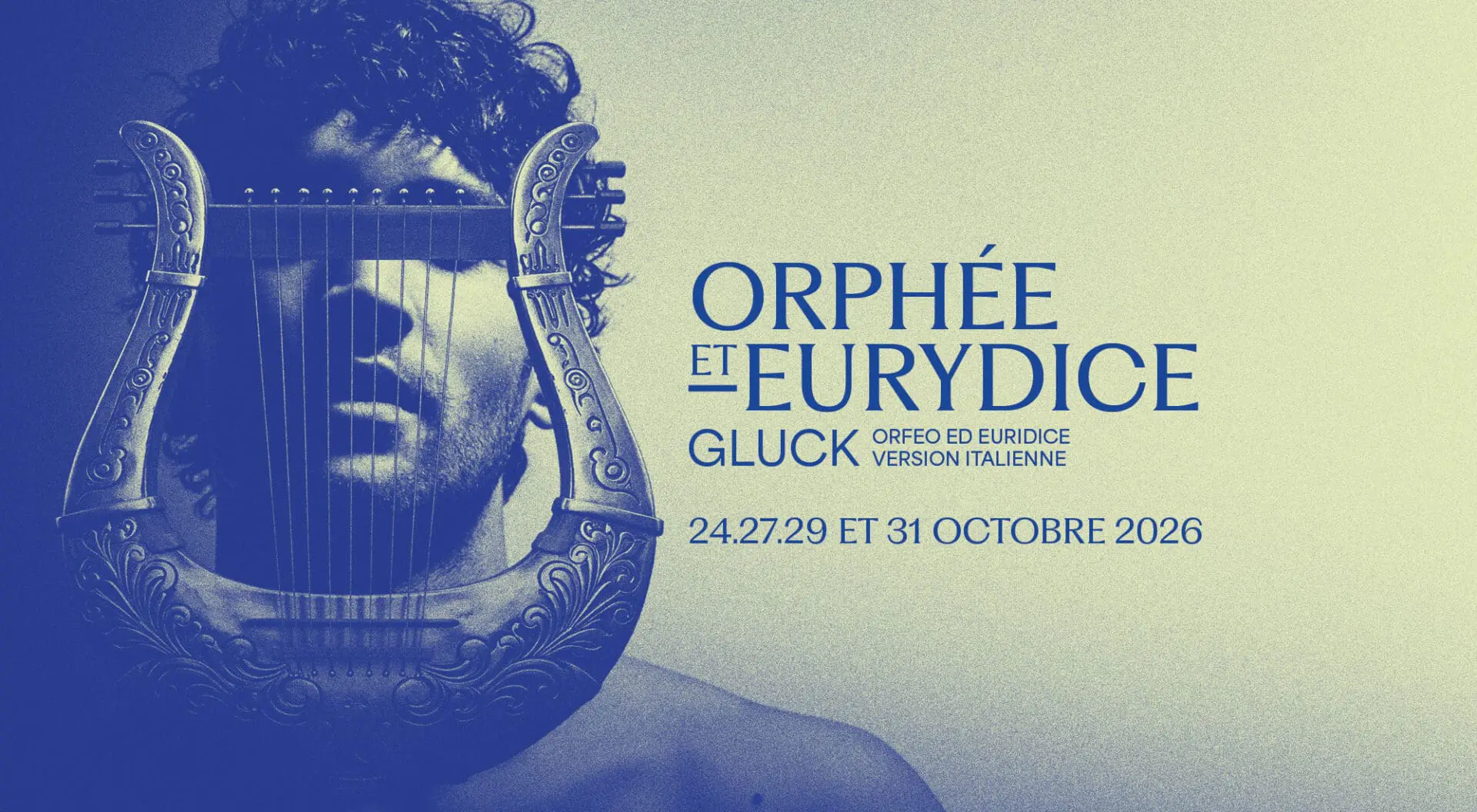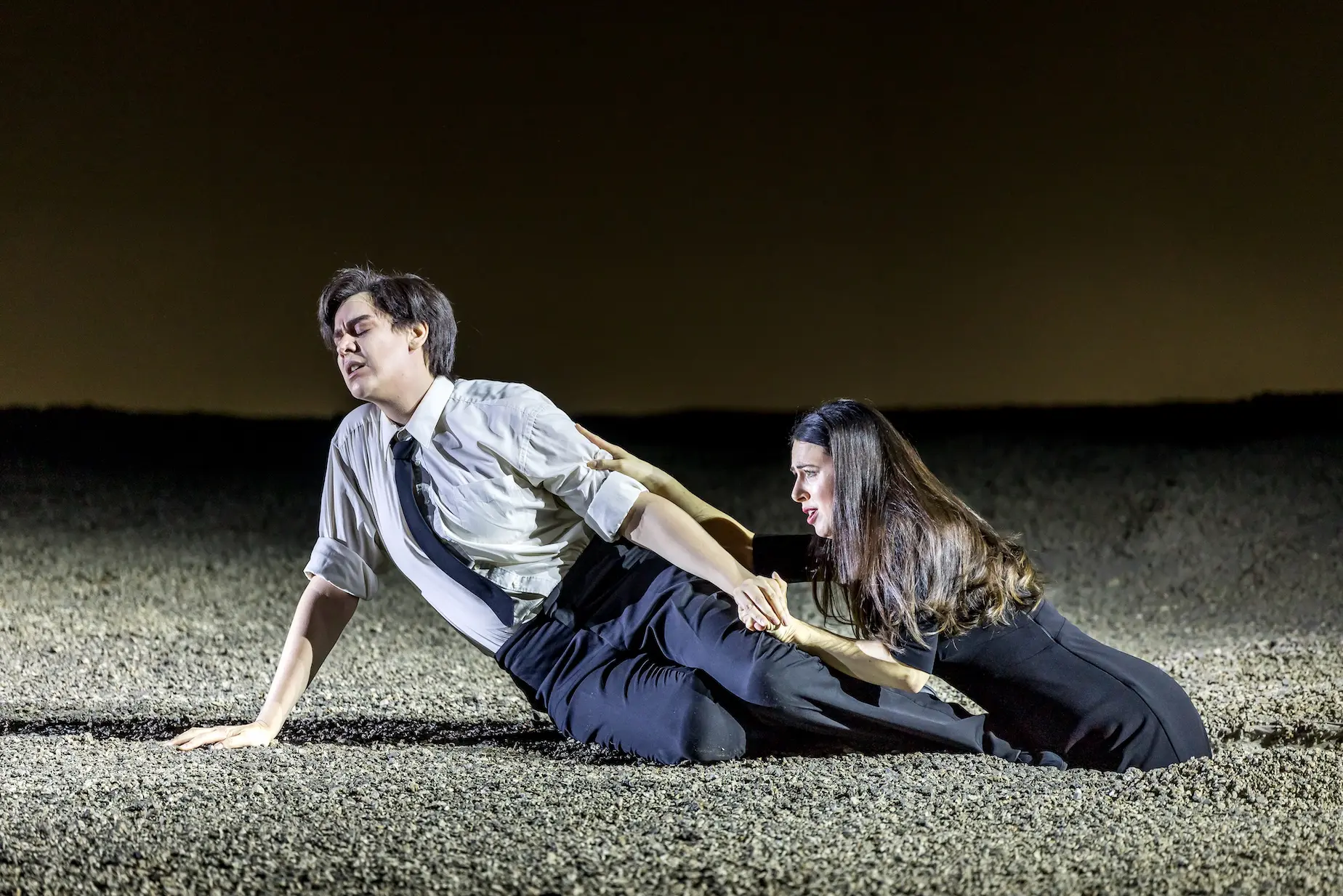
Quebec City audiences have been particularly spoiled by the choices of the Opéra de Québec's new artistic director, Jean-Marie Zeitouni. After Olivier Py's remarkable Dialogues des Carmélites, this fall the Opéra de Québec presented Gluck's Orfeo ed Euridice (in Italian) in Robert Carsen’s famous staging, recreated here by Christophe Gayral.
Created in 2011 in Chicago, this production, which has been a great success wherever it is presented, transposes the mythological legend into a contemporary Greece, without however denying the fantastic character of Orfeo’s descent into the Underworld and the providential intervention of Amore.
Since I didn't have the chance to see this Orfeo ed Euridice in Toronto, I was looking forward to it with impatience and curiosity. Here, I felt like I was rediscovering Gluck. Stripped of all superfluity, this production in black and white and without ballets takes on a new dimension and gives prominence to the beauty of the score and to the love story of Orfeo and Euridice. A sober set on an inclined plane, transformed by subtle lighting, evokes in turn the world of the living, the Underworld and the Champs Élysées. The funeral procession in the first act reminded me of a funeral I had witnessed in a small Greek village. Wrapped in shrouds, Euridice and the infernal spirits of the second act make us reflect on the fragility of the human condition.
Presented without intermission, Gluck's Orfeo ed Euridice lasts less than an hour and a half. It is carried by five characters: the chorus, Orfeo, Euridice, Amore and... the orchestra. The chorus takes up the place it had in ancient Greek tragedy: that of accompanying and commenting on the protagonists. It is the chorus we hear first, when the curtain rises, during the funeral procession. In the second act, the chorus becomes the Furies made peaceful by Orfeo’s singing, and it has the last word during the happy denouement of the opera. Solidly prepared by Catherine-Élisabeth Loiselle, faced with staging challenges and sketching a few sirtaki steps in the final scene, the Opéra de Québec chorus proved their great professionalism.
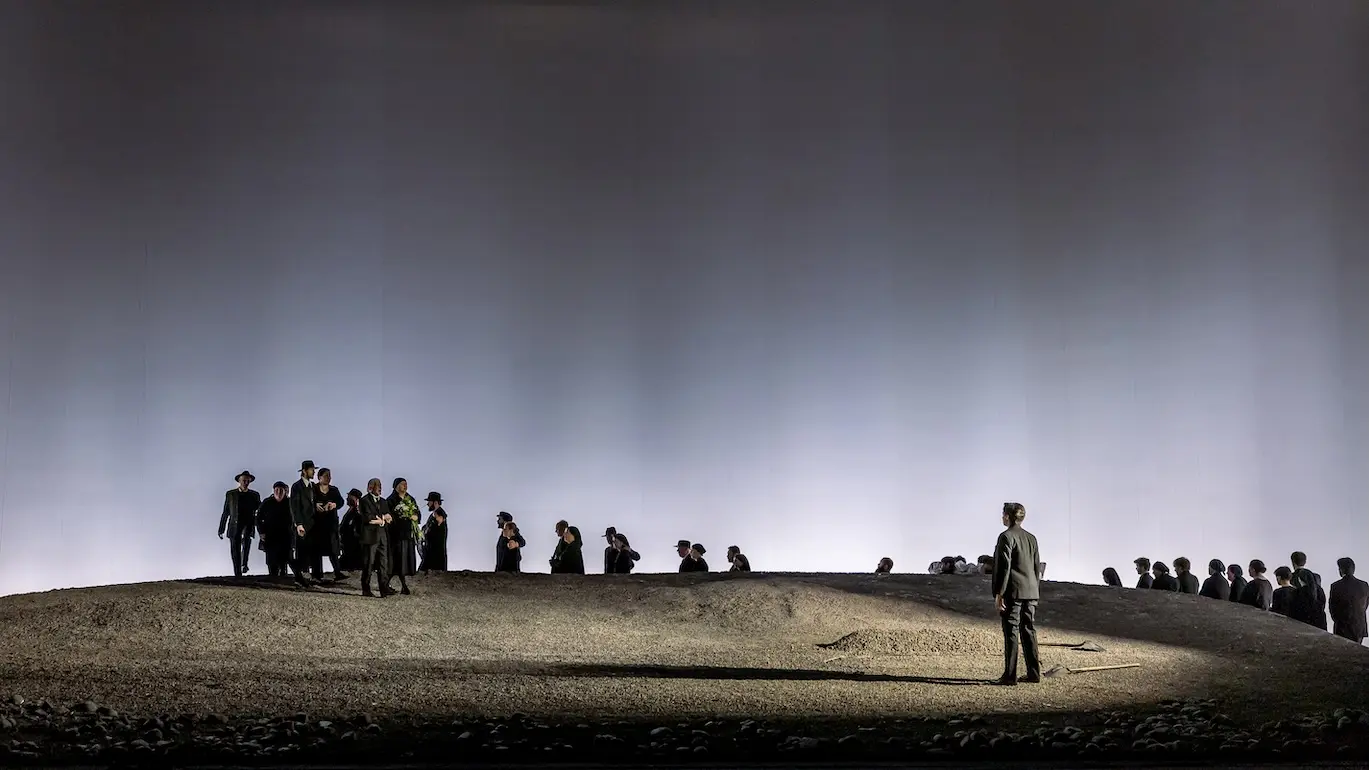
Photo Credit: Jessica Latouche
The OdQ chorus arrives for Euridice’s funeral procession, with Orfeo in the lower right near the grave
The cast includes three young singers from Quebec who are on the rise. The magnificent contralto Rose Naggar-Tremblay, who I appreciated at the 2024 Opéra de Québec Festival in Epitaph for Carmen, was more than a match for the countertenors who have sung Orfeo in recent revivals of this production. Her voice is ample, generous, supple and perfect in all registers. Her desperate Orfeo and her moving “Che farò senza Euridice” captivated the audience, who were unable to take their eyes off her.
In her third act recitatives and her duets with Orpheus, soprano Anna-Sophie Neher, who was part of the most recent Toronto cast of this production, portrays Euridice with passion and sensitivity, highlighting her suffering and incomprehension in the face of her husband's pseudo-indifference. Soprano Natasha Henry, whom I heard last July in Ma belle opérette (Festival d'opéra de Québec), played the character of Amore. Her clear and airy voice, combined with a dynamic stage presence, made her a true ray of sunshine at the heart of this tragedy.
The "fifth character" of the opera is undoubtedly the Orchestre symphonique de Québec, conducted by Bernard Labadie, who was artistic director of the OdQ between 1994 and 2003. With the rigour and precision for which he is known, and sticking to the original Italian version as opposed to the Parisian version of 1774 which includes several additions, Labadie admirably supported the singers while bringing out the beauties of this innovative score, which foreshadows Mozart's great operas.
This high-calibre production shows the importance of Opéra de Québec daring to think outside the box and allowing our young artists to perform in world-class stagings.
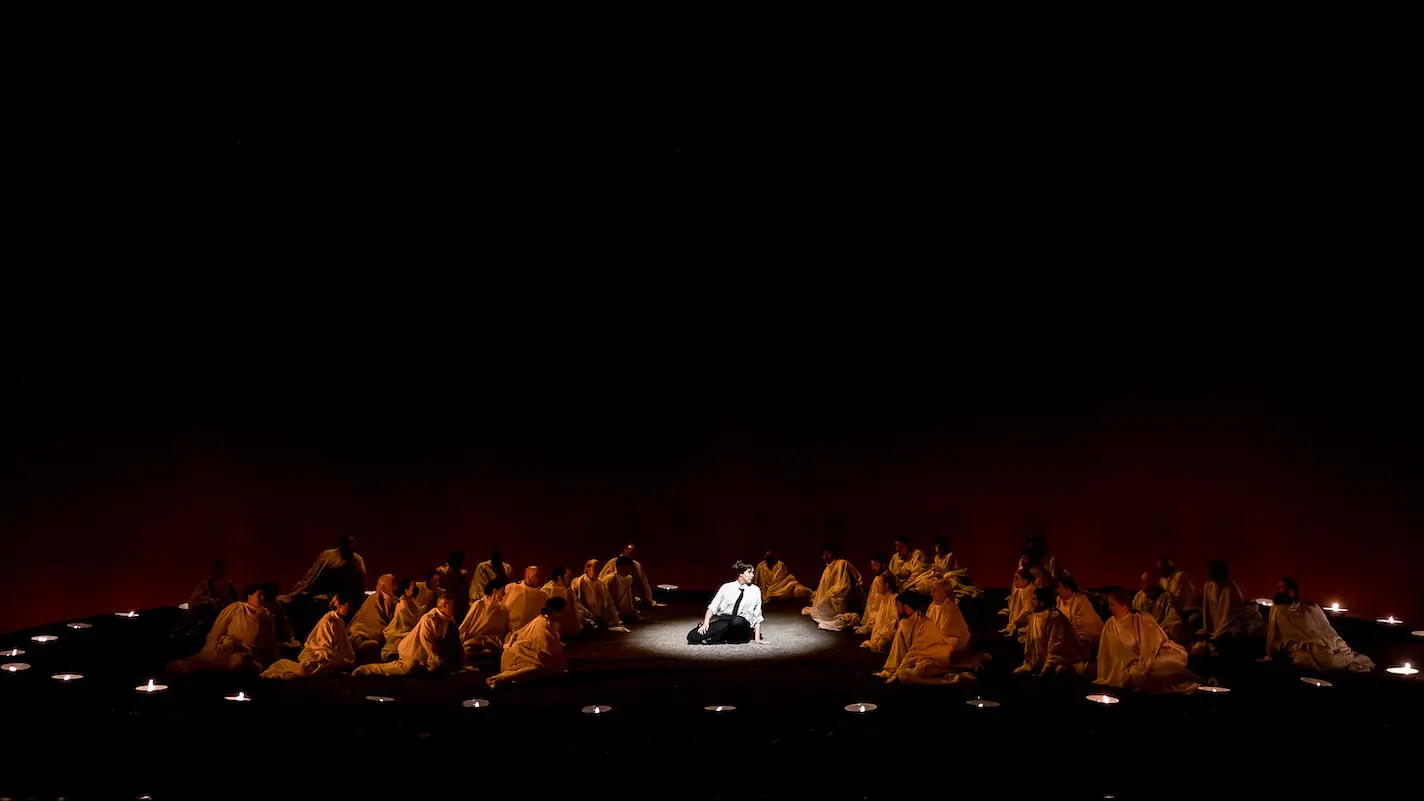
Photo Credit: Jessica Latouche
Orfeo (Rose Naggar-Tremblay) surrounded by the Furies in the second act
Opera Canada depends on the generous contributions of its supporters to bring readers outstanding, in-depth coverage of opera in Canada and beyond. Please consider subscribing or donating today.