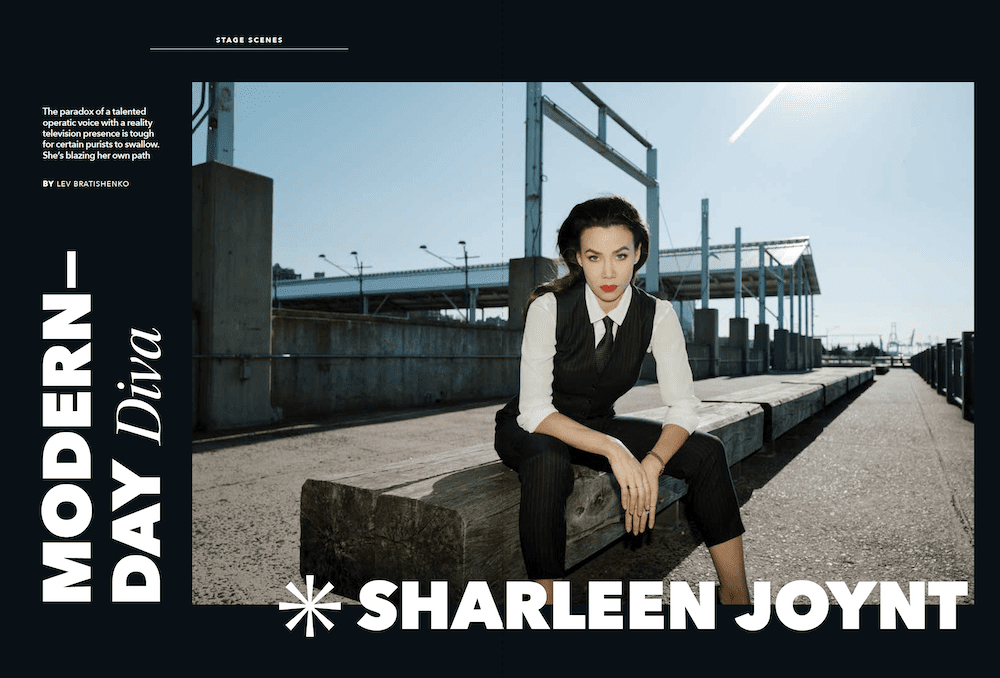
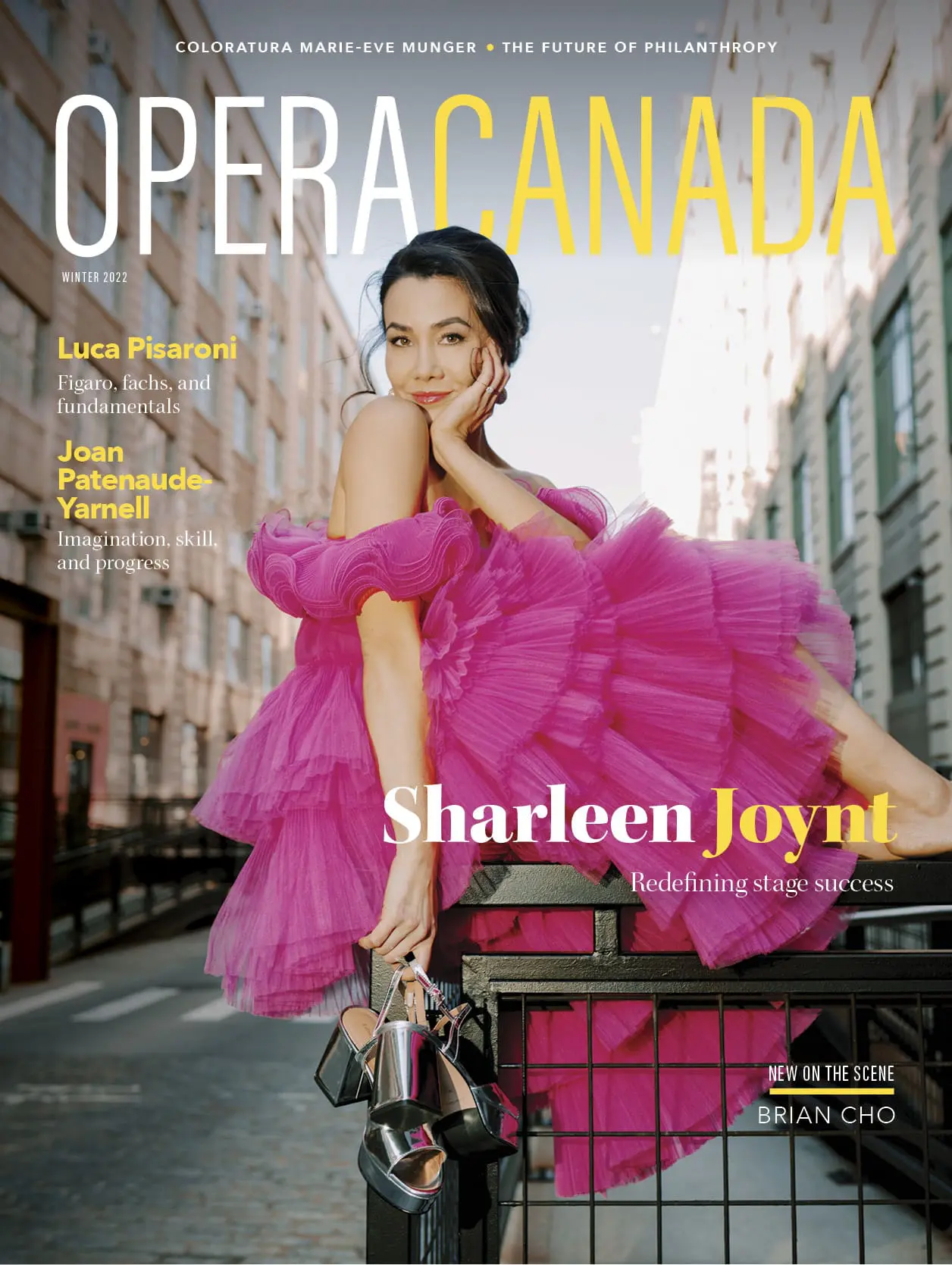
The paradox of a talented operatic voice with a reality television presence is tough for certain purists to swallow. She’s blazing her own path.
It’s been over seven years since Joynt was on season 18 of The Bachelor (a popular American dating and relationship reality television series) where her presence caused two sets of stereotypes to collide. Bachelor viewers and media praised her for bringing “sophistication” to the show—that’s opera reduced to its affiliation with wealth, like the way movie villains are always interrupted while listening to an aria—while the opera world didn’t know what to do with her. She was getting famous for the wrong thing, dabbling in the low arts, and demonstrating that musical artists could have other lives by choice. And that’s opera, and the performing arts in general, perpetuating the exclusionary myth that great artists are fundamentally all the same.
[popup_trigger id=”26633″ tag=”button” classes=”signupbutton” do_default]CONTINUE READING FOR FREE WITH REGISTRATION[/popup_trigger]
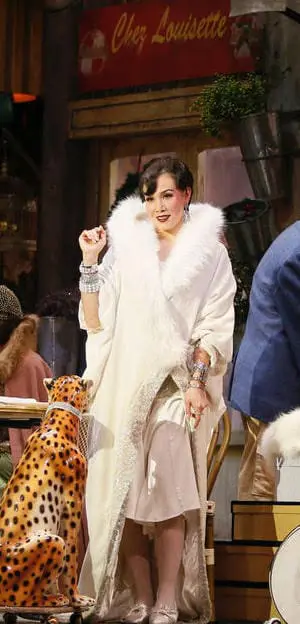
As Musetta in Renaud Doucet’s 1920s inspired La bohème at Vancouver Opera, 2019 Ⓒ Tim Matheson
“I was not taken seriously for a while,” she says about her career since, over the phone from New York. She’d been working in Germany for several years before the show and she didn’t even have an agent in North America at the time. Now she’s regularly singing here today. Recently she completed a run as Gilda in Rigoletto at Opera Colorado, she’s starring in the upcoming Joel Ivany-directed Orphée+ at Edmonton Opera, and she’s had recurring roles as Zerbinetta in Ariadne auf Naxos and Cunegonde in Candide (Ravinia, Tanglewood, Orlando, Anchorage, Opéra de Lyon), and plenty of new opera including a well-received turn as Controller in Jonathan Dove’s Flight for Seattle Opera, and Winnie in Lembit Beecher’s Sky on Swings for Opera Philadelphia.
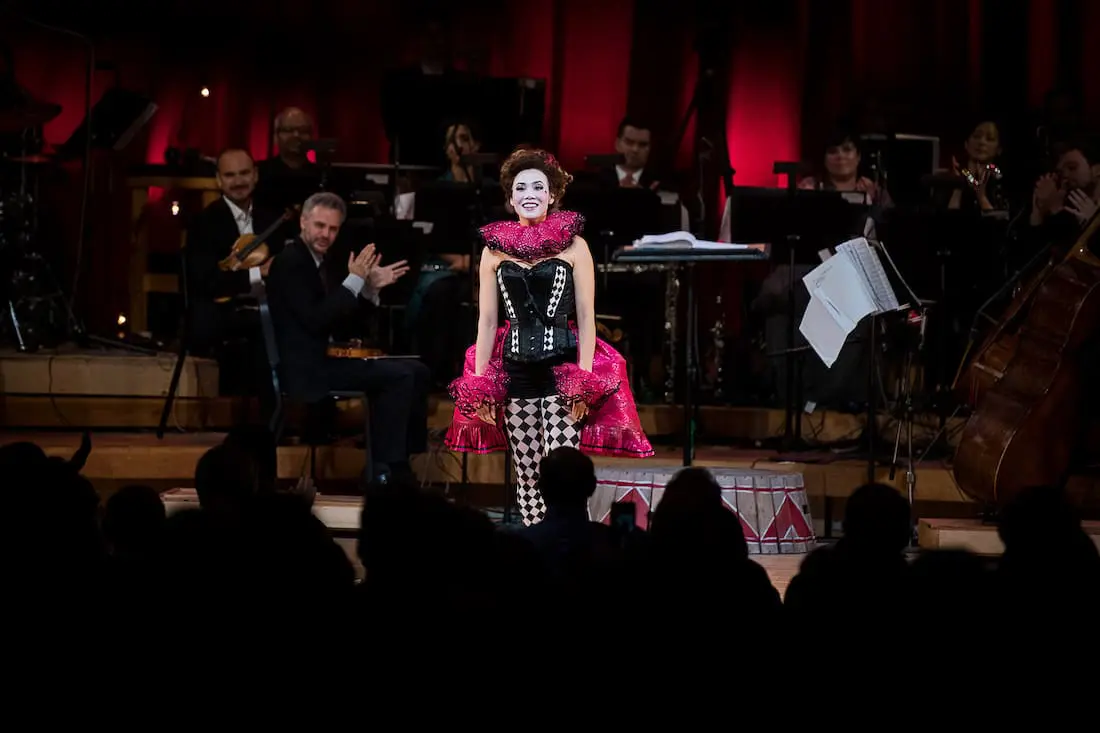
Sharleen Joynt as Cunegunde taking a bow after a performance of Bernstein‘s Candide at Tanglewood‘s Seiji Ozawa Hall
Ⓒ Christopher Duggan
What changed? An important factor in the transition was getting legitimizing performance opportunities. “You don’t get to sing at Tanglewood because you were on The Bachelor.” But why does appearing on a TV show hurt a young artist’s image in the first place? Is opera’s status as a ‘high art’ so fragile that it’s threatened by a dating show? Why should doing anything other than opera imply that a performer isn’t good enough or serious enough?
Put it another way: what would a singer need to be—how wonderful, how apocalyptically talented—in order to pass unharmed through the walls around opera and, I don’t know, host a deep fat frying cooking show or sell jeggings on youtube and not have it hurt their singing career?
The pandemic was a catastrophe for live performance and it forced many arts workers, not just singers, to do other things professionally. Joynt feels like there’s been a change. “It’s less frowned upon…” after “all these artists went ‘uh-oh, what am I going to do?’” during the pandemic. Forced to think outside the box, it becomes harder to judge those who were already out there. But it’s too soon to tell if this represents a real shift in the stories the opera world tells about itself—the qualities we associate with successful or serious artists—or if it’s just a temporary sidestep. The hustle has always been there; all those unmusical side jobs, the ways that many performers make a living, which usually start in school, but which, for many, continue between professional contracts—the flow of good gigs is fickle and easily disrupted, by pregnancy, for instance. And opera is hardly unusual in sweeping these and other practicalities under the rug. The arts all share a kind of willful ignorance about the money that makes it possible to focus on art, and where it comes from.
For example, almost all the professional musicians and singers I know do some private teaching to supplement their incomes, but only one of them describes themselves in public as a teacher as well as a performer. Why this reticence? They’re not ashamed, most of them love teaching but they want to protect themselves from questions about their dedication to performance. And that’s for related and relevant work. What if they worked as, no please no, a journalist? A garbageman? A masseuse? It’s often the unspoken rules that are the most important ways in which a community or culture defines itself, and these are some of the first things that we learn from observing our peers and teachers. Joynt recalls an early teacher telling a class, “if you can picture yourself doing literally anything else, do that instead.” Young human, we regret to inform you that you have been betrayed by your imagination. What a tragic test.
Let’s call it the bonfire of meritocracy. This is the deal: you put everything in your life that’s not opera into the fire and in exchange mysterious but don’t worry, totally impartial forces will recognize and reward you. This fantasy is especially problematic in the performing arts because it is based on a little truth, which is that you must have the technical ability to perform. “You either fill the hall or you don’t,” as Joynt says. But we all know and she’s quick to point out that this is only one ingredient in a career. There are the private lessons which continue forever, and the time to dedicate to them, not working jobs to support your family, for example; the festivals and camps where networking seeds are planted; schools, several degrees worth; young artists programs, of which a surprising number pay almost nothing; pro sessions for better audition recordings; constant travel; and of course all those contacts and the advice and introductions they can make, which isn’t possible to buy outright, but which naturally waters the fortunate few.
Which is to say, the fact that no amount of money will make you a great opera singer is also a fantasy in reverse. The fantasy that raw talent and tireless determination are enough; that great artists must be pure, that they are recognized and rewarded for the sacrifices they’ve made, and that these rewards include a good living.
The reality is that luck and hustle are crucial, but unfortunately this makes for awkward marketing copy. So we tell ourselves a reassuring and simpler story, as if the performers and musicians we hear, and even the composers and the classics we all know, are just the inevitable results of a perfect historical process of artistic selection—instead of a messy and political one. Art is supposed to be above all that.
And, not to put too much on her shoulders, but I think this fantasy was the bubble that Sharleen Joynt accidentally popped when she applied to that TV show on a lark. She’s hardly the first singer to show that there is interesting life outside opera, but she may be the highest profile person doing that today and still performing. This is crucial. Even if we accepted as normal that singers have to do other things because they don’t all come from money, or that having children doesn’t have anything to do with how serious an artist someone is, those are still dry and shrivelled up ideas compared to encouraging singers to pursue other interests because it can make them better people, and better artists.
A clip of Joynt performing the role of The Controller in Seattle Opera’s Flight, 2021.
At the simplest level, podcasting, sponsored Instagram content, and hosting Bachelor in Paradise Canada helps Joynt to afford things like private lessons and to continue to improve her voice, but it’s more complicated and more interesting than that. Keeping up her Dear Shandy podcast, which is on Youtube and made with her husband Andy Levine, demanded she bring an extra suitcase of audio/video equipment (and Andy!) to Germany while she was performing there. The balance of projects requires new skills to maintain. Joynt talks about learning to be more organized in order to manage all her different projects, and sometimes even missing the free time that came with full-time singing. In the end, she says it’s worth it and has even changed what she brings to her performances. “I enjoy singing more since it’s not all I do.”
“I don’t know if I can even call it on-the-side anymore… I have so much less free time than when I just sang but I feel more fulfilled.” You might imagine that a singer with plenty going on elsewhere can pick and choose more of her parts, avoid long separations from home and family, or refuse problematic working conditions, but for Joynt “it’s not just the freedom to say ‘no.’ It’s having more than one life.”
This is key. We don’t need to agree that any specific combination of careers is best, or that there’s anything bad or wrong about the lucky and talented few who find success on the traditional and mythologized path, or that the projects Joynt pursues alongside her singing are important, or even that pursuing a more complex life would be a good idea for every young singer, to see how a wider acceptance of singers-who-are-not-only-singers would be wonderful for opera.
The greatest barrier to diversity in opera is the fantasy of total artistic dedication. It deals real punishment out to students and young singers who can’t or won’t play along with it, stifling their careers and dismissing their real world constraints and complexities as a lack of commitment. If only it were so simple. And the most common disruptor of women’s careers in opera (and everywhere else) is having children, which is so often made to feel like an either / or when it should be an and. Can you imagine how many wonderful singers we don’t hear because of it? What is Joynt’s advice for young singers? “You still need to treat opera as number one.” But don’t be afraid of your other interests, particularly if they can earn money flexibly, and if they expand you rather than narrow you down. “Find something you can do remotely, some-thing that’s mobile. You’ll have to be able to bring that other thing around with you.” Her story is also a lesson in being strategic about when you show your other sides and when you don’t, and to whom. In the early years after the show came out, she “didn’t talk about Bachelor stuff on singing contracts, and didn’t talk about singing on Instagram,” where her following is much broader than opera. Over time, she’s started blending the two worlds a little more. But she’s not losing sight of the limitations; social media is visual and superficial. “I could post a video of me singing a difficult aria but sadly nothing will get more likes than a selfie where I look pretty” And it doesn’t matter how many followers you have, you’ll still have to audition. The bonfire of meritocracy still glows.
You could take Joynt’s story as a study of opera in the age of social media, but its wider implications are more exciting. If our image of the ideal singer was less constrained, there would be more space to welcome difference and we would hear more great singers. More artists living expansive lives would tell more stories and project more emotional colours on our stages, and welcome more kinds of people into the audience. The future of opera looks more like Sharleen Joynt than the past. Let’s embrace it.
*this text was originally published in the winter 2022/23 print version of Opera Canada magazine