On Saturday, October 3rd, Southern Ontario Lyric Opera presented Gioachino Rossini’s The Barber of Seville at The Burlington Performing Arts Centre.
Rossini was a witty man, and countless books are filled with his humorous quotes and hilarious anecdotes. His joie de vivre morphed into music filled with unstoppable rhythms, sudden musical surprises, comic vocal acrobatics and famous crescendos. Maestro Sabatino Vacca and his 33-piece orchestra revelled in the challenges of Rossini’s score. I have never heard SOLO’s orchestra sound better, with well-tuned violins and particularly beautiful overture solos by the oboes and the French horns. As was the case with Rossini and the opening night of Barber in 1816, Vacca conducted and accompanied the recitatives on harpsichord.
Chris Palmer started off the evening with a vocally sound Fiorello, and his role as the official in the final act was well done. Ryan Nauta made an outstanding Count Almaviva. His opening “Ecco, ridente in cielo” displayed the elegant tonality, breath control, sustained high notes and vocal agility needed for a bel canto tenor. His "Cessa di più resistere" was equally beguiling, and his chameleon-like voice served him well with his wonderful comic turns as the drunken soldier and the pretentious substitute music teacher, Don Alonso.
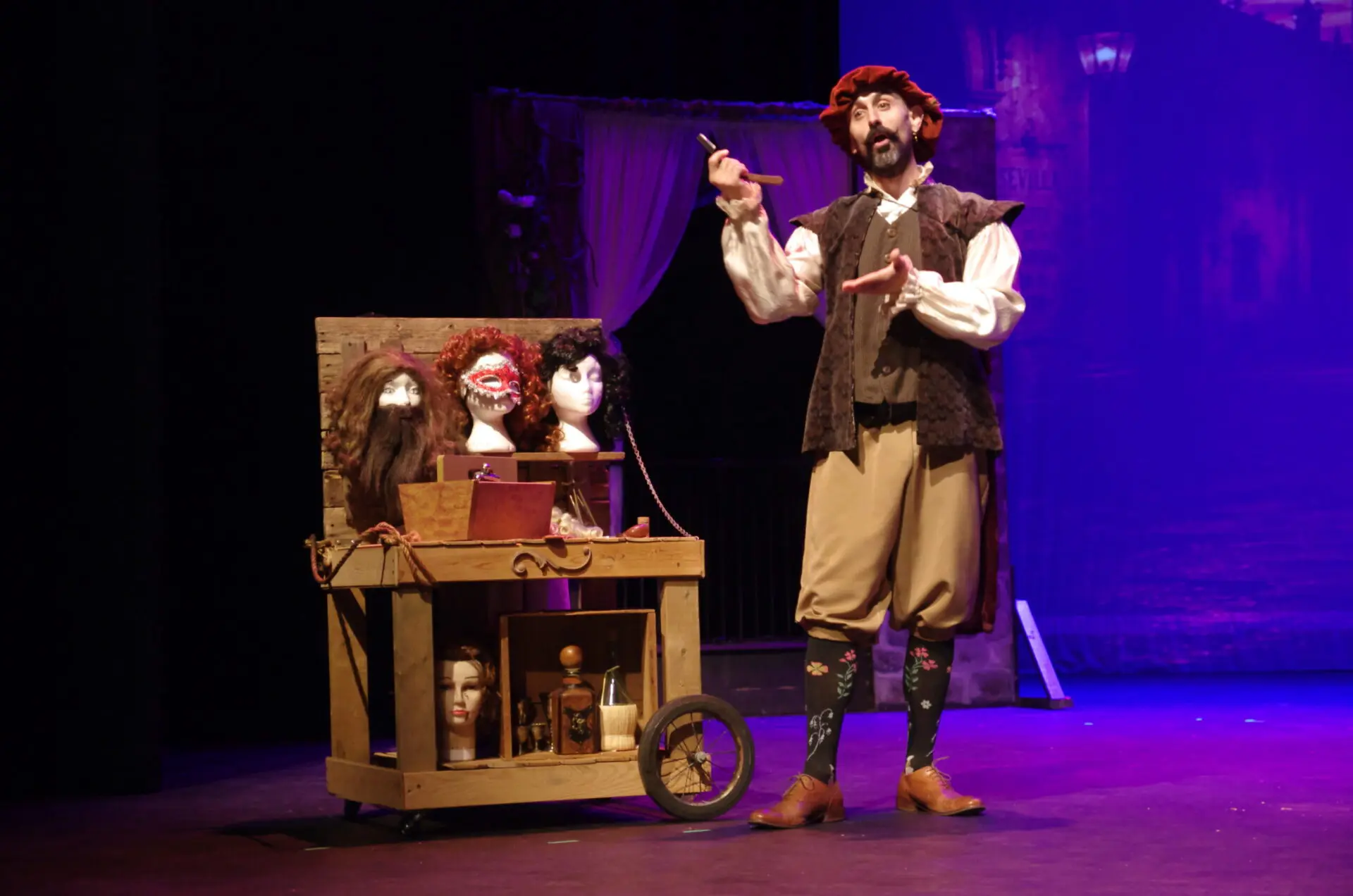
As soon as Christopher Dunham leapt on stage as Figaro, he displayed the charisma and powerful vocals which have made him a much sought-after Barber. Despite having played this role over 30 times, Dunham brought freshness and vitality to it, and his physical agility and comic genius made him a stellar Figaro. His “Largo al factotum” was a showstopper, enhanced by breakneck patter, wonderful diction and vocal fireworks.
Meagan Reimer’s Rosina was a wily woman holding her own in the world of men. Her "Una voce poco fa" contained the sweet lushness of mezzo tones, while the coloratura passages showed the inner strength and emotion in this paradoxical role. Reimer’s facial expressions were priceless, and her scene with Nauta as Don Alonso was so funny that the audience almost forgot about the extreme vocal agility needed in it.
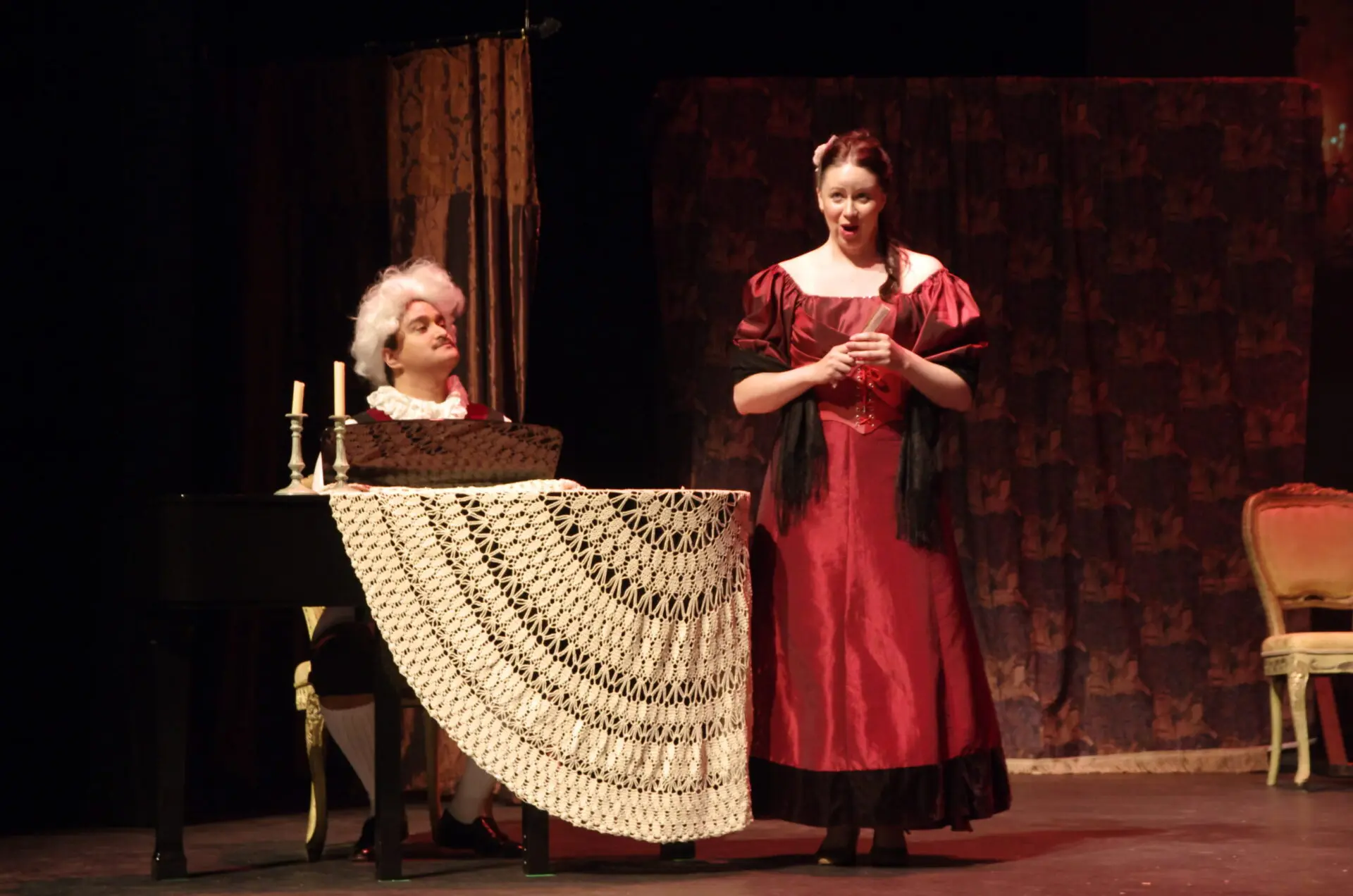
Photo Credit: John Martens
The Count (Ryan Nauta) in disguise a music tutor to Rosina (Meagan Reimer)
Ryan Hofman added a pleasing chocolatey tone to his interpretation of the smarmy Bartolo. His subtle acting was convincing, and his deep baritone added fullness to ensemble numbers. Luke Noftall was a scene stealer as Bartolo’s unscrupulous co-conspirator, Don Basilio, and his "La calunnia" was one of the highlights of the entire production. His bass-buffo voice stormed through the aria, displaying an impressive command of dynamics, timing and elocution. But what was even more mesmerizing was his complete immersion into the aria by using movement and fluid blocking. Daniela Agostino’s Berta was delightful because of her comic timing, her strong voice capable of sensuous legato phrasing, and her expressive face. Her "Il vecchiotto cerca moglie" was worth the wait, and her stunning staccatos and powerful high notes made me wish that Rossini had written more for Berta. Together, these talented young artists made an impressive ensemble in the second act sextet, "Fredda ed immobile," a gorgeous balance of voices and clever choreography that made for an impressive four minutes of fun.
The chorus’s female section was strong, while the male section occasionally struggled with tempi and timing. The full chorus opening number, "Piano, pianissimo,” was lovely, and the addition of women made the very soft singing that much sweeter. As is typical with amateur choruses, there was push-pull between the orchestra and the chorus in passages with complex timing.
The leads and chorus looked impressive – costume, prop and set designer Pamela Blackwood-Marques has consistently raised SOLO’s production value. The lighting was inconsistent. Although there was effective use of strobes and projected backdrops, the leads were hampered by lighting that caused them to disappear into black holes onstage, only to appear instantaneously under a follow spot. Practice time in a rented theatre is extremely limited, and in this case “keep it simple” would have been the best route.
Director Gregory Finney has a gift for comedy, and his modus operandi was to have fun. His hilarious choreography and very funny use of props were ingenious. The famous Bugs Bunny shaving scene was understated but, despite no shaving cream, it was well played. Some of his linear placements of the female chorus were detrimental to the action and singing onstage, and lead solos which occurred upstage were sometimes overpowered by the orchestra. Finney is a confident director who gives his leads the freedom to explore the entire stage space.
Following a prolonged standing ovation, the curtains closed and the large audience left exhilarated. They had just experienced a foamless and fantastically funny production which would have pleased the jokester himself, Rossini.
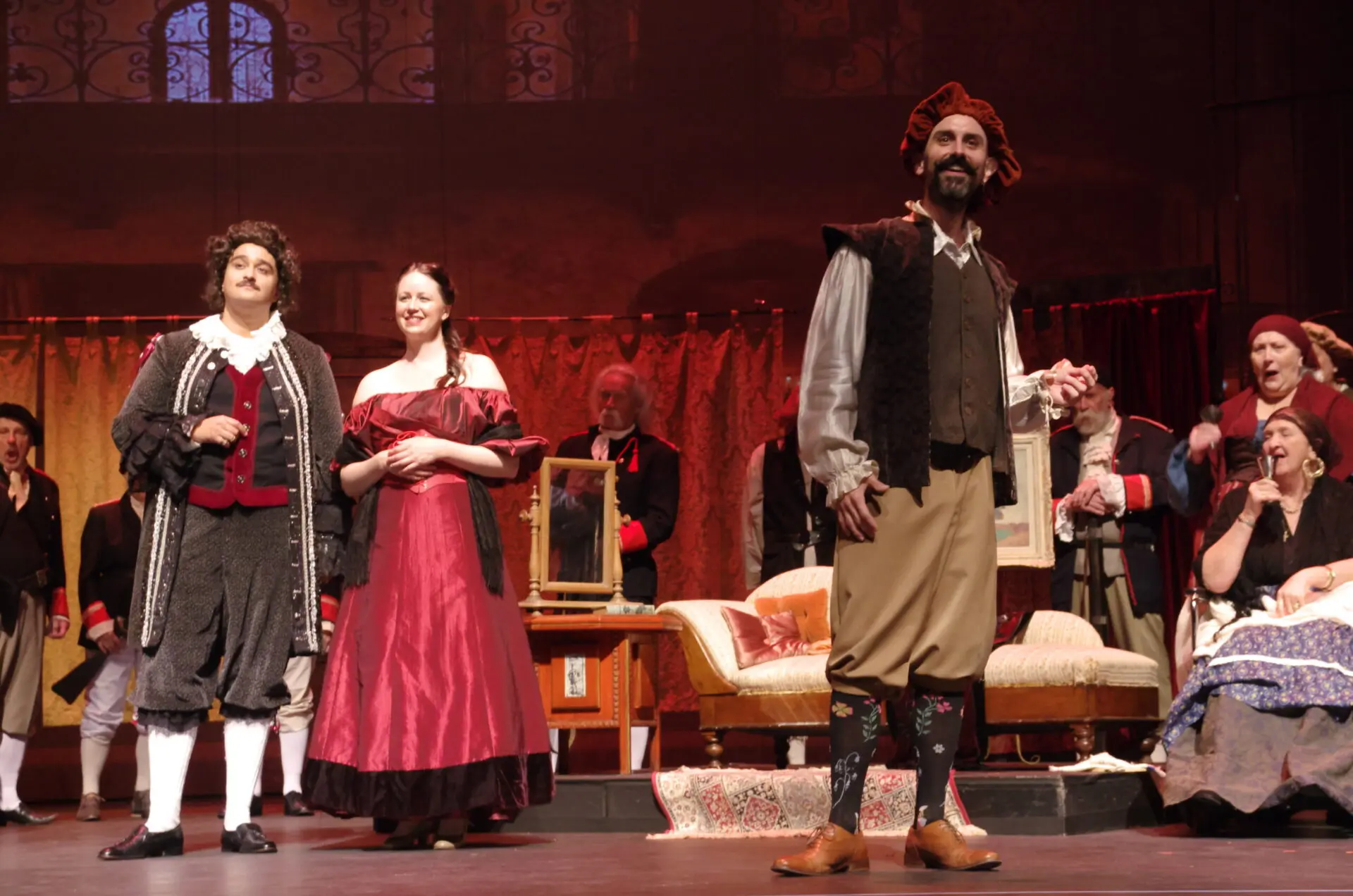
Photo Credit: John Martens
Nauta, Reimer and Dunham with the company of The Barber of Seville
Opera Canada depends on the generous contributions of its supporters to bring readers outstanding, in-depth coverage of opera in Canada and beyond. Please consider subscribing or donating today.