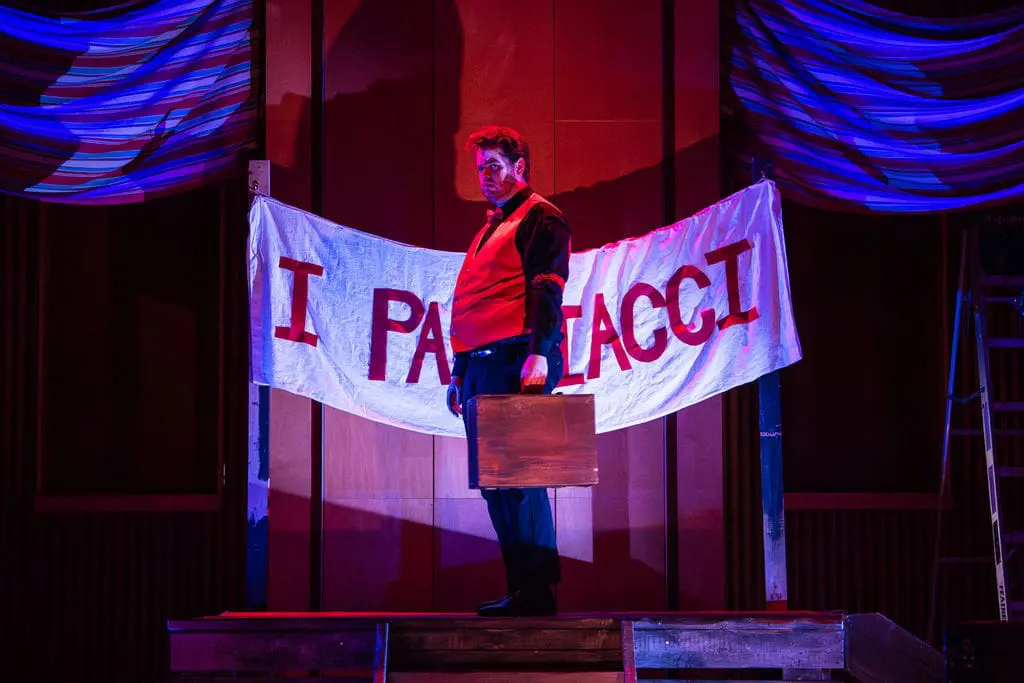
Toronto City Opera (TCO) is presenting Leoncavallo’s Pagliacci from November 19th to 23rd at Toronto’s 918 Bathurst Centre in the Annex area of Toronto. Staying true to their roots, TCO has performed in and around this area for 80 years.
Although Pagliacci had mixed critical reviews at its premier performance, it was an instant hit with the public and has remained so ever since – proving that you can’t fully trust all music critics. The plot is based upon a real-life incident which Leoncavallo’s father presided over as a judge. It tells the tale of Canio, an actor and leader of a commedia dell’arte theatre company, who murders his wife Nedda and her lover Silvio on stage during a performance. It’s a play within a play, a metadrama following in the footsteps of Shakespeare’s Hamlet and preceding modern productions like Something Rotten. Seinfeld’s 49th episode, “The Opera” took this concept even further, as the show’s characters’ lives imitated those in Pagliacci, thus producing a play within a play within a TV show.
Director Sawyer Craig creates an immersive and intensely personal voyage as the opera plays out around and within the audience. Refusing to be confined by a tiny stage, Craig’s blocking used every inch of the theatre; it was delightful to watch audience members swivel their heads to see what was coming next as characters popped up in the aisles, in corners, and at the back of the venue. My only quibble is that staging on the level of the audience or on the steps leading up to the stage was difficult for the entire audience to see. The seating of the chorus with the audience for the final act was particularly effective. We were all witnesses to the tragedy unfolding. It was a dramatic baptism by fire with total immersion for the viewers.
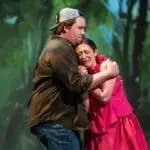
Craig’s innovative staging was supported by a strong cast. Ross Mortimer’s portrayal of the tragic protagonist Canio was sublime. He is a top-notch actor who has the emotional depth to portray Canio’s descent into a murderous husband. His voice has the training and stamina to produce a richly resonant tone throughout the opera. His “Vesti la giubba” showcased his rich baritonal quality which also produced stunning high notes. There were two instances in the evening where Mortimer’s singing was followed by rapt silence, the ultimate tribute to a fine performance.
Cassandra Amorim’s depiction of the ill-fated Nedda was poignant and displayed vocal virtuosity as she moved from her warm-toned love duet with Silvio to chilling high notes in her final moments onstage. As the only female lead in a male-dominated opera, Amorim held her own with her well-supported singing and powerful stage presence.
Johnathon Kirby’s portrayal of Tonio was multifaceted. His “breaking the fourth wall” introduction in the first act was delivered with rich smoothness, and his interactions throughout the opera were well sung and acted. Kirby is a skilled actor, and without much makeup or elaborate costuming, he convinced the audience that he was a misshapen, odious man.
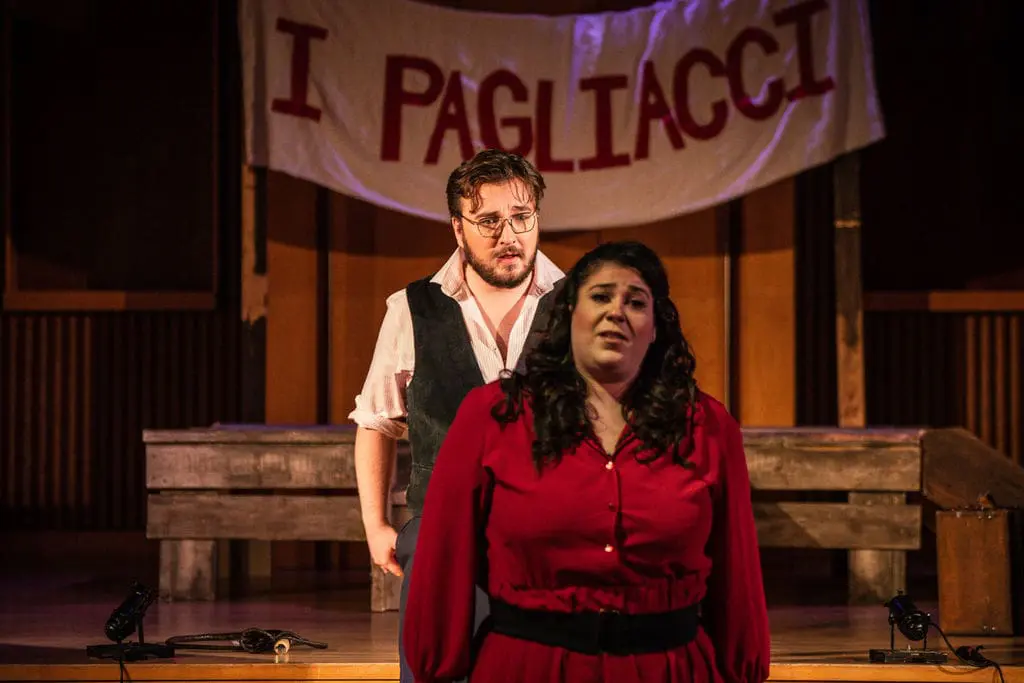
Photo Credit: Elana Emer
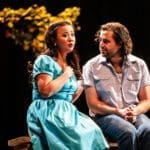
James Coole-Stevenson as Silvio opposite the Nedda of Cassandra Amorim
As the only lead who is not a member of the travelling troupe, James Coole-Stevenson brought depth to his character Silvo. His lush duet with Amorim contrasted markedly with his anguished cries at the end of the opera, demonstrating a vocal strength effectively portraying a wide range of emotions. He was not just a hapless villager but a strong character who, when seated with the audience, evoked the internal anguish of the audience itself.
Cameron Mazzei was Beppe, the only male character who pities Nedda without ulterior motives. Whether dancing down the aisle with his mandolin, shielding Nedda from a knife attack or joining his troupe onstage, Mazzei was a persuasive actor who morphed from tragedy to comedy and back again. His light tenor tone was a welcome contrast to the heavier voices.
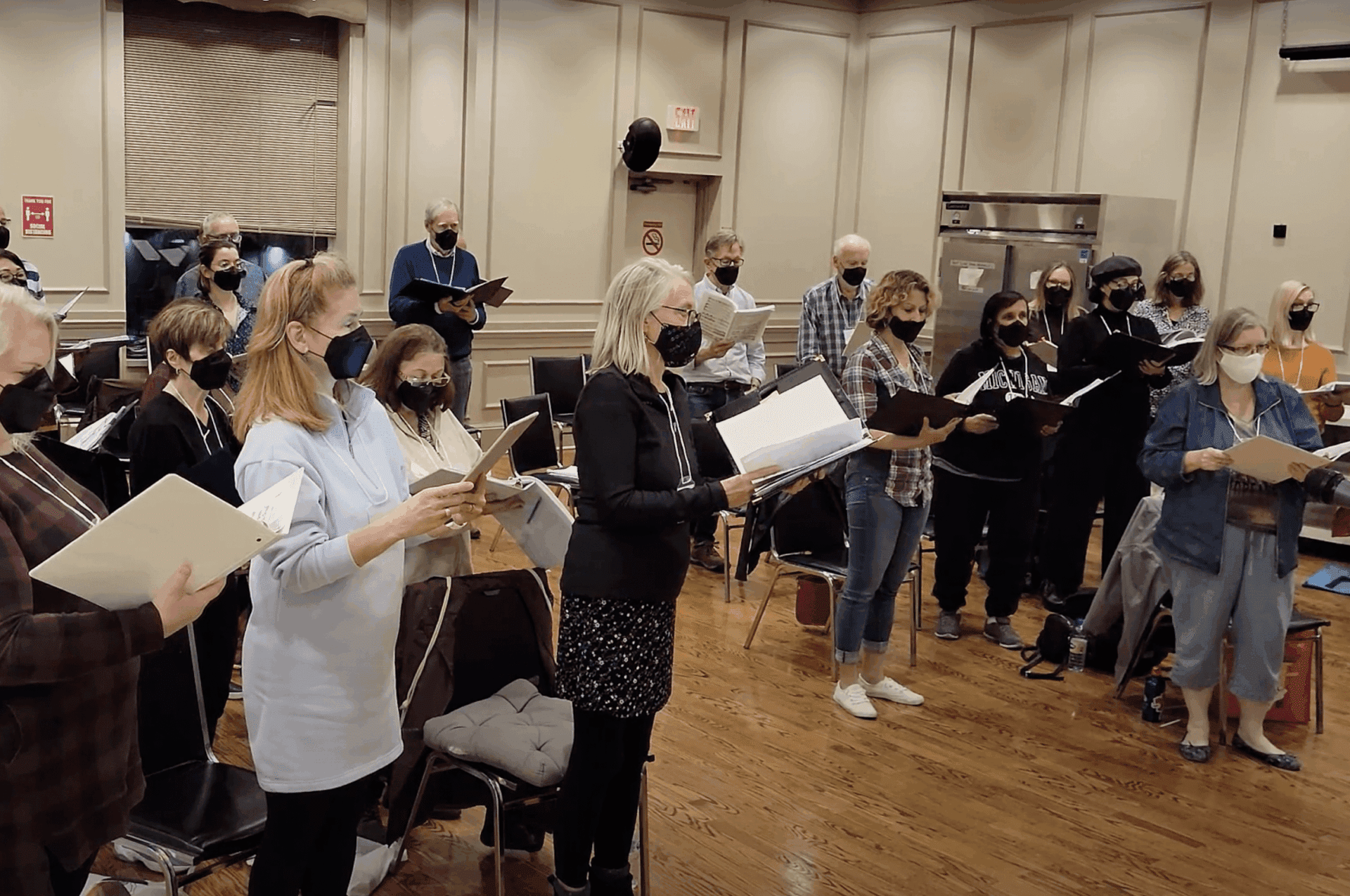
I am filled with admiration for the work done by the community chorus. There were some rough patches in the fast-paced opening chorus, but the enthusiasm of this volunteer-based group was infectious. When they were spread out throughout the venue, they maintained their pitch and, for the most part, remained in sync. Every chorus member was invested in their characters, which made for an exhilarating evening.
Pianist Ivan Estey Jovanovic was magnificent. Not only did he act as a one-man orchestra, but he provided the audience with musical respite in his sensitive solo work. Jennifer Tung proved, once again, that she is a force to be reckoned with. She was engaged in every breath that the soloists made, while also commanding the attention of the 38-voice chorus… wherever they were in the venue. Her expertise and enthusiasm permeated the entire production.
Amanda Eason’s use of reds in the costumes added to the circus-like atmosphere, an ambience which was also enhanced by the circus vintage-inspired half page programs and the large circular overhead lights.
Due to its short running time, Pagliacci is often performed in tandem with Mascagni’s Cavalleria Rusticana or other short operas. Including intermission, TCO’s stand-alone Pagliacci clocked in at two hours. No wonder this production only has a few tickets available – it is a true-crime opera with an emotional punch that will leave you reeling. In this case, trust this music critic and snatch up a ticket before they are all gone.
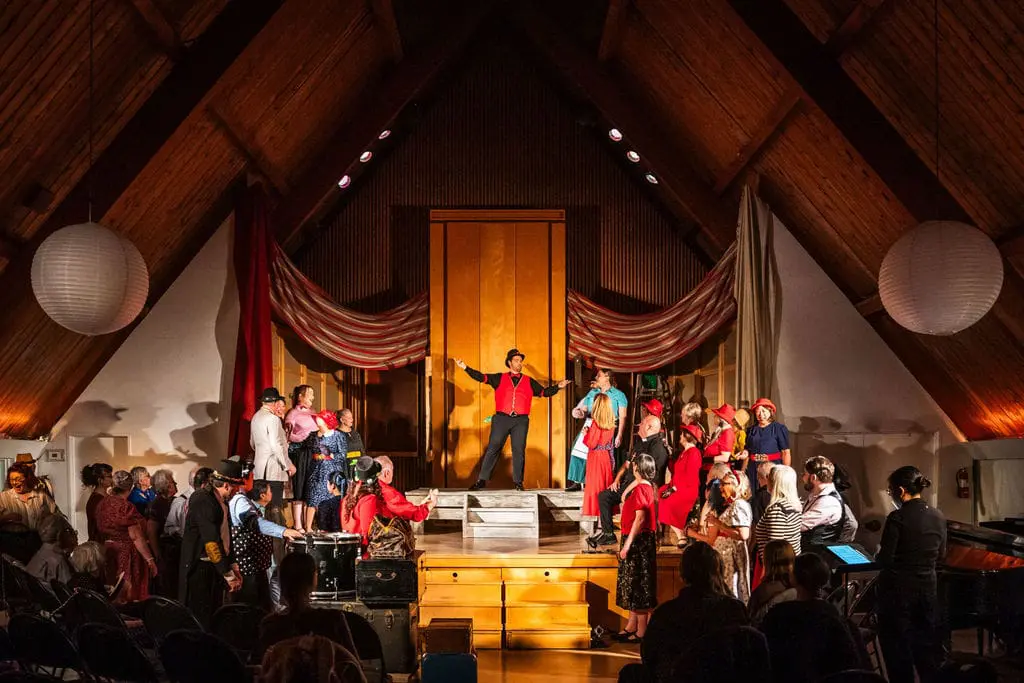
Photo Credit: Elana Emer
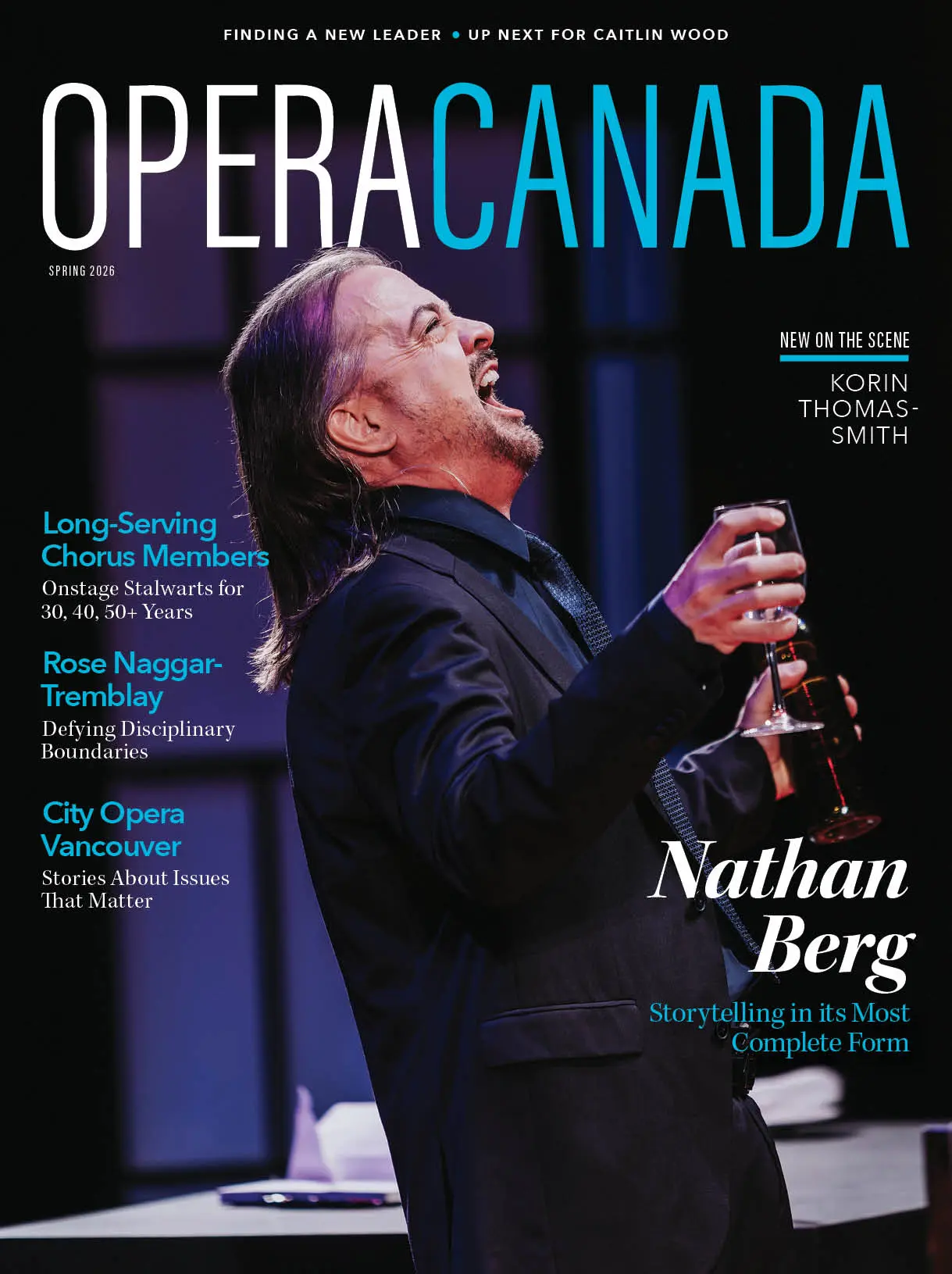
Ross Mortimer, as Canio, had the audience rapt with silence in TCO’s Pagliacci
Opera Canada depends on the generous contributions of its supporters to bring readers outstanding, in-depth coverage of opera in Canada and beyond. Please consider subscribing or donating today.