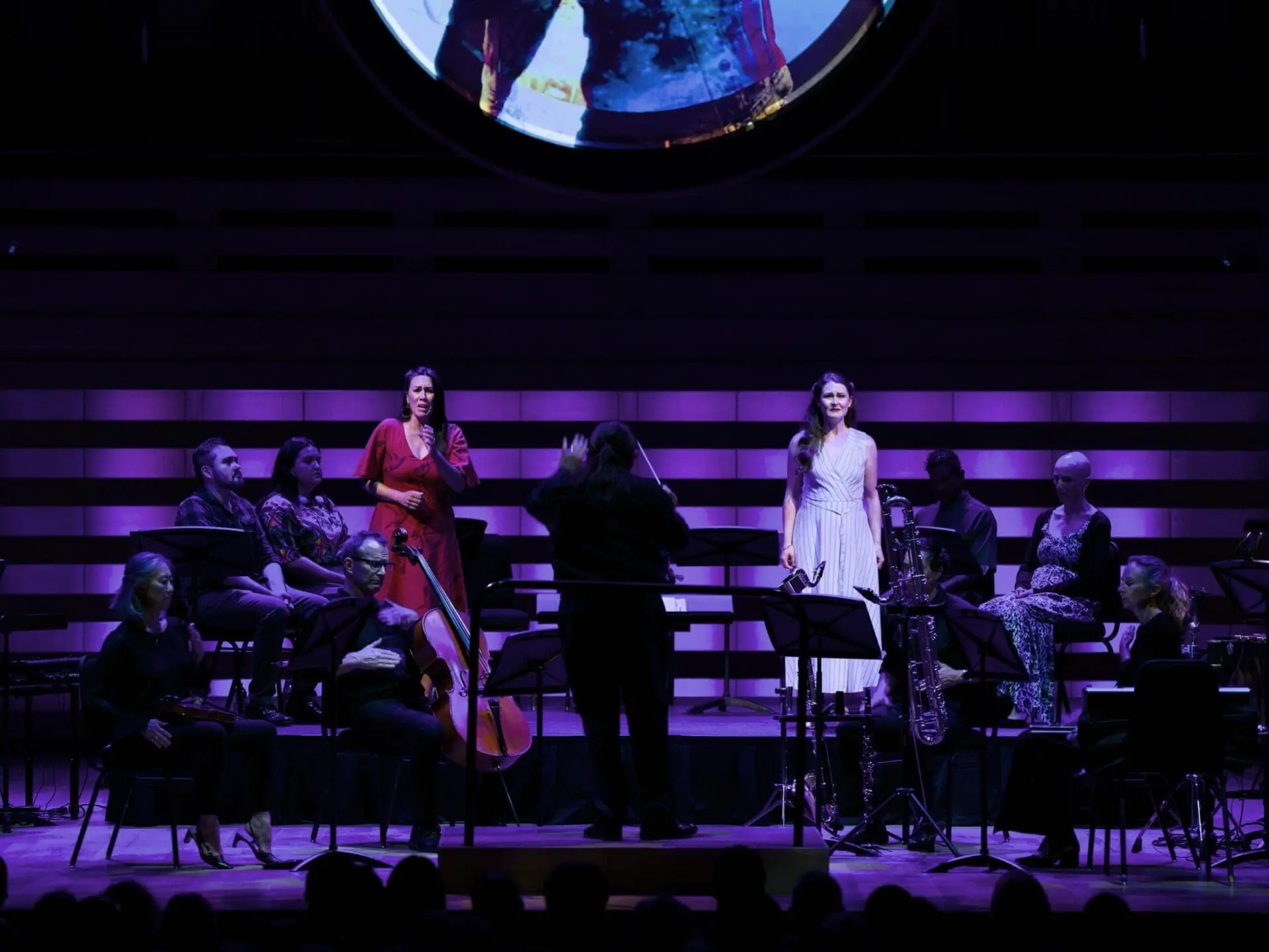
It has taken almost eight full years, but the belated Toronto premiere of Missing finally took place on Thursday, July 24th at Koerner Hall as part of Toronto Summer Music’s 2025 offerings. This Canadian opera, co-commissioned by Pacific Opera Victoria and City Opera Vancouver, had its first performances in Vancouver and Victoria in November 2017.
This opera tackles a difficult subject – the unexplained disappearances of many indigenous women and girls in Canada over the years. The production team included both Indigenous and non-Indigenous members, collectively called the Artists of the Opera Missing (ATOM).
According to the booklet, available online with a QR-code in the recently released CD, Métis playwright Marie Clements wrote the libretto, completing it before composer Brian Current was invited to compose the score. Current shaped the music in close partnership with the cast and other members of the creative team. Through the work of language consultant Vincent Gogag, native Gitxsan words and melodies are reflected in the score.
The end result is an emotionally powerful work that focuses on a serious and unresolved issue in Canadian society. It is a work that demands our attention. While many opera lovers think of this genre as escapist entertainment or “musical comfort food,” Missing is anything but! It forces us to do soul-searching and confront our cultural biases, and maybe even spurs us to action.
For a relatively short opera, the background story is quite complex. It takes place in Vancouver’s downtown East side and along BC’s Highway of Tears, a stretch of Highway 16 between Prince George and Prince Rupert. The story revolves around two main characters: Ava, a young white woman, and the spirit of a young Native Girl – two women from different cultural worlds, their improbable connection, their cultural conflicts and their eventual bonding.
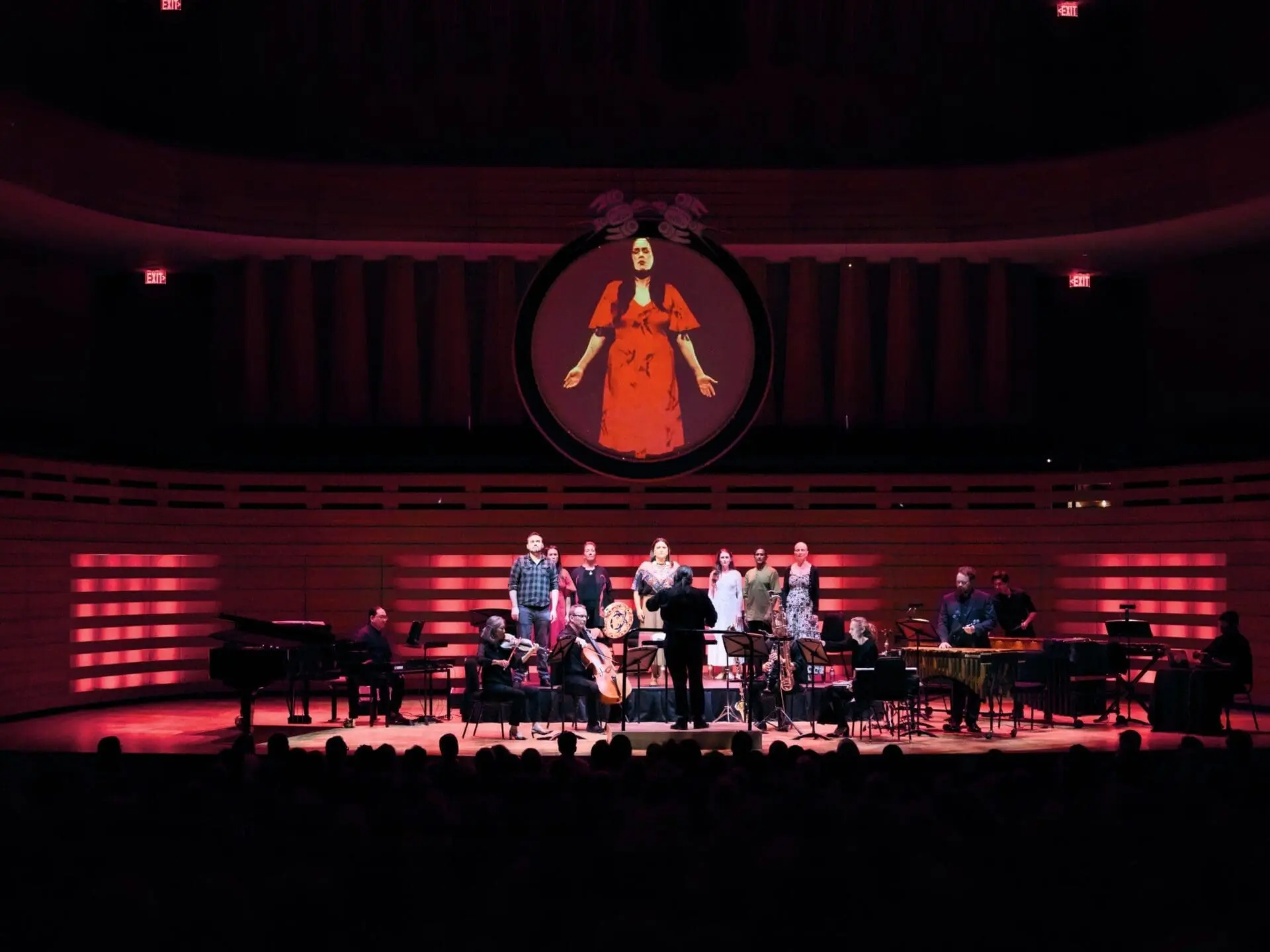
Photo Credit: Lucky Tang
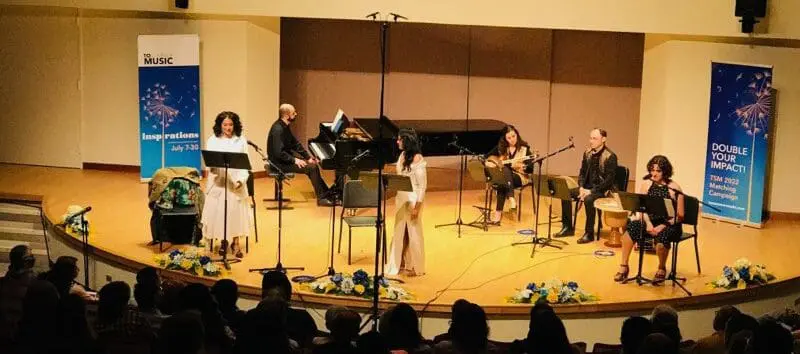
Toronto Summer Music presents Missing: In Concert
Given the complexity of the story, it was very unfortunate that the synopsis was not provided in the program. It didn’t help, particular given that this was a concert performance. As a result, the details were lost to me and to others. The sung text was projected, but it mostly dealt with emotions and didn’t necessarily speak to the onstage actual. The surtitles were also very difficult to read. I hope one day to see a staging of this work.
Through the agency Domoney Artists, I was able to reach soprano Caitlin Wood to get her thoughts on singing Ava, a role she created in 2017. “I feel incredibly proud and grateful to have been part of Missing,” she says. “It is a gift to return to this piece. When we first worked on the opera, Marion Newman shared that the Wedding Scene, where two non-Indigenous young people are invited to share a Gitxsan song, represented for her what post-Reconciliation might look like. I know we still have a long way to go, but that moment continues to represent the hope I carry for what we may see one day in Canada.”
Brian Current’s score is tonal and accessible, called “minimalist” by some, but to my ears it allows the emotions to come through. The Continuum Ensemble under conductor Tim Long was terrific, creating an evocative and haunting sonic world, particularly with the use of tuned percussion instruments like the vibraphone. The vocal writing is generally gracious on the voice. The projections by Andy Moro was excellent in setting the mood. As noted above, one fly in this ointment was the difficulty reading the surtitles, as sometimes they were written in white letters on a white background!
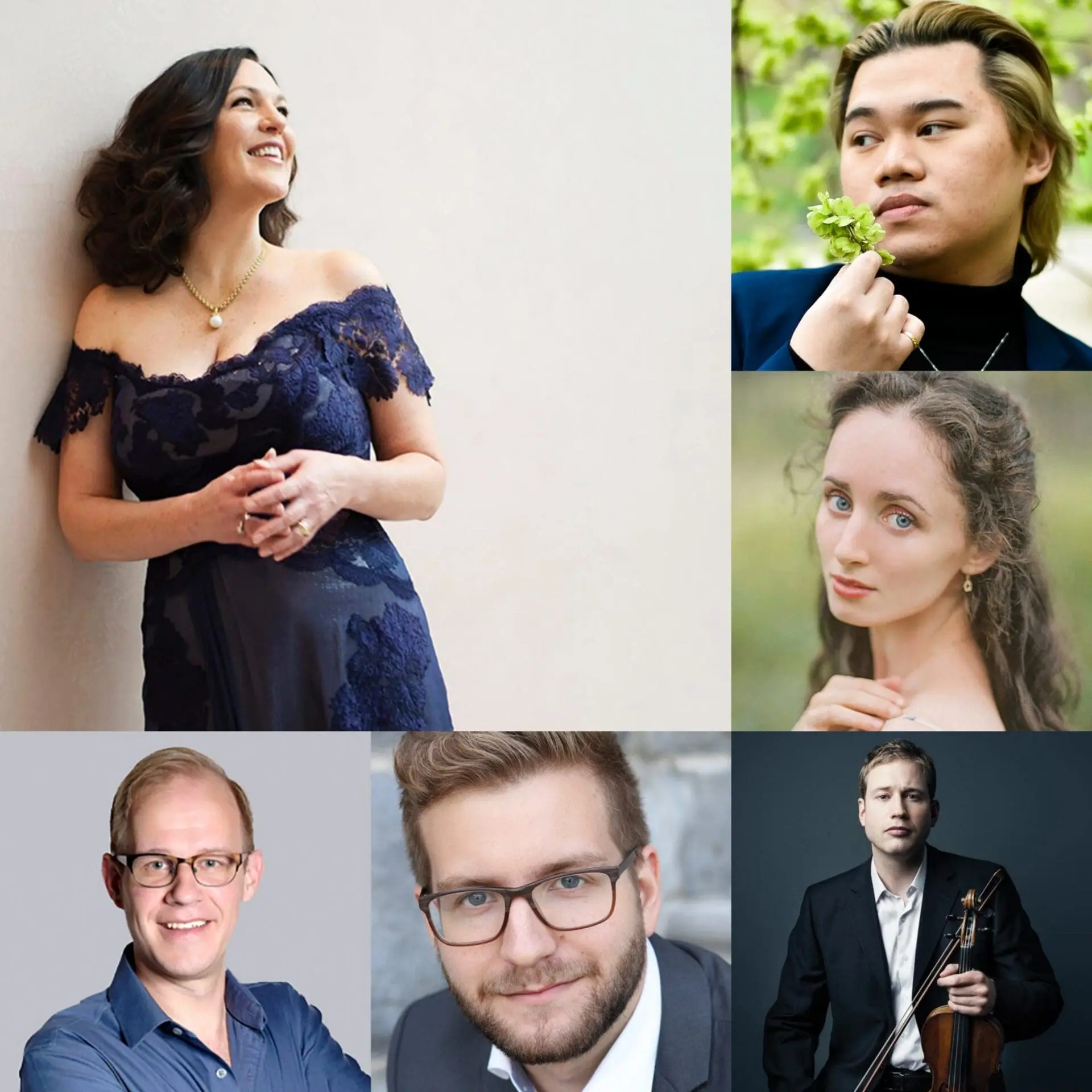
There was no weak link in the cast of seven. Kudos to the two main characters, Caitlin Wood (Ava) and Melody Courage (Native Girl) – two singers with similar timbres, a happy coincidence! Marion Newman (Dr. Wilson) dominated the stage in her moments in the spotlight. Also impressive were Andrea Ludwig as Jess and Asitha Tennekoon as Devon. The placement of the singers behind the orchestra was more problematic, making them hard to see from where I was sitting. Unfortunately, the conductor blocked a couple of the singers from time to time.
Even though it was a concert performance, it was essentially semi-staged. The audience was extremely well behaved – you could hear a pin drop. At the end, the performers were hugely applauded by a smallish but enthusiastic and appreciative audience.
A thought-provoking work that deserves to be revived, fully staged.
Opera Canada depends on the generous contributions of its supporters to bring readers outstanding, in-depth coverage of opera in Canada and beyond. Please consider subscribing or donating today.