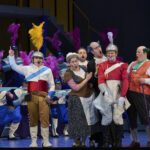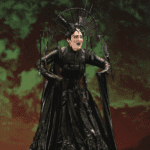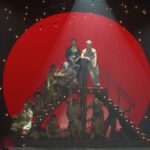
On Friday, February 20th, the COC Ensemble Studio presented a slightly abridged version of their current production of The Barber of Seville at a performance marketed for students. For the ensemble members, this is an important chance to perform a full, major role in front of an audience. For the COC, it’s important outreach, allowing them to host students at the Four Seasons Centre, a far cry from a school-hosted opera tours. For the students, this could be a gateway – an opportunity for them to experience something new and intriguing as well as a confirmation that they have a place at our largest arts institutions.
I went anticipating the 90-minute abridged, English language version that is occasionally performed at the Met during holiday season. What I found was an almost-complete version sung in Italian with surtitles. Certain scenes were cut – the COC chorus isn’t available for daytime performances, which meant that the entire opening scene had to be deleted – but students received a full introduction to attending a traditional opera performance.
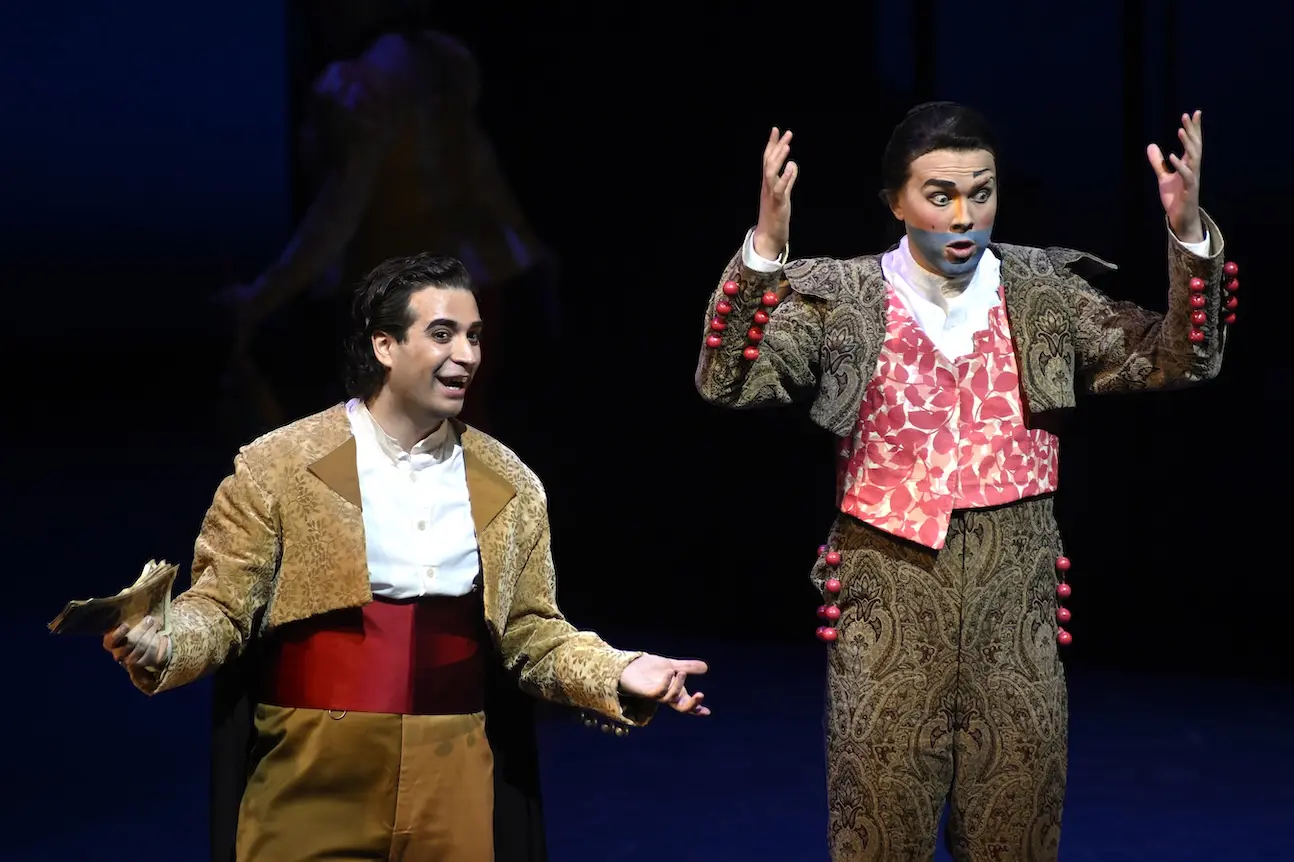
Since the production has already been reviewed by Opera Canada, I won’t speak much about the direction or designs. It is, however, a production that calls for stylized performances. While the full version has the opening men’s chorus dancing onstage with a giant guitar to set that mood, this performance opened with Figaro’s “Largo al factotum.” It seemed challenging for Ben Wallace (Figaro) and Angelo Moretti (the Count) to launch into the quasi-choreographed movement without having the performance style already established by the chorus.
Wallace sang beautifully and has an agile baritone capable of both the range and patter in the opening aria. On occasion – particularly in the patter sections – his voice got slightly lost under the volume of the orchestra, but it is an instrument that should be thrilling as it matures. As a performer, he felt very natural onstage, and had great chemistry in the first act duets with both Moretti and Ariana Maubach (Rosina).
Moretti has a natural lyric tenor with strong, ringing high notes and a lightness and facility that was exceptional in the coloratura sections. With “Ecco, ridente in cielo” cut with the opening chorus scene, his only solo became “Se il mio nome,” the serenade the Count sings for Rosina to guitar accompaniment. His innate sense of phrasing made one wish to hear what he could have done with the larger showpiece.
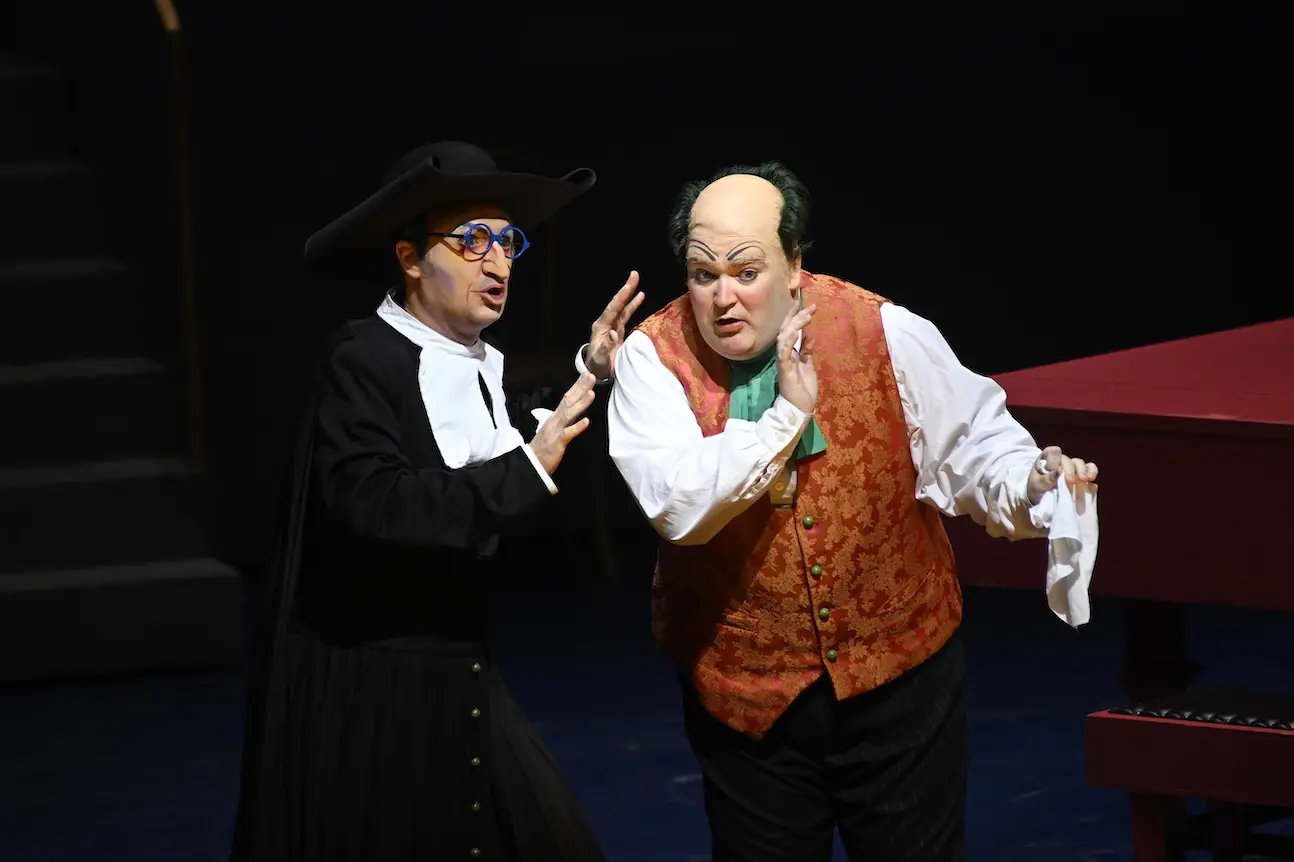
Photo Credit: Gary Beechey
Basilio (Stephen Hegedus) teaches Bartolo (Nick Murphy) of the power of “La calunnia”
I first heard Maubach sing at the COC’s Centre Stage competition in fall 2025, where she was the first prize and audience choice winner. Since that time, her voice has grown in size and warmth; it is more lustrous and has greater focus. Her “Una voce poco fa” had precise coloratura passages and some unexpected, but beautiful, choices in ornamentation. She is captivating onstage, commanding the audience’s attention at all times. Maubach also sings the role of Berta in the mainstage performances of Barber, but her performance showed no signs of fatigue. This is an emerging Canadian talent who could have a serious career ahead of her.
Nick Murphy, as Bartolo, felt the most comfortable with both the comedy and the stylized performance required by the production. His “A un dottor della mia sorte” was well-delivered, although he also struggled with projection in the patter sections. Another singer from the 2025 Centre Stage competition, it sounded as if his higher range, which has a beautiful timbre, is opening up, and he may choose to continue exploring the baritone repertoire along with the buffo bass-baritone material to which he is so well suited.
Basilio was sung by Stephen Hegedus. He is not a member of the Ensemble Studio, but he sang Count Ceprano in the COC’s recent production of Rigoletto. Hegedus had beautiful tone and strong projection, and his “La calunnia” was a highlight. Emma Pennell sang the role of Berta for this production. Their sprightly take on the character was more youthful and playful than Maubach’s in the mainstage production, and it showcased their natural onstage charm. Despite the cuts to the production, it kept Berta’s “Il vecchiotto cerca moglia,” which gave the audience a real opportunity to appreciate the clarity of Pennell’s lyric soprano.
One can never say enough good things about Sandra Horst, the COC’s Price Family Chorus Master, who conducted this performance. The tempos were brisk but steady, and the orchestra responded well to her phrasing, even when it differed from the choices of Daniela Candillari, who led the mainstage performances. Horst is a significant talent, and the COC’s audience would be well-served by opportunities to hear her conduct more mainstage fare.
The audience response, throughout the performance, was rapturous. They appreciated Rossini’s vocal pyrotechnics, they were engaged by the story and the comedy, and it was evident in the vigour of their response. As noted above, they had a “full introduction to attending a traditional opera performance,” and it hopefully whetted their appetite for more. If nothing else, they saw a cast of singers not that much older than themselves – and maybe they saw that the opera house was a place for them, too, as performers or as our future audience.
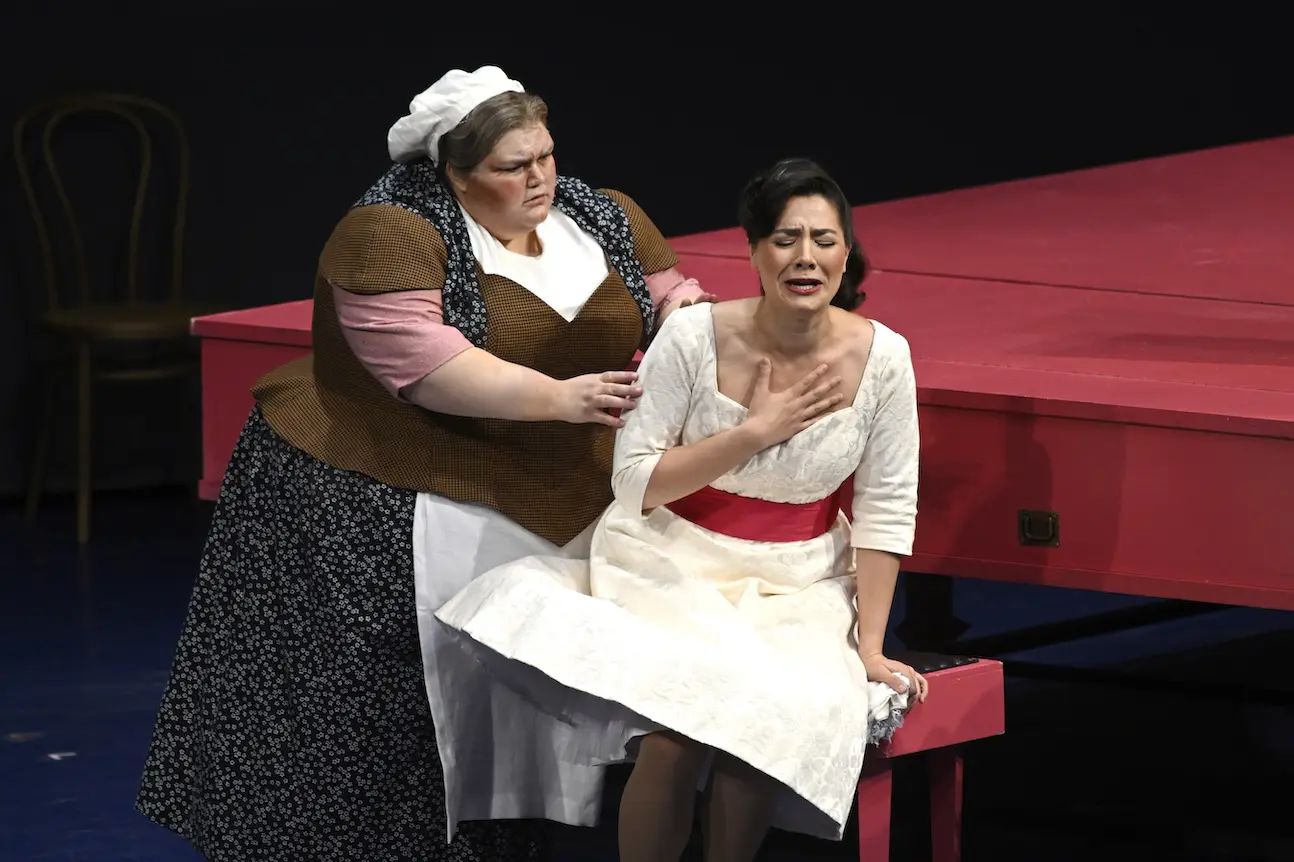
Photo Credit: Gary Beechey
As Berta, Emma Pennell comforts the Rosina of Ariana Maubach
Opera Canada depends on the generous contributions of its supporters to bring readers outstanding, in-depth coverage of opera in Canada and beyond. Please consider subscribing or donating today.