On Friday, October 24th, I boarded a GO train in Burlington with my husband and hundreds of Blue Jays fans to see…an opera! I was headed to Toronto Operetta Theatre’s (TOT) season opener, The Mikado Revisited, at the St. Lawrence Centre for the Arts. When we disembarked at Union Station, we swam against a stream of thousands of blue-and-white-clad fans going the other way to see Game One of the World Series. Would our trip be worth the effort? Time would tell.
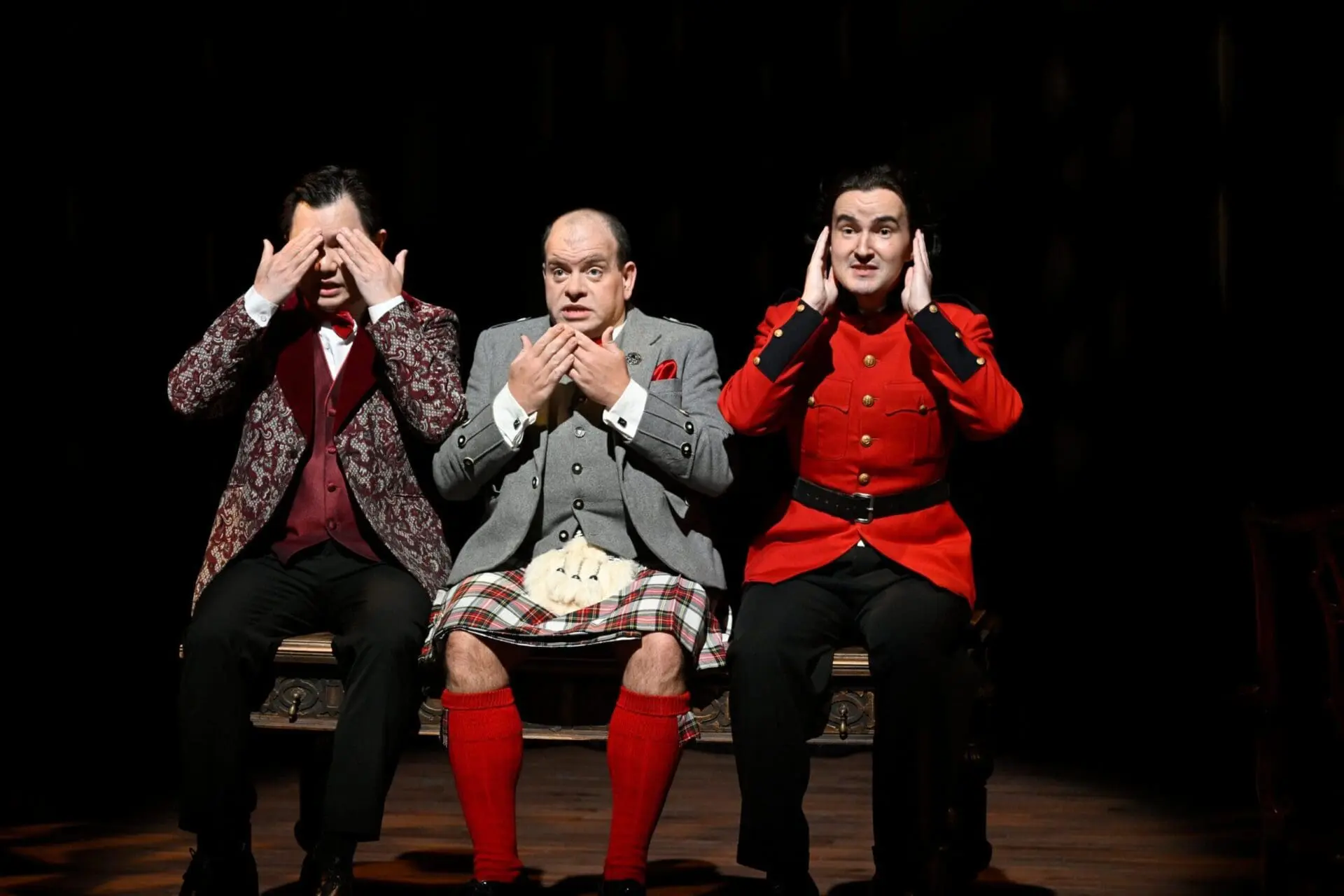
Artistic director Guillermo Silva-Marin began the performance by greeting a cheering audience wearing a Blue Jays’ baseball cap while wishing the team “toi toi toi.” This sense of fun pervaded the entire evening, as young and old took in Silva-Marin’s revised adaptation of The Mikado: the setting was in Burlington, the characters’ names were modernized (for example, the Mikado became Prime Minister, Pooh-Bah became Lord Arthur Blimp), and Japanese robes were replaced with red serges. The music remained unchanged, but lyrics were hilariously updated and dialogue included references to “e-transfers” and an “elder orange oligarch.”
Marcus Tranquilli (Nanki Blue, formerly known as Nanki-Poo), was a charming leading man. His “A wand’ring minstrel I” was a delightful introduction to his charismatic stage presence, a result of his training in both musical theatre and opera. Although his upper range started out thin, Tranquilli gained vocal strength throughout the night, demonstrating some fine technique in this demanding tenor role.
His pairing with Madeline Cooper as Yum-Yum was suitably sweet and her golden mezzo blended well with Tranquilli’s voice in “Were you not to Bo-Bo plighted.” Cooper was a fine actress, playing up Yum-Yum’s innocent nature to the max. Kudos to her fellow maids from school – Máiri Demings (Petit Pois, formerly known as Pitti-Sing) and Emma Puscalau (Lucy Darling, formerly known as Peep-Bo) – who blended smoothly with Cooper in the fast-paced and well sung “Three little maids from school are we.” Demings was also a fine mezzo lead in “Braid the raven hair.”
It was gratifying to hear Joseph Ernst in a more prominent role with the TOT, and his “Our great Prime Minister, virtuous man” showcased his smooth baritone voice and excellent diction. Handaya Rusli was a hilarious Lord Arthur Blimp as he strutted around the stage and lent his resonant baritone to choruses, trios, quintets and solo work. Stuart Graham was an entertaining Prime Minister (formerly known as the Mikado), who combined his dramatic baritone with very funny dead-pan and self-important acting reminiscent of Leslie Nielsen. His “A more humane Prime Minister never” was greeted with enthusiastic applause.
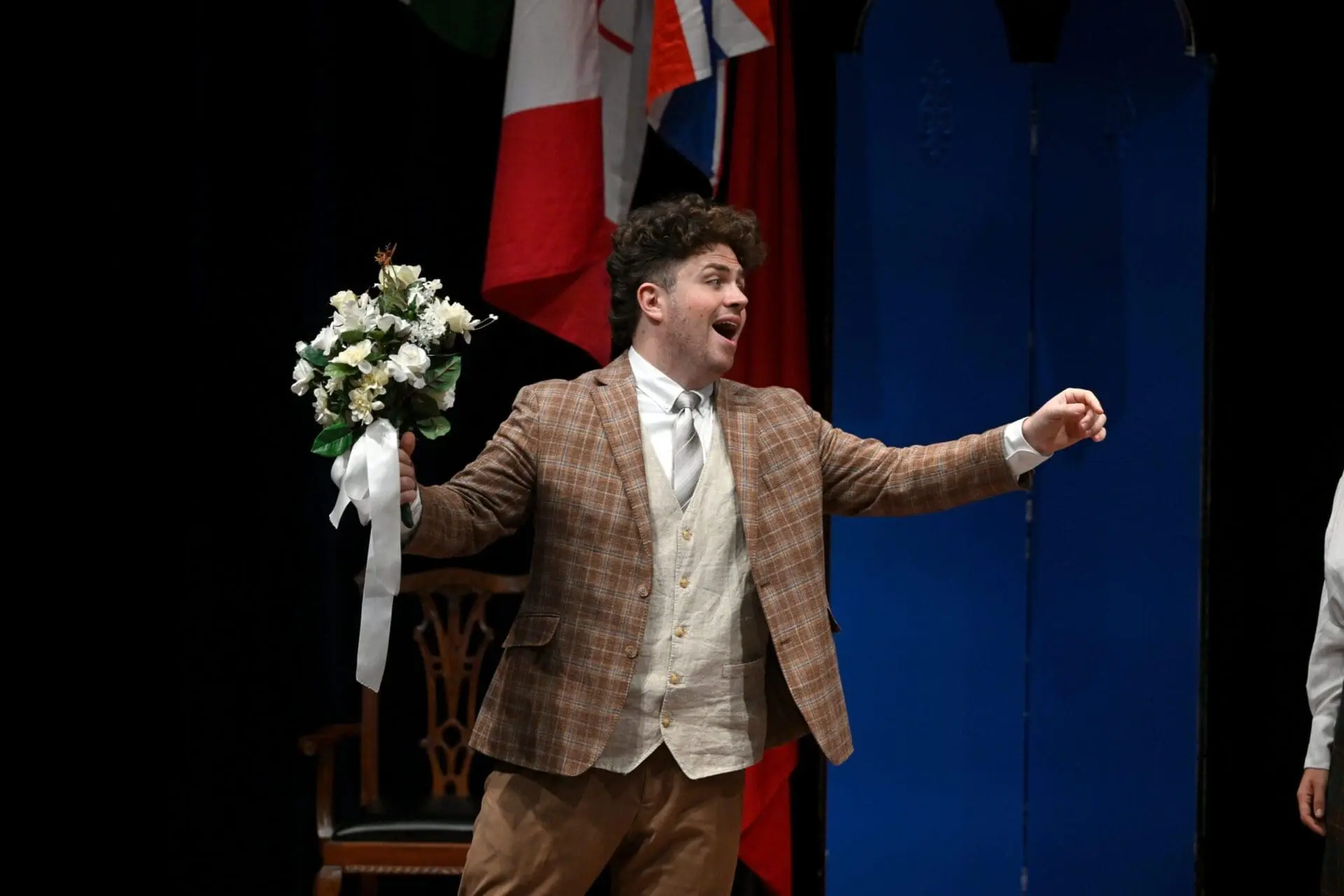
Photo Credit: Gary Beechey, BDS Studios
Marcus Tranquilli was a charming “Nanki Blue” at Toronto Operetta Theatre
Karen Bojti (Katty Kat, formerly known as Katisha) was a comic delight. Bojti immediately hit the audience’s collective funny bone as she swept onstage in flowing red velvet robes, coupled with a red-haired updo reminiscent of Helena Bonham Carter’s Red Queen in Tim Burton’s Alice in Wonderland. Strong in both ensembles and solos, Bojti’s rich mezzo was the icing on the cake of a well-acted performance.
Gregory Finney as Sir Arthur Boborian (formerly known as Ko-Ko, the Lord High Executioner) was the stand-out performer of the evening. Whether he was swaying his sporran, waxing eloquently in a Jack Benny fashion or singing up a storm, Finney was a triple-threat Lord High Executioner. His pitch, diction and timing were spot on, and his performance is an example of what a good Gilbert and Sullivan opera is all about – farce played out using detailed professionalism.
There was some impressive harmony in the vocal ensembles, and the male chorus sounded particularly fulsome in “If you want to know who we are.” The female wards provided harmonically tight support for soloists. The orchestra consisted of nine players with some excellent solo work by Clare Scholtz (oboe), Michele Verheuf (clarinet) and Luise Heyerhoff (trumpet). The strings were well pitched, and the tricky rhythms were skilfully navigated by percussionist Mark Duggan and bass Travis Harrison.
The Mikado Revisited marked conductor Narmina Afandiyeva’s TOT debut. Whether leading the orchestra through the legato phrasing of “Alone, and yet alive,” or the exuberant finale “For he’s gone and married Yum-Yum”, Afandiyeva masterfully guided her musicians and singers through the witty and interwoven orchestrations of Sir Arthur Sullivan.
Transporting The Mikado to another time is not as straightforward as updating lyrics, costumes and names. There requires some knowledge of what the historical basis of the humour is. When punishment for flirting is mentioned, it is a nod to the strict morality of Victorian England. When cruel and unusual punishment is alluded to – including beheading – it is poking fun at London’s over-the-top legal system of the late 1800s. Although performances promoting diversity and inclusivity should be applauded, it can be jarring to universalize themes and put a work written with an imaginary setting into an actual geographic location.
Having said that, the world of Gilbert and Sullivan is topsy-turvy, and if suspension of historical context and imagination are used, updated versions should be welcomed in order to expose a new generation to this glorious art form. The different ages at The Mikado Revisited are testimony to how an updated version of a classic work can attract new viewers. Taking into account the exuberant response of the audience, it was clear that TOT hit a home run with this new adaptation.
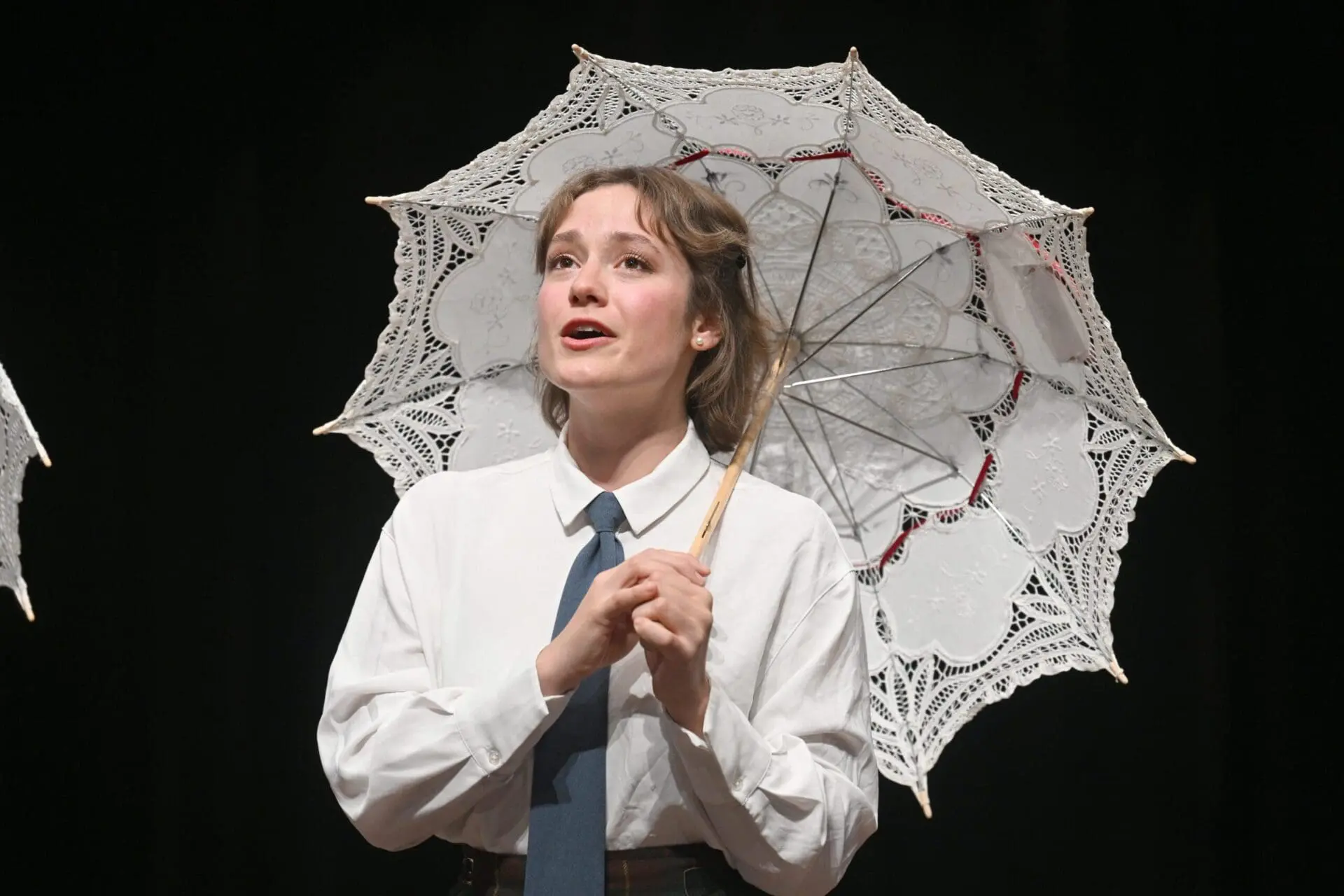
Photo Credit: Gary Beechey, BDS Studios
Madeline Cooper as Yum-Yum was suitably sweet in The Mikado Revisited
Opera Canada depends on the generous contributions of its supporters to bring readers outstanding, in-depth coverage of opera in Canada and beyond. Please consider subscribing or donating today.